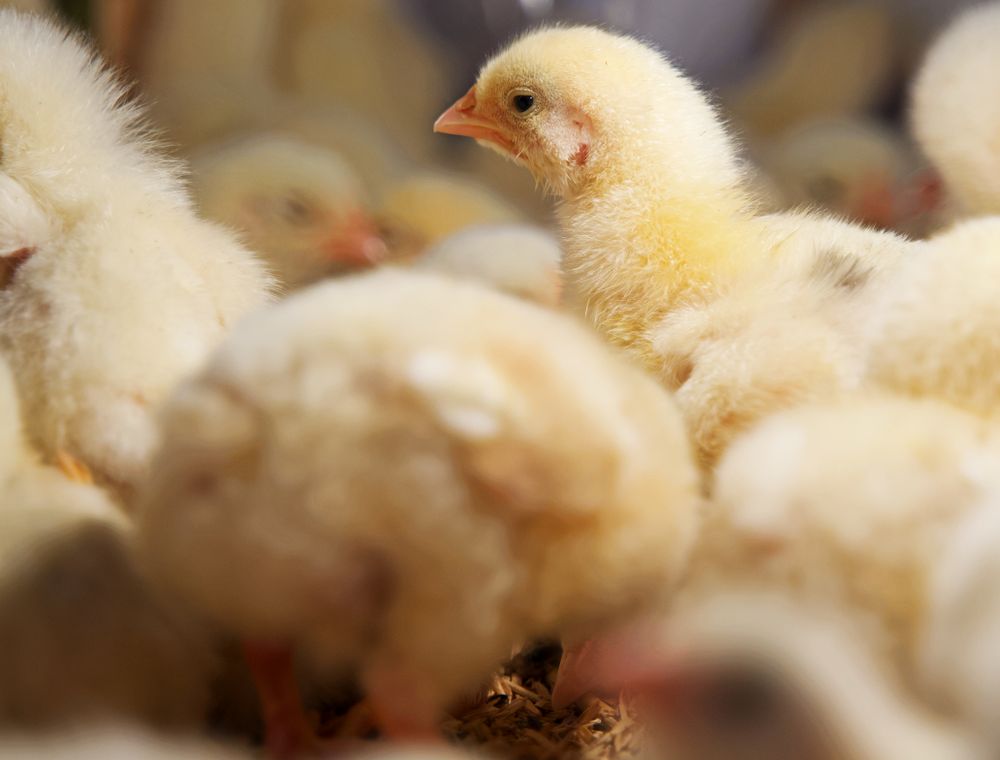
Short answer: Eye-drop and spray vaccination put a measured dose into each chick, which is why careful farms use them for young birds. The method is simple, but results depend on holding the chick level, using the right drop or droplet size, and keeping the spray out of draughts and off the litter. Your vet decides which vaccine goes by which route, and the label settles every detail that this guide leaves out.
Key takeaways
- Eye-drop gives the most certain dose per chick, but only when you have watched the drop go in.
- Hold the chick level, and wait for the drop to be drawn in before you release it.
- For spray, fine droplets and a closed room do the work, and draughts and fans scatter the dose.
- Spot-check ten chicks from each tray, and look rather than assume.
- Keep one dropper per bottle, and clean the sprayer before every session.
Eye drop takes longer than it sounds
Eye drop looks quick. Catch a chick, put a bead of liquid where it belongs, and set it back in the tray. On a busy morning, with a tray of fifty birds waiting and the phone ringing, it becomes the step that gets rushed. The chick is squeezed a little too hard, the drop lands on the down, and the bird is back in the tray before anyone sees that the liquid has run into the litter.
Give each chick its full attention for the few seconds the job takes. The job is not finished when you have touched the bird. It is finished when you have watched the drop go in. Chicks in the first week also carry the usual early problems, and our common chick diseases guide helps you tell an ordinary sleepy chick from one that needs a second look.
What the eye route gets right that the others don't
The eye route gives you the nearest thing to a certain dose per bird. You can see whether the drop was taken in, and a bird that did not take it can be given a second drop straight away, if the label allows that. You also know which chick you vaccinated, because you held it. For a few hundred chicks, that certainty is worth the extra hours on the bench.
Spray works differently. It covers many birds at once, but you cannot see any single dose. It suits a closed room run by trained staff, and it is the wrong choice for one farmer working alone in a shed with the door open. Pick the route the label allows, and the one your vet has trained you to use. Our general vaccination guide lays out the four routes side by side.
The eye drop, one chick at a time
- Pick the chick up with one hand under its body, and support the feet between two fingers.
- Turn the head to the side so the eye faces up, and keep the beak level, not tipped down.
- Hold the dropper about a finger's width above the eye, and let the drop fall onto the eye or into the nostril, as the label describes.
- Wait until the chick blinks or draws the drop in. This usually takes a second or two.
- Check the feathers and the tray for a run-off, and only then put the chick down.
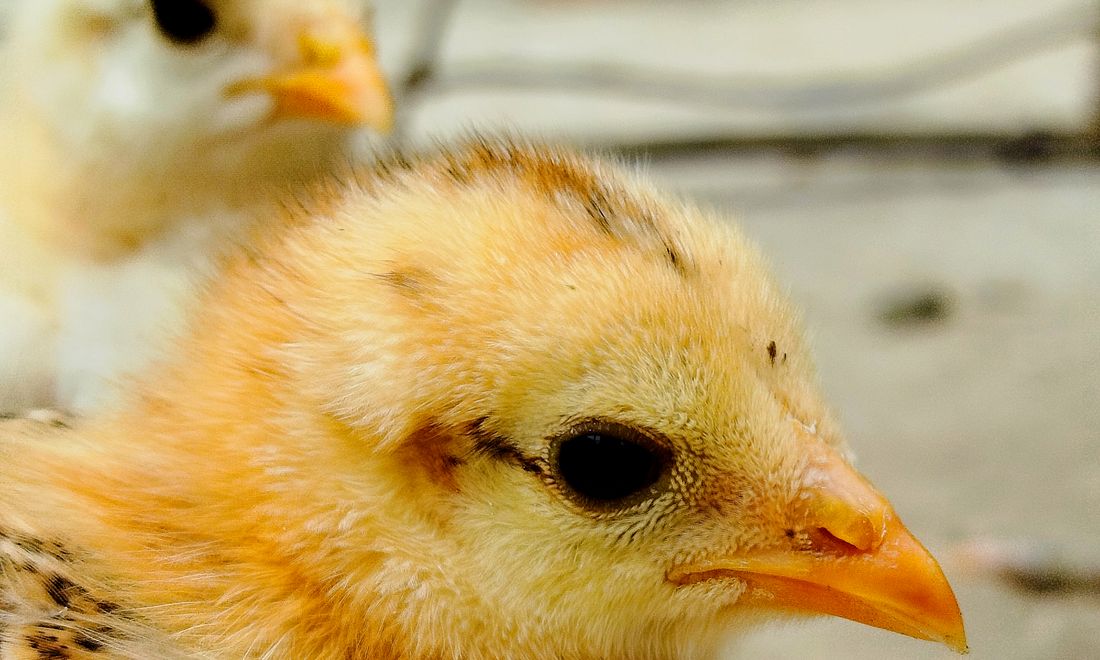
Chicks from our hatchery arrive already vaccinated against several diseases, as our chick vaccination guide explains, so the eye-drop work on a farm is usually a booster or a second product your vet has chosen. Work in small batches of a dozen or so, so the chicks don't cool or dry out while they wait. The first chick of each batch is the one most likely to get a poor drop, because your hand is still finding its rhythm. Give that bird a second look.
The dropper: drop size, the bottle and the tip
The drop size is set by the dropper or the bottle, and the label gives the volume per bird. Don't estimate the size by eye, because your eye is poor at judging a few drops of liquid. If your dropper gives drops of different sizes, check it against a measuring cylinder before you start, and replace it if it has a crack or a blocked tip.
Keep the tip clean. Don't touch it to the eye, the beak or the feathers, and don't dip it into a second bottle. Once a dropper has been used on one bottle, it belongs to that bottle. Mixing bottles through a dirty tip is how one bad bottle becomes a whole tray of birds with a poor response. Keep the bottle itself cold until the session, following the steps in our vaccine cold chain guide, because a warm bottle makes a perfect dropper look like a failure.
| Dropper check | Why it matters |
|---|---|
| Calibrated to the label volume | Each chick gets the stated dose, not more and not less |
| Tip intact, with no cracks | A split tip sprays or leaks into the litter |
| One dropper per bottle | Stops contamination moving from one product to another |
| Dry before refilling | Water left in the dropper dilutes the next bottle |
Spray: what the droplet size does to the dose
Spray works because the vaccine is broken into a fine mist that the chicks take in through the eyes and nose as they breathe. Droplet size decides whether the mist reaches the birds or falls to the floor. A coarse spray puddles on the litter, and a very fine mist drifts out of the house on the first breath of air.
In practice, you set the sprayer to the droplet size the manufacturer and your vet specify, hold it at the distance the label gives, and move steadily across the tray. Don't stop and start, and don't spray one patch twice to be sure. A slow, even pass is what the dose needs, and a second pass is how a tray gets soaked and the birds get chilled.
| Droplet and set-up | What you see | Likely result |
|---|---|---|
| Coarse spray | Wet puddles on the litter, birds shaking their heads | Too much on the floor, too little in the birds |
| Very fine mist in a draught | A haze drifting out of the door | Dose lost to the air |
| Fine mist, closed room, fans off | A light cloud settling over the tray | Dose reaches the birds |
If you are using a sprayer for the first time, test it on a tray of water before any vaccine goes in. You will see the pattern quickly, and you will know whether your hand moves at the right speed. Where the vaccine goes in the drinking water instead, the steps are different, and our water vaccination guide covers them.
Setting up the room before the first chick goes in
Close the doors and windows, and switch off the fans and any blower that would push air around the room. A draught carries the mist away and chills the birds at the same time. Put the trays on a flat surface at a height that brings the chicks close to the spray without anyone touching the nozzle.
Keep the room quiet. Chicks panic at noise, and a panicked chick flaps its way through the mist and out of the tray. Give one person the spraying and another the job of moving trays in and out, rather than having everyone talk at once over the top of the work.
Finish the room before you open the vaccine. Wipe the benches, check that the sprayer is clean and has no leftover liquid from the last session, and mark the trays that have been done. A tidy room is quicker to work in, and it makes the spot checks easier to carry out properly.
Chicks that should not go in the tray
Not every chick is ready. A chick that is cold, floppy, or unable to stand should be set aside and looked at by your vet before it is vaccinated. A chick with a swollen eye, a crust around the nostril or visible discharge should not be given a drop until someone has looked at it properly. Put that chick in a warm box, and write down the tray number and the time.
Chicks that arrived on a long journey or a cold morning need a longer look. Don't vaccinate in a hurry on the day the box lands. Let the chicks settle, drink and stand before you handle them, and follow your vet's advice on the timing for that batch. Our delivery page explains how chicks travel to farms across the regions, which is useful background when a box arrives looking tired.
Spot checks that tell you whether it worked
After every tray, pick ten chicks at random and look at each one. For eye drops, the liquid should be in the eye or the nostril, and the bird should be blinking normally. For spray, look at the tray as a whole. The chicks should have settled into the mist, not be lying in a puddle. Check a few chicks from the start, the middle and the end of the tray, because mistakes cluster, and the end of a rushed tray is where most of them hide.
If you find a poor drop on a spot check, go back through the tray rather than assuming one bird is the only one. Note the number of spot checks you did and how many looked right. That number tells you more about the session than the number of birds you handled.
Need chicks for your next batch?
Send breed, number and town. We reply with price, hatch date and delivery cost in writing.
The mistakes that waste a bottle on a Ghanaian farm
These are the errors we see most often when farmers do the work themselves. Each one is avoidable, and none of them needs expensive equipment to fix.
- Vaccinating in an open shed, where the first breeze takes the spray out of the house
- Holding a chick by the wing or the neck, so the head moves and the drop runs away
- Using one dropper across two bottles, or dropping it on the floor and carrying on
- Working alone on a large batch, so the last trays are rushed and the spot checks are skipped
- Leaving the sprayer uncleaned from the last session, so the next mix is contaminated
How long a box of 50 takes by hand
Suppose a box of 50 Sasso chicks is in front of you, and you are doing the eye drops by hand. Assume it takes about 15 seconds per chick, counting the hold, the drop, the wait and the release. That is 750 seconds, or about twelve and a half minutes of hands-on work. Add ten minutes to set up and five to spot-check, and the box takes about half an hour from start to finish. These are assumed figures, so time your own first tray and use your own number.
Now double the box to 100 birds, and you are looking at roughly an hour, with fatigue starting to show in the hands. That arithmetic is why careful farms split large batches between trained people and take a short break every dozen chicks. Time you save by rushing is paid back later, in chicks you have to check again and bottles you have to throw away.
Who should do it, and how to learn before vaccination day
Eye and spray work is a skill that lives in the hands. Practise the hold and the drop before the vaccine comes out, using plain water on a practice pen of old feathers, or on a clean tray of chicks that are not being vaccinated that day. Watch an experienced person do the first tray, then do one yourself with them standing next to you. Your vet can show you how, and some agro-vets run short sessions for small groups.
Spray is a job for trained people in a closed room, with the equipment set up to the label. If you are not confident you can set it up that way, ask your vet to do the spray session, or to train someone on your farm who can.
Starting from scratch? Our hatchery page covers how the birds are raised before they leave us, and what they arrive with. Chicks from our hatchery come with a batch record that lists the vaccines already given, so you can plan the on-farm side around it. If you are starting a layer flock, our layer day-old chicks page sets out the breeds and box sizes, and the schedule your vet builds should follow the same timeline.
A checklist and record for each drop or spray session
Use this list every session, and keep the record with the vaccine box. It is the difference between knowing what happened and remembering it wrongly.
- Confirm the vaccine, route and batch against the card on the wall
- Check the dropper or sprayer for cracks, blockages and cleanliness
- Close the room, switch off the fans and clear the benches
- Hold each chick level, one drop at a time, and wait for the drop to go in
- Spot-check ten chicks from each tray, from the start, the middle and the end
- Write the tray count, the spot-check results and the time in the record
For more questions on routes and timing, our frequently asked questions are a good first stop. Chick orders go through the order form, and questions about handling a box can be sent to +233 24 915 1503 on WhatsApp. Anything about the vaccine programme itself should go to your vet.
Questions farmers ask
Is eye-drop vaccination better than spray?
It depends on the vaccine and the set-up. Eye-drop gives you a dose you can see going in, one chick at a time, so it is easier to trust on a small or medium batch. Spray covers many chicks quickly, but it needs a closed room, the right droplet size and trained hands. Use the route the label gives, and follow your vet's advice on which one suits your flock.
How do I know the eye drop went in?
Watch the chick after the drop. It should blink and draw the liquid in, and the bead should be gone within a second or two. If the drop has run off onto the feathers or the litter, give that chick another drop if the label allows it, and check the rest of the tray afterwards.
Can I spray vaccine in an open shed?
Avoid it. An open shed has draughts, and fans take the mist out before the chicks can take it in. Use a closed room, switch off the fans and keep the door shut for the session. If you cannot close the room, ask your vet about another route for that vaccine.
How old should chicks be for eye-drop or spray vaccination?
The right age depends on the product, and the label and your vet set it. Some vaccines are given at the hatchery, and others come later in the first weeks. Don't guess. Ask for the age in writing, and keep it on the vaccine card with the batch number.
What if a chick shakes its head or sneezes after spray?
A bird may shake its head for a moment after vaccination, and that can be normal. Persistent sneezing, swelling, gasping or birds that stop eating in the next day should be reported to your vet. Write down how many birds were affected, when the signs began and which batch was used.
Can I use one dropper for a whole tray?
You can use one dropper for one bottle, provided the tip stays clean and never touches the birds or the litter. Never move a dropper between bottles. Replace or clean it if it falls on the floor, and keep to one bottle per dropper for the whole session.
Who should do eye-drop or spray vaccination on my farm?
Someone who has been shown the technique by a trained person, and who can keep to the label. Spray is best left to trained staff in a closed room. Eye-drop can be done by a trained farmer or worker, with a second person watching the first trays. Your vet decides which vaccine goes by which route.


