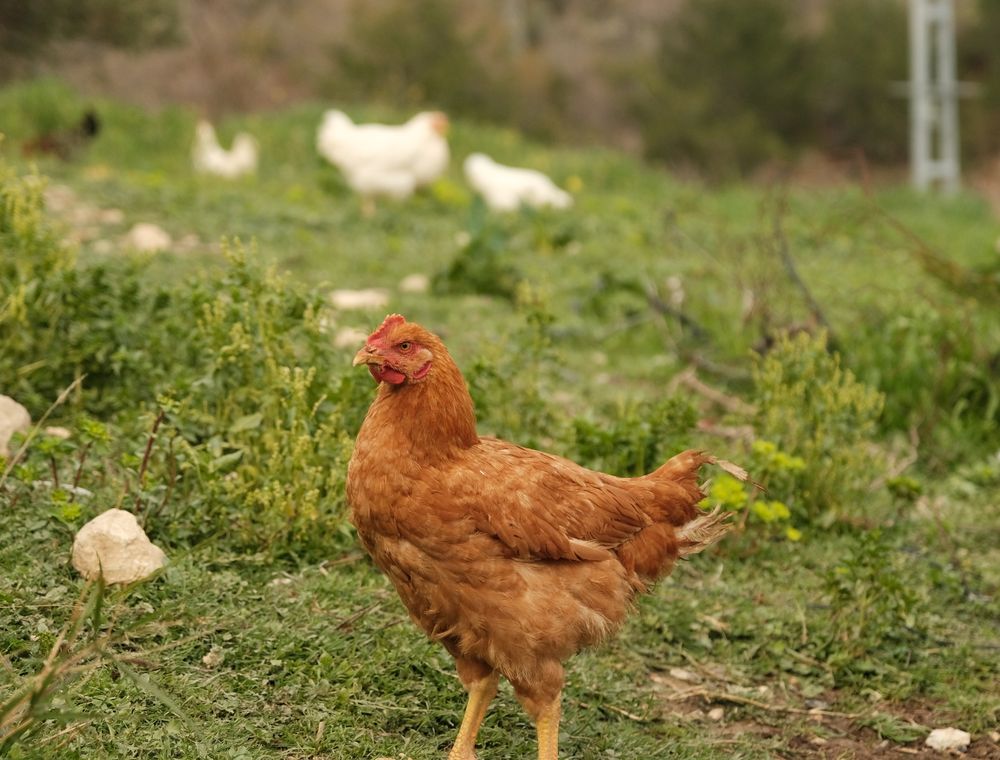
Short answer: A feed spike does not automatically mean you should change breed or cut the flock. Switching breed in the middle of a batch usually adds cost, while a planned change at restock can suit a farm with buyers for a slower bird. Scaling down only helps when fixed costs fall with the flock, and most of them do not. Check today's market, then work through the numbers below before you decide.
Key takeaways
- Do not switch breed in the middle of a batch. Plan any change for the next restock.
- Compare chick bills, time to market and feed per kilo of meat, not the chick price alone.
- Fixed costs do not shrink with the flock, so every bird left carries more of them.
- Test a slower breed in one house first, starting with a single box of 50.
- Find the buyer for the bird you plan to raise before you change the flock.
The question usually arrives with the feed invoice
It is almost always the same conversation. The invoice comes in, the total is higher than last month, and the farmer asks whether he should change to a cheaper breed or cut the flock in half. Both questions are reasonable. Both are often answered too quickly, because the invoice is the loudest number on the table.
A feed spike makes every choice look urgent. Your job is to separate the decisions you can make now from the ones that can only be made at restock. Most of the money is lost when a farmer makes a restock decision in the middle of a batch.
Switching in the middle of a batch rarely pays
The birds in the house are already the breed you bought. You cannot change their genetics, and you cannot exchange them for a slower bird without losing the chick cost you already paid. Any switch you make now applies to the next batch, not this one, and that is the first thing to be clear about.
What you can change mid-batch is the sale plan. Sell earlier, hold to plan, or reduce the number of birds you keep in the house. None of those is a breed switch. Each one needs its own sum, which we cover below. Keep the current flock on the plan you already have, and make the breed decision on paper while the birds grow. If you are weighing broilers against layers for the next cycle, our broiler versus layer profit comparison lays out the cash timing for each.
Chick cost is only the first line
Breed choice often starts with the price of the chick, and that is the wrong place to start. The cheapest chick is not the cheapest bird at sale. It is the bird that costs the least per day to keep, the least per kilo to feed and the least time to reach a weight that buyers want.
Here is the chick bill for a flock of 250 birds at our starting prices, to show how far apart the numbers sit before any feed is bought.
| Breed | Chick price from (cedis) | Chick bill for 250 birds (cedis) | How it grows |
|---|---|---|---|
| Ross 308 | 20 | 5,000 | Fast-growing meat bird, short cycle |
| Sasso | 13 | 3,250 | Slower-growing bird that forages well |
| Kuroiler | 11 | 2,750 | Dual-purpose, slower to market |
| Plymouth Rock | 7 | 1,750 | Slow-growing dual-purpose bird |
The chick bill is the cheapest number on the page. The number that matters is what each bird costs from placement to sale, and that depends on how long it stays in the house and how much it eats on the way.
Feed per kilo of meat is where a slow bird loses
A slower bird takes longer to reach a saleable weight, and it spends more of that time eating from your bag. Over the whole cycle it usually takes more feed to make a kilo of meat than a fast-growing bird does. That is the part most farmers miss when they compare breeds on the chick price.
So when feed rises sharply, a slower bird loses more per kilo than a fast one. The gap widens because there are more kilos of feed to pay for. The exception is free range. A bird that forages on your land eats less from the bag, and that can close some of the gap. Measure it on your own farm before you assume it does.
Where a slower bird can earn its place
A slower bird is not a bad decision. It is a different business. It can make sense when you have a buyer who pays for the bird you raise, when you have room to let birds range, and when the sums show the bag cost is not the only cost that matters.

Three situations favour a slower bird. The first is free range with enough land for the birds to forage and not waste the time they spend away from the bag. The second is a local buyer who wants that bird and will pay the price the sum needs. The third is a farm that has had heavy losses on fast birds in hot months and wants a hardier flock, though that is something to test on your own site rather than take on trust. Our page on Sasso day-old chicks sets out the bird we would point to for that kind of programme, and our Kuroiler and Noiler chicks page covers the dual-purpose option.
Scaling down: fixed costs do not shrink with the flock
Cutting the flock lowers the feed bill and the chick bill. It does not lower the rent on the house, the loan repayment on the shed, the security, the power for the fans and the wages of whoever cleans the pens. Those costs stay where they are. Fewer birds have to carry them, and that is the trap.
Take a fixed cost of 600 cedis a month, which is an illustration and not a benchmark for your farm. Here is what it means per bird at three flock sizes.
| Flock size | Fixed cost per month (cedis) | Fixed cost per bird per month (cedis) |
|---|---|---|
| 250 birds | 600 | 2.40 |
| 150 birds | 600 | 4.00 |
| 100 birds | 600 | 6.00 |
Going from 250 birds to 150 adds 1.60 cedis of fixed cost to every bird you still keep, before you have spent a pesewa on feed. If the feed spike has already squeezed the margin, that increase may be the reason the batch loses money. Scaling down can be right, but only after you have checked what the fixed costs do. Our honest look at whether poultry farming is profitable in Ghana shows which of these costs most often sink a farm.
A trial line before any full switch
If you want to test a slower breed, do not convert the whole farm. Run a trial line in one house, with the same management you use on the other house, and compare the two. Start with a single box of 50 chicks. A box of 50 Sasso chicks at our starting price is 650 cedis, which is a sensible amount to risk on a question you cannot yet answer.
Keep the trial honest. Use the same feed supplier, the same vaccines on the same dates, the same drinker supply and the same brooding. Weigh birds in both houses at the same time each week, and write down the feed used. At the end of the cycle, compare the feed per kilo of meat, the mortality, the sale weight and the price your buyer actually paid. That is the comparison that decides the next batch, not the chick price on the leaflet. Set the trial against our broiler day-old chicks options, so the fast-growing bird you already know stays on the other side of the comparison.
Need chicks for your next batch?
Send breed, number and town. We reply with price, hatch date and delivery cost in writing.
Stay, switch or shrink: which case you are in
Most farms are in one of four situations. The table gives a first answer for each, so you can see which set of numbers you need to work through next.
| Your situation | What it points to | What to do first |
|---|---|---|
| Feed is dear for a few weeks, buyers are steady | Stay on the breed and manage the cost | Cut waste, plan sales around the peak, read the cost guides |
| Feed is dear for many months, and a buyer wants a slower bird | A planned switch at the next restock | Run a trial box of 50 and compare feed per kilo of meat |
| Feed is dear, margin per bird is negative, and fixed costs are high | Shrink, but keep a core flock you can sell to | Work out fixed cost per bird at the smaller number |
| You have no buyer for the bird you plan to raise | Neither switch nor shrink yet | Find the buyer first, then decide the breed |
A twenty-minute numbers check before you decide
Set aside twenty minutes with last batch's sheets and a calculator. You do not need software. You need the figures you already have, written in one place.
- Write the chick price per bird for each breed you are considering, and the bill for your planned number.
- Write the weeks each breed takes from placement to your target sale weight.
- Write the feed per kilo of meat from your last batch, and an estimate for the slower breed from your buyer or your mill.
- Write the fixed costs per month for the house and the crew, and divide by the birds you plan to keep.
- Write the sale price per kilo your buyer will pay for each bird, in writing if possible.
- Compare the margin per bird for each option, then the total for the batch.
If the answer depends on a guess you cannot check, run the trial box before you commit the house.
Mistakes we see in a panic decision
The first mistake is to buy the cheapest chick on the list because it looks like the fastest way to cut costs. The second is to shrink so far that the fixed costs swallow the margin, and the farm loses money on fewer birds than it lost on more. The third is to change breed without checking whether the buyer will take the new bird at the price the sum needs. The fourth is to make the decision on the invoice alone, without the birds in view.
The fifth is to switch feed without talking to the mill about the breed. A slower bird may need a different grower and finisher programme, and that is worth checking before the chicks arrive, not after.
If you do switch, plan the first two weeks differently
A new breed starts in a brooder, and the first two weeks decide how the rest of the cycle goes. Have the brooder ready before the chicks arrive, with heat, feed and water set out and the house checked for draughts. Our guide to brooder ring setup covers the layout in more detail.
Ask the mill whether the slower breed needs a different starter, and write the answer down. When the chicks arrive, record the weight of a sample on day one, then again at the end of week one. If those numbers are off, you will see it early. When you are ready to order, talk through the breed and numbers with us on WhatsApp at +233 24 915 1503, or use the order form. If you are not sure which bird suits your site, our breeds page is the place to start before you commit.
Questions farmers ask
Should I switch breed in the middle of a batch when feed prices rise?
Usually not. The birds already in the house are the breed you bought, and switching only applies to the next batch. Use the current batch to decide how to sell it, whether earlier or on plan. Make the breed decision for the next batch on paper while the current birds grow, and test any new breed in one house first.
Is a cheaper chick always the better choice?
No. A cheaper chick can take longer to reach a saleable weight and eat more feed per kilo of meat on the way. Compare the chick bill with the feed per kilo, the weeks to sale and the price your buyer will pay. The chick price is only the first line of the sum.
When does scaling down make sense?
Scaling down helps when feed is short for many months and the margin per bird is negative even after the sums are checked. Work out the fixed cost per bird at the smaller number before you cut. If the fixed costs rise faster than the feed saving, a smaller flock will lose more, not less.
How big should a trial be before I switch breed?
Start with one box of 50 chicks in one house, run under the same management as your other house. That is enough to see feed per kilo, mortality and sale weight on your own farm. Compare the results at the end of the cycle, and only then decide whether to change the whole flock.
Will a slower breed do better on free range?
It can, because birds that forage eat less from the bag. The gain depends on how much land they can use safely and how much of their diet they find for themselves. Measure feed use on your own range before you assume the saving, and keep the bag feed programme in place for the birds that do not forage well.
What should I check with the mill before I change breed?
Ask whether the slower breed needs a different starter, grower and finisher programme, and whether the formula you have now suits it. Get the answer in writing with the feed specification. A breed change with the wrong feed can cost you more in weeks than the chick saving gives back.


