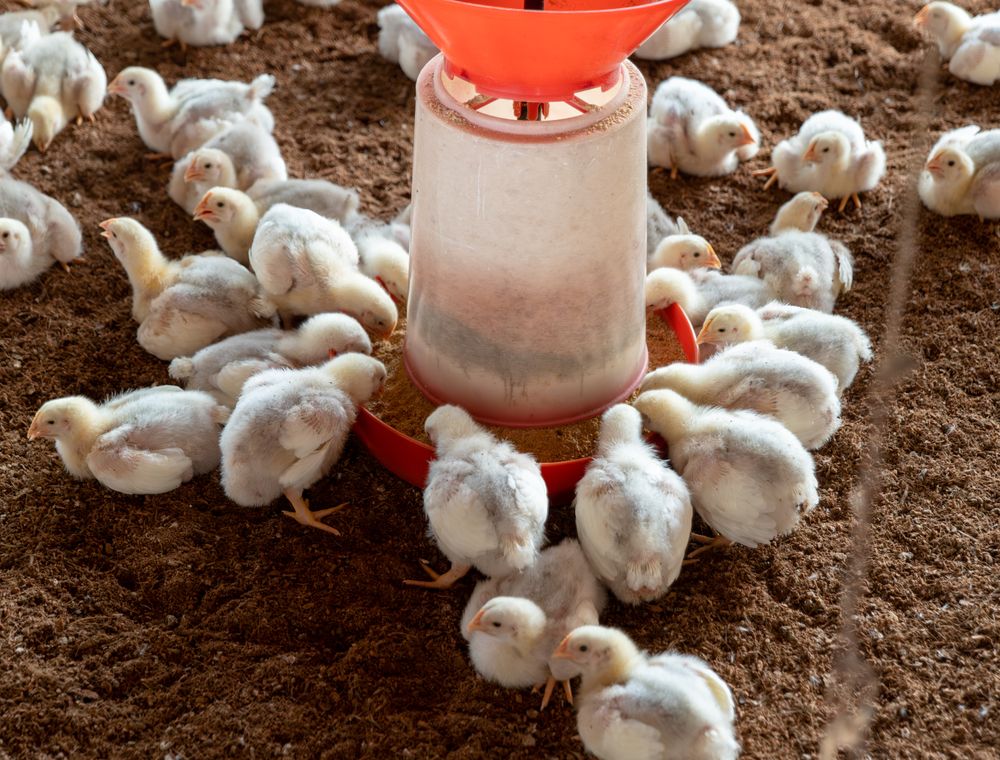
Short answer: Broilers usually return cash faster, because a cycle lasts about six to seven weeks, but every cycle carries its full cost and the margin per bird is small. Layers take roughly four to five months before the first eggs sell, then keep producing for most of a year. In our 120-bird example, broilers earn more in year one, and the layer result swings sharply with the price of an egg and of feed.
Key takeaways
- Broilers return cash in about six to seven weeks, but you pay the full cost of every cycle again.
- Layers carry a long cash gap at the start, and their year-one result depends heavily on egg price.
- A 50 pesewa rise in feed per kilo can wipe out a layer flock's year-one margin in the example.
- Decide by when you need the money back, not by which bird looks more exciting.
- All figures are labelled examples. Your own feed, egg and bird prices will change the answer.
Two different businesses that share a roof
A broiler house and a layer house can look almost the same from the road. Both have birds, feeders, drinkers and a smell you learn to live with. Underneath, they are different businesses with different cash rhythms, different risks and different skills.

A broiler farm is a series of short sprints. You bring in chicks, feed them hard, sell them and clean the house. Then you do it again. A layer farm is a long walk. You spend months paying for birds that do not yet earn anything, and then you earn from them daily for most of a year.
Neither route is better for everyone. The right choice depends on how long your money can wait and how much daily work you can take on. This article works through both with the same number of birds so the comparison is fair. If you want to see what we currently hatch and import, our broiler chick page and layer chick page list the options side by side with the breeds we work with.
How long before the first sale
A Cobb 500 chick reaches sale weight in roughly six to seven weeks, depending on your feed programme and the weight your buyer wants. Add a few days to clean and rest the house, and you are looking at about eight weeks from one batch to the next. The first money comes in about six weeks after the chicks arrive.
A layer takes longer. A brown or white layer pullet reared properly usually starts laying around 18 to 20 weeks of age, and the first eggs are small. Eggs sell as normal size only after several weeks more. Our guide to when layers start laying explains the signs to watch for. For the money side, the first egg sale comes about five months after the pullets arrive. If you would rather skip the rearing wait, our point-of-lay pullet guide explains what you pay for and what to check when the birds arrive.
The table below puts the two timelines side by side for a single flock.
| Stage | Broilers (one cycle) | Layers (one flock) |
|---|---|---|
| Chicks or pullets arrive | Week 0: chicks paid for in full | Week 0: pullets paid for in full |
| Feed starts | Week 1, every day | Week 1, rearing feed every day |
| Money goes out | Weeks 0 to 6 | Weeks 0 to 19, and then feed for laying |
| First sale | Weeks 6 to 7 | Around week 20 onward |
| Next cash point | After cleaning, about week 8 | Every day the hens lay |
Where the cash goes, and when
The broiler farmer pays for everything in one burst, then gets paid in one burst. Between those two moments, the cash is all tied up in birds. If the sale slips by a week, the feed bill keeps running and your reserve shrinks.
The layer farmer pays for a long, slow build-up. The pullets, the rearing feed, the house and the vaccines all go out before any egg is sold. Once the flock is laying, the cash comes in steadily, and the feed bill is spread across the eggs. The risk is that the build-up takes longer than you planned, and by then the money is gone.
For the broader question of whether either route pays for a small farm, our profitability overview is the place to start. In practice this means a broiler farm needs a reserve for the next cycle, and a layer farm needs a reserve that covers the whole rearing period plus a few months of laying. Many first-time layer farmers run out of money in month four, when the flock is nearly ready but nothing is selling.
Worked example: 120 birds each side for a year
These are example figures for illustration. They are not a quote and not a forecast. We use 120 birds on each side, the from-prices of GH₵20 for a Cobb 500 day-old chick and GH₵23 for a Hy-Line Brown day-old chick, and an example feed price of GH₵8.00 per kilo. Our current chick prices page is where those from-prices come from. Broilers run five cycles in the year. The layer flock is followed for its first twelve months, which covers rearing and about eight months of laying.
Broiler assumptions: 4 kg of feed per bird per cycle, 4% mortality, and a sale weight of 2.2 kg at an example price of GH₵78 per bird. Layer assumptions: 7 kg of rearing feed per pullet, then 0.11 kg a day for about 230 laying days, an 85% lay rate giving about 195 eggs per hen, and an example price of GH₵1.60 per egg.
| Item (example) | Broilers, five cycles (GH₵) | Layers, first 12 months (GH₵) |
|---|---|---|
| Day-old chicks or pullets | 12,000 | 2,760 |
| Feed | 19,200 | 31,008 |
| Vaccines, litter, power and other | 5,500 | 3,000 |
| Total cost | 36,700 | 36,768 |
| Sales | 44,850 | 37,440 |
| Margin before labour | 8,150 | 672 |
Look at the layer feed line. Rearing and laying feed together take up more than four-fifths of the egg income in this example, and that is normal. It is also why the layer result is so easy to upset. Sales of 23,400 eggs at GH₵1.60 bring in GH₵37,440, and the margin is only GH₵672 before anyone is paid.
The broiler side looks better, but it works only if you actually manage to run five clean cycles. Each one has to finish on time, be cleaned properly and be restocked without a gap.
The layer result is an egg price story
Move the egg price and the layer margin moves with it. At GH₵1.80 per egg instead of GH₵1.60, the same 23,400 eggs bring in GH₵42,120, and the margin rises to about GH₵5,350. That is a real improvement, but it is still less than the broiler route in this example.
Feed is the other lever. In the example, a rise from GH₵8.00 to GH₵8.50 per kilo adds about GH₵1,940 to the layer feed bill in the first year. That alone takes the margin below zero. The same rise adds about GH₵1,200 a year to the broiler side across five cycles. The layer flock is more exposed because it eats more kilos over a longer period.
The second year is different. The pullet cost and the rearing feed are behind you, so most of the year's feed goes straight against eggs. This is why many layer farmers keep a flock longer than the first year, and why they treat the first year as the price of getting there. Plan the first year on the assumption that you will need the money, and treat the second year as a bonus you have to earn.
The broiler result is a feed and timing story
On the broiler side, the margin depends on three things you control and one you do not. The things you control are feed conversion, the weight you sell at and the day you sell. The thing you do not control is the price on the day you sell.
- Feed conversion. Every extra half kilo of feed per bird adds about GH₵4.00 per bird at the example feed price. Waste and poor water intake both push this up.
- Sale weight. A bird that is 200 grams under the weight your buyer pays for is money you already spent.
- Sale day. Birds kept an extra week eat feed the buyer will not pay for. Plan the sale date when the first chicks arrive.
- The festive spike. Christmas and Eid can push prices up, but only if your birds are ready in the right week. A batch that lands a week late misses the peak.
If you want the broiler margin to hold, control the first three and keep a small reserve for the fourth. Our guide to getting heavy broilers covers the feeding and house routine that drives those numbers.
What can go wrong, and how fast it hits
Both routes have bad days. What differs is how quickly a problem reaches your bank balance and how much room you have to respond.
| Risk | Broilers | Layers |
|---|---|---|
| Disease outbreak | Hits the whole batch within days. Sale can be lost completely. | Drops egg output for weeks, and some birds may be lost. Harder to recover in one season. |
| Price drop | Felt at the next sale. Birds cannot wait long without eating into the margin. | Felt slowly through eggs. You can sometimes hold eggs for a few days, but not for weeks. |
| Feed price rise | Lifts cost on each cycle. Five cycles multiply it. | Lifts cost every day for a year. Largest single exposure. |
| Heat and dust | Causes heat stress and weight loss in weeks. | Cuts egg size and output, and the hens take time to recover. |
| Delay between batches | Idle house costs money every week. | Less of a problem, because the flock keeps working. |
Our advice is to write down the one risk you cannot afford for each route, and build your reserve around it. The step-by-step egg farming guide covers the layer side of that plan in more detail. For broilers, that is usually a disease event close to a sale. For layers, it is usually a feed price rise in the middle of the first year.
Labour, space and your own time
Broilers ask for hard work in short bursts. Catching, weighing, loading and cleaning are heavy, and they all land in the same few days. A helper for those days often pays for themselves.

Layers ask for steady daily work. You collect eggs at least once a day, grade them, wash the ones that need it and store them properly. Layers also need more room for nest boxes, perches and the walking space that stops feather pecking. Our nest box guide explains how many you need, and it is one of the first things we check when a layer house is not performing.
Think about your week, not just your money. If you have a job and can only visit the farm in the evenings, a broiler house with its sharp cycles may suit you better than a flock that needs eggs collected every day. If you are at the farm all day, the layer routine can be a relief.
Need chicks for your next batch?
Send breed, number and town. We reply with price, hatch date and delivery cost in writing.
Which one suits your money and patience
Go back to the question we asked at the start. When do you need the money back?
If you can carry the costs for about two months and you want to see results inside a season, broilers suit you better. You will learn quickly, you can test your buyers and your feed routine, and you can change course after each cycle.
If you can carry the costs for a year and a half, and you want a steady income once the flock is laying, layers may suit you better. Be honest about the feed bill. If you are not sure you can cover a bad feed month in the middle of the first year, start with broilers and build the cash for layers over time.
Can you run both on one farm?
Yes, but only with separate housing and strict rules. Broilers and layers have different feed, different vaccination timings and different ages on the same site. Mixing ages is one of the fastest ways to spread disease between batches.
When it works, the broiler cycles bring in cash while the layer pullets are reared in their own house. The broiler sales can carry some of the rearing bill. The risk is that one bad broiler batch leaves you short when the pullets need feed. Keep the two budgets separate on paper, even if they share a yard.
Our biosecurity guide sets out how to keep the houses apart. If you are unsure whether your site can handle both, a conversation before you buy chicks is far cheaper than a conversation after an outbreak.
Checklist before you choose a route
Work through this list with your own numbers before you place an order.
- How many weeks can your cash cover with no sales at all?
- What is your feed price today, and what would it cost you if it rose by 50 pesewas a kilo?
- Which buyers will take your birds or eggs, and at what price, in writing?
- Do you have a house that is dry, ventilated and free of other birds?
- Can you spend an hour a day on eggs, or a full day every six weeks on sale?
- What is the one risk you cannot afford, and how much reserve will cover it?
When the answers add up, bring your numbers to us on +233 24 915 1503 and we will talk the chick side through with you. The order form is there when you are ready to commit.
Mistakes we see with both routes
Buying layers because eggs look like easy money, without costing the rearing period. The rearing period is where most first flocks go wrong.
Buying broilers and then waiting for a better price. A broiler that waits is a bird eating feed at your cost, and the market rarely pays you for the wait.
Ignoring the second year of a layer flock. Some farmers sell hens after the first year and then restart from scratch, which means paying the rearing bill again. Run the numbers for both years before you decide to cull.
Starting with no reserve. Both routes need one, and most of the failures we hear about come from a farm that spent its first profit on something other than the next batch. Our guide to choosing your first chicks makes the same point from the buyer's side.
Questions farmers ask
Is a broiler or a layer farm faster to make money?
Broilers are faster. A cycle takes about six to seven weeks, so cash comes back in a season. Layers take around five months before the first eggs sell, but then they produce daily for most of a year. Broilers return money sooner, layers return it more steadily, and the right choice depends on how long your reserve can wait.
How many weeks until a layer starts laying?
A well-reared brown or white layer pullet usually starts laying around 18 to 20 weeks of age. Breed, rearing feed and management all change the timing. Eggs at first are small, and they grow over the following weeks. Our layer guides cover what to expect and how to tell that a flock is close to lay.
Which is riskier, broilers or layers?
They carry different risks. Broilers can lose a whole batch quickly to disease or a missed sale. Layers hold their value for longer but are more exposed to feed price rises across a full year. Write down the one risk you cannot afford on each route and build your reserve around it.
What feed price would make a layer flock unprofitable?
In our example, a rise from GH₵8.00 to GH₵8.50 per kilo took the first-year layer margin below zero. Your own answer depends on your egg price, your lay rate and your feed use. Work it out with your own figures, and recalculate every time the feed price moves.
Can I switch from broilers to layers later?
Yes, but it is not just a matter of buying different chicks. You may need a different house, nest boxes and a longer cash plan. Keep your broiler records, because they show you how your feed, labour and sales really behaved, which is the best starting point for a layer budget.
Which breeds should I compare first?
For broilers, a Cobb 500 is one of the most common choices, with a from-price of GH₵20 per chick at our hatchery. For layers, a day-old Hy-Line Brown chick is a popular option at a from-price of GH₵23. Choose by your market and your experience, not by price alone, and read our breed guides before you order.


