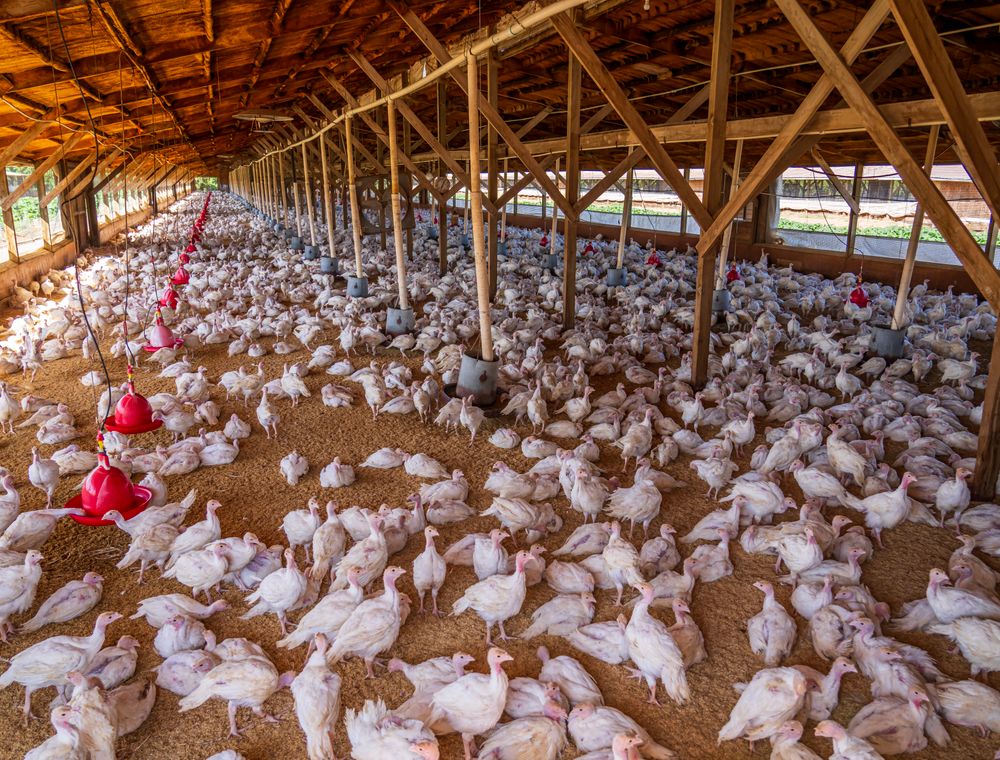
Short answer: Poultry can pay in Ghana, but the profit is the small gap left after feed, chicks, medicine and losses come out of what buyers pay. Feed is usually the biggest cost, and most farms that lose money lose it through dead birds, slow sales and running out of cash between batches. The worked example below uses figures for illustration only, and it shows a thin margin, which is the honest picture for most first batches.
Key takeaways
- Profit is what is left per bird after every cost, multiplied by the birds that actually reach the buyer.
- Feed is usually the largest cost in a broiler cycle, so every change in feed price moves your margin.
- Dead birds and late sales cost more than a small drop in the market price.
- Run the numbers per batch, and keep a cash reserve for the next batch before you spend any profit.
- The figures here are illustrations, not results from Halaal Farms and not a promise of returns.
What the question usually means
The question we hear most often on WhatsApp is some version of "how much will I make?" Most people asking it are not really asking about profit. They want to know how much cash they will have left after everything is paid, and when it will land in their hand.
Those are different questions, and the gap between them is where most first-time poultry farmers get caught. A batch can show a profit on paper at the end and still leave you unable to buy the next box of chicks, because the money came in three weeks after the feed bill went out.
So before any sum, get two words straight. Profit is what you keep after every cost for a batch has been paid, including the chicks that died. Cash is what you can spend today. A poultry business needs both, and it can fail with one while the other looks fine.
Where the money actually comes from
On a broiler farm, income comes from one thing: birds sold at the weight your buyer wants, at the price they will pay, on the day you can sell them. Each bird is a small product line. In the example further down, a bird costs about GH₵61 to produce and sells for GH₵70. You keep about GH₵9 of that, and that is before your own time, your house and the interest on any money you borrowed.
Layers work differently. A hen gives you eggs most days for most of a year, so income is steady once she is laying. The trouble is that the big costs come first. You buy the pullets, you feed them through rearing, and only then do the eggs start to sell. We cover that timing in our broiler versus layer comparison, so here the point is simpler: a layer flock is a long wait, and a broiler house is a short, sharp cycle.
Manure and spent hens can bring in a little extra. Count them as a bonus, because a bag of manure is not something you can bank on in a bad month.
Where poultry farms lose money
Most losses are not dramatic. They are small leaks that add up over one cycle. These are the ones we see most often.
- Dead birds. A farm that loses 8% of its birds instead of 3% gives away roughly one bird in every twenty it paid to raise.
- Feed waste. Spilt feed, wet feed and feeders with holes in them. Feed is the biggest cost, so waste here hurts most.
- Late sales. Birds kept two weeks past their best weight eat feed that the buyer will not pay for.
- Idle housing. A house that sits empty between batches still needs a roof, a loan repayment and a clean-out crew.
- Power and water. During dumsor, fans stop and generators burn diesel. Both show up on the bill.
- Price guesses. Selling without a written price, or agreeing a price that does not cover your cost per bird.
The fix is not complicated, but it needs discipline. Weigh a sample of birds each week, record every death, and sell on a date you chose in advance rather than when the buyer phones.
A worked broiler example for 300 birds
These figures are an example to show how the sums work. They are not a quote and not a result from our farm. Put in your own feed price, your own chick price and your own sale price before you rely on any of it.

We use 300 Cobb 500 chicks, bought at our from-price of GH₵20 each, reared for about six weeks and sold live at around 2.2 kg. We assume 4 kg of feed per bird, an example feed price of GH₵7.60 per kg, and 3% mortality. If you are set on broilers, our broiler day-old chick page lists what is available this week.
| Item | Example cost (GH₵) | How we worked it out |
|---|---|---|
| Day-old chicks | 6,000 | 300 chicks at GH₵20 |
| Feed | 9,120 | 1,200 kg at GH₵7.60 per kg |
| Vaccines and vet visits | 600 | Vet-guided programme, example only |
| Litter and bedding | 400 | Fresh shavings for one cycle |
| Power, water and fuel | 1,200 | Fans, lights and generator time |
| Transport and market | 500 | Taking birds to the buyer |
| Total cost | 17,820 | Before labour and housing |
With 3% mortality you sell 291 birds. At an example price of GH₵70 per bird, that brings in GH₵20,370. Take away the GH₵17,820 cost and you keep GH₵2,550 for the batch. That is about 12% of sales.
Now run a bad week. Mortality rises to 8%, so 24 birds die and you sell 276. Revenue falls to GH₵19,320, and the margin drops to GH₵1,500, or about 8% of sales. The feed bill did not change. The birds did, and so did the money.
That is why we keep telling farmers the birds matter more than the price. Five points of mortality moved this example by just over a thousand cedis.
What that works out to for each bird
Divide the batch figures by the birds you sold and you get the number to keep on your wall. In the good case, each sold bird cost about GH₵61.24 and returned GH₵70, which leaves about GH₵8.76 per bird before you pay yourself. In the bad week the margin per bird drops to about GH₵5.43.
That is thin. It is also realistic for a first batch when feed is at this price. If you hear of a farm making much more per bird, ask what its feed price is, what its mortality is and whether it paid for its housing. The answers usually explain the gap.
Keep the same layout on every batch so the numbers line up from one cycle to the next. A sheet you can read in two minutes is worth more than a spreadsheet you update once a quarter.
Cash runs out before profit arrives
In the example, GH₵6,000 goes out on day one for chicks, and most of the feed bill follows in the first three weeks. Nothing comes back until the birds are sold, which is about six weeks in. If the buyer pays on delivery, you wait six weeks. If the buyer pays a month later, you wait ten.
So you need a reserve equal to at least one full batch of costs before you start the next one. We suggest keeping a little more than that through the first year, because the first batch always teaches you something expensive. If the profit goes on a new phone or a family event before the next box is ordered, the business has no money for its next cycle.
Keep the reserve in a separate account, or at least on a separate line in your book. Our guide to writing a poultry business plan shows how to build that reserve into the numbers from the start. Mobile money is convenient, and it is also easy to dip into without noticing.
Ghana factors that move your numbers
Three things about farming in Ghana change the sums more than any textbook will tell you.
- Harmattan, December to February. Dry dust gets into brooders and into birds' lungs, and nights turn cold. Chicks cost more to keep warm, and sick birds cost more to treat.
- The rains. Damp litter means wet birds, ammonia and more coccidiosis. Your bedding bill can double if the roof leaks.
- Festive demand. Christmas, Easter and Eid push prices up for a few weeks. Every other farm nearby is thinking the same thing, so time your batch to finish before the rush, not in the middle of it.
- The cedi. Feed ingredients, vaccines and equipment often carry an import cost. When the cedi falls against the dollar, your costs can rise within a month, even while your buyers are still paying the old price.
- Power. A generator is an expensive way to keep fans running. Plan the fuel, not just the machine.
None of these is a reason to stay out of poultry. They are reasons to keep a reserve and to check your prices every month rather than once a year.
The risks to price in before you start
Disease is the risk everyone names first, and it deserves the most planning. One outbreak can wipe out a batch. Vaccinate on the schedule your vet gives you, keep visitors and other birds away from the house, and budget for the vet bill before you need it. The vaccines we give at the hatchery are a start, not a full programme.

Price risk comes second. Broiler prices move with the festive calendar and with how many birds reach the market in the same week. A glut in your town can take a few cedis off every bird. If you have no reserve, you sell at the low price because you need the money. Our selling guide covers how to agree prices with buyers before the birds are ready.
Theft and predators come third, and they hurt small farms most. A lock that works, a fence without holes and someone awake at night cost less than one lost batch.
Need chicks for your next batch?
Send breed, number and town. We reply with price, hatch date and delivery cost in writing.
How to tell if the farm is working
Do not wait until the end of the year. Track these numbers on every batch and compare them with the last one.
- Mortality, as a percentage of the chicks you placed
- Feed used per bird, and your feed conversion ratio
- Average live weight at sale
- Days from placing to sale
- Cost per bird sold, and margin per bird after cost
- Cash in the reserve at the end of the batch
If the margin per bird falls for two batches running, check mortality first, then feed, then sale timing. Those three explain most of the problems we see on farms that call us for advice.
The costs this example leaves out
The example is honest about the costs it counts and quiet about the ones it does not. Before you decide anything, add these to your own sheet.
- Your labour, including the hours spent catching, weighing and loading birds.
- Housing: the roof, the pens and the wear on them, spread across every batch you will run in that house.
- Interest on any loan, and the fees that come with it.
- A reserve for disease. Outbreaks are not an everyday cost, but they can land on any farm.
- Transport to the feed store and to the buyer, which often costs more than people expect when the birds are heavy.
None of these is large on its own. Together they can take the whole GH₵2,550 margin in the example. That is why we ask farmers to work out their margin after labour and housing, not before.
Start small and let the first batch teach you
Our minimum order is one box of 50 chicks, and that is a sensible place to start for most people. One box lets you learn the brooder, the feed routine and your buyers before you borrow for a bigger house. You can see current from-prices on our day-old chick prices page. If you are planning a larger first flock, our guide to starting a poultry farm on a budget goes through the set-up costs in more detail.
Write your first batch numbers down, even if they embarrass you. The second batch is where the margin usually improves, and you can only see the improvement if the first set of numbers was honest. Our record keeping guide sets out a simple sheet that takes about ten minutes a day.
When you are ready, place your order on the order form or WhatsApp us on +233 24 915 1503. Delivery covers all 16 regions, and some farmers prefer to collect at Opeikuma.
Before you call a batch profitable
Run through this list at the end of every batch before you decide whether it paid.
- Did you count the chicks on arrival? Dead on arrival birds are replaced free in the next hatch. Count them on arrival and send us a photo on WhatsApp the same day.
- Did you record feed by bag or by kilogram, and did you write down what you lost to spillage?
- Did you weigh a sample of birds before sale, and did the buyer pay on that weight?
- Did you include vaccines, vet visits, litter, power, fuel and transport?
- Did you leave your own pay out on purpose, so you can decide separately what you will take?
- Is the reserve for the next batch still in the bank?
Questions farmers ask
Is poultry farming profitable in Ghana?
It can be, but the margin is usually small and depends on keeping mortality low, buying feed at a fair price and selling on time. Broilers give a quick cycle with thin margins per bird. Layers take longer to start paying but can run for most of a year. Neither is guaranteed. Work out the sums for your own town, with your own prices, before you commit money.
What is the biggest cost in a poultry business?
Feed is usually the biggest single cost, often around half of what a broiler batch costs to produce. Chicks come next. Feed prices in Ghana can move quickly with the cedi, so check the price every time you buy and keep a record of how much feed each batch really used.
What profit margin should a small farm expect?
There is no standard margin, and anyone who quotes one is guessing. In the worked example in this article, the batch margin was about 12% of sales before labour and housing, and it fell to about 8% in a bad week. Your own margin depends on your feed price, your mortality, your sale weight and the price per bird you get.
Why does a farm lose money when the birds look healthy?
Healthy birds can still lose money if they are sold late, fed badly or sold below cost. Feed conversion, weight at sale and timing do not show up when a flock looks well from the path. Check whether your cost per bird is below your sale price, and whether the birds reach the weight your buyer pays for on the day you planned.
Does the festive season guarantee a good price?
No. Demand rises at Christmas, Easter and Eid, but so does the number of farmers trying to sell. Plan your batch to finish a week or two before the peak, and agree sales with buyers you have spoken to in advance. A price that looks good in December can disappear if the birds are ready in the wrong week.
Can I make money without a large house or land?
You can start small with one brooder and one box of chicks, but a small operation has less room to absorb a bad batch. Many people start in a spare room or a fenced pen. Make sure the space is dry, ventilated and secure, and that predators cannot get in. Scale up only when the numbers from the first batch hold.
Should I start with broilers or layers?
Broilers are the quicker start. A cycle runs about six weeks, the upfront cost is lower and you get feedback fast. Layers take around five months to lay and need more capital, but they can produce eggs for most of a year. Our broiler versus layer comparison has year-one figures for both sides, using the same number of birds.


