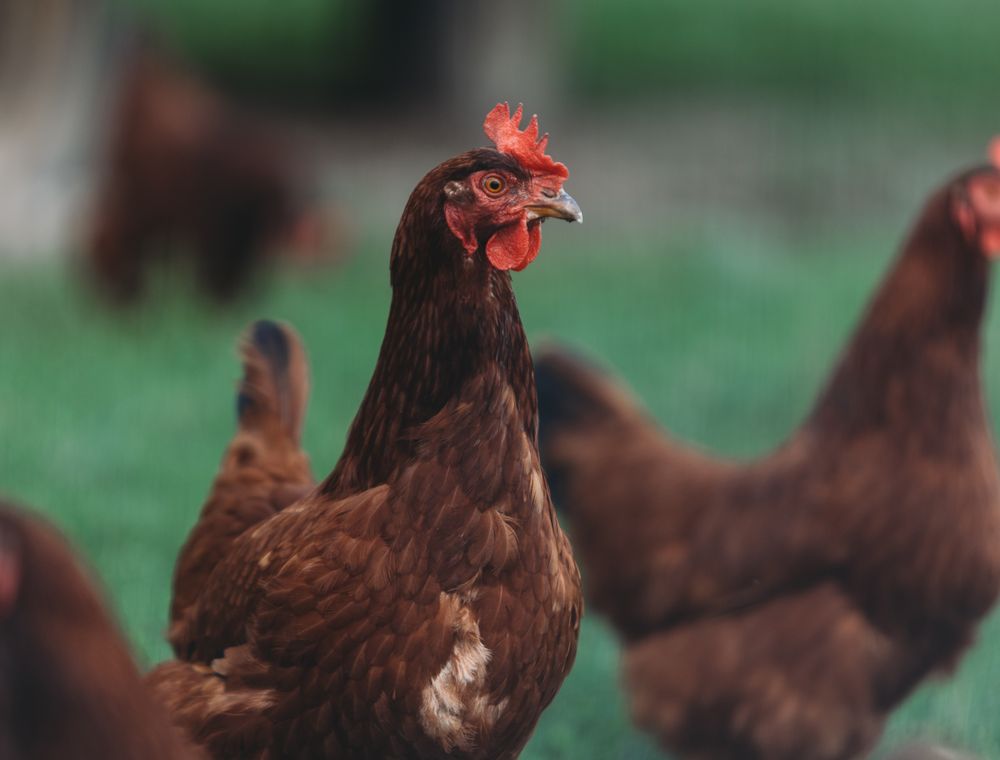
Short answer: Sasso is not one chicken. The name covers several lines bred for different jobs, from meat-focused birds that grow heavier to dual-purpose birds that forage well and lay a useful number of eggs. Before you buy, match the line to your goal: free-range meat, eggs, or a balance of both. Ask which line is in the box and what growth and laying figures to expect from it, because the lines are not interchangeable.
Key takeaways
- Treat Sasso as a family of lines, and decide on the line before you decide on the name.
- Meat-focused lines grow heavier, while dual-purpose lines usually forage better and lay more eggs.
- Expect a Sasso to grow more slowly than a fast broiler, and plan your sale dates around that.
- Egg output from a dual-purpose Sasso hen is usually a fraction of a commercial brown layer, so do not budget as if it were a layer.
- A naked-neck line can help on hot afternoons, but it still needs shade, water and shelter at night.
- Ask for the line's growth and laying figures before you commit, and check them against your own records after the first batch.
Why Sasso is really a family of lines
Many farmers talk about Sasso as if it were one bird, but it is better understood as a group of lines. A line is a breeding population selected for a specific purpose and a specific set of traits. Two Sasso lines can look quite different, grow at different speeds, and suit different systems. That is why a farmer who buys a Sasso because a neighbour did, without checking the line, can end up disappointed.
The practical lesson is simple. Before you pay for a box of chicks, decide what you need from the bird, then ask which line is being supplied. Our Sasso day-old chicks for Ghana page sets out the Sasso chicks we offer, and our breed overview compares Sasso with the other breeds in our range.
The main Sasso lines side by side
The table below uses the line names given in a published Ugandan farming feature on Sasso, which lists five lines. The weights come from that same source, and they describe the breeder's ideal under good feed and management, not a promise for your farm. Where a source gives no figure, the cell says so.
| Line | Stated focus | Growth picture | Plumage and feathering | Egg output |
|---|---|---|---|---|
| Ruby C (C44) | Meat | Heaviest of the group, about 3.4 kg for males at 10 weeks | Not described in the source | Not given |
| Ruby N (XL44N) | Meat, free-range | Middle of the group, about 2.6 kg for males at 10 weeks | Naked neck | Not given |
| Ruby T (T44) | Free-range, dual-purpose | Slowest of the group, about 1.9 kg for males at 10 weeks | Not described in the source | Described as meat and eggs, figures not given |
| Rainbow X (XR) | Hardy, free-range, dual-purpose | Not given | Multicoloured plumage | Not given |
| Rainbow T (TR) | Not described | Not given | Not given | Not given |
The gaps in that table are the point. A line is only as useful as the figures behind it, so ask for the breeder's own performance sheet for the line you are buying, and do not rely on a general description.
Growth: how heavy and how fast
Growth is where the lines differ most. The meat-focused line in the table reaches the highest weights, while the dual-purpose line grows more slowly and carries less meat at the same age. In a free-range system, slower growth is often the price of a bird that moves, forages and holds its condition. A bird that is walking around for insects will not put on weight at the rate of a bird that sits by a feeder all day.
Sale ages for these lines often fall in a window of roughly 10 to 14 weeks, and where a batch lands in that window depends on the line, the feed programme and how much of the day the birds spend outdoors. Do not assume a line will reach market weight on the same day as another. Weigh a sample of birds every week or two, and set your sale date by weight rather than by the calendar. For a rough cost comparison against a fast broiler, our broiler profit calculator lets you put in your own weights, feed and prices.
Range ability and what it asks of you
Sasso lines are chosen for their ability to use outdoor space. A bird that moves freely can forage for insects, grass and seeds, which lowers your feed bill and gives the meat a firmer texture. The same movement means the birds need more from the ground they walk on. Grazed-bare ground carries worm eggs and coccidia, so a rotation of paddocks is one of the most useful things you can build into a Sasso system.
Range also asks for shelter and shade. Birds that roam far from the house in the middle of the day can be caught by heavy rain or by a hot spell with no water nearby. Put shade over the feeders and drinkers, keep a clear path to the house, and check the far end of the run each morning for birds that have wandered too far or been attacked by a predator.

Egg output: what to expect from a dual-purpose hen
Egg output is the question most farmers ask, and it has the least clear answer in the public material. A dual-purpose bird lays fewer eggs than a commercial brown layer, and the figure depends on the line, the age at which the hens start, the feed, the light and the health of the flock. Ask the supplier for the laying curve of the specific line, which shows the expected egg output week by week, and compare it with the hen's actual performance in your own records.
Budget conservatively. If your business plan depends on a steady stream of eggs at layer levels, a dual-purpose line will disappoint you. Its real value is in the combination of meat and some eggs from the same bird, on a farm that wants both. Our layer egg profit calculator is designed for commercial layers, so use it for comparison only, with the egg numbers you have actually recorded.
Naked neck and hot afternoons
The naked-neck line in the table, XL44N, carries less feather cover on its neck. Birds with less feather cover tend to shed body heat more easily, which can help in hot, humid weather. That is the reason many farmers in warmer parts of Ghana consider a naked-neck line for free-range production. The benefit is real, but it is not a reason to stop providing shade.
The same bare neck offers less protection on cold, damp nights and during the harmattan, when temperatures drop sharply in the early morning. Make sure the house is dry and draught-free, and that the birds can get into shelter at night. A bird that is cold and wet is at more risk than one that is simply warm.
Matching a line to your goal: meat, eggs or both
Start with the goal, not the line. If your priority is a heavier bird for market in a shorter time, a meat-focused line is the better starting point, and you should expect to use a higher-protein feed programme to get the weight on. If your priority is a free-range bird that forages well, lays a reasonable number of eggs and provides meat at the end of its life, a dual-purpose line fits better.
If you want both meat and a flock that will give you eggs for the home or the local market, a dual-purpose line is usually the sensible choice. If you want a bird that tolerates heat and still roams, a naked-neck meat line or a hardy dual-purpose line may be the answer. Write your goal down in one sentence before you talk to anyone about lines, because the sentence will keep you honest when a cheaper or faster option is offered.
Asking the right questions before you buy
Before you pay, ask the supplier five questions. Which line is it, and what is the breeder's target weight at your planned sale age? What is the expected laying curve, if you want eggs? What vaccines has the flock had, and when? What price is it, and what is the delivery cost? And what is the replacement policy if chicks die in transit? Ask for the answer in writing. Before dispatch, the chicks get hatchery vaccines covering Marek's disease, Newcastle, Gumboro, bronchitis and coccidiosis, so ask for the dates on the batch card and keep a copy. Starting prices for Sasso are from GH₵ 13, confirmed per order, and you can see the wider range on our day-old chicks prices page.
A supplier who cannot answer these questions clearly is asking you to take the bird on trust. That is a poor basis for a business decision.

Need chicks for your next batch?
Send breed, number and town. We reply with price, hatch date and delivery cost in writing.
Feeding different lines differently
A meat-focused line needs a feed programme that supports its growth, with the protein and energy levels set for the age and weight you are aiming for. A dual-purpose line on free range can be fed a more modest programme, with a larger share of its diet coming from the ground, provided it is not left to scavenge on its own. In both cases, a clean, reliable supplement and fresh water are not optional.
Feed changes should be gradual. Moving birds abruptly from one feed to another can upset digestion and slow growth. Keep a feed record for each batch, including the brand, the date changed and the amount used, so you can compare performance. Our poultry feed calculator helps you estimate the total feed a batch will need, which makes it easier to plan purchases before the rains or the harmattan push prices up.
Managing the first weeks with a Sasso batch
The first weeks set the pattern for the whole batch. Brood the chicks in a warm, dry, draught-free space, with enough feeders and drinkers for the number of birds. Check that every chick is drinking and moving normally within the first few hours. Once the birds are big enough to go outside, introduce the range gradually, starting with a small, fenced area close to the house and extending it over a week or two.
Keep the vaccination dates in your book, and use our poultry vaccination schedule calculator to check you have not missed one. Watch for birds that are slow to come out of the brooder, that stand apart from the others, or that do not reach the feeder with the rest. Those are the birds that need attention first, long before a loss shows up in the numbers.
Working the numbers before you commit
Put the numbers on paper before you order. For a meat-focused batch, estimate the chick cost, the feed to market weight, the vaccines and the labour, then divide by the number of birds you expect to sell. For a dual-purpose batch, do the same for the meat, and add the eggs only at the value you have recorded, not at the value you hope for. Include the cost of range management, such as fencing and shade, because those costs continue for the whole batch.
Allow for losses. Even a well-run free-range flock loses birds, and the figure you plan for should reflect your own records. Start with a conservative estimate, then correct it after the first batch. The farmers who do best with Sasso are usually the ones who keep recording, not the ones who started with the most optimistic numbers.
Common mix-ups between lines
The most common mistake is buying a meat-focused line and expecting it to behave like a dual-purpose hen, or the reverse. The second is judging a line by its colour or looks alone. Plumage tells you something about camouflage and sometimes about heat tolerance, but it does not tell you the growth rate or the egg output. The third is mixing lines in the same house and then trying to read the performance figures, which makes it impossible to know which line did what.
Keep each line in its own house or pen, record it separately, and compare like with like. If you are also considering a Noiler or Kuroiler, our Noiler chicks for Ghana page sets out how that dual-purpose option differs, so you can compare the two on the same sheet of paper.
Questions farmers ask
Is Sasso a good choice for a backyard flock in Ghana?
It can be, if you have space for free range and the patience to grow birds more slowly than a broiler. A backyard flock also needs shade, clean water, a predator-proof run and a vaccination plan. If space is limited, a smaller dual-purpose flock may suit better.
How heavy will a Sasso get?
It depends on the line, the feed and how much the birds move. One published Ugandan farming feature quotes about 3.4 kg for males of a meat-focused line at 10 weeks, and about 1.9 kg for males of a dual-purpose line. Treat these as ideals under good management and check your own weights.
Do Sasso hens lay a lot of eggs?
Not usually as many as a commercial brown layer. Dual-purpose hens lay fewer eggs, and the figure depends on the line and management. Ask for the laying curve of the specific line, and record your own egg numbers from the start.
Which Sasso line is best for hot weather?
A naked-neck line tends to shed body heat more easily, which can help in hot, humid conditions. It still needs shade and water, and it needs protection from cold, damp nights and from the cold snap of the harmattan.
Can I mix Sasso with my local chickens?
You can, but mixing makes records hard to read and can blur the line you are trying to keep. If you want to improve a local flock, a planned, recorded cross is better than a mixed flock with no plan. See our notes on local birds before you start.
How much does a Sasso chick cost?
Sasso day-old chicks start at GH₵ 13 each, confirmed per order. The final price depends on the line, the quantity and delivery, so ask for a quote for your exact order.


