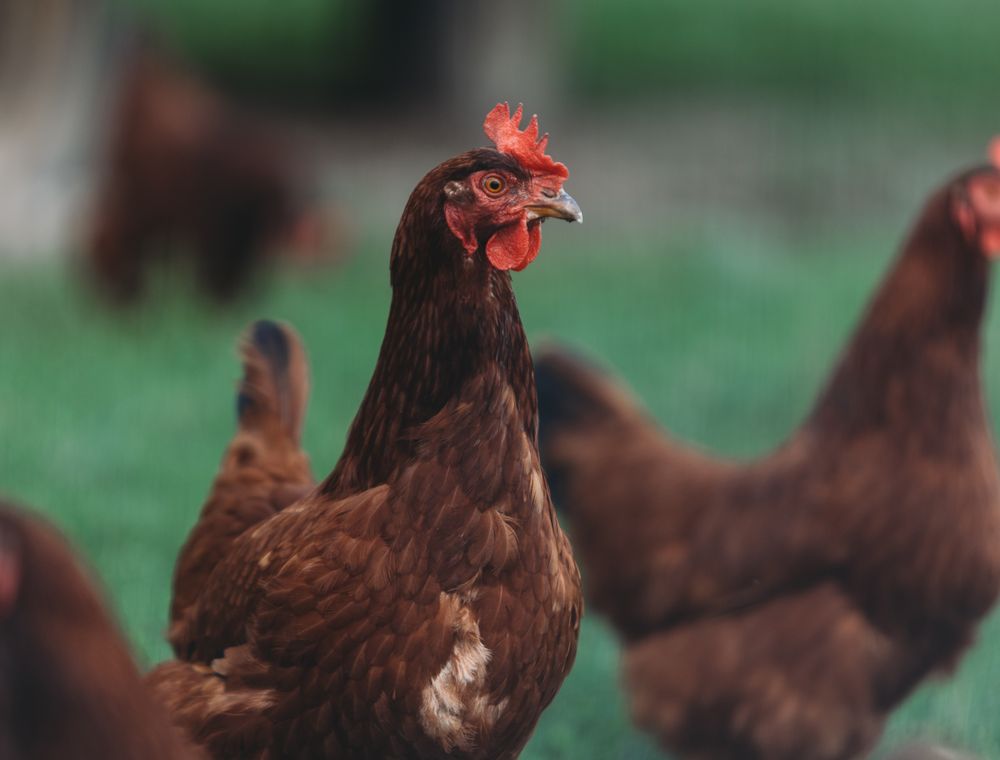
Short answer: A free-range or organic word on an egg carton is a promise you must prove when a buyer asks. In Ghana the proof is almost always your own records, because few buyers can check the hens themselves. Before any claim is printed, write down what it means on your farm and name the record that shows it. If a claim has no record behind it, take the word off the carton.
Key takeaways
- Every word on a carton is a claim. Free range, organic, natural and farm fresh each need their own proof.
- Write what each claim means in your own words, then name the record that shows it. No record, no word.
- Free-range proof is daily. A single photo from last month proves nothing about this week.
- Organic is a certification, not a feeling. Do not print it unless a certifier has approved your system.
- Keep the claims file in the house, and read it against the carton every quarter.
A carton is a promise, and a careful buyer will test it
Most egg buyers never question the carton. They pick the one that says free range because it looks like a better egg, and they pay the difference without a second thought. The buyer who does question it is usually the one who matters most: the hotel purchasing officer, the supermarket category buyer, the bakery owner who has been caught out before.
A request like "show me" is a reasonable one, and it is a test of your business, not an insult. The answer should take less than a minute, and it should come from a file, not from memory. If your answer is "the hens are very happy, I think", the claim is already in trouble.
The rules come from the regulators, and the rules change. What we can say with confidence is that a claim you can prove is worth more than a claim you cannot, and that the difference shows up the first time someone asks.
What each common word promises a buyer, and what to keep
Read this table as a checklist. Each claim on the carton promises something to the buyer, and each promise needs a document behind it. Some documents come from you, and some come from an outside body.
| Claim on the carton | What a buyer assumes | What you should be able to show |
|---|---|---|
| Free range | Hens go outside every day, into a real run | Daily door-opening log, count of hens outside, condition of the run |
| Organic | Certified system, approved feed, restricted inputs | The certifier's certificate and their inspection record |
| Natural | Nothing added, nothing processed | Feed records and a plain statement of practice. The word is vague, so avoid it |
| Farm fresh | Collected and sold within a short time | Collection-time log and a dated delivery note |
| Vegetarian fed | No animal protein in the ration | Feed invoices and the mill's written specification |
| Omega-3 enriched | The feed was enriched and the eggs were tested | Feed specification and laboratory results on the eggs |
A claim with no row in this table is a claim you have not thought through yet. Do not print it until you have. Our guide to selling premium free-range eggs covers the pricing side of the same claims, and this article covers the proof side.
What free range means on your own farm
Free range is not one fixed condition, so write your own definition first. Many buyers expect hens to have daily access to an outdoor run, not a door that opens for an hour at noon and closes again. Some markets have legal definitions that set outdoor access and stocking rules. Ask the Food and Drugs Authority and the Ghana Standards Authority whether a national definition applies to your eggs. Until they answer in writing, use your own definition, written down and honest.
Your definition should answer five questions: how many hours the hens can be outside, how big the run is for the number of hens, what shelter and shade the run has, how the ground is managed, and what happens at night. A run with no shade in the Kasoa afternoon is not free range in any sense a buyer would accept, however many hens walk out of the door.

- Hours of outdoor access each day, and the times the door opens and closes
- Run size per hen, measured rather than guessed
- Shade and cover, so hens can get out of the sun and the rain
- How the ground is kept clean and rested
- Night housing and predator protection
The housing choice shapes all five answers. Our free-range or cage comparison sets out what each system does to egg quality, losses and cost, so you can judge whether the claim is worth keeping.
The daily records that prove free range
The record is what makes the word true on paper. Keep it simple enough that someone fills it in every day, including the day you are tired. A two-minute entry in the morning and another in the evening beats a perfect spreadsheet that gets missed for a week.
| Day | Door opened | Hens counted outside at 10 am | Run condition | Notes |
|---|---|---|---|---|
| Day 1 | 7.00 am | 186 of 200 | Dry, shade in place | Hawk seen at 9 am, all hens driven into the run |
| Day 2 | 7.10 am | 191 of 200 | Damp after rain | Patch of litter cleared and raked |
| Day 3 | Not opened | 0 of 200 | Dry | Door left shut by mistake, fixed at 11 am |
The sample table shows why the record matters. Day 3 is the problem you would otherwise hide. It goes on the log with the cause and the fix, and a buyer who reads the log sees a farm that notices its own mistakes. Count the hens outside at the same time each day, and write the number rather than a tick.
Add the things that change the claim: rainfall, predator sightings, sick birds removed from the run, and any day the run was closed for cleaning. A free-range record with no bad days in it looks invented, and a careful buyer will say so.
Organic is a certificate, not a feeling about the farm
Organic is the claim most often printed without anyone checking it. A farmer keeps the hens outside, buys good grain and avoids the worst chemicals, and calls the eggs organic. That may be a good farm, but it is not an organic egg in the sense a certifier or a careful buyer means.
An organic claim usually means an inspected system. The certifier checks the feed sources, the inputs used on the land and in the house, how animals are housed and treated, and your records. Ask any certifier which body they work with, what the inspection covers, and what the cost and timeline look like before you enter. Do not sign up on the word of a salesperson who cannot show you the standard in writing.
Until you hold a certificate in your name for the eggs you sell, do not use the word on the carton, the price board or your WhatsApp status. Describe the farm honestly instead: hens with daily outdoor access, and feed from a named mill, for example.
No antibiotics, no hormones, and the claims that need a vet's record
Some of the strongest-sounding claims are the easiest to get wrong. Hormones are not part of normal commercial egg or chicken production in most countries, so a "hormone-free" label suggests a choice the farm never had. Buyers who know the trade read that as a sign of a careless label, and they start to doubt the rest of the carton. Print nothing that implies a hormone-free product unless you can explain exactly what the statement covers.
"No antibiotics" needs a treatment record for every flock that laid those eggs. Write down every medicine, the date it was given, the withdrawal period stated for the product, and the date the eggs were first sold afterwards. Follow your vet's advice on every treatment. Do not use a vaccination card to prove the absence of medicines, because vaccination is a separate record.
The vet's note and your treatment log matter more than any photo. If a buyer asks for proof of no antibiotics, those two documents are the answer, and an answer without them is not an answer.
Answering a buyer who asks for proof
A good answer is short and specific. Name the claim, show the record, and offer a farm visit by appointment. Do not argue about what the word means in general. Explain what it means on your farm, because that is the only thing the buyer can check.
- Read the claim back to the buyer, exactly as it is printed on the carton.
- Open the daily log for the period they are asking about, and show them the page.
- Point to the bad days and say what you did about each one. This builds more trust than a clean page does.
- If the claim is organic, show the certificate and the certifier's name and contact. If you cannot, say so, and offer to change the wording.
- Offer a visit by appointment, and leave a copy of the record with them.
If the buyer is still not satisfied, do not promise a credit or a discount you cannot afford. Change the carton wording and sell the eggs as what they are. A buyer who trusts a plain carton will stay longer than one who was misled once.
Need chicks for your next batch?
Send breed, number and town. We reply with price, hatch date and delivery cost in writing.
Mistakes that sink a good free-range line
- Printing free range while the hens are shut in at night, then sending a daylight photo of the run as proof. Night housing is part of the picture.
- Using a stock photo of hens on grass for your own carton or price board. Buyers and inspectors can tell, and it reads as a lie even when the farm is honest. Use a real, dated photo of your own farm.
- Printing organic on a box filled with conventional feed, because the organic feed was dearer that month.
- Writing free range on an open-door run with no shade, so the claim is true on paper and absurd in the afternoon heat.
- Keeping the records on one phone that gets lost on a bus. Keep a paper copy in the house and a photo of each page.
Most of these come from a claim that was printed first and checked later. Reverse the order and most of the trouble goes away. Buyers who check quality also look at the shell and the yolk, so our egg quality guide is worth reading alongside your claims file.
Honest wording when you cannot prove the big word
Not every farm qualifies for the strongest claim, and that is fine. A plain, true sentence sells well when it is backed by a farm the buyer can understand. "Hens with daily outdoor access and a covered run" is more honest, and often more persuasive, than a single word the buyer does not trust.
Describe what you do in numbers and simple words. Our guide to branding and packaging eggs covers how to lay out the carton so the plain facts are easy to read. Give the packing date, the farm name, a contact number and the feed you use if you are proud of it. Leave off anything you cannot show. A carton with five true facts beats a carton with one big promise and no proof behind it.
Print less, and keep the rest in the file. The file is what protects the carton when the carton is questioned.
A checklist before the carton goes to print
- Every claim on the carton is written out with its meaning on your farm
- Each claim has a named record that shows it, kept in the house
- Daily records exist for the whole period the claim covers, including the bad days
- Organic appears only if a certifier has approved your system in writing
- No hormone, antibiotic or chemical-free statement without a treatment or vet record behind it
- No stock photos used to represent your farm or your hens
- The farm name, packing date and contact details are correct
- The current labelling rule has been checked with the regulator and noted in the file
Review the file every quarter, not when a buyer complains
Flocks change. You buy new hens, change the feed mill, move the run, or treat a patch of disease. Each change can break a claim without anyone noticing. Set a date each quarter to read the carton against the file, and change any word the records no longer support. It takes an hour, and it costs far less than a lost account.
If you are starting a flock with a free-range plan in mind, the breed and the housing decide how much of the claim you can keep. Our breeds page sets out the main laying birds, and our layer day-old chicks page covers what we hatch for laying flocks. Order through our order form, or WhatsApp +233 24 915 1503 to talk the plan through before you commit. Our about page explains how we work as a hatchery.
Questions farmers ask
Can I write free range on eggs if my hens have a covered run?
It depends on what the run gives the hens. A covered run with daily access to open air and light can be a fair description, but say what it is, for example hens with a covered outdoor run, rather than a bare free-range claim. If the covered run never opens to the outdoors, the free-range word is not honest. Write your definition down and check the wording with the regulators.
Is organic allowed on eggs in Ghana?
Only where your system is certified, or as the rules allow in writing. Organic is a claim a certifier checks, not a term you can choose for a nicer carton. Ask the Food and Drugs Authority and the Ghana Standards Authority for the current rules, and ask any certifier which body they work with before you start.
What records prove that eggs are free range?
A daily log of door-opening times, a count of hens outside at the same time each day, notes on the state of the run, and records of any day the run was closed. Keep a paper copy, and show the bad days as well as the good ones.
Can I use a stock photo of hens on my carton?
No. Buyers and inspectors recognise stock images, and a stock photo presented as your farm is misleading. Use a dated photo of your own hens, run and house, and keep the original file.
What about no antibiotics on eggs?
Only if you hold a complete treatment record for the flock, showing every medicine given, the dates, the withdrawal period and when the eggs were first sold after it. Follow your vet's advice on every treatment. Vaccination records do not prove the absence of medicines.
Who should I ask about labelling rules in Ghana?
Start with the Food and Drugs Authority and the Ghana Standards Authority for product labelling, and your district assembly for trading rules. Ask for current requirements in writing, and keep the reply in your file. Rules change, so check again before each print run.
What should I do if a buyer doubts my free-range claim?
Show them the daily log and the dated photos for the period in question, and explain the bad days as well as the good. Offer a visit by appointment. If the record does not support the word, change the carton to a plain, true description, and tell the buyer what you changed and why.


