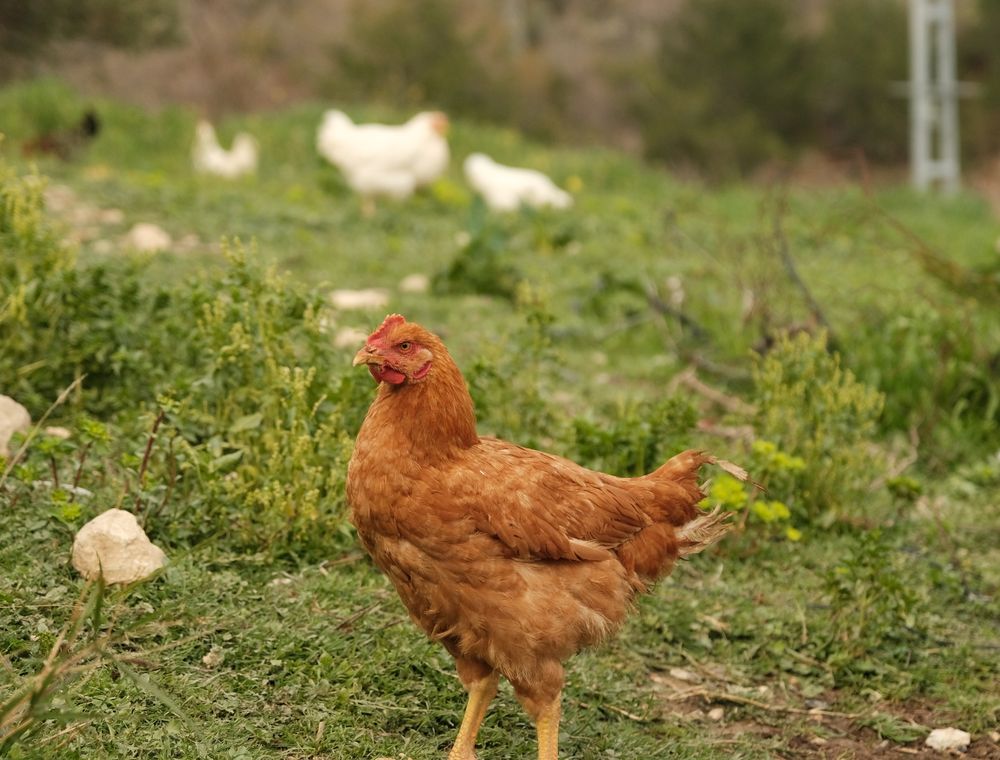
Short answer: A premium free-range egg pays only when the price covers the lower lay rate and the extra work of open housing, and when the buyer can check the claim without leaving their kitchen. Divide your weekly free-range cost by the eggs you lay to find the uplift each egg must carry, then keep weekly records and a fixed visit day. Keep the carton to what you can prove.
Key takeaways
- Work out the lay gap and the weekly free-range cost, then divide to find the uplift every premium egg must carry.
- Sell premium eggs only where a buyer can check the claim, with a weekly count, a photo and a fixed visit day.
- Keep the carton honest: write only the hours, the hen count and the feed type you can prove.
- Price the standard tier on its own, and never drop it to make the premium look better.
- Warn premium buyers before harmattan and the rains, and sell the volume your flock can fill in the worst month.
A free-range egg has to beat the cheap egg in the buyer's head
Free-range hens lay fewer eggs than the same breed kept in controlled housing. They spend energy walking, scratching and dodging the rain, and they often take longer to settle into lay after a move. That is the first number any premium price has to cover, and most farms that try to charge more never write it down.
So the premium is not a reward for good intentions. It is a payment for two things: the lower count, and the buyer's belief that the eggs really came from birds on grass. If either one fails, the price has to fall back to the crate rate, and the extra work of free range becomes a cost you carry alone.

We have had farmers ask us, in good faith, why their free-range eggs do not sell better than the ones from the shop. The honest answer is usually that the buyer has no way to see the difference. The eggs look the same, the carton says the same thing, and the price is only a few cedis higher. A premium needs a reason a buyer can check, and it needs a price that makes the work worth doing.
What a buyer thinks the extra cedis actually buy
Buyers who pay more for free-range eggs usually have a picture in their heads. The hen is outside. The yolk is deeper. The egg tastes stronger. Some of that picture is true and some is not, and you will do better selling the parts you can prove than the parts you hope they believe.
Yolk colour is the one buyers ask about most. A hen that forages on green feed can give a deeper yolk, but the yolk colour is also set by what goes into the feed, so a free-range hen on plain maize may not look different from a caged one. Do not promise a colour. Promise what the hen eats and how she lives, and let the yolk do what it does.
Flavour is harder to sell. A buyer who tastes a free-range egg next to a standard one may notice a difference, or may not. Do not lean on it in the advert. Lean on the things the buyer can check without tasting anything, such as the outdoor access, the flock size and the visit day.
The lay gap, in eggs and in cedis
Take a flock of 60 hens averaging one egg every five days. That is 0.8 eggs a day per hen, or 48 eggs a day for the flock. In a week that comes to 336 eggs, which is 11 crates of 30 with a few spare. At the table-egg price we list, GH₵50 a crate, the whole flock would earn about GH₵561 a week if every egg sold at the standard rate.
Now add what free range costs. Say the run needs extra fencing and predator protection, a part-time person to move the birds and open the house, and a little more feed for birds that spend the day walking. Call it GH₵120 a week for the example. Divide that by 336 eggs and the free-range work adds about GH₵0.36 an egg before you have made a single sale. Our feed cost per egg guide shows how to put your own feed bill into that figure. Your premium has to be at least that, on every egg you sell, just to stand still.
The table shows what happens when you split the flock into tiers, which is how most farms end up selling. Premium eggs here are 200 a week at GH₵2.50 each. The rest go at the standard rate of about GH₵1.67.
| Scenario | Eggs a week | Weekly income | Extra free-range cost | Net against standard |
|---|---|---|---|---|
| Same flock, all sold at standard | 336 | GH₵561 | GH₵0 | Baseline |
| Free range, all sold at standard | 336 | GH₵561 | GH₵120 | −GH₵120 |
| Free range, 200 premium and 136 standard | 336 | GH₵727 | GH₵120 | +GH₵46 |
| Free range, all 336 sold as premium | 336 | GH₵840 | GH₵120 | +GH₵159 |
Read the table honestly. The two-tier version pays, but only just, and it pays only if you can sell 200 premium eggs every week. The all-premium row looks best, and it is the one you are least likely to reach. A premium line that sells half its eggs at the standard price is a free-range flock with a lower margin than the farm next door, not a higher one.
Proof a buyer can check without a farm visit
A buyer will not drive to your farm to check the hens, and you should not ask them to. What they can check is a short list of things you show them on a phone, every week, in the same format. A photo of the run with the date in the frame. A count of the hens and the eggs laid that week. A note on the feed and the day the birds went out. Do this for three months and the buyer stops asking.
Keep a visit day for the buyers who want one. Once a month, on a fixed day and time, you open the run and let them walk it. A fixed day is better than an open invitation, because it says the farm has a routine and not an audience. Make the visit short, keep the birds calm and show the buyer the house they sleep in at night.
- Weekly photo of the run, with a date you cannot hide
- Weekly count of hens and eggs collected
- A one-line note on feed, water and any bird you lost
- A fixed monthly visit day, with a short walk around the run
- A written statement of the hen count and the outdoor hours
These proofs cost you ten minutes a week. They are worth far more than a logo on the carton, because a buyer who has seen three months of records is the buyer who pays the premium when a rival farm starts charging less.
What the carton can say, and what it should not
The label is the promise you make before the crack. Keep it small and make every word true. If the hens are on open ground for part of the day, say so, with the hours. If they are in a run that is covered and fenced, say that instead of a word that suggests more. A buyer who finds the carton overstated stops trusting every other line on it.
Some words carry a meaning that someone checks. The word organic is the clearest example. It is tied to a standard that a certifier assesses, and using it without that assessment is a claim you cannot back up in front of a buyer who asks. Unless you hold the certification the word implies, leave it off, and leave off the close synonyms too. A plain, accurate description does better than a fancy one that falls apart in a conversation.
Write the hen count, the outdoor hours and the feed type on the label or on a card in the crate. Add the flock's batch code, so the eggs can be traced back to a house and a date. For more on the label itself, our guide on branding and packaging covers the layout, and our guide on what buyers check in a crate covers the shell and cleanliness tests that go with the claim.
Harmattan, heat and the rains: the premium follows the seasons
The premium is weakest in the months when the birds are least comfortable outside. In the harmattan, the dust is thick and the nights are cold. Hens that spend the day scratching in dust come in with dry, dull feathers, and the lay can drop for a few weeks. In the hot months, free-range hens hunt for shade and water, and they lay less when the afternoons are close.
The rains bring a different problem. The run turns to mud, the birds pick up worms and the eggs can come in dirty. A buyer who sees a dirty crate in the rainy season will judge your whole premium line by it. Plan for the wet season by keeping the nest boxes dry, collecting twice a day and grading out the worst shells.
Warn your premium buyers before the seasons turn. Tell them in October that harmattan may cut the count for three weeks, and that the price will hold but the volume will not. A buyer who expects a dip stays loyal. A buyer who is surprised by a dip goes back to the shop shelf.
Selling two tiers from one flock without confusing the regular buyer
Most farms that sell premium eggs also sell standard eggs from the same flock. That works, but only if the two tiers look different and the buyer knows which one is which. Use two crate types, or one crate with a clear band, and never let a premium crate contain eggs you would sell as standard on another day.
Price the standard tier at the rate you would charge without the free-range claim. Do not drop it to make the premium look better. A regular buyer who sees the standard price go down will ask why, and the honest answer is that you are selling the premium eggs at a discount to the standard ones. That is a bad story to tell.
Shell colour is a separate choice that does not make an egg freer, and our brown versus white eggs guide explains when it is worth a premium of its own. Keep the tiers in a simple tally. Each morning, count the eggs into premium and standard, and write both numbers down. At the end of the week, you know exactly how many premium eggs you sold and whether the line is paying. A premium line that you cannot count is a premium line you cannot defend.
Need chicks for your next batch?
Send breed, number and town. We reply with price, hatch date and delivery cost in writing.
Choosing the hens for a premium free-range line
A premium line starts with the breed. Brown-egg layers that are bred for indoor housing can struggle outdoors, and they lay fewer eggs once the weather turns. Birds that are bred for free range are often slower to lay and more hardy. Pick the breed for the job you want it to do, not for the flock you already have.
Sasso and the dual-purpose birds are a common choice for free range, because they hold up better outside and give both eggs and meat from the same flock. Our Sasso page sets out what to expect, and our Kuroiler and Noiler page covers the other dual-purpose option. If you want a dedicated layer, the layer chicks we ship are better suited to a housed flock with a run than to open range.
Whichever breed you pick, buy from a source that gives you the batch record and the vaccination history. A flock that starts with a weak batch will never give you a premium line. Our breed guide is a good place to compare what each bird is for, and our free-range breed comparison goes further on the outdoor side.
Checklist for launching a premium free-range egg line
- Write the lay gap down: hens, average eggs per day and eggs per week.
- Add up the free-range cost per week and divide it by the eggs to get your uplift per egg.
- Set the premium above that uplift, and set the standard price on its own.
- Choose a label that says only what you can prove, with the hen count and the outdoor hours.
- Start the weekly photo, count and feed note before the first premium crate leaves.
- Fix a monthly visit day and keep it.
- Tally premium and standard eggs every morning and total them each week.
- Warn your premium buyers before harmattan and the rains.
If the checklist does not add up on paper, the premium will not add up in the market. Fix the sum first, then the carton. Still choosing a flock? Put your hen count and your buyers on paper, then ring us on +233 24 915 1503 and we will test the sum with you.
Questions farmers ask
Can I sell free-range eggs at a higher price in Ghana?
Yes, but only if the buyer can see a reason and you can cover the extra cost every week. Work out your free-range cost per week, divide by the eggs you lay, and set the premium above that figure on every egg you sell at the higher price. Then show the buyer proof they can check, such as weekly counts, photos and a visit day.
How much more should a premium egg cost?
There is no single figure that fits every flock. Start with the uplift per egg that your extra costs require, then add a margin that covers a bad harmattan month. Test the price with five regular buyers before you change the standard price. The premium should cover your real cost, not a number you hope buyers will accept.
Do free-range hens lay fewer eggs?
Usually, yes. Hens that move around outdoors use more energy, and they often take longer to reach full lay after a move. The drop depends on the breed, the weather and the amount of cover in the run. Track your own count from the first week, and price your premium around the number you actually get, not the number in a brochure.
Is yolk colour a fair reason to charge more?
Be careful. Yolk colour depends heavily on what the hen eats, so a free-range hen on plain maize may not look different from a caged one. Do not promise a colour on the carton. Describe the feed and the outdoor access honestly, and let the buyer judge the yolk themselves.
What should I write on a free-range carton?
Write only what you can prove, such as the outdoor hours, the hen count and the feed type. Add a batch code so the eggs can be traced. Avoid words that imply a certification you do not hold, because a buyer who asks will expect the paperwork to back it up.
How do I stop premium buyers switching back to cheaper eggs?
Give them proof they can see every week, a fixed visit day and a steady volume they can plan around. Warn them before the harmattan or the rains cut the count, and keep the standard price stable so they do not feel tricked when they buy the premium. Buyers stay when they trust the routine more than the label.
Which chickens are best for a premium free-range line?
Choose birds bred for the outdoor life you can provide. Dual-purpose birds such as Sasso are a common choice because they hold up outside and give both eggs and meat. A dedicated layer can work in a housed flock with a run, but it will usually lay less on open range. Buy from a source with a batch record and a vaccination history.


