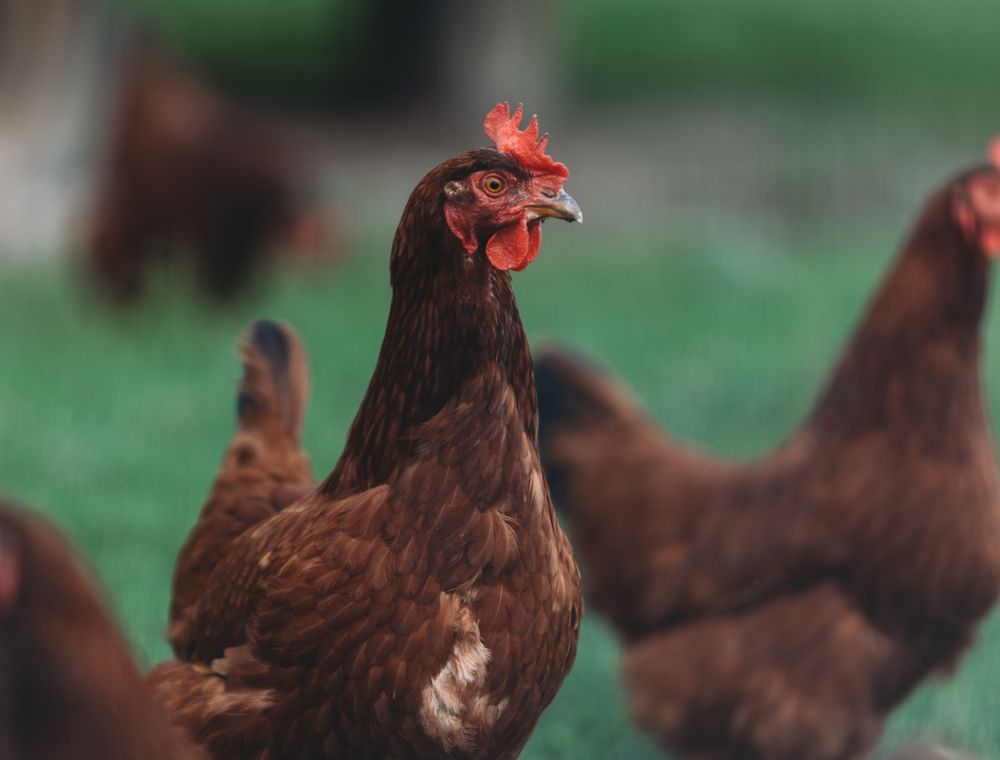
Short answer: Free range describes how the hens live, with daily outdoor access. Cage describes an indoor system where each hen has her own space. Free-range eggs are not automatically better: they carry more risk of dirty, lost and predated eggs, while caged layers carry more risk of ammonia, dust and crowding. Choose by the buyers you can reach and the losses you can manage, not by the picture on the carton.
Key takeaways
- Free range means daily outdoor access, and it is a management choice rather than an automatic quality grade.
- Outdoor hens bring predator losses, lost eggs and wild-bird disease risk that a closed house avoids.
- Caged hens bring a ventilation and ammonia job, and a crowding risk if the cages are too small.
- On 100 hens, one egg less per hen per year costs about 1,700 cedis at 50 cedis a crate.
- Label eggs free range only when your hens really have the access you describe.
What the words mean, and what this article does not cover
Free range and cage are not the same kind of distinction. Free range describes outdoor access: the hens leave the house during the day and forage on the ground outside. Cage describes an indoor system where the hens live in cages, usually stacked in tiers. Both describe how the bird lives. Neither is a grade printed on the egg.
This is a different question from the one in our battery cage versus deep litter guide, which compares two indoor systems. Here we compare hens with outdoor access against hens kept indoors, whether in cages or on litter. If you have read that guide, the housing costs there still apply, and this article adds what changes when the birds go outside.
What free range does to the eggs themselves
The shell is the first thing a buyer sees. Free-range hens on dusty or muddy ground often lay eggs with dirt on the shell, and some are laid in the open, where the shell picks up soil and droppings. Those eggs need more cleaning. Cleaning removes the natural bloom that protects the shell, so washed eggs need more careful storage, and our table egg storage guide sets out the routine. Caged eggs roll onto a belt or into a tray and stay clean from the start.
Yolk colour is where free range looks best. Hens that forage on green plants and insects take in more of the pigments that colour the yolk, so the yolk tends to be deeper in colour. That is a feed effect, not a sign of higher nutrition. A caged hen on a well-formulated ration lays a good egg with a paler yolk.
Shell strength depends more on the ration, the calcium and the heat than on whether the hen goes outside. A free-range flock on a poor mash will lay thin shells, and a caged flock on a good ration will not.
Losses you only get outdoors
This is where free range costs you most, and it is the part most people leave out of the plan.
- Predators: dogs, cats, snakes, birds of prey and small mammals take hens, especially the lone ones that wander away from the flock. A house that is locked at night is the first defence.
- Lost eggs: hens lay in bushes, under sheds and in long grass. You find some eggs days later, cracked, or not at all.
- Theft: free-range birds can be picked up by passers-by, so the fence and gate need the same care as the house.
- Wild birds and disease: wild birds, rodents and neighbouring flocks can bring infection into a free-range area. Biosecurity is harder when the birds can reach the outside world.
- Worms and parasites: hens scratching in dirt pick up worms and coccidia from droppings, so a worming and litter plan matters more outside.
Caged birds face most of these risks at a lower level, because they are inside. They face others in return, which we cover in the next section.
Losses you only get indoors
An indoor system is not automatically safe. The house has to do the work the outdoors does for free, which is moving air and keeping the birds clean.
- Ammonia: droppings under cages build up ammonia, which stings the eyes and the airways. The smell is the warning. Keep the manure removed and the house ventilated.
- Dust: a dry house in the harmattan fills with dust, and dust carries airway problems and spreads disease.
- Crowding: cages sized for the cheapest build rather than the bird stress hens, who then lay less and peck more.
- Egg eating: a caged hen who cannot reach a nest, or who sees broken eggs, can start eating them. Our egg-eating guide covers the causes and the fixes.
- One point of failure: a power cut or a dead fan in a closed house can cost a flock heavily in a single hot afternoon. A free-range run does not have that exact risk.
Cost per hen: a worked example for 100 hens
To keep the sum honest, use one flock size and change only the system. The numbers in the example are placeholders you should replace with local quotes, but the shape of the comparison holds for any farm.
| Item | Caged indoor (100 hens) | Free range (100 hens) |
|---|---|---|
| House and cages | Build cost per hen, from your own quotes | A smaller house, plus fencing and a night shelter |
| Fencing and predator protection | Little | Significant, and it needs regular repair |
| Feed use | Set by the ration | Can fall if hens forage well, but the saving is uncertain |
| Eggs lost or broken | Low | Higher, because eggs are laid outdoors |
| Losses to predators and disease | Lower | Higher, especially among lone hens |
| Collection labour | Quick, from belts or trays | Slower, with time spent searching for hidden nests |
The line most farmers underestimate is the lay gap. Suppose the free-range hens lay 10 fewer eggs each over the year, because of losses, stress and the weather. For 100 hens that is 1,000 eggs. At 30 eggs a crate, that is about 33 crates. At 50 cedis a crate, the gap is about 1,700 cedis a year. That is before you count predator losses, which can be bigger than the lay gap on a small flock.
How buyers see free range, and what you can claim
Free range sells to a particular buyer. Some households and specialist shops will pay for it, because they want the hen to have been outside and because they believe it is more natural. Others care only about price and freshness. The label does a lot of work, and that is the risk. A label you cannot prove will cost you the next sale, and it will cost you the buyer who finds out.
Use the words only when they are true. If your hens spend the day on a run with real access to ground and shade, say so. If they are kept in a pen of a few square metres and let out once a week, a free-range label is misleading, and a buyer who visits will see it. Describe your system in plain words on the crate, and let the buyer judge.
A middle path: covered runs and partial range
Many farms do better with a middle path. A covered run, a veranda or a netted pen gives hens fresh air, daylight and some ground to scratch, without the full exposure of open range. The house stays the main home, with the nest boxes, feeders and water inside, and the run gives the birds somewhere to be during the cooler hours.
Partial range works best when the run is roofed or netted against birds of prey, has shade and clean water, and is locked at night. Move the drinkers and feeders off the wettest ground after rain, and rotate the run if you can. Rotation is what keeps worms and coccidia from building up on one patch of soil.

Need chicks for your next batch?
Send breed, number and town. We reply with price, hatch date and delivery cost in writing.
Choosing breeds for each system
Breeds differ in how they handle free range. Dual-purpose and heritage birds forage better and cope with a mixed diet. Specialist brown layers are bred to lay in a controlled house and do best on a full ration. Our best dual-purpose chickens guide compares the foragers, and the local versus exotic guide covers the trade-offs in more depth.
As a simple rule, if the hens will be outside most of the day, pick a bird that already forages and handles the heat. If they will be inside, pick a specialist layer and feed it properly. The breeds overview lists the lines we hatch and import.
Disease: the trade-off you cannot ignore
A free-range flock meets wild birds, rodents and the neighbour's chickens. That makes biosecurity harder and raises the disease risk, especially for Newcastle disease and avian influenza, which can travel with wild birds. Vaccination matters on both systems, but it does not replace a clean house or a fenced run. Read our Newcastle disease guide and our biosecurity guide before you open the gate for the first time.
An indoor flock has a different risk. Disease moves faster in a crowded house, so one sick bird can reach the whole flock in days, and the ventilation and cleaning routine becomes the main defence. Your vet should set the vaccination schedule for either system.
A decision checklist for your farm
- Who will buy your eggs, and will they pay for free range, or only ask for it?
- How many hens can you protect at night with a locked house and a sound fence?
- Can you collect eggs twice a day from the run without losing track of the nests?
- Is the site shaded, dry, and free of standing water in the rains?
- If you choose indoor housing, can the house keep ammonia and dust down through both the harmattan and the rains?
- What will you lose each month to predators, theft and breakage, and have you written it down?
If you cannot answer the last question, start with a small trial flock and record every loss for three months before you scale. Our record keeping guide sets out a simple daily sheet. When you are ready to buy, order through the order form, or message us on WhatsApp at +233 24 915 1503.
Questions farmers ask
Are free-range eggs healthier than caged eggs?
Not in any way that has been shown consistently. Free-range eggs can have a deeper yolk, because hens foraging on greens take in more yolk pigment, but that reflects the diet rather than better nutrition. Food safety depends on handling, storage and the health of the flock, and both systems can produce safe eggs or unsafe ones.
Do free-range eggs cost more to produce?
Often they cost more per egg, because of fencing, predator losses, lost eggs and slower collection. Feed can be lower if the hens forage well, but that saving is uncertain and depends on the ground and the season. Work out the cost per egg from your own losses, not from the general idea that outdoor birds are cheaper to keep.
Can I call my eggs free range if the hens have a small run?
Only if the hens have real daily access to the outdoors that you can describe honestly. A small pen let out once a week is not free range, and a buyer who visits will see it. Describe the system in plain words on the crate, such as hens with daily run access, and do not use a label you cannot back up.
How much outdoor space does a free-range hen need?
There is no single figure that works everywhere. Some standards elsewhere use around 4 square metres of outdoor range per hen as a reference, but the right space depends on the ground, the shade, the predator pressure and the number of birds. Check local rules, and watch the ground for bare, dirty patches as an early sign that the space is too small.
Which breeds handle free range best in Ghana?
Dual-purpose and heritage birds usually forage better and cope with a mixed diet, which suits free range. Specialist brown layers can manage outdoors with good shade and a full ration, but they do best where the house is the main home. Our breed guides give the detail for each line before you buy.
Do cage hens lay more eggs than free-range hens?
On a well-managed farm, caged hens usually show a steadier lay rate, because the conditions are more controlled and losses are easier to count. Free-range flocks lose eggs and birds outdoors that never show up in the daily count, so the gap often looks larger than it is. Keep your own records on both systems to see the difference on your farm.
How do I stop predators taking hens from a free-range run?
Lock the hens in a sound house every night, close the gaps at ground level and check the fence each morning. Cover the run from the air if you can, since birds of prey take hens in daylight. Keep the flock together where possible, and count the birds at dusk. A lone hen outside is the one that usually goes first.


