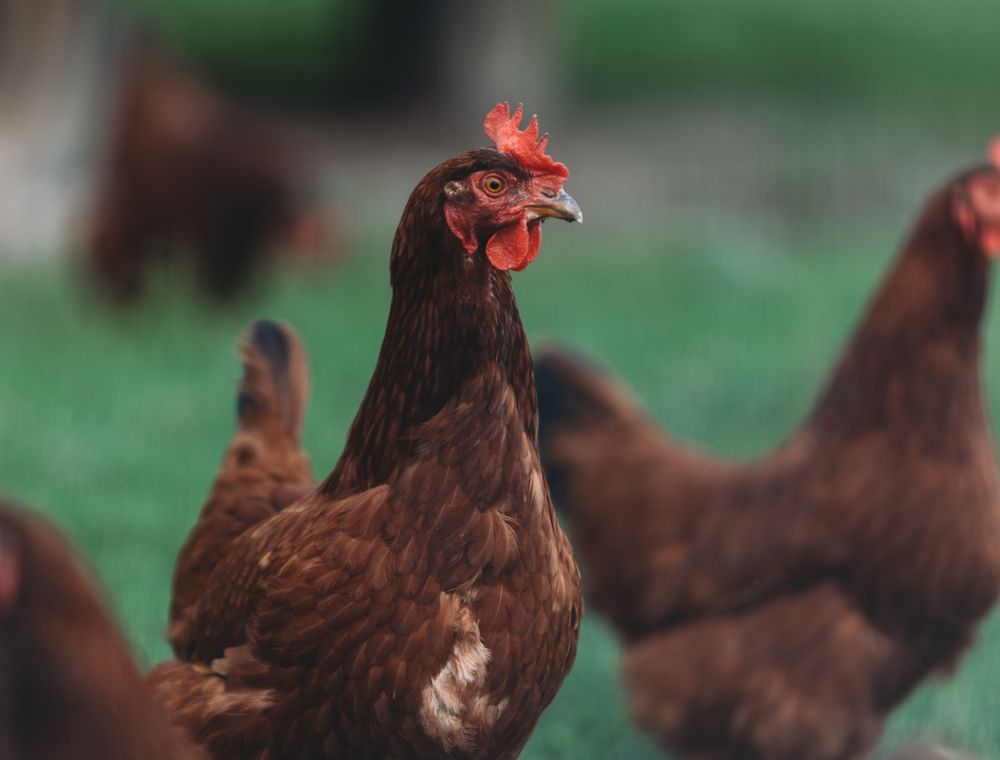
Short answer: Local chickens are hardy, cheap to keep and well suited to scavenging, but they usually grow slowly and lay fewer eggs. Exotic breeds, meaning improved commercial strains, lay and grow far more per bird but need feed, housing and a steady management routine to pay off. Local birds win for low-input family flocks and slow sales, while exotic birds win when you need eggs or meat on a schedule and can afford the inputs.
Key takeaways
- Local birds win on low input, scavenging ability and broodiness; exotic birds win on eggs per hen, growth per kilogram of feed and uniformity.
- The cheapest chick is not the cheapest bird. Feed, housing, vaccines and losses decide the real cost per egg or per kilogram.
- A worked example for 50 birds shows how a GH₵11 Kuroiler chick and a GH₵23 Hy-Line Brown chick change the business.
- Exotic birds need a vaccination schedule, a steady feed programme and good biosecurity to perform as their breeding promises.
- Many farms run a mixed model: improved dual-purpose birds for the main flock and a few local hens for broodiness and family use.
What we mean by local and exotic
The words get used loosely, so let us be precise. Local chickens, sometimes called indigenous or village chickens, are birds that have been kept in Ghanaian homesteads for generations. They are mixed in type and colour, usually free-ranging, and they have been shaped by local climate, scavenging and disease pressure rather than by a breeding programme for eggs or weight.
Exotic breeds are the improved commercial strains: layers, broilers and dual-purpose hybrids developed in Europe, North America and Asia and selected for specific performance. At Halaal Farms we hatch locally on European parent stock and import from the Netherlands, Belgium and Germany, so most of what we sell is in this exotic group.
Exotic does not mean fragile. Many improved breeds handle the Ghanaian climate well, as long as the house and management suit them. The real question is not whether a bird is local or exotic, but what it needs from you and what you need from it.
Where local birds win
Local birds have real strengths, and dismissing them is a mistake. Their biggest advantage is low input. A household flock that forages most of its own food, roosts in a simple shelter and needs little feed beyond scraps and a grain supplement can keep going with modest attention. For a family that wants a few birds for eggs and occasional meat, that is often exactly right.

- Foraging. They find insects, seeds and greens and need less bought feed.
- Heat and local conditions. Birds adapted over generations usually cope well with the climate they were raised in.
- Broodiness. Many local hens go broody and hatch and raise their own chicks, which removes the need for incubators.
- Low capital. You need little housing and no vaccine programme to start, though a vet plan is still wise.
- Taste and texture. Many buyers value the flavour and firmer texture of slower-grown birds.
The trade-off is output. Village birds often lay a few dozen to around a hundred eggs a year, depending on feed, shelter and the season, and they reach market weight slowly. Their performance is uneven, which makes planning and pricing harder.
Where exotic birds win
Exotic breeds are selected for performance, and that shows in the numbers. A commercial brown layer lays far more eggs per hen than a local bird, and a broiler or dual-purpose bird reaches market weight much faster. Improved birds also give you uniformity. When every bird in the house is roughly the same age, size and colour, you can plan feed, sell in batches and price your flock with confidence.
- Egg and meat output. Commercial layers and fast broilers give predictable yield per bird.
- Uniform flock. Similar birds grow and lay together, which simplifies feeding and sales.
- Vaccine response. Chicks vaccinated at hatch follow a known programme, which helps when you plan against common diseases.
- Planning. Known laying and growth curves make it easier to schedule festive sales or egg supply.
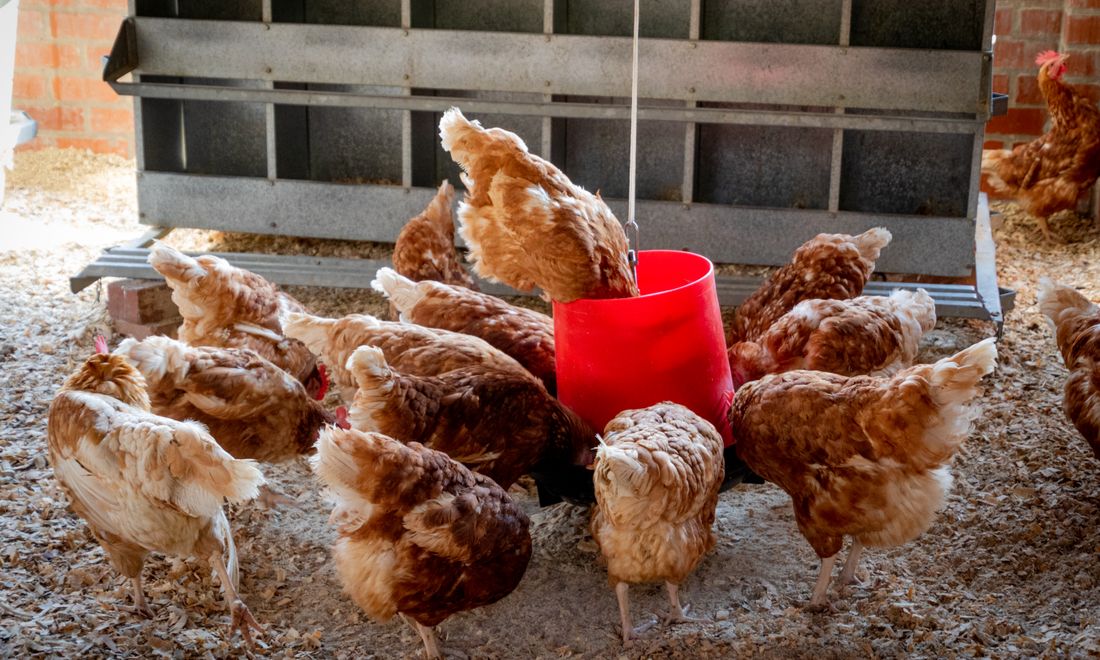
The price of that performance is inputs. Exotic birds need good feed, reliable water, a house that keeps them cool and dry, a vaccination schedule and daily checks. When those inputs are missing, the advantage disappears quickly, and an exotic bird in a neglected house can do worse than a local hen.
Trade-offs side by side
The table below compares the two groups on the factors that matter most to a farmer. Treat it as a general guide. The exact numbers depend on the strain, the feed and the house, and we have deliberately avoided quoting figures that would look like measured results.
| Factor | Local birds | Exotic birds |
|---|---|---|
| Starting cost per bird | Often low or free from a neighbour | From GH₵7 to GH₵25.50 per chick from us, box prices confirmed at order |
| Eggs per hen per year | Typically a few dozen to around a hundred | Much higher, especially brown and white commercial layers |
| Time to market weight | Slow | Fast for broilers, moderate for dual-purpose birds |
| Feed need | Low, relies on foraging | High, needs a complete programme |
| Housing need | Simple shelter | Ventilated house with shade, dry litter and drinkers |
| Broodiness | Common, hens hatch their own chicks | Often reduced in layers; some dual-purpose birds still go broody |
| Flock uniformity | Variable | High |
| Disease programme | Usually unvaccinated; plan with your vet | Vaccinated at hatch against common diseases, then a vet-led schedule |
| Planning for sales | Hard to predict | Easier, with known growth and lay curves |
Use the table as a checklist of trade-offs rather than a verdict. The best choice is the one that matches the work you can put in and the market you are selling to.
A worked cost example for 50 birds
Imagine you are starting with 50 birds and want to compare three options. Our prices are starting figures per chick, and a box is 50 chicks, so the chick cost is simply the box price. Feed, housing and vet costs are not included here because they depend on your local prices and your house.
| Option | Chick price (GH₵ each) | Box of 50 (GH₵) | Main role |
|---|---|---|---|
| Plymouth Rock | 7 | 350 | Dual-purpose, hardy, lower chick cost |
| Kuroiler | 11 | 550 | Dual-purpose, forages well |
| Hy-Line Brown | 23 | 1,150 | Brown layer for eggs |
The Hy-Line Brown box costs GH₵600 more than the Kuroiler box and GH₵800 more than the Plymouth Rock box. The question is whether those extra eggs cover the extra spend. Here is the way to think about it:
- Add up the chick cost, feed for the whole production period, housing, vaccines and vet visits.
- Divide by the number of eggs or kilograms of meat you expect to sell from the flock.
- Compare that cost per egg or per kilogram with the price you can actually get in your market.
- Add a margin for losses, because a few birds lost in the first weeks changes the picture quickly.
For illustration only, suppose a brown layer lays many more eggs than a local hen over the same year. If that gap is large, the higher chick price and feed bill can be worth it, provided the house and feed are good. If your house is basic and feed is irregular, the same brown layer may cost you more per egg than a well-kept village hen. That is why the inputs matter as much as the breed.
When local birds make sense
Local birds are usually the right choice when your goals are modest and your time is limited. A family that wants eggs and occasional meat, a homestead with plenty of space and a farmer who sells only in small local lots can all do well with village birds. They also suit households where the birds are part of a wider garden or plot, and where the flock is a supplement rather than the main income.
- You want a small flock for home use rather than a commercial business.
- You have space to free-range and little money for feed or housing.
- You want hens to go broody and raise their own chicks.
- Your market values local birds and will pay for them.
- You can accept slower growth and lower, uneven egg output.
Even when local birds are the goal, a sensible health routine helps. Keep the shelter dry, separate sick birds, and talk to your vet about a plan for the common diseases in your area.
When exotic birds make sense
Exotic birds make sense when the flock is a business and the timing matters. If you need a steady supply of eggs for a shop, a fast turnover of broilers for a market, or a predictable festive batch, improved breeds give you the predictability you need. They also suit farmers who can invest in a proper house, feed and vaccines.
- You need a predictable output of eggs or meat on a schedule.
- You can provide a ventilated house, shade and reliable clean water.
- You can buy a complete feed programme and keep it steady.
- You will follow a vaccination schedule with your vet.
- You plan to sell in volume or to buyers who want uniform birds.
If you are new to this, a small first batch will teach you more than any calculation. Our layer chicks and broiler chicks pages explain what each system needs, and our team will talk you through the options on WhatsApp at +233 24 915 1503.
Need chicks for your next batch?
Send breed, number and town. We reply with price, hatch date and delivery cost in writing.
Mixing the two: a practical middle path
Many farms do not have to choose one group. A common middle path is to keep the main flock as improved dual-purpose birds, which give reasonable egg numbers and a useful table weight, and to keep a small number of local or local-type hens for broodiness, family eggs and sales to buyers who ask for village birds.
Dual-purpose birds such as Kuroiler and Noiler forage better than most layers and sit in between the two extremes. They give you a flock that is easier to keep than a pure layer system and more productive than a village flock. If you want a full comparison of hardy options, our guide on the best dual-purpose chickens goes through them in detail.
Do not try to cross local and exotic birds on your own expecting a reliable result. Crossbred offspring vary widely in size, colour and performance, and that unpredictability undoes most of the planning benefits you were after.
Feed and housing differences
The biggest practical difference between the two groups is what they demand from the house and the feed bag. Local birds can live on a simple shelter, a scatter of grain and what they find. Exotic birds need a formulated feed matched to their age, a house that keeps them dry and cool, and a routine that never runs out of water.
- Local birds: basic shelter, scratch grains, greens and foraging, with a dry roosting spot.
- Exotic birds: starter, grower and layer or finisher feeds in sequence, with clean water always available.
- Local birds: fewer checks, but easy to lose to predators if not housed at night.
- Exotic birds: daily checks for feed, water, litter and behaviour, plus records of weight and lay.
If you plan to feed exotic birds, study our layer feeding guide and the broiler feeding schedule so you know what each stage needs before the birds arrive.
Health and vaccination differences
Every flock needs a health plan, but the plan looks different for each group. Exotic chicks from our hatchery are vaccinated at hatch against Marek's disease, Newcastle disease, Gumboro disease, infectious bronchitis and coccidiosis, and we provide a batch record with every order. That gives you a known starting point. Follow your vet's advice for the schedule that follows, because booster timing and local disease pressure differ from farm to farm.
Local flocks are usually not vaccinated, and their owners rely on hardiness and separation of sick birds. That can work for a small flock, but disease can move quickly through a larger mixed flock with no plan. If you are keeping local birds at any scale, sit down with your vet and agree a written plan.
Whatever group you choose, the basics are the same: clean water, dry litter, rodent and predator control, and quick isolation of birds that look unwell. Our biosecurity guide covers those basics in more depth.
A decision checklist before you buy
Before you choose between local and exotic birds, work through these questions honestly. Your answers will point you to the right group faster than any table.
- Is the flock for home use or for sale?
- How many eggs or kilograms of meat do you need per month?
- How much can you spend on feed, housing and vaccines each month?
- Do you have a ventilated house, shade and a dry place for the birds?
- Can you check the flock every day and keep records?
- Does your market pay more for uniform birds or for local birds?
- Do you have a vet you can call quickly?
If most answers point to a home flock with low spending, local birds are a sensible choice. If most point to a business with predictable output, exotic birds are the right route. If you are in between, start with an improved dual-purpose batch and see how it performs over one season.
Questions farmers ask
Are local chickens better than exotic breeds in Ghana?
Neither is better in every case. Local chickens are hardy, cheap to keep and good at foraging, but they usually grow slowly and lay fewer eggs. Exotic breeds are much more productive but need feed, housing and a vaccination plan. The better choice depends on whether you want a low-input home flock or a predictable business.
How many eggs does a local hen lay compared with an exotic layer?
Local hens often lay a few dozen to around a hundred eggs a year, depending on feed, shelter and season. Commercial brown layers lay far more under good management. Because local performance varies so widely, check your own flock's records rather than relying on a single figure.
Can I cross local hens with exotic cockerels to get the best of both?
You can, but the results are unpredictable. Crossbred chicks vary in size, colour, growth and laying, which makes planning difficult. If you want reliable performance, it is usually better to buy a known improved strain. Some farmers keep local hens for broodiness alongside an improved main flock instead.
Which is cheaper to start, local or exotic birds?
Local birds are often cheaper or free to start, because they can come from a neighbour's flock. Exotic chicks have a clear price. From Halaal Farms, Plymouth Rock starts from GH₵7 per chick, Kuroiler from GH₵11 and Hy-Line Brown from GH₵23, with box prices confirmed in writing before you pay. The cheapest start is not always the cheapest total cost.
Do exotic chicks need vaccines?
Yes. Chicks from our hatchery are vaccinated at hatch against Marek's, Newcastle, Gumboro, infectious bronchitis and coccidiosis, and you receive a batch record. Follow your vet's advice for the schedule after that, because the timing of boosters depends on your area and flock.
Can local birds live on scraps alone?
Local birds can forage and eat scraps, but scraps alone do not give a balanced diet, and that shows in slow growth and weak lay. Add a grain supplement, clean water and greens, and keep a dry roosting spot. For improved birds, a formulated feed for each growth stage is essential.
Where can I order exotic chicks in Ghana?
You can order from Halaal Farms through the <a href="/#order">order form</a> on our site, or by WhatsApp on +233 24 915 1503. We hatch locally and import from the Netherlands, Belgium and Germany, and we deliver to all 16 regions. You can also collect at the farm by appointment. Read our <a href="/imported-day-old-chicks/">imported chicks page</a> for more on our import range.


