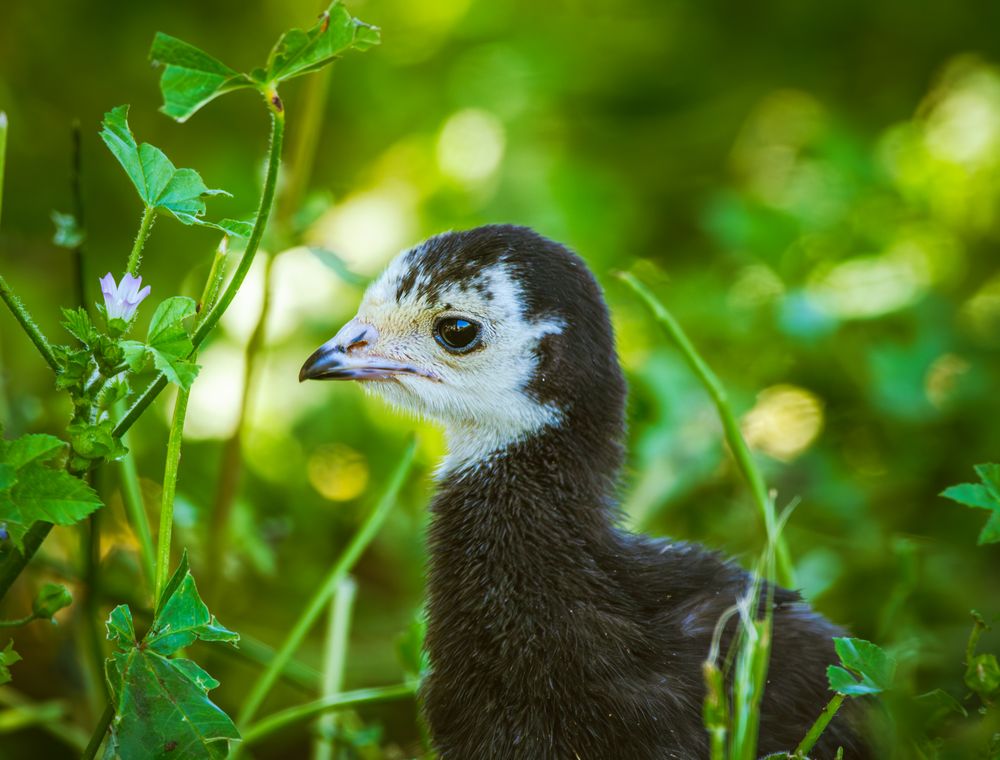
Short answer: Turkey poults need a starter at about 28 per cent protein, a grower near 24 per cent from around four weeks, and a finisher near 20 per cent for the last weeks before sale. Feed and water placement matter as much as the protein figure, because poults that cannot find food in the first two days are lost before the ration starts working. Work the Christmas sale backwards from the market age, and budget feed per bird, which in our worked example costs more than the poult itself.
Key takeaways
- Poults need a poult or turkey starter at about 28 per cent protein. A chick starter at 20 to 22 per cent will not carry them through the early weeks.
- Step down to a grower near 24 per cent around week four, then to a finisher near 20 per cent for the last weeks before sale.
- Shallow drinkers with pebbles and pan feeders protect the poults in the first days, when drowning and crowding are the biggest feed-related losses.
- Feed per turkey to sale often costs more than the poult itself. Track feed per bird from the first bag, not from the sale date.
- Working back from a Christmas sale means the feed plan starts months earlier than most people think. Plan the ration for the market weight you want.
The first two days: find the water before the feed
A turkey poult that has just come out of a ventilated box is small, soft and a little dazed. It has spent the journey without eating, and in the first two days it has to learn where the food and water are. Most early losses we hear about are not about nutrition at all. The poult could not find the feed, got chilled at the edge of a brooder, or drank the wrong thing.
So the feed plan starts with the setup. Our brooder ring setup guide covers the heat and the space in more detail, and the turkey poults page describes the box you should expect on arrival. Put the poults on fresh, cool water with a few clean pebbles or marbles in shallow drinkers, so a poult that slips in can stand up and get out. Spread the starter on paper or on a clean tray where the poults can see it, and add a sprinkle of chopped feed to the water tray for the first hour so they learn to pick.
Count the birds that are eating by the evening of the first day. If you see poults standing around with their heads down, or huddled in a corner under the heat, check the temperature before you check the feed. A poult that is cold will not eat, however good the bag.
Forcing feed into a listless poult does more harm than good. Dip its beak gently in water and show it the feed, and watch whether it swallows. If it still does not eat after that, call your vet. A bird that cannot eat in the first two days needs an expert's eye, and a bag of feed will not help it.
Poult starter at 28 per cent, and why a chick starter is the wrong bag
Turkeys are protein-hungry birds in their early weeks. Poult starters on the shelf usually run between 26 and 28 per cent crude protein, and the figure we use as a working target for a healthy starter is about 28 per cent. That is well above the 20 to 22 per cent you will see on most chick starters, and the difference is not a marketing trick. A poult that grows on a lower-protein feed will be thin and slow, and the flock will spread out in weight.
The trap is that many farmers keep a bag of chick starter in the store and reach for it when the poult feed runs out. Do not do that for more than a day or two. If you are short, buy the right bag from your supplier, or ask your feed miller whether they carry a turkey starter. A short stopgap should be written in your record book, with the date.
Read the label for the crude protein figure, and check that it is for turkeys or for game birds with the same protein level. Some mixes sold as general starters are built around chicken needs, and the calcium and phosphorus in them can be off for a turkey.
One practical point from the hatchery. Do not judge the ration by how fast the bag goes down. Judge it by the birds. Smooth feathers, bright eyes and steady weight gain tell you more than the bag does, and our feed formulation basics explains how to check the protein in any mix you are offered.
Stepping down to a 24 per cent grower at about four weeks
Around the fourth week, most poults are ready for a grower near 24 per cent protein. The switch is worth doing over two or three days, mixing the starter and the grower and then moving to the grower alone. A sudden change in texture can drop a flock's intake for a day, and a turkey that stops eating for a day in the growing weeks is a lost day you do not get back.
At this stage the birds are putting on frame and feathers at a fast pace, and their feed needs to support that. A 24 per cent grower carries enough protein for the growth without the extra cost of the starter. Many farmers see the bag cost fall, and that fall is only real if the birds keep gaining weight on it.
Weigh a sample of birds every week. We ask farmers to pick ten birds at random, weigh them in a bucket or a sack on a hanging scale, and write the average down. A flock that slows down in the grower stage is telling you the ration is too low in protein, the feeder space is too small, or the birds are sick. Check all three in that order before you change the bag.
Keep the grower dry and off the floor. Turkeys will peck at any feed spilled on the ground, and wet grower in a Ghanaian rainy season goes sour within a few days. Our feed storage article explains how to keep bags dry and what to do with feed that has turned.

Finishing on 20 per cent: why toms and hens need different plans
In the last weeks before sale, the ration drops again, to a finisher near 20 per cent protein. The bird is then mainly adding weight and fat, and too much protein at this stage is spent on muscle the buyer will not pay for. Turkeys are a long growing job, so this is not a small change, and it needs the same care as the switch to the grower.
Toms and hens are not the same. A tom grows much heavier and takes longer to reach a market weight, so he will spend more weeks on the grower and finisher feeds. A hen reaches a usable weight sooner and can be sold earlier. If you keep both sexes together, feed them the same ration, but decide the sale date for each sex separately. A flock that is held too long to fatten the hens often ends with hens that are over-fat and toms that are still light.
Many farmers try to hold birds for a higher price by feeding more energy in the last weeks. That can work, but only if you watch the birds closely. Over-fattened turkeys are slow to move, and the feed bill climbs without the price following. Set the sale weight before you buy the poults, and build the feed plan back from that weight.
Keep a simple record of the feed used per week and the birds' average weight, so you can see the cost per kilo of live bird at each stage. That number is the one that tells you whether the last weeks were worth it.
Feeders, drinkers and grit for turkeys in the pen
A feeder placed correctly does half the work of the ration. Poults start on flat trays or a pan feeder with a low rim, so they can reach the feed without climbing. As they grow, move them to a tube or a trough feeder with enough space for every bird to feed at once. A pen where the birds have to queue at a single feeder is a pen where the weak birds lose weight.
Use shallow drinkers for the first weeks, and keep them clean. Poults drown in drinkers that are deep enough to get a head into but not deep enough to get out of. Pebbles or marbles in the tray give them something to stand on. Change the water every day, and scrub the drinkers at least once a week.
Grit is the piece that many turkey keepers forget. A turkey that eats whole grain or coarse mash needs some insoluble grit in the gizzard to grind it. Most commercial starters and growers are ground fine enough that the birds get by without much grit, but once you feed grain, scraps or outdoor forage, a small pot of clean grit beside the feed is worth having. Our grit and shell article explains what to use and how much.
The feeder should always have some feed in it, and the drinkers should always have clean water. Those two rules sound obvious, and they are the ones we see broken most on farms that are otherwise well run.
Heat and harmattan: when turkeys eat less
In the hot months, turkeys eat less and drink more. A bird in a hot shed puts its energy into staying cool, and the appetite drops. Feed that sits in the heat also goes off quickly, which makes the problem worse. In those weeks, feed early in the morning and in the evening, and keep the grower in small amounts rather than one big fill.
The harmattan is the opposite problem in some ways. The dust gets into the feed, the birds sneeze and cough, and the appetite can drop when the air is dry and cold at night. Keep the feeders covered where you can, and sweep the dust off the trays. Our harmattan care guide goes through the sheds and litter in more detail, and our hot weather feeding article covers the heat side of the same problem.

When the weather turns, watch the birds rather than the calendar. A flock that stands in a group at the feeder, or sits under the heat lamp, is telling you about the temperature. Turkeys that huddle are cold. Turkeys that pant with wings held out are hot. Both mean feed intake will fall, and both need a fix before you change the ration.
Working out the Christmas sale backwards from today
Take a date in mid-October. Christmas is then about ten weeks away, and that number matters. A turkey hen usually reaches a sale weight somewhere in the region of twelve to sixteen weeks, and toms take longer, often sixteen to twenty weeks. A poult hatched in mid-October will not be on a Christmas table that year, however well you feed it.
That is the point of working backwards. Pick the sale date first, then count back the market age, then count back the brooding weeks, and only then decide when the poults should arrive. Most of the planning that goes wrong on turkey farms goes wrong at this step, because the farmer orders poults for the festive season in the middle of the season.
If you want birds for Christmas next year, the feed plan is what you should be setting now. Work out the feed you will need from the first day to the sale, how much will be grower and how much finisher, and how much storage you need to keep the bags dry through the rains. Feed that is bought in the wrong month, or stored in a damp corner, costs more than the price of the birds.
Our Christmas production plan sets out the calendar in more detail, and it is worth reading alongside this feed plan. The two belong together.
Need chicks for your next batch?
Send breed, number and town. We reply with price, hatch date and delivery cost in writing.
A feed budget for 30 turkeys to sale
Most turkey budgets look at the poult price and forget the feed. The sum below uses round numbers, and it is built to show you the shape of the cost rather than to predict your own. We have assumed a feed price of GH₵4.60 per kilogram for this worked example only. Replace it with the price your supplier quotes you, and replace the intake with the figure from your own records. Current poult prices are on our day-old chick prices page, and the figures there are the ones to use.
Take 30 poults. Each poult costs GH₵65, so the chicks come to GH₵1,950, which is three boxes of ten at GH₵650 each. Now the feed. For this example, we assume each turkey eats an average of 15 kilograms of feed from the first day to its sale weight. That is a working figure, and toms will push it higher while hens will sit lower.
The sum is 30 birds at 15 kilograms, which is 450 kilograms of feed. At GH₵4.60 per kilogram, that comes to GH₵2,070. Divided across the 30 birds, the feed cost is GH₵69 per bird. That is more than the price of the poult.
The lesson is simple. A turkey farm is a feed business with a chick purchase at the start. If you are judging the poult price alone, you are looking at the smaller number. Add the feed, the vet, the fuel for the brooder and the losses, and then compare the total with the price you can get at sale. A farmer who knows that number in October can make a sensible decision about the next batch.
Turkey feed by stage at a glance
Here is the turkey stage list. The protein levels are typical commercial ranges, the ages are approximate, and the flock's weights are the thing to trust when the two disagree.
| Stage | Age | Feed | Protein | Watch for |
|---|---|---|---|---|
| Poults, first days | Day 1 to about day 3 | Poult starter, fine crumb | About 28% | Every poult eating, water within reach, pebbles in drinkers |
| Poult starter | Day 3 to about week 4 | Poult starter | About 28% | Weekly weight sample, feeder space for the whole flock |
| Grower | About week 4 to week 8 | Turkey grower | About 24% | Step down over two to three days, grit if grain is fed |
| Finisher, hens | From about week 8 to sale | Turkey finisher | About 20% | Sale weight decided in advance, over-fat birds slow to move |
| Finisher, toms | From about week 8 to sale | Turkey finisher | About 20% | Toms take longer, so plan a longer finisher run |
The sex split in the last two rows is a planning note, not a second ration. If you need a finisher mix made to a specific protein figure, our formulation basics shows the working. You can feed both sexes the same finisher and still hold them to different sale dates.
Three feed mistakes we see on turkey farms
These three account for most of the feed problems we hear about when a turkey flock falls behind.
- Running a chick starter for weeks. The poults grow, but thinly. The flock spreads out in weight and the bigger birds bully the smaller ones away from the feed.
- Feeding one drinker for a whole brooder. The birds that cannot reach the water drink less, eat less, and fall behind by the second week.
- Changing the bag mid-week without a note. A new brand with a different texture can drop intake. If you change, mix the two feeds for a few days and write down the date.
None of these is expensive to fix. The problem is that they are easy to miss when the birds still look busy at the feeder.
A checklist before every feed change
Run through this list each time you move a flock to a new ration, whether it is starter to grower or grower to finisher.
- Check the protein figure on the new bag against the stage the birds are in.
- Mix the old and new feed for two or three days, and watch the feeder each morning.
- Weigh a sample of ten birds the day before the change, and again a week later.
- Confirm that every bird has room at the feeder and at the drinker.
- Keep the grit pot full if the birds are eating any grain or scraps.
- Store the new bag off the floor, under cover, and note the date it was opened.
- Write the change in your record book with the reason, so you can judge the result later.
If you are planning a batch and are not sure which ration suits your birds, call us on +233 24 915 1503 before you buy. Our turkey poults page lists what we supply, and you can ask us about delivery to your region through our delivery page. When you are ready to order, the order form takes the details and we confirm the price in writing before any payment.
For the wider picture of raising turkeys from the first box to the sale, our turkey farming guide covers housing, brooding and selling, and this feeding guide is meant to sit alongside it.
Questions farmers ask
How much protein should a turkey poult get?
A poult does well on a starter around 28 per cent crude protein for the first four weeks. Commercial poult starters often sit between 26 and 28 per cent, so check the label. A chick starter at 20 to 22 per cent will not support a turkey poult's early growth, and it is the most common feed mistake we hear about from farmers who are new to turkeys.
When do turkeys move from starter to grower?
Most turkey keepers move poults to a grower near 24 per cent protein at about four weeks. Change the feed over two or three days. Weigh a sample of birds each week, and if the weight gain slows, check the feeder space and the ration before you change anything else.
Do turkeys need grit?
Turkeys need grit when they eat whole grain, coarse mash or outdoor forage, because the gizzard uses it to grind food. A pot of clean insoluble grit beside the feed is cheap insurance. If the birds are on a fine commercial starter or grower and nothing else, grit is less critical, but keep it available once they start to forage or eat scraps.
How much feed does a turkey eat?
As a rough working figure, the average turkey may eat around 15 kilograms of feed from the first day to sale, with toms eating more than hens. That figure is for planning only. Keep your own intake records through one whole batch, and let those set the feed budget and the sale weight.
Why do my poults drown in the drinkers?
Poults are small and light, and a drinker that is deep enough for them to reach the water but too deep to climb out of will drown them. Use shallow drinkers in the first weeks, and put clean pebbles or marbles in the tray so the birds have something to stand on. Check the drinkers each morning and each evening.
Can I feed turkeys the same feed as my chickens?
Not safely over the whole cycle. Chicken starters are usually lower in protein than a turkey poult needs, and the balance of calcium and phosphorus can be different. A chicken grower or layer ration may not carry enough protein for a growing turkey either. Use a feed made for turkeys, and check its protein figure against the table in this guide before it goes in the pen.
When should I start planning a Christmas turkey?
Work back from the market age. A hen usually reaches sale weight in roughly twelve to sixteen weeks, and a tom often needs sixteen to twenty weeks. Plan the poult order, the feed and the storage against that calendar. If the sale date is close, a poult hatched now will not be ready in time, so the planning belongs to the next season.


