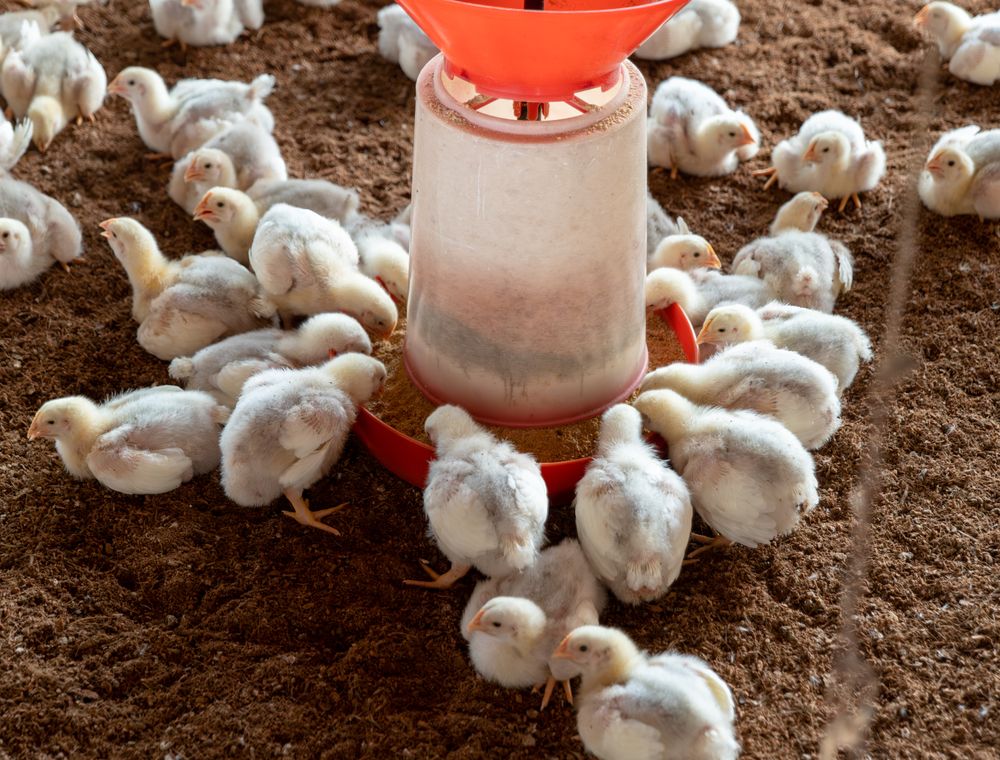
Short answer: A chicken that feels the heat eats less, and the protein and energy she misses do not come back later. Feed in the cool hours, keep the feed fresh and the water cool and full, and hold the formula steady rather than cutting protein to save money. If the trough is still full at dawn, the heat has already cost you a day of growth.
Key takeaways
- Most of the day's feed should go out in the cool early morning and again in the late afternoon.
- Do not change the formula because it is hot. Change the timing and the amount put out at once.
- Refill feeders in small amounts, so nothing sits in the heat long enough to go off.
- Water use climbs sharply in heat. Check it at noon, not only at dawn.
- A full trough at dawn means the flock did not eat yesterday. Write it down and act on it.
What heat does to appetite
A chicken is a small furnace with feathers. When the air is hot, she tries to shed heat, and the body does that partly by slowing down. Feed intake is the first thing to fall. She stands in the shade with her wings held out from her sides, pants a little, and eats in small bites when she eats at all.
The drop in intake is the real problem, more than the heat itself. A bird that eats 15 per cent less than normal takes in 15 per cent less protein and energy, and she cannot grow at her usual rate on that. A laying hen eating less lays fewer and smaller eggs. The loss builds quietly over three or four hot days and then appears as a flat week on the weight chart, when it is far too late to fix it cheaply.
The feeder tells you before the scale does. Get into the habit of looking at the trough the moment you walk in at dawn, before you touch a thing.
Timing the feed around the heat
Put feed in front of the birds when the air is cool, and make sure it is still there and fresh when the house is at its hottest. In most Ghanaian towns the coolest part of the day is the hour before sunrise, and the air eases again once the sun goes down. Midday, roughly 11 until 4, is when the house is hottest and the birds are least interested in eating.
Give most of the day's ration early in the morning, hold a second portion for the late afternoon, and top up in between only if the trough has run empty. Broilers under lights can take some feed in the cool of the night as well, but keep the light dim so they can rest. Layers do well on the same pattern: the main meal in the morning and a smaller one before dusk, with lamps off on schedule, as set out in our lighting programme for layers.
Whatever the pattern, measure it. If you cannot say how much went in before 9 am, you are guessing about the afternoon too.
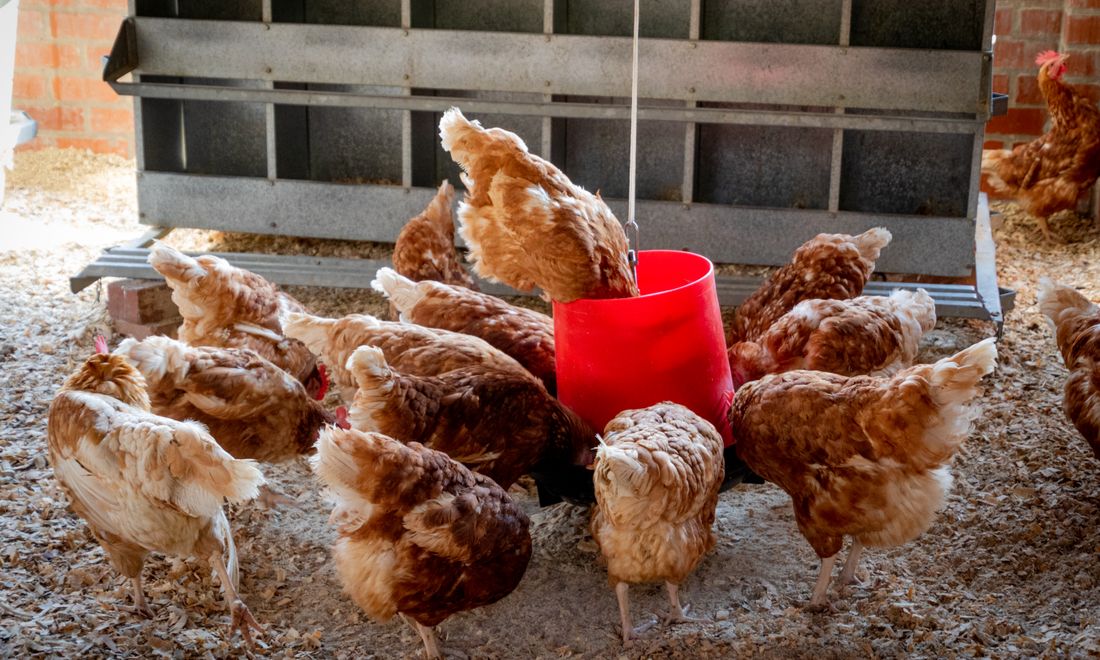
A hot-day timetable for the house
Pin this beside the feed bin for the hot months. Times are guides for a house in the coastal belt, and you will adjust them by a little as the sun moves.
| Time | What to do | Why |
|---|---|---|
| 5 am to 7 am | Check the trough, then fill the feeders with fresh feed | Birds are awake, hungry, and the air is still cool |
| 7 am to 10 am | Clear stale feed and check the drinkers | Heat starts to spoil feed quickly in an open trough |
| 10 am to 4 pm | Check water, and do not top up the trough | Fresh feed sitting in the heat loses quality and the birds leave it |
| 4 pm to 6 pm | Put out the second portion of fresh feed | Appetite returns as the air cools |
| After dark | Check the water and the ventilation once more | Overnight is when a hot house is most at risk of stacking heat |
The timetable is only useful if someone follows it every day, so write the times on the sheet and sign the sheet at each one.
Keep the formula steady, change the timing
The most common mistake we hear about in a hot spell is a farmer who cuts the protein in the feed to save money, or who buys a cheaper low-protein bag for the week. That is the wrong move. A bird that eats less needs every mouthful to count, and cutting protein makes every mouthful count for less.
Keep the feed that matches the bird's age and phase. Change the time you put it out, the amount you put out at once, and how long it is allowed to sit. A programme that works in March still works in April, provided the birds get it when they want it. If you need to move the bird to the next phase, do it on the calendar and the weight, not on the thermometer.
Layers are the one case where the formula question comes up, because egg size depends on energy and amino acids. Hens in a hot spell often lay smaller eggs for a few weeks, and our notes on heat and egg drop cover the house side. Speak to your feed supplier or your vet before you change the layer mash, and do not make the change on the strength of a single hot week. The fuller picture is in how to increase egg size in layers.
Water comes before feed in the heat
A bird in the heat drinks far more than she eats, and the water she drinks is what she needs to lose heat through panting. When the afternoon is hot, a flock can use a large share of its day's water between noon and three o'clock. Drinkers that run dry by then push the flock to eat less, because a thirsty bird is not interested in dry mash.
Check the water at dawn and again at noon. Check nipple lines by hand, because a blocked nipple looks like a working one from a distance. Shade the tanks and the drinkers, keep the water as cool as you can, and clean the containers every second day in the hot months. Slime on the inside of a drinker means birds will drink less from it. For the wider picture, see water management for broilers in Ghana, and if your drinkers are the nipple type, nipple versus bell drinkers covers the upkeep.
Feed that goes off in the heat
Feed is a dry product waiting to spoil, and heat and humidity speed that up. A trough of mash left open from morning to evening can warm, clump and start to mould. Birds smell the change before you do, and they walk away from it. Pellets hold up better than mash in humid weather, because they hold less moisture on the surface, which is one reason many farms switch form for the hot months.
Keep the bags closed, off the floor and away from the wall, and use them in order, oldest first. In the hot season, bring in only what the next two days need. Our rule is simple. If the feed in the trough smells sweet, sour or musty, it goes out, and the feeder is washed before anything goes back in.
For storage in more detail, read storing feed and avoiding mould.
When birds stop eating in the afternoon
Some birds lose their appetite in the afternoon heat and still look fine at dusk. Others sit with wings out, gasp with beaks open, and crowd against the cool wall. The first group is coping. The second group is heat-stressed, and feed alone will not fix them.
Look at the flock when the temperature peaks. Birds that gather in one corner and stay there are too hot. Birds that stand apart and pant are usually coping, but only just. If several birds stop eating and stand with open beaks, cool the house, make sure every drinker is running, and call your vet. Do not wait for the next morning. Sudden deaths in the afternoon, birds that cannot stand, and a flock that eats nothing for a full day all need a vet the same day. The detail on the heat itself is in heat stress in broilers: signs and fixes.
Need chicks for your next batch?
Send breed, number and town. We reply with price, hatch date and delivery cost in writing.
Adding energy without overfeeding fat
When intake falls, some nutritionists raise the energy in the ration a little, usually with a small amount of oil or fat, so the birds get more energy from each mouthful. It can work. It can also go wrong, because fat turns rancid quickly in heat and humidity. A rancid ration makes birds eat less, which is the opposite of the goal.
If you want to try it, mix only what goes out that day, keep the oil cool and sealed, and check the trough every morning for smell. Ask your feed supplier what the ration already contains before you add anything, because most commercial feeds are balanced already and an extra fat may push them out of line. For a flock that is growing well, the timing change above is usually all it needs.
What a bad hot week costs
Here is a worked example with one assumption, which you should change for your own flock. Take 300 broilers in week five, eating about 160 grams each per day. Over a hot week, intake drops by 10 per cent. That is 16 grams less per bird per day, or 4.8 kilograms less for the whole house every day, and 33.6 kilograms less across the week.
The feed the birds did not eat is not a loss. The problem is the setback. Assume, for the arithmetic only, that the flock needs two extra days to reach the weight it would have hit on time. Two days of feed for 300 birds at 160 grams is 96 kilograms. At an illustrative GH₵8.20 a kilogram, that is GH₵787.20 of feed alone, before you count the power for the fans, the litter, the water, the labour and the chance that the late birds go to market in a weaker price week.
The point is not the figure. It is that a two-day setback is more expensive than most farmers guess, and it starts in the trough at dawn.
The hot-week checklist
- Read the trough before you fill anything, and write down how much was left.
- Fill the feeders in the cool hours, and only with what the next two days need.
- Clear stale feed by ten in the morning, and wash the feeder if it has any clumping.
- Check every drinker and nipple line by hand at dawn and at noon.
- Keep the feed bags closed, off the floor and away from damp walls.
- Keep the second feeding for the late afternoon, and keep the lights dim after dark.
- Call the vet the same day if birds stop eating, cannot stand, or die in the afternoon.
If you are planning a flock that will go through the hot season, our broiler day-old chicks page explains the batch sizes we supply. You can place an order through the order form, or WhatsApp +233 24 915 1503 to talk through the house before the birds arrive.
Questions farmers ask
Should I stop feeding my chickens during the hottest part of the day?
Not entirely. Keep feed available, but do not keep topping up the trough at noon, because fresh feed heats and birds eat less. Give most of the day's ration in the early morning and late afternoon, and make sure water is always full and cool. A short break from fresh feed at midday is fine. A whole day without feed is not.
Do chickens need more water in hot weather?
Yes, a lot more. Water intake can rise sharply on hot days, and a flock that runs short in the afternoon will eat less the next morning. Check drinkers at dawn and at noon, clean containers every second day, and keep them in shade. A sudden drop in water use is a reason to look closely at the flock, because sick birds drink differently.
Can I switch to a lower-protein feed when it is hot?
Avoid it. Hot weather already lowers intake, so each bird eats less protein and amino acids than usual, and a lower-protein feed compounds that loss. Keep the feed that matches the bird's age and phase, and fix the timing and the water instead. If you have a real reason to change the formula, ask your feed supplier or your vet first.
Why do my layers lay smaller eggs in the heat?
Heat cuts feed intake, and eggs need energy and protein to grow to full size. Hens in a hot spell often produce smaller eggs for a few weeks before they recover. Keep the feed fresh, the water cool and the house ventilated. Do not change the layer mash on the strength of one hot week. Give the flock time before you decide anything.
Is it safe to feed wet mash in hot weather?
Only if you feed it fresh and in small amounts. Wet mash begins to ferment in the heat within a few hours, and a sour smell is a sign of spoilage. Mix only what the flock will eat in one sitting, remove what is left before it sours, and wash the trough the same day. Dry pellets are often easier to manage through the hot months.
How do I tell heat stress from disease?
Heat-stressed birds pant, spread their wings, and gather in the shade, and they usually recover once the house cools. Sick birds may stop eating, sit hunched with ruffled feathers, or pass watery droppings even when the house is cool. If birds fail to recover by the evening, or you see deaths, call your vet the same day.
What should I do before a heatwave arrives?
Check the water lines and drinkers, clean the containers, and test the fans and vents. Bring in only the feed the next two days need. Write the feeding times on your sheet so everyone on the farm knows when to feed and when to check. Keep a store of clean, cool water for emergency top-ups.


