Short answer: A supply contract with a poultry buyer in Ghana should say exactly what is sold, how it is weighed or graded, the price and when it can change, how and when you are paid, what happens to rejected or short birds, and what happens if disease stops supply. A written contract protects both sides and turns a phone argument into a clause you can point to.
Key takeaways
- Describe the product in measurable terms: live weight or dressed weight, egg grade, crate size and collection point.
- Fix the price for a stated period, and write the review date and the formula into the contract.
- Agree the rejection rules before the first delivery, including who weighs and who has the final say.
- Name what happens during bird flu or a movement ban, so the supply duty is paused fairly.
- Keep delivery notes, weigh tickets and receipts for every load, because they are the proof.
The phone deal that goes wrong on delivery day
What happens on the morning the buyer refuses a crate that was agreed by phone? In our experience, the answer is an argument at the gate, a driver waiting with a lorry, and two people who each remember the deal differently. Nobody has written anything down, so the shouting decides who wins.
A written supply contract is not about distrust. Our guide to outgrower contracts explores the same issues from the grower's side. Most buyers in Ghana are honest and most farmers want to deliver what was promised. The contract is there for the day when a price moves, a batch comes in light, or a buyer's manager leaves and the new one remembers nothing. It turns a memory into a clause that both sides have read and signed.
Why written beats verbal, even with a friendly buyer
A verbal deal is still a contract in law, and Ghana's Sale of Goods Act, 1962 (Act 137) fills some gaps with default rules. But default rules are general. They do not say how many birds count as a short delivery, how a weighing is witnessed, or how far in advance a price change must be given. Those details are what decide a dispute, and they are exactly what a verbal deal leaves blank.
Write the contract even if the first order is small. A small order with a good buyer is the easiest time to agree the rules, because nobody is angry yet. Ask a lawyer to check the final draft, and budget for that advice as you would for feed.
The parts every supply contract needs
A poultry supply contract does not need to be long to be complete. The partnership models guide covers the wider question of who owns what. It needs to answer thirteen questions clearly. The list below is the set we would expect to see in any contract a farmer signs, and it is a good template to take into a meeting.
- The full legal names and addresses of the seller and the buyer, with phone numbers and a named contact on each side.
- The product, described in measurable terms, with the grade, size or weight range.
- The quantity, the frequency and the day of delivery or collection.
- The price per unit, how and when it can change, and the review date.
- The payment terms, including any deposit and the method of payment.
- The collection or delivery point, who pays for transport and who loads.
- How the product is weighed or counted, and who is allowed to witness it.
- The quality standards and the rules for rejecting a delivery.
- The rules for short supply, mortality and replacement.
- What happens during disease, a movement ban or other events beyond either party's control.
- The length of the agreement, the notice needed to end it and the reasons either side may end it early.
- How disputes are handled, and which court or arbitration body applies.
- Signatures, dates and the names of witnesses, with a copy for each party.
If a clause is missing from the list, that is the one a buyer will want to argue about later. Make sure it is written.
Describe the product so nobody has to guess
Most supply disputes start with the product description. A contract that says "good broilers" is a contract for an argument. A contract that says "live birds of a stated breed, weighed on a calibrated scale at the farm gate, averaging not less than the agreed weight per bird" gives both sides a number to check.
For live birds, state whether the price is per kilogram of live weight or per bird, and at what age or weight the birds are sold. Say how the flock is weighed, on what scale, and by whom. Agree how the birds are caught and held before weighing, and how long the feed is withheld before the birds leave the farm. The withdrawal period for any medicine must follow the label and your vet's advice, so write that in as a condition, not as a guess.
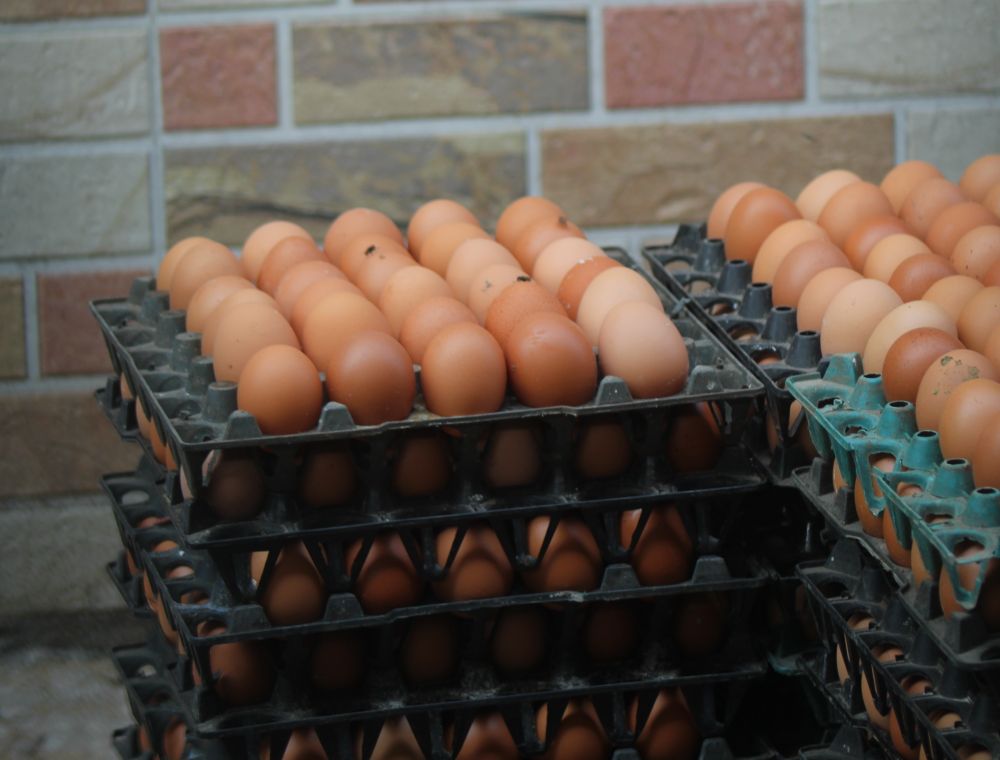
For table eggs, the buyer usually cares about grade, size and cleanliness. Our guide to what egg buyers check sets out the criteria in detail, and it is a good source for the wording. Our delivery page is also useful if you are arranging transport from the hatchery side. Name the crate size, the crate type and the collection point. A standard crate of 30 is easy to count, and the contract should say what happens to a crate with fewer eggs.

For dressed birds, define the weight after dressing and the rules for giblets and feathers. If a buyer wants birds plucked and cleaned, the contract should say so, and who pays for the labour and the water.
Price: a fixed figure, a formula or a review date
The price clause is where most contracts go soft, and where most buyers push. Three approaches work in practice. You can fix the price for a stated period. You can tie it to a formula that moves with an agreed reference, such as the feed cost or a published market report. Or you can set a review date when both sides sit down and agree a new figure in writing.
Whichever you choose, a price should never change on a phone call. Put the change in writing, with an effective date, and agree how much notice the buyer must give before a rise or a fall. Our guide to pricing through market swings covers how to set a floor and move in steps, which helps when you draft the review terms.
Sample wording of the kind we would expect to see in a clear contract is shown below. Fill the blanks with the figures you agree, and check the wording with a lawyer before you use it.
The price is GH₵ ____ per kilogram of live weight for the period from ____ to ____. The parties shall review the price on ____. Any change takes effect only when agreed in writing and signed by both parties, with at least ____ days' notice given before the change applies.
Notice the blank that asks for a notice period. Buyers often leave it out, and then a price rise arrives on the day of delivery.
Payment terms, deposits and the cheque you never see
Payment is where cash flow lives or dies. A buyer who pays on collection keeps your working capital tight but safe. A buyer who asks for thirty days of credit is, in effect, borrowing your birds and your feed money for a month. Decide which you can afford before you talk about price, and write the answer into the contract.
- State the deposit, if any, and when it is due. A deposit on the chick order or the first load is common, and it should be credited against the final invoice.
- State the payment method: mobile money, bank transfer or cash, and the account name that must appear on the transfer.
- State the payment date in relation to delivery, for example on collection or within a number of days after the invoice.
- State what happens if payment is late. Agree any late-payment charge in writing, and check what the law allows before you set a figure.
- Require a receipt or signed delivery note for every payment, and keep a copy.
Do not accept a cheque from a buyer you have not dealt with before unless you have checked the bank and the account name. A bounced cheque at the end of a long cycle can wipe out the margin on a whole flock.
Rejection, short supply and the table that settles them
Every supply contract needs rules for the bad day. What counts as a rejected bird or egg? Who decides? How quickly must the buyer say so? And what does the farmer owe in return? The table below sets out the clauses we would want in place before the first load leaves the farm.
| Situation | What the clause should say | Why it protects you |
|---|---|---|
| Birds or crates below the agreed weight or grade | Define the minimum, the weighing method and the witness on both sides | Stops a single disputed scale from deciding the load |
| Rejection on arrival | Buyer must state the reason in writing within a set time, with a photo or count | Prevents a rejection days later with no evidence |
| Short delivery from mortality | A stated mortality allowance and a rule for replacement or a price adjustment | Recognises that live birds die, and says what happens when they do |
| Eggs cracked in transit | Who carries the cost of transit damage, and how the count is agreed | Puts transport risk on the party that controls transport |
| Buyer cancels a standing order | Notice period and any payment for birds already placed or fed | Protects the cost of stock you have already committed |
| Farmer cannot supply | Notice given within a set time, with a stated replacement or refund plan | Keeps the relationship and limits the damage to the buyer |
Read the table against your last two or three deliveries. If your past loads would have been rejected under the clauses, the clauses are too strict, and you should change them before you sign.
Disease, bird flu and the pause clause
A poultry contract that does not mention disease is incomplete. If a flock is placed under restriction, or the Veterinary Services Directorate orders a movement ban, you may be legally unable to deliver. The contract should say that supply is paused in that case, for how long, and what notice each side must give. Otherwise the buyer may treat the pause as a breach and claim the cost of replacement birds.
Write in the duty to report. If your vet suspects a notifiable disease, you report it to the Veterinary Services Directorate or your district veterinary officer straight away, and you tell the buyer within a set time. Our avian influenza guide sets out the signs to watch for, and the clause should match the reporting duty in that guide.
Do not assume the state will pay for birds that are culled. Compensation schemes have existed in Ghana at times, but amounts and availability change, and there is no guarantee. Decide in the contract who bears the cost of birds that cannot be delivered for a reason beyond either party's control. That is a question with money attached, and it is better answered in advance than in an emergency.
If the flock is clean and the pause is short, the best outcome is usually a short delay and a clear restart date, written down. A long pause often ends the contract, so agree the trigger for ending it as well.
Need chicks for your next batch?
Send breed, number and town. We reply with price, hatch date and delivery cost in writing.
Worked example: a buyer who wants 300 birds on a set day
Imagine a restaurant buyer who wants 300 live broilers collected on a Saturday, at a price per kilogram of live weight agreed for one month. The farmer knows that a few birds will not make weight, and that a few will die in the last week. The contract should reflect that before a single chick is placed.
A farmer who plans to deliver 300 birds at the agreed weight should plan a larger flock. Our day-old chick price page has the from prices to start from, and the broiler chick page shows the breeds. Allowing for a small mortality margin, a flock of 310 Ross 308 chicks at our from price of GH₵20 each comes to GH₵6,200 in chicks alone, before feed, vaccines, housing and transport. The contract should match the number of birds the buyer takes to the number the farmer can deliver, and say what happens if the number falls short.
Suppose the flock delivers 285 birds on the day, all above the minimum weight. The contract needs a short-supply rule that says whether the buyer pays for the 285 at the agreed price, whether a shortfall charge applies, and whether the farmer must replace the missing birds from a second batch. A rule that says "best efforts" leaves the question open. A rule that gives a number closes it.
Write the example into the contract as a schedule, with the weight range, the count, the collection time and the rule for shortfall. Both parties then know what to expect, and the farmer knows what the flock must deliver before the chicks are ordered.
Termination, notice and how a dispute gets settled
Every contract ends eventually, and most end without fuss if the exit is written down. Set the notice period for ending the agreement without cause, and list the reasons either side may end it immediately, such as non-payment or repeated failure to deliver. Agree what happens to birds already placed and any stock already fed at the end date.
For disputes, the order is usually a meeting first, then a written notice, then a neutral mediator, and only then the courts. Name the court or arbitration body in the contract, and say which law applies. Most farmers do not need a long court battle, but a clear route is far cheaper than an argument with no end.
Keep the records that make a dispute easy to settle: the signed contract, delivery notes, weigh tickets, invoices and payment receipts. A farmer with a clean paper trail rarely loses an argument about what was delivered.
Clauses to question before you sign
Some clauses look ordinary but favour the buyer far more than they seem. Read every one twice, and ask whether you could live with it on a bad month. These are the ones we would question first.
- A right for the buyer to reject any delivery for any reason, with no evidence and no time limit.
- A price the buyer can change on their own notice, or a price tied to a reference you cannot check.
- A penalty for late delivery set so high that one late truck wipes out the margin on the load.
- Exclusivity that stops you selling to anyone else, without a price or volume that makes it worth your while.
- Unlimited liability for losses, in place of a cap or a clear list of the losses covered.
- A long payment period with no interest and no way to stop supply when the account falls behind.
If a buyer pushes back on one of these, ask what they are worried about. Often the answer can be written into a narrower clause that protects both sides.
Signing, records and the checklist before you sign
A contract is only as good as the signing. Both parties sign and date every page, two copies are made, and each party keeps one. Name witnesses where the value is high. Keep the signed copy somewhere dry and safe, and photograph it on your phone as a backup.
Review the contract every six months, or when the price moves. Compare the delivery notes, weigh tickets and invoices with what the contract says, and note any clause that has stopped working. Our group buying guide makes a similar point for groups of farmers selling together: one shared price list is much easier to defend than a set of private side-deals.
Before you sign, run through this checklist:
- The product is described in weights, grades or counts that can be measured.
- The price, the review date and the notice period for changes are all written.
- The payment method, the payment date and the late-payment rule are stated.
- The rejection rules, the weighing witness and the time limit for rejection are set.
- Short supply and mortality have a stated rule.
- Disease, bird flu and movement bans trigger a clear pause and restart.
- Termination notice and the dispute route are named.
- A lawyer has read the final draft, and each party has a signed copy.
If you want to see how a buyer might look at your flock before the first load, our guide to catching and loading broilers and our guide to transporting live birds show what a buyer's team will check on collection day.
Questions farmers ask
Do I need a written contract to sell poultry to a buyer in Ghana?
A verbal deal can be binding, but it leaves most of the important details open. A written contract sets the product, price, payment, rejection and dispute rules in advance, so nobody has to guess on delivery day. Even a small first order is worth writing down, and a lawyer should check the final draft.
What weight should the contract use for live birds?
Use the weight that both sides can measure: live weight per bird or per kilogram, weighed on a calibrated scale at a named point. State the scale, who weighs, who witnesses and the minimum weight or range. Avoid vague terms such as good size, which give the buyer room to reject anything.
How long should a supply price be fixed for?
It depends on the market and the cycle length, but a fixed period with a written review date is the most common approach. Include the notice a buyer must give before any change applies. A price that can change on a phone call is the one most likely to cause a dispute.
What happens if the flock is hit by bird flu?
The contract should pause supply, state how long the pause lasts and say who must notify whom and how quickly. Report suspected cases to the Veterinary Services Directorate or your district veterinary officer right away. Do not assume compensation will be paid, because schemes and amounts vary. Agree in writing who bears the cost of birds that cannot be delivered.
Can a buyer reject my birds on arrival?
Only under the rules in the contract. Agree the grounds for rejection, the weighing method, the time limit for stating a rejection in writing and what evidence is needed, such as a photo or a count. A buyer who rejects without stating a reason should not be able to walk away from a load without consequence.
What should I do if the buyer pays late?
Follow the late-payment clause, send a written reminder with the invoice number and the due date, and keep the delivery notes that prove the load arrived. If the contract allows, pause the next delivery until the account is cleared. Check with a lawyer before you take legal action, and keep the records ready.
Should I sign an exclusive supply deal?
Only if the price, volume and payment terms make it worth giving up other buyers. Exclusivity is a cost, because you cannot sell your birds elsewhere even when a better offer comes. Make sure the exclusivity has an end date, a price that covers it and a way out if the buyer stops paying.


