
Short answer: Suspected bird flu is reported to the Veterinary Services Directorate through your district veterinary office, and you do not need lab proof before you call. The official process then covers a field visit, possible sampling, and a hold on the movement of birds, eggs, litter and equipment, with conditions for lifting it that the authorities set. Ask for every instruction, its start date and its end date in writing, and keep a record of every visit.
Key takeaways
- Report on suspicion to your district veterinary office, and copy in the regional office if you cannot get through.
- Have the farm details, bird numbers by house and the death timeline ready before you dial.
- Expect a field visit and possibly sampling. Keep the birds penned and the house closed until told otherwise.
- An official movement hold covers more than live birds. Ask what it means for eggs, litter, feed and people.
- Get the hold, its conditions and its end process in writing, with dates and the officer's name.
- Keep your buyers and neighbours informed in plain terms, and stay off social media about the case.
Who you call, and in what order
In our experience, bird flu cases drag on because of the phone, not the birds. A farmer rings a neighbour first, then the agro-dealer, then a cousin who used to keep layers, and by the time the official route is tried the best part of a day has gone. The official route is short. Learn it now, while you are calm.
Suspected bird flu is reported through the Veterinary Services Directorate, which works through district and regional veterinary offices. In practice, your first call is to the district veterinary office that covers your farm. If you cannot reach anyone there, go up one level to the regional office, and keep trying both. Your own private vet can also make the report on your behalf, but make your own call as well, and ask for a reference or a name so you can match it later.
| Level | Who it is | What they handle for you |
|---|---|---|
| First call | District veterinary office for your area | Receives the report, sends a field officer, starts the case record |
| Escalation | Regional veterinary office | Covers the district if it cannot be reached, and coordinates larger responses |
| National | Veterinary Services Directorate | Sets the official measures, sampling and any movement restrictions |
| Your own adviser | Private vet or poultry consultant | Helps you prepare, examines birds, and can report, but does not replace the official route |
Write the three numbers on a card, keep it in the house and in your phone, and check them every few months. Numbers change, and the card you find in a drawer after a scare is often out of date. For the signs that should send you to the phone in the first place, our avian influenza guide is the place to start.
What to say in the first two minutes on the phone
The officer on the other end is working through a list. The faster you can answer that list, the sooner someone comes out. Have a scrap of paper in front of you with these facts, and read from it if your mind goes blank.
- Your name, the farm name and the exact location: village or town, the road, and a landmark a driver would recognise.
- The number of birds, by house and by type. Say chickens, guinea fowl or turkeys separately.
- The number dead, the date and time the first bird was found, and how many died each day since.
- The signs you have seen: birds that stop eating, drop their heads, have swollen heads or combs, or have watery or green droppings. Describe what you see, do not diagnose it.
- Any change in feed, water or egg numbers, and when it started.
- The last vaccinations given, with dates, and where the birds came from.
- Recent visitors, traders, vehicles or dealers who have been on the farm.
- Whether any birds, eggs or litter have left the farm in the last few days.
Say the last point honestly, even if the answer is embarrassing. An officer who hears about a sale on day three will plan around it. An officer who hears about it from a buyer on day ten will not forgive it quickly.
Report on suspicion, because proof is not your job
Farmers often wait because they want to be sure. They want the laboratory to say it, or they want a second opinion from someone who might tell them it is only Newcastle or only a bad batch of feed. That wait is the most expensive part of the whole process. Testing and confirmation are the authorities' job. Your job is to notice something unusual and say so.
If you are worried enough to lose sleep, that is enough to report. A false alarm usually costs a visit, a few hours of an officer's time and some awkward questions. A delayed report can cost the flock, your neighbours' birds and your standing with the officials who will have to decide what happens next. We would rather a farmer rang twice for a case that turned out to be ordinary than once, three days too late.
When you report, say clearly that you are reporting a suspicion, and ask what happens next. While you wait for the officer, the work on the farm is covered step by step in our field guide for the first 72 hours. The answer might be a visit the same day, a visit in a few days, or an instruction to watch the birds and call back if things change. Write down the answer, the officer's name and the time of the call.
The field visit and sampling: what the team will do
A field officer usually wants to see the birds where they are, not in a photo. They will walk the house, look at live birds and any dead ones, check the feed and water, and ask to see your records. Some visits end with samples taken. Those can be swabs from live birds, samples from dead birds, or blood. The officer decides what to take and from where, and you should not try to pick them or prepare them yourself.
Keep the birds penned and the house closed while the officer is there, and ask them to use a footbath and dedicated overshoes, as you would for any visitor. Walk them through the house in the order they ask, and answer each question with the number you wrote down. If they ask for something you do not have, such as a vaccination card, say so and tell them where you can get it.
Ask for a written record of what was collected, the time, the place and the name of the person who took it. Ask for the reference number of the case. If the officer leaves without a record, phone the district office the next day and ask them to confirm the visit on file. A visit that is not on paper is hard to refer to later, and that matters if the case is ever reviewed.
- Note the officer's name, the time they arrived and the time they left.
- Ask what was collected, from which birds, and where it is being sent.
- Ask for a written note of any instruction they give on the spot.
- Do not let anyone take birds, eggs or samples away without a receipt.
The official hold on your farm, in plain terms
A movement hold, sometimes called quarantine in everyday talk, is an instruction from the authorities that keeps birds, products and people from leaving the farm while the case is looked at. It is not a punishment, but it is strict, and it is set by the authorities for each case. The hold can cover the whole farm or only part of it, and it can apply to some products and not others.
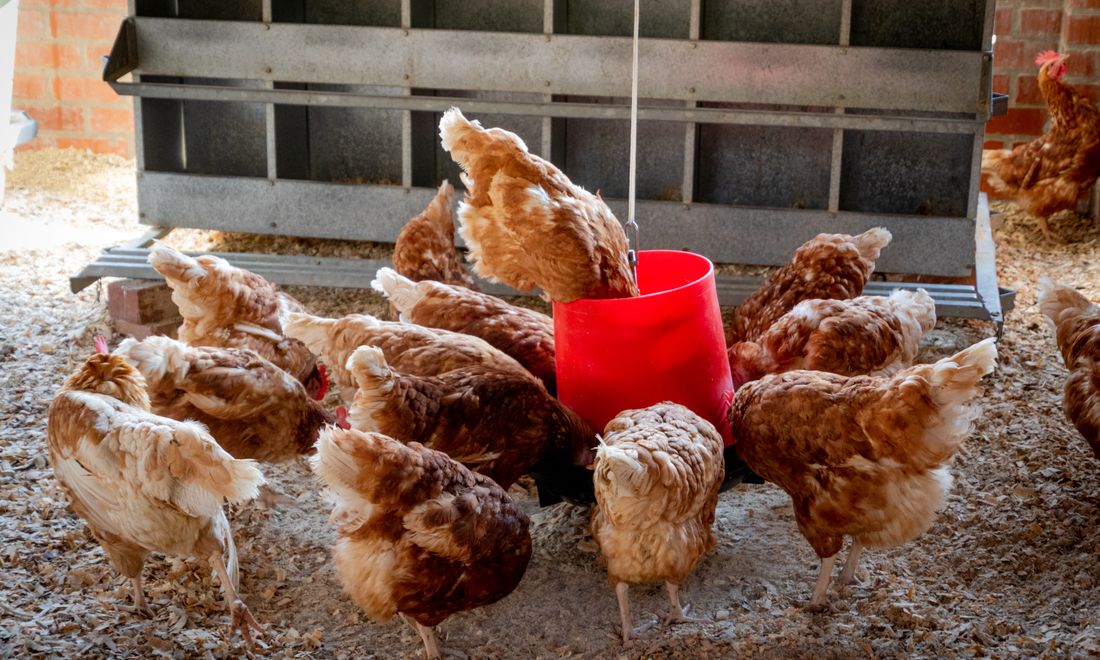
What it does not mean is that you stop running the farm. You still feed the birds, collect the water, keep the log and maintain the house. What changes is that the things you usually send out stay where they are until someone in the official chain says otherwise. Treat the hold as a set of boundaries, and write each boundary down on a single page that is pinned to the house door. The everyday version of that discipline, including the biosecurity habits that keep disease out, is worth reading before you need it.
- Birds: no sales, transfers, gifts or movement off the premises unless the authorities approve it in writing.
- Eggs: kept in the store, labelled, and not sold until the conditions say they may be.
- Litter and manure: stay on the farm and are not spread or sold.
- Equipment: crates, trays and feeders do not leave the farm, and do not move between houses until cleaned.
- People and vehicles: visits are logged, and vehicles that have come from elsewhere are kept outside the yard.
- Feed: deliveries are recorded, and any feed that has been opened stays under cover.
The everyday version of keeping birds apart, which applies to any birds bought in from outside, is in our quarantine guide for new birds. When you are not sure whether something is covered, do not decide for yourself. Ask the district office in writing, and do the thing you are not sure about only after you have a reply.
Movement permits and the grey areas that cause trouble
Most of the problems we hear about after a hold do not come from deliberate breaches. They come from the grey areas: a crate that goes back to the feed supplier, a dead bird taken to a vet clinic in town, a worker who takes home a sack of litter for the garden. Each seems minor, and each can be enough to reopen the case.
The table below shows the kind of question to ask before anything moves. The answers depend on the conditions the authorities set for your farm, so treat each row as a question to put to them, not an answer.
| Item | Usually allowed to move? | What to ask before it moves |
|---|---|---|
| Live birds | Not without written approval | Destination, reason, transport, and what happens on arrival |
| Eggs for sale | Depends on the conditions | Whether a sale is allowed, to whom, and how the trays must be labelled |
| Dead birds | Only for disposal as directed | Who collects, where they go, and what paperwork they need |
| Litter and manure | Usually not | Whether it can be composted on site, and under what conditions |
| Crates and trays | Not until cleaned and cleared | What cleaning is required, and who checks it |
| Feed sacks | Empty sacks may be treated differently | Whether empty sacks must be kept or destroyed |
Ask for every answer in writing, including the ones that say no. A written no is far more useful later than a verbal yes, and it protects the officer as well as you.
The paper trail the officials will ask for
Officers do not ask for records because they enjoy paperwork. They ask because a clear record lets them trace where the disease could have come in, and whether it could have gone out. A farm with a tidy record gets through the process faster, and it is easier to defend any claim later.
Gather these records now, while everything is fresh, and keep them together in one folder that is kept in the house or the office, not in the back of a vehicle.
| Record | Why the officer wants it | Where it comes from |
|---|---|---|
| Batch record and source of each flock | To trace where the birds came from and when | Your hatchery or supplier. Halaal Farms gives a batch record with every order. |
| Vaccination dates and products | To see what protection the flock had | Your own vaccination log and the vet's records |
| Flock census by house | To know how many birds are at risk | A physical count, done and dated |
| Daily mortality and symptom log | To judge how fast the problem is moving | Your daily log from the first day of the scare |
| Feed, water and medicine purchase receipts | To see what the birds were given, and when | Shop receipts, delivery notes and your own stock book |
| Visitor and vehicle log | To trace contacts and movements | Kept at the gate from the first day |
| Recent sales and transfers | To trace any birds or eggs that left the farm | Invoices, receipts and your sales book |
If the birds in question came from us, tell us the batch number when you call, and we will give you the batch record and vaccination details we hold for that order. Our about page explains how we run the hatchery. We cannot speak for the authorities or decide anything on their behalf. What we can do is make sure the paperwork on the supply side is as clear as it can be.
Need chicks for your next batch?
Send breed, number and town. We reply with price, hatch date and delivery cost in writing.
Buyers, neighbours and the press: say less, say it plainly
Once a hold is in place, people will want to know what is going on, and some of them will be entitled to know. Your buyers need to know that you are not supplying for now. Your neighbours need to know that you are dealing with a problem and that you are following the authorities. Nobody needs your theory about where the disease came from, and that kind of talk causes more harm than the disease does.
Keep the message short and factual. "We have a hold on our birds and eggs while the authorities look at the case. I will call you when it lifts." That sentence covers it. Do not promise a date you do not control, and do not name another farm, trader or neighbour as the source of anything.
Do not give interviews, post pictures or speak to a journalist about the case until the officials have said what can be shared. Speculation online spreads quickly, and it can damage people who have done nothing wrong. A reporter who calls you can be told that the matter is with the veterinary authorities, and that you will say more when they have.
When the hold ends, and why lifted should mean written
The end of a hold is as important as the start. Many farmers relax the moment the officer stops visiting, and then sell a crate of eggs on the Friday before the paperwork arrives. Do not do that. Wait for the written notice that the hold has been lifted, read it, and check that it covers everything you were restricted from.
The notice may also set conditions for what comes next. Cleaning and disinfection of the houses may be required before birds come back in, and the authorities may want to inspect the house first. Those conditions are the bridge to restocking, which is its own job. Our restocking guide walks through the sequence once you have the clearance.
Keep the log running until the notice arrives, and keep the notice with the records you gathered during the hold. If a question comes up later about dates or what was allowed, that folder is the only thing that will answer it.
Mistakes that make the process longer
Most of these are not stupid mistakes. They are the ordinary reactions of a tired farmer who is trying to protect what is left. That is exactly why they are worth reading in advance.
- Waiting until the birds are obviously ill before ringing anyone.
- Ringing the agro-dealer or a neighbour instead of the official office, and never calling the official office at all.
- Selling birds or eggs to clear stock before the hold, then not mentioning it when asked.
- Moving birds to a "safer" house on the same farm without asking, which the officer may see as a breach of the hold.
- Giving a vague count such as "a lot" instead of a number and a time.
- Letting visitors in through the gate because they came with a truck and a smile.
- Assuming a verbal assurance from an official is the same as a written instruction.
- Posting about the case online before anyone has said what can be shared.
If you have already made one of these mistakes, do not hide it. Tell the officer, write down what happened and what you did about it, and then carry on with the process. An honest account, given early, does far more for you than a clean story that falls apart later.
Once the hold is lifted and you need stock again, call or WhatsApp +233 24 915 1503 and we will take it from there. You can also start with the order form. Our day-old chicks page lists what we keep and how we handle each batch.
Questions farmers ask
Do I have to report bird flu if I am only worried and not sure?
Yes. Report a suspicion to your district veterinary office as soon as you have it. You do not need laboratory proof before you call, and the officials would rather check a worrying case than hear about it late. Give the facts you can see, say clearly that it is a suspicion, and ask what happens next. Write down the answer and the name of the person you spoke to.
Who pays for the field visit and the samples?
Ask the officer directly at the first contact, and get the answer in writing if you can. Arrangements for visits, sampling and any costs depend on the official process and can change, so do not assume either that the state pays for everything or that you will be billed. Never pay anyone who offers to speed up a case without an official receipt.
Can my private vet report the case for me?
Often, yes. A private vet can make the report and examine the birds, and that is useful. Still make your own call to the district office, because you need to know the case is on file and you need the reference. Ask your vet to note in writing what they reported and when, so both records match.
Can I move birds to another house on my own farm during a hold?
Ask first, and do not assume it is allowed. Moving birds between houses on the same farm can still count as movement under the hold, and an officer who finds birds in an unexpected house will not be impressed by the reason. Put the question to the district office in writing, and wait for the reply before you move anything.
Can I sell eggs while my farm is under a movement hold?
Only if the conditions of the hold allow it, and in the way those conditions describe. The answer depends on the case, the products and the destination. Ask the district office in writing whether eggs can be sold, to whom, and how the trays must be labelled. Until you have that written answer, keep the eggs in the store.
Is there a payment if the officials order my birds destroyed?
Sometimes schemes have existed, but amounts and availability vary and cannot be relied on, so do not plan your cash flow around them. Ask for any destruction order in writing with its reason, and ask the officer what support process applies. Our compensation claim guide explains which records to keep, so you can make a claim properly if a scheme is open to you.
How do I know the hold is really over?
You will have a written notice from the authorities that lifts the hold and lists any conditions that still apply. Do not rely on an officer saying it is fine as they drive away, a neighbour saying they heard it, or a sale that another trader has already arranged. Check the notice line by line, and keep it with your records before you restart sales.


