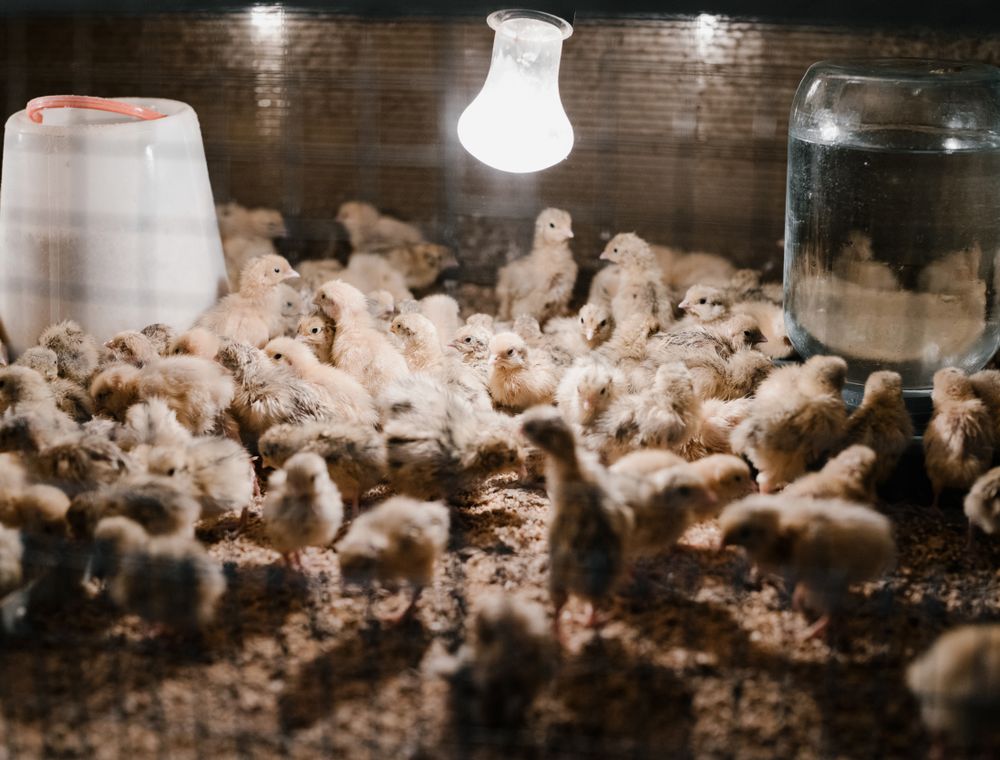
Short answer: A power cut at night can leave a brooder cold within hours, and chicks that pile up in a cold corner can smother each other. Plan your heat in tiers before the cut: the grid, a fuel-based backup that is safe indoors, and a small warm box for emergencies. Size any generator to the heaters and lamps you actually run, and keep a written routine that everyone on the farm can follow in the dark.
Key takeaways
- Decide the temperature your chicks need for their age, and measure it at chick height rather than at the ceiling.
- Keep a backup heat source that is safe to run indoors, and test it with the chicks in the house before the first real cut.
- Never burn charcoal or wood in a closed room where chicks or people sleep.
- Size a generator from the wattage of the heaters, lamps and pump you run, then add a margin for the start-up surge.
- Fill the gas cylinder and the fuel container on the day a cut is due, not after the lights have gone.
- Write the cut plan once, post it where the night watchman can read it, and rehearse it with the whole household.
What a cut does to a brooder in the first hour
A cut at two in the morning feels like a small problem until you walk into the house and the brooder is dark. The lamp or infrared heater switches off, the room loses its warmth, and the chicks begin to bunch in the corner furthest from the door. On a cool night, a poorly insulated brooder can drop well below the temperature the chicks need within an hour or two. The birds at the bottom of a heap are the ones that smother or chill.

The loss does not always show straight away. A chick that is cold but still moving can look fine until morning, when you find a cluster of dead birds under the pile. So the first job after a cut is to read the chicks, not the clock. Go in quietly, look at how they spread across the floor, and listen. Birds spread evenly and peep steadily when they are comfortable. Birds that crowd under the last of the heat, or sit with their feathers puffed in a corner, are telling you they are cold.
Our day-old chicks leave the hatchery on the day they hatch, so the brooder has to be ready before the box arrives. A cut on arrival night catches people out, because the house has not been warmed up and the birds have no reserve of heat.
The temperature your chicks need, week by week
Your backup has to hold a specific temperature, so decide on the number first. Chicks need the most heat in their first week and less each week after. The ranges below are typical for a closed brooder and are measured at chick height. Treat them as a guide, and let the birds tell you when the room is too hot or too cold.
| Age of chicks | Temperature at chick height | What to do during a cut |
|---|---|---|
| Days 1 to 7 | About 32 to 35°C | Keep the heated area small and do not let it fall below about 30°C |
| Weeks 2 to 3 | About 27 to 32°C | Heat part of the house, as long as the birds spread out evenly |
| Weeks 4 to 5 | About 24 to 27°C | Heat one corner, with a clear way out to cooler air |
| Week 6 onward | About 21 to 24°C, or room temperature in a warm month | Ventilate well and remove the heat once the birds cope without it |
Ghana's climate helps in some months and hurts in others. During the harmattan, nights in the north and parts of the middle belt can turn cold, and a house that is warm at dusk can be chilly by four in the morning. In the rains, a draught through a gap in the wall can chill chicks faster than a still room would. Never plan the heat for the warmest night you remember.
Some strains feather faster than others, which changes how much heat a brood needs in its third and fourth weeks. The breed guide shows the differences between the strains we hatch, so you can plan for the birds you actually have.
Plan your heat in three tiers before you need it
Think of brooder heat as three tiers. The first is the normal source you use while the grid is on. The second is a backup that runs on fuel, such as gas. The third is an emergency measure that keeps a small group of chicks alive for a few hours while you sort out the rest.
Set up the second tier while the lights are still on. Buy the regulator, check the hose, decide where the cylinder will stand, and keep a spare cylinder full if you can. Write down how many hours each tier runs at full output, so you know how long the chicks are covered before the next step. Most backups fail because they were never tested, not because they were too small.
A first-time brooder is covered in our guide to starting poultry farming in Ghana, but the three-tier rule applies at any size. If you are still choosing a supplier for a fresh brood, the delivery page sets out how chicks are dispatched and how the delivery cost is quoted before payment. A house of 100 chicks and a house of 2,000 both need a plan for the night the grid goes off.
Using an LPG brooder when the grid is down
A gas brooder is usually the most dependable backup for a flock of a few hundred birds, because it does not rely on the grid and its output is steady once lit. Buy a unit made for indoor brooding, and follow the clearances and cylinder position on its label.
Before lighting, check the regulator and hose for cracks or hardening, and test each joint with soapy water. Never test for a leak with a flame. Stand the cylinder upright outside the brooder, on level ground, with the hose running in through a gap that a door or a pushing crowd cannot crush. Leave a small opening at the top of the house so combustion air comes in and the exhaust can leave. A brooder in a sealed room burns poorly and can fill the air with fumes, and the chicks will show it before you do.
Gas also has a cost you must know in hours. Time how long a full cylinder runs your heater at its normal setting, and write that figure on the wall beside the plan. A cylinder that runs out at three in the morning is no backup at all.
Charcoal and wood: a last resort, and never in a sealed room
When the power goes and the gas is empty, many people reach for a charcoal pot. It is the most dangerous option on the list. Charcoal and wood give off carbon monoxide, which has no smell or colour, and a shut house with a pot of coals can harm chicks and people in the same night. A pot that makes the room feel cosy may already be making the air unsafe.
If you have no other option, use a charcoal pot only in an open-sided shed or outdoors, on a non-flammable base well away from straw, feed bags and walls. Keep the chicks in a box that holds warmth without being sealed. Never leave a burning pot unattended, never sleep in a room where one is burning, and let it cool completely before you carry it indoors. If the power returns, put the fire out first.
The better answer is to avoid this path. If coals are the only heat you have, move the most vulnerable chicks to a small insulated box inside a sound house with grid power, or to a neighbour's house with power for the night. Use a covered carrier with the lid closed, and move the birds in the cool part of the night.
Sizing a generator for the brooder, not the whole farm
Many people buy a generator for a poultry house and size it for everything in the building. That gives a dearer machine that burns more fuel than the brooder needs. For a brooder cut, start with the loads that must run: the heaters, a few lamps and perhaps one water pump. Leave out the large fans and egg-cooling equipment unless you have decided those must run too.
Read the wattage on each heater, lamp and pump, and add the figures to get the running load. Motors and some heaters draw more when they start, so add a margin, roughly a quarter to a third of the running load. The table uses that approach. The maker's sheet is the final word for your machine.
| Load on the brooder circuit | Running load | Size to look for, with margin |
|---|---|---|
| One 250 W infrared heater and two 60 W bulbs | 370 W | About 500 W |
| Two 250 W heaters, four 60 W bulbs and one 370 W water pump | 1,110 W | About 1.5 kW |
Ask the dealer for the continuous rating, not the peak figure printed in large letters on the box. A set that is too small stalls when the heaters switch on, and that is the worst moment for a brooder that has just lost its power.
How much fuel a cut will use, and how to keep it on hand
Fuel is the part of the plan people forget until the tank is empty. Estimate it by running the set at the load you chose and timing how long one litre lasts. Multiply that by the hours you expect a typical cut to last, then add a margin for a longer one. Keep the result on the same sheet as the plan.
Store petrol and diesel as you would any flammable liquid: in sealed, labelled containers, in shade, and well away from the brooder, the feed store and the egg store. Old petrol goes stale and gums the carburettor, so buy only what you will use within a month or two. Run the set for a few minutes on a fixed schedule so the engine and fuel line stay in working order.
Put the fuel budget beside the gas figure. If the cylinder gives six hours of heat and the set burns two litres an hour for the pump and lights, you can see at a glance which tier to use for a long cut and which for a short one.
Need chicks for your next batch?
Send breed, number and town. We reply with price, hatch date and delivery cost in writing.
The small warm box: keeping a few chicks alive while you sort the rest
When the main brooder cannot be kept warm, a smaller enclosure protects the weakest birds fastest. Use a sturdy cardboard or plastic box with a lid, and cut air holes in the sides rather than the top, so warm air stays near the floor. Line the base with clean, dry litter and a folded towel underneath. Wrap a hot-water bottle in cloth and place it on one side, so the chicks can move away if they get too warm.
Check the box every hour. The chicks should be spread across the floor and moving about. If they all cluster on one side, the bottle needs moving or another cloth layer is needed. A lid holds warmth well, but do not seal the box, because chicks breathe out moisture and a sealed box goes stale and damp within the hour.
The warm box is a holding measure, not a home. Move the chicks back to the main brooder as soon as its heat is restored, and keep the box in the house in case of another cut.
Checking the flock after the power comes back
When the power returns, do not switch everything on at once. A surge can trip the breaker, and a cold house takes time to warm. Turn the heater on first, let the room come up to temperature, then bring back the lamps and, last, the pump. Walk the house slowly and count the chicks you can see. Note any birds lying still, any that look pale or chilled, and any with wet vents or eyes that stay closed.
Move the weakest birds into the warm box and offer clean drinking water at room temperature. Do not force feed a chilled chick. A bird that does not recover within a few hours, or keeps falling over, needs a vet or a veterinary officer. Record the time the power went off, the time it came back, the lowest reading on the thermometer, and the number of birds lost. That record tells you whether the backup was enough.
A cut plan that works with the lights off
A written plan saves more chicks than good intentions do. Keep it short enough to read by torchlight, and post it on the brooder door at a height a tired person can see. Name the first action, the second, and the person responsible for each, so nobody has to decide anything in the dark.
- Note the time the power went off and read the thermometer at chick height.
- Light the backup heat, and confirm the flame or lamp is steady and the house has air at the top.
- Move the weakest chicks into the warm box and close the lid without sealing it.
- Check the chicks every hour, count the birds you can see, and write the reading and time in the log.
- When the power returns, switch on in order: heater, then lamps, then pump.
- After the cut, check the flock again, record losses, and refill the gas or fuel before the next cut.
Practise the plan once, with the lights off and the chicks in the house, on a calm afternoon. You will find the step that takes longer than it should, such as a spare cylinder that is hard to reach. Fix those things while the sun is up.
What a lost batch costs against the price of a backup
Money is a poor reason to skip a backup, but it helps to see the numbers side by side. Take a brood of 200 Ross 308 chicks bought at the starting price of GH₵ 20 each. That is GH₵ 4,000 in chicks alone, before feed, vaccines, labour and weeks of care. A cold night can cost a small share of that or the whole brood, depending on how long the heat is off and how cold the house gets.
A gas brooder, a spare cylinder and a small generator for the pump are a one-off purchase followed by fuel and servicing. Compare that with the value of the birds you keep and with how often your area has cuts. The chick price list gives starting prices for each breed, and the day-old chicks cost calculator helps you add up chicks, feed and fuel before you commit to a heat source.
For a broiler brood, run the figures through the broiler profit calculator with and without a loss of 10 percent of the birds. The gap shows how much a sound backup protects. For a wider look at costs before you choose, the poultry calculators cover the other lines in the budget.
Questions farmers ask
How long can chicks survive a power cut without heat?
It depends on the room temperature, the age of the chicks and how much they crowd together. Chicks under a week old in a cold room can be in trouble within an hour or two, while older birds in a warm room may cope for a whole evening. Plan for hours rather than days, and treat every cut as a reason to check the flock.
Is a gas brooder safe to use indoors?
It is safe only if it is designed for indoor brooding, the room has fresh air at the top, and the cylinder stays outside. Check the hose and joints for leaks before each lighting, and follow the clearances on the label. Never use a gas cooker or an outdoor portable heater inside a brooding house.
Can I use a candle, a kerosene lamp or a charcoal pot to keep chicks warm?
Not inside a closed house. Open flames and kerosene lamps give off fumes and carry a real fire risk, and charcoal gives off carbon monoxide. If charcoal is the only option, use it only outdoors or in an open shed, and move the chicks to safer heat as soon as you can.
How big a generator do I need for a 300-bird brooder?
Add up the wattage of the heaters, lamps and pump you will run during a cut, leaving out the rest of the farm. Then add roughly a quarter to a third for start-up surge, and choose a set rated above that figure. For most small brooders this points to a small petrol set, but check the maker's continuous rating.
Should I run the whole farm on the generator during a cut?
Usually not. A brooder needs heat and light, but big fans and egg-cooling equipment can make a small set stall and burn fuel fast. Decide in advance which loads matter most during a cut, and run only those, unless the set is large enough for the whole farm.
How often should I check the chicks during a cut?
About once an hour, and more often if the night is very cold or the house is damp. Each check should take a few minutes: count the birds you can see, look at how they are spread, listen for steady peeping, and note the time and temperature.


