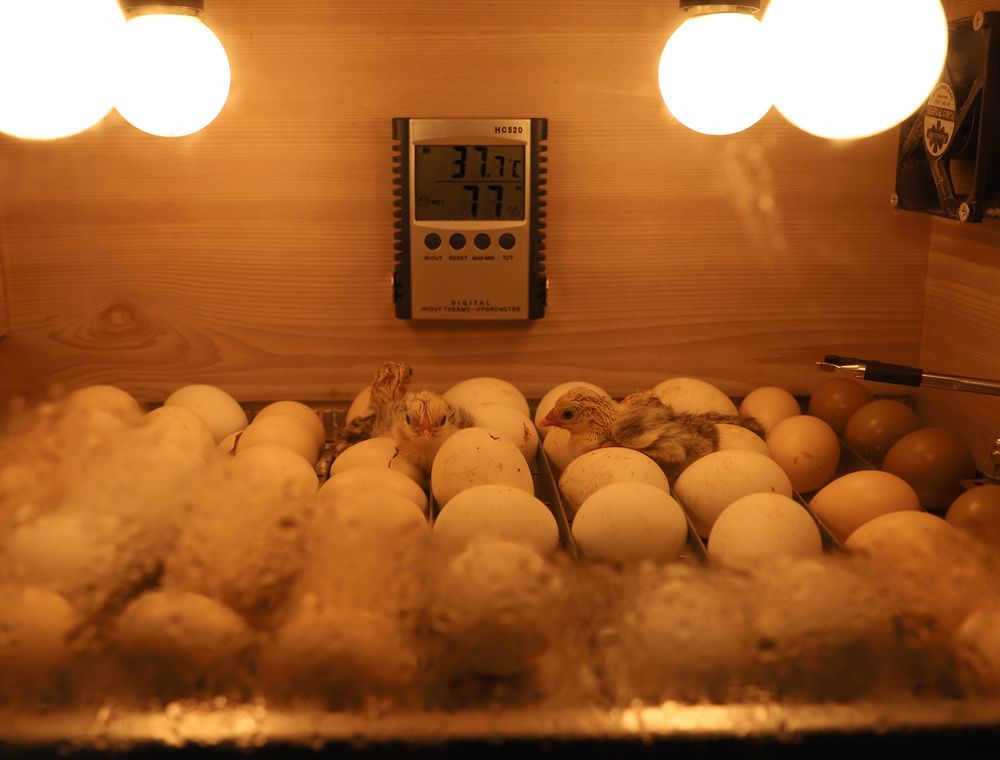
Short answer: Buy an incubator for the number of fertile eggs you will set each week, not for the figure printed on the box, and count the trays and spacing the seller left out. Judge the brand by the parts you can replace in Ghana and the service you can get when the heater fails. Decide the backup power before you plug the machine in, because a power cut in the middle of a hatch can cost you the whole set.
Key takeaways
- Size the machine from the chicks you want each week, using the hatch rate you actually get.
- Count usable trays and egg spacing, since rated capacity assumes the best case.
- Choose a brand by its replaceable parts and local service, not its name.
- Plan backup power for the heater, fan and turning, and test it before the first set.
- Buy for the next two sets, not for the flock you hope to have in a year.
Rated capacity is the best case, not your case
Every incubator box carries a capacity figure, and it is nearly always a chicken egg figure under ideal packing. The number is useful for comparing two machines on the same test. It tells you very little about how many eggs you can put on the trays and still turn them, see them and reach them with a hand.
Three things shrink the usable figure. Trays with dividers or pegs take fewer eggs than flat trays, egg size varies a lot inside one flock, and a turning mechanism needs clearance that the rated figure ignores. Guinea fowl and turkey eggs, if you hatch them, are a different size again, so ask for the count per tray for the egg you will actually set.
Ask the seller for three figures in writing: the eggs per tray for your egg size, the number of trays, and the clearance above the top tray for the turning arm or the fan. Those three numbers, multiplied out, are the capacity you can plan around.
Work out the set size from the chicks you want
Start from the output, not the box. Decide how many day-old chicks you want each week, then work back. Divide that target by the share of eggs you expect to become chicks. That share is fertility multiplied by hatch of fertile eggs, so a flock that is 85 percent fertile and hatches 80 percent of its fertile eggs gives a combined 68 percent. Divide the chick target by 0.68 and you have the eggs to set each week.
Those rates are yours to fill in. Your flock's record will be better or worse than the working figures here, and a farm that keeps a proper record of fertility and hatch soon knows its own number. Until then, plan with the lower figure so the machine is never short. If you are choosing the birds first, our broiler day-old chicks page and layer day-old chicks page show the batch sizes we supply, so you can set the incubator against the flock you are planning to rear.
A worked case: 150 chicks a week needs about 221 eggs set each week, because 150 divided by 0.68 is 220.6. The setter holds eggs for 18 days and the hatcher for the last three, so a farm that sets every week keeps about three weekly sets in the setter at once. That is 663 egg places in the setter and one week's set, 221 places, in the hatcher.
| Chicks wanted each week | Eggs to set each week | Setter places (three weekly sets) | Hatcher places (one set) |
|---|---|---|---|
| 100 | 147 | 441 | 147 |
| 150 | 221 | 663 | 221 |
| 300 | 441 | 1,323 | 441 |
The setter is the expensive part of the plan. A farm that wants a steady weekly supply often buys two machines and stages the sets across them. Our article on staggered setting works through that schedule day by day.
Choosing a machine size you can actually run
Bigger is not automatically better. A large machine that you fill once a month holds the same eggs in the same heat, but when one part fails it takes the whole set with it. Two medium machines spread the risk, let you stage the sets, and fit a room that a single large machine would overheat.
The question to ask is how many eggs you would lose if this machine stopped tonight. If the answer is the whole season's chicks, buy two machines, or buy one and agree a hatch-out arrangement with someone who has spare space. Our hatchery page explains how we run our own setters and hatchers, which is a useful benchmark for thinking about yours.
Room matters too. A closed room with several machines, lamps and people in it runs warmer than the thermostat expects, and the machines' fans have to push that heat out. Place the machine where the room stays at or below the temperature you set it to, and keep it out of direct sun and away from the window.
Brand: the question is parts and service, not the logo
We will not name a brand in this guide. Models change faster than any article can keep up, and a machine that works well for one farm can be poorly set up on another. What lasts is the parts list and the service behind it.
A machine has five parts that fail, and each should have a replacement you can buy in Ghana within a week: the heater element, the thermostat or controller, the temperature and humidity sensor, the fan motor, and the turning motor or tray mechanism. The door seal and the trays come next. Ask the seller to show you the parts list with prices, and to say where each part is kept.
- Thermostat: a digital controller with a separate probe, or a simple dial. Ask how it is calibrated.
- Heater: a replaceable element with a stated rating, not a sealed unit you must throw away.
- Turning: manual trays, a tilting tray or a motor, and how each one fails.
- Warranty: what it covers, for how long, and who pays the postage on a faulty part.
- Local service: a named person or workshop in Accra, Kasoa or Kumasi who has repaired this model.
A cheaper machine with spares on a shelf in Kasoa beats an expensive one whose heater takes weeks to arrive from abroad. The first time a heater fails in the middle of a set, the spare part and the person who can fit it matter more than the name on the front.
Backup power: plan it before the machine arrives
In a power cut the heater and the fan matter most, and the turning system matters too if it runs on a motor. A typical small machine does not draw much power, but it draws it continuously for the whole set, so the backup has to carry the set, not just the next hour. Read the running watts of each part from the nameplate, add them up for the machine, and write the figure on the quote beside the price.
A cut that lasts minutes is a different job from one that lasts a night. Short cuts are where a battery and inverter earn their place, because they switch over fast enough that the heater never really stops. Long cuts need a generator or a source you can start by hand. Our guide to incubating through power cuts covers what to keep running, and our guide to generators, solar and inverters covers how to choose the source itself.
Comparing the backup options for a hatch
The table compares the four backups we see on farms. None of them is perfect, and most farms that hatch regularly use more than one.
| Backup | Covers well | Limits | What to check |
|---|---|---|---|
| Inverter with a battery | Short cuts of minutes to an hour, heater and fan | Battery age and size; the battery must be full when the cut starts | Inverter rating against the heater's starting draw, battery condition, switchover time |
| Generator | Long outages and night-time cuts | Fuel, noise, start-up, and someone must be there to start it | Starts first time, fuel on site for a full night, a test under load each month |
| Solar with a battery | Daytime and partial cover | Night and cloudy days | Battery sized for the hatch, not only for the daytime load |
| Insulated hold-over | A few hours at most | Depends on the room and the box | A logged cool-down, a fitted lid, a warm room |
The last row costs almost nothing and can still help, but only once you have measured how long the machine holds its heat. That measurement is the cool-down test below.
Test the cool-down before the first set
Run the machine empty for at least two days before any egg goes in, with water in the trays and the room at its usual temperature. Then switch the heater off at the plug and record the temperature at egg height every 15 minutes. You are measuring two things: how fast the machine loses heat, and how long you have before the egg temperature falls far enough to harm the embryo once eggs are in.
A machine that drops a degree in an hour is a different asset from one that drops that much in ten minutes. Write the figures in the record book beside your power log. With those two sheets together you have a plan you can act on at two in the morning, instead of a guess you make in the dark.
Need chicks for your next batch?
Send breed, number and town. We reply with price, hatch date and delivery cost in writing.
A buying checklist for the machine itself
Use this list on every machine before you pay, and keep the answers with the quote.
- Write down your weekly chick target and the hatch rate you expect from fertile eggs.
- Ask for the usable tray count and eggs per tray for your egg size.
- Ask for the parts list with prices, and the place each part is kept.
- Confirm the heater element can be replaced without buying a new machine.
- Confirm the thermostat is digital with a separate probe, and ask how it is calibrated.
- Confirm how humidity is added, whether by water trays, a sponge or a reservoir, and how much water the machine uses each day.
- Ask how often the eggs are turned, and whether turning can be stopped for transfer.
- Ask who will service the machine in your town, and how quickly they respond.
- Check the warranty in writing, including who pays postage on a faulty part.
- Plan the backup power and the cool-down test before the machine is delivered.
A good machine holds its temperature in a narrow band once it has warmed up, with the door closed. It should not swing across a range on every cycle. Check its thermometer against a reference, as our calibration guide explains, before you trust the display.
Mistakes that cost more than the machine
- Buying by the rated figure, then setting a full tray of mixed egg sizes.
- Buying one large machine and having no plan for the week its heater fails.
- Accepting a brand with no local spares and nobody nearby who can repair it.
- Setting the machine in a hot corner, under a window or beside a generator's exhaust.
- Plugging the machine into an extension lead shared with a fridge and a fan.
The last one causes more trouble than the list suggests. A fridge compressor's start-up surge can trip a shared lead and cut the heater with it. Give the machine its own socket and keep the fridge on another circuit.
If you do not want to buy a machine yet
Many farmers test the idea with one or two sets before they buy anything. You can send fertile eggs to us through our egg hatching service, or buy fertile eggs and set them yourself once your machine arrives. Ask for the current price before you send anything. We confirm every price in writing before payment, and nothing is paid online.
If you tell us your weekly target and set size on WhatsApp at +233 24 915 1503, we can help you check whether one machine or two is the better start, and when the chicks would be ready. When your plan is clear, you can place the order through the order form. Our about page explains who we are and where the hatchery sits in Opeikuma, Kasoa.
Questions farmers ask
How big an incubator do I need for a small farm?
Start from the chicks you want each week, not from the size of the room. At a planning rate of about 68 percent of eggs set becoming chicks, 100 chicks a week means setting about 147 eggs each week, and a setter that holds three weekly sets. Most small farms start with one machine that holds one set comfortably, and add a second once the weekly target is steady.
Is a more expensive incubator always better?
No. Price tracks features and brand reputation, not how well the machine hatches. A cheaper machine with a replaceable heater, a digital thermostat with a separate probe and a local repairer can outperform an expensive one that you cannot fix. Judge it on the parts list, the spares and the service, then on the cool-down test you run at home.
Can I use a battery and inverter for a whole hatch?
Yes, if the battery and inverter are sized for the heater and fan running through the whole set, and the battery is in good condition. Most farms use the inverter for short cuts and rely on a generator for long ones. Check the inverter's rating against the heater's starting draw before you buy, not only its running figure.
What temperature should eggs be kept at during a power cut?
For chicken eggs the setting temperature is around 37.5 °C at egg height. Keep the machine closed while the power is off, because every opening lets the heat out. Use the cool-down log from your test to decide when to act. If the outage runs longer than your log says is safe, call on your backup or move the eggs to a warm, stable place.
Does an incubator really need to turn the eggs?
Yes. Until transfer in the usual routine, the embryo needs turning so it does not stick to the membrane inside the shell. Machines turn eggs automatically several times a day, and a manual machine needs turning at regular times through the day. If turning stops, a set can fail even when the temperature is right.
Should I buy a second-hand incubator?
Only after you have run it empty for two days with a reference thermometer. Check the heater, the sensor, the fan, the door seal and the turning mechanism. Ask the seller why they are selling. A second-hand machine can be sound, but a heater that has cycled for years and a sensor that has been knocked will only show their faults under test.
Do I need a hatching service if I own a machine?
Not always. A machine lets you set your own eggs on your own schedule. A hatching service suits a farm that does not want to run a machine every week, or a flock that needs a one-off hatch. Our egg hatching service takes fertile eggs for you, and the price is confirmed in writing before you send anything.


