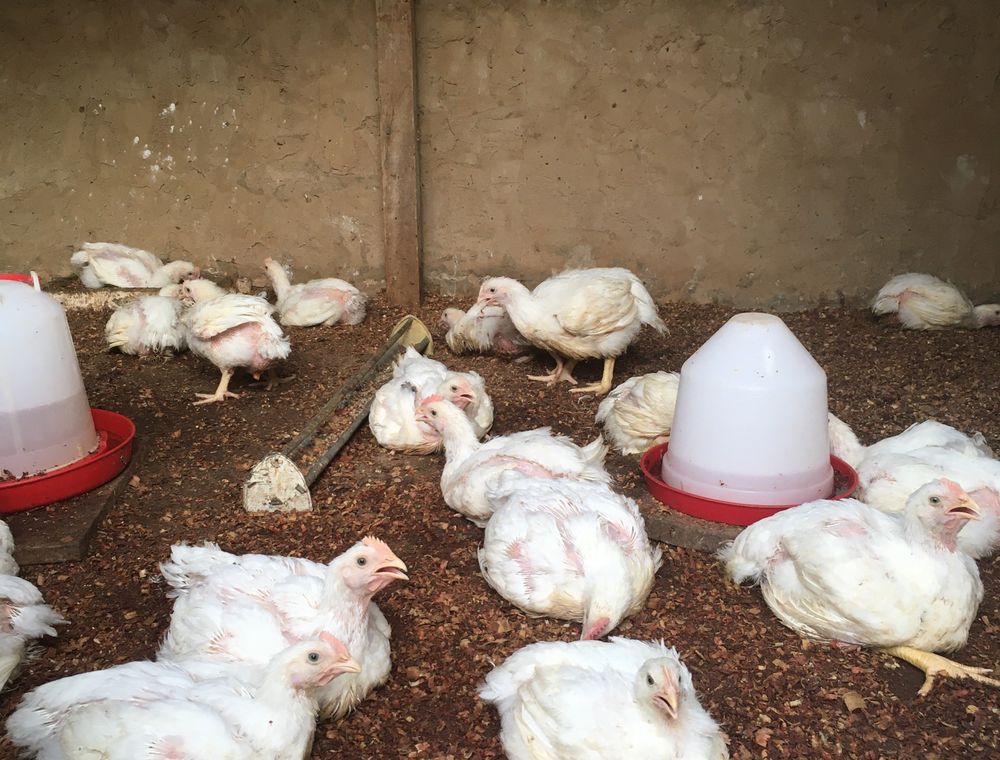
Short answer: Gout in chickens happens when uric acid salts build up in the body, either inside the organs (visceral gout) or in the joints (articular gout). The usual drivers are kidney damage, dehydration and feed that is unbalanced or mouldy. Hot, dry spells and home-mixed feed are common triggers on Ghanaian farms. Fixing water, feed quality and kidney health prevents most cases, but a vet should confirm the diagnosis before any treatment is chosen.
Key takeaways
- Gout is a failure of the kidneys to clear uric acid, not simply a sign of too much protein in the diet.
- Visceral gout puts chalky deposits on the internal organs and often kills birds suddenly.
- Articular gout swells the joints and makes birds reluctant to walk, stand or reach the feed.
- Dehydration during hot spells is one of the easiest triggers to prevent with good drinkers.
- Mouldy feed, some infections and careless medicine use can all damage kidneys and raise the risk.
- Confirm gout with a vet, because lameness and sudden deaths have other causes as well.
How the kidneys clear uric acid, and where that breaks down
Birds get rid of nitrogen from protein as uric acid, not as urea as mammals do. The kidneys filter uric acid out of the blood and pass it into the droppings, where it shows as the white, pasty part. When the kidneys work well and the bird has enough water, uric acid stays dissolved and leaves the body without trouble.
Gout begins when that system fails. Either the kidneys cannot clear the acid fast enough, or the blood carries more than they can handle. The acid then comes out of solution and forms crystals, which settle in tissues as chalky urate. Those crystals irritate the body, cause inflammation and pain, and in severe cases damage organs.
Gout is therefore a sign of a bird under strain rather than a disease that simply arrives from outside. The question for a farmer is always what made the kidneys or the water balance fail.
Visceral gout: chalky deposits on the organs
In the visceral form, urate is laid down on the internal organs. The heart, liver, air sacs, intestines and the membranes lining the body cavity can all be coated with a white, chalky layer. The kidneys are often swollen and pale, and the ureters, the tubes that carry urine from the kidneys, can be blocked with white urate.
Visceral gout often shows as sudden deaths, or as birds that become quiet, thirsty and dehydrated with little interest in feed. Affected birds can look well until shortly before they die, which is why the form is easy to miss. A vet who opens a dead bird will see the chalky deposits clearly, and that is the most reliable way to confirm it.
This form is usually linked to kidney damage or a long period of dehydration. Flocks that drink too little during a hot spell, or that have been exposed to damaging infections or mould, are the ones most often affected.
Articular gout: swollen joints and reluctant walkers
The articular form is the one most farmers recognise. Urate collects in the joints, most often the hock, the toes and sometimes the wing joints. The joints swell, feel firm or lumpy, and in some birds white chalky material can be seen under the skin. The bird becomes lame, sits on its hocks and is reluctant to stand, walk or climb to the feed.
In a flock this shows as birds that hang back at the feeder, rest in corners or struggle to reach the drinkers. Other causes of lameness look similar, including bacterial joint infection, injury and nutritional problems. A vet can tell them apart by examining the joint and sometimes by testing fluid taken from it.
Articular cases tend to affect heavier birds that are short of water, but they can also follow kidney damage. Birds that are lame should have easy access to feed and water, and should be checked promptly. The breeds page is worth reading before you choose a line, because heavier strains are more likely to show joint strain.
The kidney connection: infection, mould and dosing errors
Kidney damage is the trigger behind most cases. Some strains of infectious bronchitis virus attack the kidneys directly, and infectious bursal disease, or Gumboro, can damage them in young birds. Both are on the vaccine programme at our hatchery, which matters because each can leave the kidneys weakened if a flock meets it untreated. Vaccines match only certain strains, so keep the programme on schedule and ask your vet about the strains in your area.
Mouldy feed is another cause. Maize and other grains stored in damp conditions can carry mycotoxins, and some, such as ochratoxin, harm the kidneys. In the rainy season, feed left in a humid store is a real risk. Some medicines given at the wrong dose or for too long can also damage kidneys, which is why no medicine should be used without a vet's advice.
Too much vitamin D or a poorly balanced mineral premix can also cause kidney damage and urate deposits. That brings the question back to the feed itself.
Why a dry drinker can tip a flock into gout
Water is the cheapest protection a farm has, and it is often the first thing to fail. A bird that drinks less than it needs produces more concentrated urine, and the kidneys cannot flush uric acid as easily. Dehydration pushes birds towards urate deposits even when their feed is correct.
In warm weather broilers often drink roughly twice as much water as they eat by weight, so a drinker that runs dry for an afternoon matters more than many farmers expect. Dust and dry air in the harmattan increase water loss, and in the hot season many birds drink less when the water is warm. Check drinkers at midday, not only in the morning, and make sure every line delivers water with its nipples or bells working.

Water that is too warm, too dirty or too far away is as good as no water for a bird that is already stressed. Cool the supply where you can, clean the lines regularly, and place drinkers where birds can reach them without climbing.
Feed protein matched to the growth stage
Protein is needed, but more protein does not help a bird grow faster once its amino acid needs are met. Extra protein means extra nitrogen to excrete, and that load falls on the kidneys. The fix is balance rather than a crude cut. Feed each stage to the level it needs, and do not push protein higher in the hope of extra weight.
As a rough guide, many commercial starters sit near 21 to 23 per cent crude protein, finishers near 18 to 20 per cent, and layer feeds near 16 to 18 per cent. Labels vary by brand and region, so read the bag and compare it with what your birds need at their age. Do not cut protein below the level the flock needs, because deficiency brings poor growth and feather problems of its own.
Midday heat and the birds that stop drinking
Heat is the other big trigger in Ghana. In the dry season, afternoon temperatures inside poorly ventilated houses can climb well above 30 degrees Celsius, and the birds respond by panting, eating less and changing how much they drink. If the drinkers run dry or the water is too warm to be appealing, the flock becomes dehydrated quickly.
Shade, ventilation and cool water are the three levers. Open the sides of the house where your design allows, keep air moving at bird height, and add drinkers if a line is long. Check the flow at the hottest hour of the day, not at dawn when everything looks fine. A house that is hot at midday is a house where gout can start.
Signs in the walkway and the droppings
Watch the birds rather than waiting for a crisis. Lameness, swollen joints and birds sitting on their hocks are the obvious signs. Less obvious are birds that are dull, stand hunched, drink heavily or go off their feed. The table sets out what you might see and where to look first.
| What you see | Likely driver | First check |
|---|---|---|
| Heavy drinking, dull birds, dry droppings | Dehydration from dry or hot drinkers | Water flow, drinker height and water temperature |
| Swollen hocks or toes, birds sitting on hocks | Joint urate, or a joint infection | Vet examination of a few lame birds |
| Sudden deaths, chalk on the organs at post-mortem | Visceral urate after kidney damage | Post-mortem and a feed sample |
| Watery droppings, heavy white urate in litter | Kidney stress or water imbalance | Water records and vaccine history |
| Many birds affected at once after a feed change | Mouldy feed or a premix error | Feed storage, mould and premix rates |
Some white urate in the droppings is normal, so compare what you see with the flock's usual pattern. If one bird is lame, it may simply be an injury. If several are lame, or the lameness spreads over a week, look at water, feed, the house and the vaccine record. Layers can show the same signs, so keep the egg count alongside your notes, and use the layer egg profit calculator to put a figure on any drop.
Need chicks for your next batch?
Send breed, number and town. We reply with price, hatch date and delivery cost in writing.
What a post-mortem and feed test tell the vet
A vet confirms gout with a combination of history and examination. The post-mortem is the most useful step. Kidneys are checked for swelling and pale colour, the ureters for white blockage, and the internal organs for chalky deposits. Joints are opened and examined, and fluid or tissue may be sent to a laboratory.
The vet will also ask questions. What has the flock eaten, and where is the feed stored? How has water been supplied, and for how long was it available? Which vaccines and medicines were given, and when? Bring the feed bag, a sample of the feed if possible, and a note of recent water and feed use. A feed analysis can show whether mould or a mineral imbalance is involved.
Premix errors and home-mixed feed
Many Ghanaian farms mix their own feed, buying maize, soya, fishmeal and bran and adding a premix of vitamins and minerals. Home mixing can save money, but it is easy to get wrong. Too much premix, especially vitamin D and some minerals, can damage the kidneys. Too little leaves birds short of the nutrients they need for healthy bone and joints.
Follow the premix supplier's inclusion rates exactly, and weigh ingredients rather than measuring by the cup. If you are not confident in mixing, buy a complete feed from a reputable mill or ask a nutritionist to check your formula. The poultry feed calculator helps you estimate how much feed a flock will need, so you can see whether the feed budget is realistic before you buy.
Prevention on a Ghanaian farm, week by week
Prevention is mostly a set of routines. Most of the steps below are cheap, and they all protect the kidneys, which is the heart of the problem.
- Store maize and feed in dry, raised, ventilated stores, and discard anything that smells musty or shows visible mould.
- Check drinkers twice a day, and at midday during the dry season.
- Keep water flowing and cool, and clean the lines regularly.
- Feed to the stage, and avoid pushing protein or energy above what the bird needs.
- Keep the vaccine schedule on time, particularly for infectious bronchitis and Gumboro.
- Use no medicine without a vet's advice, and never use leftovers.
- Record water, feed and mortality each week so changes stand out early.
For a new flock, the poultry vaccination schedule calculator helps set the programme dates, and the broiler chicks for sale page explains the lines available. The guide to starting poultry farming in Ghana covers the basic setup a new farm needs before the first chicks arrive.
Lame birds this week: separating, feeding and calling the vet
When you find lame birds, act the same day. Separate the most affected birds into a pen where they can reach feed and water without climbing, and put soft, dry litter under them so they are not trampled or left on hard, wet ground. Make sure the drinker is within reach and that they can get to the feed without fighting for it.
Do not give human painkillers or any other medicine on your own. Birds hide pain, and a dose can mask the signs while the cause carries on. Call a vet and give a clear account of the feed, the water, the vaccines and the number of birds affected. If a bird cannot stand, cannot reach water or is clearly suffering, ask the vet how to end its suffering humanely. Sensible decisions at this stage save more birds than any single medicine.
For planning, the broiler profit calculator shows how a bad week feeds into your costs, and the Halaal Farms blog has more practical guides. For general flock questions, the frequently asked questions page is the next stop.
Questions farmers ask
Will gout spread through the flock like an infection?
Gout itself is not an infectious disease, but its triggers can hit many birds at once: a bad batch of feed, a hot spell with dry drinkers, or an infection that damages the kidneys. A flock-wide problem usually points to management or feed rather than a germ.
Are joint cases worth treating?
Mild joint cases sometimes improve once water, feed and kidney stress are fixed, but damaged joints may not recover fully. A vet can say whether treatment is worth the cost. Birds that cannot reach feed and water should be dealt with humanely.
Is the cheapest feed the cause?
It can be, if the feed contains mould, too much premix or an unbalanced mineral mix. Price alone does not show the problem, so ask the supplier for a recent analysis and check how the feed has been stored on the farm.
Are layers more at risk than broilers?
Both can get it. Heavy broilers are more likely to show joint signs, while visceral cases follow kidney damage from infection, mould or dehydration in any age of bird. Your records will show which pattern you face.
Can I give my birds a painkiller?
Do not give human painkillers or any medicine without a vet's advice. Some medicines can damage the kidneys further, and birds hide pain, so a dose may mask the signs without solving the cause.
Does too much vitamin D really cause gout?
Excess vitamin D in feed or in a home-mixed premix can damage the kidneys and lead to urate deposits. The fix is correct inclusion rates, not guesswork. Ask for a feed analysis before changing a premix.
Who should examine a dead bird for gout?
A vet or veterinary officer should. Keep the bird cool in a clean bag, take it in quickly, and tell the vet about the feed, the water and any recent changes. The kidneys, ureters and joints show the key signs.
Will the hatchery's vaccines stop kidney-related gout?
They reduce the kidney damage that infectious bronchitis and Gumboro can cause, but no vaccine covers every strain, and vaccines do not fix water, heat or mould problems. Keep to the schedule and treat vaccination as one layer of protection.


