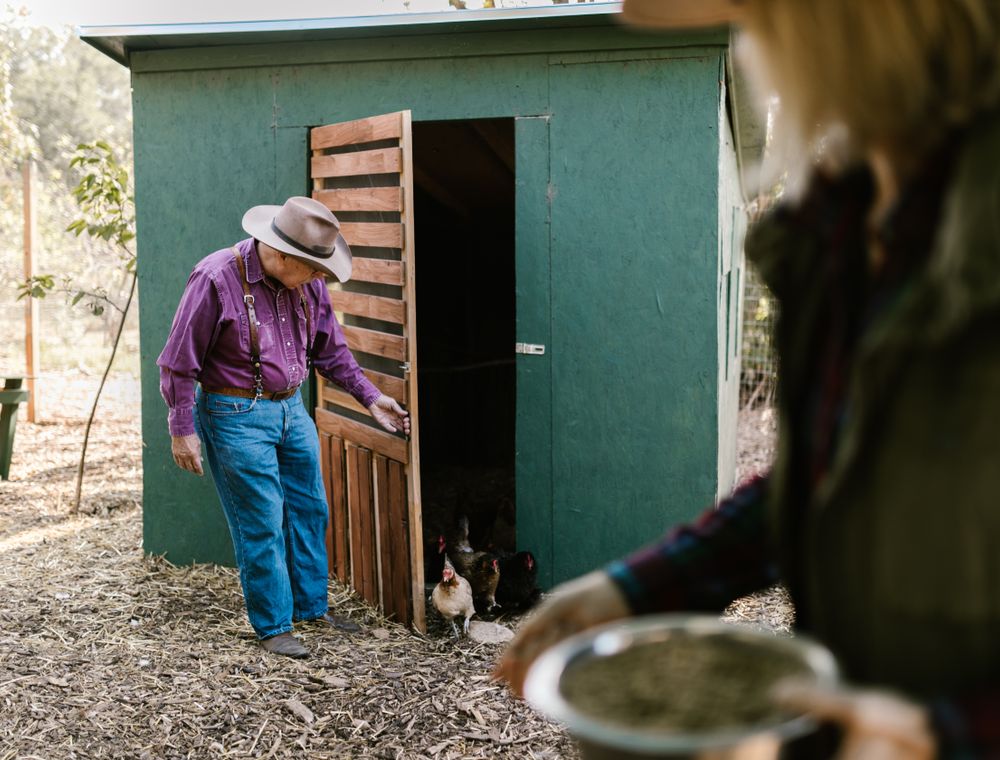
Short answer: A young person can start farming in Ghana with limited money, provided the land is settled in writing, one enterprise is chosen and learned well, and buyers are found before the first harvest or batch. Learn on a working farm, use public youth programmes only after checking their current terms, and keep dated records from day one. Poultry is a common first enterprise, and it gives a clear set of records for any farm you build later.
Key takeaways
- Settle the land in writing before you put money into permanent structures.
- Pick one enterprise, learn it within a year, and add a second only when the first runs without help.
- Spend weeks on working farms before you spend your savings.
- Pre-agree sales with buyers before the first batch or harvest, and keep a cash reserve.
- Check youth programmes directly with the agency or ministry office, and never pay an unnamed agent to apply.
Start with the land question before the animal question
Can I start farming at 24 with a phone, a plot my uncle lets me use and no savings? Yes, but only if you settle the land question before you buy a single bird, seedling or sack of feed. Many young farmers who give up in the first two years did not fail at farming. They ran out of land they could count on.
There are four common ways young people get land in Ghana. A family member may let you farm a plot, sometimes free and sometimes for a share of the produce. You may rent a plot for a season or for a few years. You may lease land from a stool, skin or clan authority, or from a private owner. Or you may buy outright, the most expensive route and the one that most needs checking. Each route carries different risks, and each needs different paperwork.
A family plot is the easiest place to begin and the easiest place to lose. Ask the family head to confirm, in front of witnesses, how long you may farm the land and whether you may build a pen, a store or a house on it. A promise made at a funeral is not a lease. Write it down, sign it, and keep a copy in your own name.
Our article on acquiring and securing farmland in Ghana goes through the documents and the consent questions in more detail. Read it before you put money into permanent structures, because a pen or a borehole on land you later lose is money you cannot take back.
Choose one enterprise you can learn within a year
Young farmers who try four enterprises in their first year usually master none of them. Pick one, learn it properly, and add a second only when you know its costs, its sales and its daily routine well enough to run it without help. For someone starting from a compound or a small plot, poultry, vegetables and maize are the most common first choices. Goats and sheep suit those with a pen and access to browse or forage.
| Enterprise | Space it needs | How hard it is to learn | Typical time to first sale | Daily work, roughly |
|---|---|---|---|---|
| Broilers | A small house or a secure corner of a compound | Moderate: brooding, feeding, litter and biosecurity | About five to eight weeks, depending on the bird and the market | Two checks a day, plus cleaning and feeding |
| Layers | A house, nests and perches for each bird | Higher: lighting, feed phases and egg handling | Point of lay at around 18 to 20 weeks, then eggs most days | Feeding, water and egg collection, twice daily |
| Leafy vegetables | A plot near a reliable water source | Moderate: nursery work, watering and pests | Roughly six weeks from transplanting | Watering in the dry season, weeding and harvest |
| Fruiting vegetables | A larger plot with good drainage | High: pests, disease and staking | Two to four months, depending on the crop | Scouting for pests, harvest every few days |
| Maize | A plot sized to what you can weed on time | Moderate, but rainfall decides a lot | Roughly three to four months from planting | Light in most weeks, heavier at weeding and harvest |
| Goats | A dry, raised pen and forage or browse | Moderate: parasites, housing and breeding records | Fattening sales in a few months, breeding cycles over a year | Feeding, water and pen cleaning, once or twice a day |
The table gives typical figures from general husbandry and agronomy practice. They vary with the breed, the season and the region, so confirm them with your district agric extension officer before you build a budget on them.
Notice what the table leaves out: prices. Market rates for animals, produce and inputs move quickly, and they differ between Accra, Kumasi, Tamale and a village market. Check your local market and current rates before you put any figure into a plan.
Learn on a working farm before you spend your savings
The cheapest training in farming is a working farm run by someone who has been doing it for years. Ask for a week, then two, and offer to do the chores properly. Many farmers will say no to a stranger who wants to watch, and yes to a young person who turns up at six in the morning and asks what needs doing.
Agree the terms before you start. Some apprenticeships are unpaid and give you feed and a place to sleep. Others pay a small wage. Some give you a share of the first batch or the first harvest. Whatever the arrangement, write down the start and end dates, the tasks, what you will learn and what happens if either of you wants to stop. Verbal agreements are where young farmers lose their labour and their trust.
Watch for the farm that wants your labour and teaches you nothing. A good placement shows you the records, explains the feed mix, lets you handle the animals and tells you why a decision was made. If after three months you are only carrying water and cleaning pens, ask for more responsibility or move on.
Visit two or three different operations if you can. Each farm will have a different answer to the same problem, and seeing that difference teaches you more than one perfect example. It also helps you spot practices that are unsafe or wasteful.
Start small with the money you actually have
Most young people start with less money than they want and more than they think. The useful question is not how much you have, but how much you can lose without losing your food, your rent or your standing at home. Set that figure first. Everything you buy comes out of what remains.
Build a start-up budget with three parts: what you must buy before the first sale, what you need to keep the enterprise alive through a month of bad news, and what you would like to buy later. Put the first part in the plan. Hold the second as a reserve. Leave the third until the first sale has been paid for.
Savings groups are a practical source of early money, especially where members know and trust each other. A susu collector can help you save in small, regular amounts. Hire rather than buy equipment you use only once a season, such as a sprayer, a tiller or a chopping machine, and read the hire terms before you sign. Our guide to GIRSAL and agricultural finance in Ghana explains what banks look for once you are ready to borrow.
Avoid the offer that promises fast returns for an upfront payment. Genuine farm businesses do not need you to pay a stranger for a place in a queue. Ask who owns the animals or inputs, who carries the loss if they die, and how you get paid. A reputable seller will answer those questions in writing.
Youth programmes: what to check before you apply
Public programmes target young people in agriculture, and some offer training, inputs or tools. Their names, eligibility rules and calendars change, so treat this section as a list of what to look for, not a record of what is open today.
- The Youth Employment Agency has supported young people in agriculture with training and starter equipment in recent years. Ask whether an intake or placement is open for your district and your enterprise.
- The National Youth Authority runs youth development activities across the regions. Ask the regional office what it offers that connects to farming.
- Planting for Food and Jobs, run through the Ministry of Food and Agriculture, has mostly been organised around crops and inputs. Check whether it is taking applications and whether it covers the enterprise you have chosen.
- The district office of the Ministry of Food and Agriculture can tell you which extension services reach your community and whether any young farmers' groups are active near you.
Three rules apply to every programme. Check whether any fee is charged, and by whom, before you pay anything. Confirm that anyone asking for your personal details works for the programme and not for an agent. And ask what you must do in return, since some schemes expect records, reporting or repayment.
Phones, mobile money and market information
A phone is the most useful piece of farm equipment many young people own. It can hold your records, your photographs of the flock and your message threads with buyers. It can also send you down a rabbit hole of advice that does not fit your region or your breed.
Use a simple spreadsheet or a notebook for the numbers. A dated entry for every feed bag, sale and death is worth more than a folder of screenshots. Record what each buyer owes you and when they paid. Mobile money leaves a trail, which helps when a buyer later disputes a payment.
Use WhatsApp groups with care. A group of farmers in your district is useful for sharing a price you have checked, a warning about a disease outbreak or a supplier who delivered on time. It is not a substitute for your agric extension officer, and it is not a source of approved treatments. If a group member recommends a medicine, ask your vet before you give it.
Some apps and online services publish market prices and farm advice. Test them. Compare what they say with what buyers pay at the market near you and with what the extension officer tells you. Where they disagree, trust the local evidence first.
Find buyers before the first harvest or the first batch
Young farmers often grow or raise first and look for buyers afterwards. That order is backwards. Before you commit to a batch, write down who will buy it, in what size, on which day, and how they will pay.
Walk your neighbourhood and list the buyers who are already there. Caterers, chop bars, market women, kiosk owners, churches and schools all buy food in quantities that matter. Ask them what they buy now, what they cannot get reliably and what they pay. Their answers are more useful than a general survey, because they describe demand you can reach on foot.
Festive demand is real but uneven. Christmas, Easter and the Eid season lift demand for poultry, goats and sheep, and buyers who order early tend to plan their money earlier too. Agree numbers in advance, and do not promise a weight or a quantity you cannot deliver.
If you buy your chicks from us, our current chick prices show what the first stage of a poultry batch costs, so you can set it against the sales side. When your buyers are ready, place your order through the order form. Our delivery page explains how chicks reach your area.
Timing the first cycle around rains, harmattan and festivals
Your first cycle should start when the work is manageable. For poultry, that usually means avoiding a start in the weeks when you cannot be at the house, and brooding through a period when night temperatures are not dropping sharply. In the north, the harmattan from about December to February can be hard on young birds, so many farmers plan to have chicks housed and warmed before it arrives. In the forest and coastal zones, the rains bring damp litter and disease pressure, so check drainage around the house before the first heavy downpour.

For crops, the rule is simpler. Plant after the rains are reliable, not after the first shower. Ask your district agric officer for the planting window for your variety and zone, and keep a note of when the rains start each year. A young farmer who plants on a single shower can lose the seed to a dry spell that follows.
Treat festivals as deadlines. If you want to sell goats for Eid or birds for Christmas, count back from the date you need them ready. Build in the weeks for growth, transport and any treatment your vet recommends, and check that the animals or birds reach the weight or condition buyers expect.
Need chicks for your next batch?
Send breed, number and town. We reply with price, hatch date and delivery cost in writing.
Working with older farmers, family and landlords
Your first real partners will be the older farmers, relatives and landowners around you. Their knowledge is often excellent and free, but their patience runs out quickly if you arrive with large plans and little respect for the work they have already done.
Ask before you change how someone else's land or equipment is used. Offer to share the work of repairs and clean-up, and say clearly what you will pay for and what you expect in return. If you farm a family plot, agree in writing who owns the harvest, the animals and the structures if you leave.
Keep your disagreements private and your records open. When a relative questions a decision, show the numbers. A dated record of sales, feed and losses turns an argument about feelings into a conversation about facts, and it protects you if the money is questioned later.
Farming around school, a job or a trading business
Most young people who farm in Ghana do it alongside school, a job, a trading business or childcare. That is not a compromise. It is the normal way to start. The mistake is planning as though you have the hours of a full-time farmer when you do not.
Work out your real hours each week, including travel. A house of birds that needs checking twice a day means two fixed times in your timetable every day, including Sundays and public holidays. Animals and crops do not wait because you are busy, so choose an enterprise that fits the hours you actually have.
Think about a trusted helper before you need one. Pay them fairly, write down their tasks and make sure they can cover for you when you are away. A reliable worker is worth more to a young farm than most of the tools you could buy.
Your first six months, in order
This sequence suits many first-time farmers. Adjust the timings to your enterprise and your season, but keep the order: land first, then enterprise, then money, then sales.
- Settle the land in writing with the family head or landowner before you put money into permanent structures.
- Choose one enterprise and write down why you chose it, which buyers you have spoken to and the reserve you will hold.
- Spend at least two weeks on a working farm, and two more on a second one if you can.
- Visit your district Ministry of Food and Agriculture office and ask for the agric extension officer covering your community, by name.
- Start a notebook or spreadsheet for every feed bag, input, sale, loss and payment, from the first day.
- Confirm which permits or registrations apply to your enterprise, and start that paperwork early. Our guide to registering a farm business sets out the offices to ask about.
- Agree sales with at least two buyers before the first batch or harvest.
- Review the numbers at the end of each month, and decide with the reserve in mind whether to carry on as planned.
Mistakes young farmers make in the first year
Most first-year farmers make the same few mistakes. Naming them in advance costs nothing and may save a season.
- Starting three enterprises at once, so that none of them gets proper attention.
- Building permanent structures on borrowed land without a written agreement.
- Buying the cheapest chicks, seed or feed without checking the supplier's record.
- Skipping the reserve, so that one bad month ends the whole farm.
- Letting a group chat set the plan rather than the extension officer and your own records.
- Spending the first sale before the feed bill for the next cycle is paid.
Most of these come from wanting to look like a farmer quickly. A slower start with clean records usually gets you further by the second year.
Where a poultry start fits, and where we fit in
Many young farmers start with poultry because the first cycle is short, the entry cost is low compared with cattle or a larger crop, and households, caterers and chop bars buy steadily. Poultry also gives you a clear set of records from the first week, which helps you make decisions about any other enterprise you add later.
If you choose poultry, the first decision is the bird. Broilers give a short cycle and quick sales. Layers take longer to reach point of lay but then give a product most days. Our breed guide compares the options, and day-old chicks from our hatchery come in several types. Choose the bird that matches your buyers, your house and your hours, not the one that is trending this season.
Planning a first batch? Message us on WhatsApp at +233 24 915 1503, or write to support@halaalfarms.com with your questions. Read our poultry record-keeping guide before the chicks arrive, so the first week of data is worth keeping. Our piece on women in agriculture covers many of the same practical steps from a different starting point. Whatever you add later, goats, vegetables or maize, the notebook you start with poultry will serve every enterprise after it.
Questions farmers ask
Can I start farming without land of my own?
Yes, provided the arrangement is in writing. A family head, a landowner or a stool, skin or clan authority can grant a lease, a licence or a seasonal agreement. Confirm how long you may farm, whether you may build on the land, and who owns what you leave behind. Check current terms with the Lands Commission if the land is registered.
Which enterprise is cheapest to start?
There is no free start, and costs depend on your area and the season. Many young farmers begin with a small poultry house, a vegetable plot near water or a few goats on a family pen, because each has a short learning curve. Ask local suppliers and the market for current rates before you decide. The enterprise with the lowest entry cost is not always the one you can run well.
Do I need a business registration before I start?
For a very small start you may trade without one, but you should find out which permits apply to your enterprise and to your site. If you trade under a name other than your own, the business name is registered with the Registrar-General's Department. Ask the district assembly and the relevant technical office what applies to you before you build.
Can a young farmer with no collateral get a loan?
Possibly, through susu, savings groups, rural banks or programmes that include a loan element. Banks will focus on your records, your plan and what security you can offer. Start with dated records and a clear plan. Our guide to GIRSAL and agricultural finance explains what lenders check.
How much time does a small flock take each day?
For a small broiler or layer flock, expect two fixed checks a day, plus feeding, watering, cleaning and records. Layers need slightly more time than broilers because of egg collection. Those are rough figures. Your own time will depend on the house, the distance from your home and how quickly you work. Time yourself for the first two weeks.
Is poultry a better first enterprise than goats?
It depends on your space, your hours and your buyers. Poultry has a short first cycle and a steady household and catering market. Goats need more space and forage, but they hold value for longer and suit festive sales. Visit both kinds of farm, talk to the buyers near you and choose the one that fits your daily routine.
Where do I find an agric extension officer?
Start at your district office of the Ministry of Food and Agriculture. Ask for the extension officer covering your community by name, and ask when they hold their regular visits. Keep their number, and bring them your records when you have a problem. Ask the office whether any charge applies, and treat a request for payment from anyone else as a warning sign.


