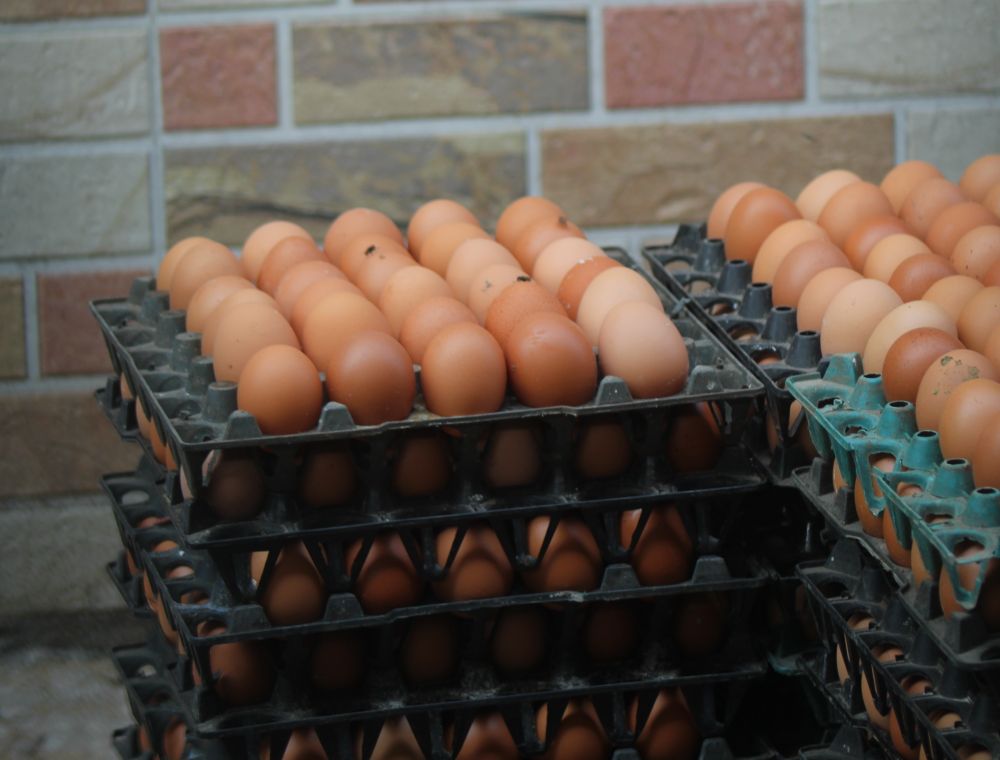
Short answer: Table eggs lose quality in the heat, and most of the loss happens between the nest and the buyer. Collect often, clean dry, keep the eggs cool and shaded, and sell the oldest tray first. Label each tray with the lay date and move the eggs in a closed, cool box. A small seller who does these things can hold quality for days longer than one who leaves trays in a hot room.
Key takeaways
- Collect eggs several times a day in hot weather, so they do not sit warm in the nest for hours.
- Clean eggs dry first, using a brush or a dry cloth, and reserve washing for eggs that need it and that the buyer accepts.
- Store eggs cool, shaded and out of the sun, and aim for a steady temperature rather than a single cold spell.
- Keep eggs point-end down, so the air cell stays on top and the yolk stays centred.
- Write the lay date on each tray and sell the oldest tray first.
- Carry eggs in a closed, cool box and deliver before the heat of the afternoon where you can.
Why the first hours after laying matter most
An egg is at its best when it leaves the hen, and every hour in the heat takes a little off it. The shell has tiny pores, the white thins slowly with time, and the yolk moves more as the egg ages. A buyer cannot see any of this, but a cook can, and a fried egg from a warm, tired tray looks and tastes worse than one from a cool, recent tray.
The quality you keep is therefore decided by three things in roughly this order: how quickly the egg is collected, how cleanly it is handled, and how cool it is held. A store that is perfectly cold cannot repair an egg that sat in a hot nest for the whole afternoon. Start the work at the nest, not in the store.
Collecting several times a day when the house is hot
In Ghana's hot months, a single collection in the afternoon is too late for most of the eggs. A hen that lays in the morning leaves the egg in a nest that is warming by the hour, so the egg sits in heat until someone takes it out. Collect early, collect again through the middle of the day, and do a final round before dusk. The table shows a simple routine for a small house.

| Time of collection | Conditions in the house | What to do |
|---|---|---|
| Early morning, before about 9 a.m. | Coolest part of the day, with eggs from the night | Full collection, dry clean, and move to the cool store at once |
| Late morning | Warming, and the nests heat up | Second collection of the eggs laid since the first round |
| Early afternoon | Hottest part of the day | Collect and move straight to shade, not left on a table |
| Late afternoon or dusk | Cooling, and most hens have laid | Final round, check the nests are empty, then close the house |
Put the collection times on the wall and keep to them. Eggs that stay in the nests while the family eats lunch are the ones that go off first. A short routine taken every day beats a long clean-up once a week. If you are building a new laying flock to supply the store, the layer chicks for sale page lists the options.
Dry cleaning first: brush, cloth and patience
Most dirt on an egg comes off dry, and the best way to clean it is to leave it dry. Use a soft brush or a clean, dry cloth to lift away droppings and litter. For a spot that is stuck on, scrape very gently with a blunt tool, and check the shell afterwards. Do not soak eggs, and do not rub hard, because both can damage the outer layer that protects the egg.
Keep a bucket of clean cloths, and change them often. A dirty cloth just moves the mess from one egg to the next. Eggs that are very dirty, cracked or stained should be set aside for the household or for disposal, not sold as good eggs. A buyer who opens a tray and finds a mess will not come back.
The washing question: decide with the reasoning, not a rule
Practice differs between countries and between buyers. In some markets eggs are washed before sale, and in others they are sold unwashed and the outer layer is left intact. The reason for the difference is the same: a cold egg placed in warm water can draw bacteria into the pores as the contents contract, and a wet shell that is not dried quickly can carry bacteria onto the next egg in the tray.
If you wash, use water that is warmer than the egg, clean, and treated with a sanitiser that is approved for food use. Dry the eggs at once on a clean rack. If you cannot manage warm, clean water and quick drying, dry cleaning and a cool, clean store are the safer route. Ask your buyers what they expect before you start washing, because a shop that wants clean eggs may refuse washed ones with a bloom that has been removed.
Point-end down, and why the air cell matters
Every egg has an air cell at the blunt end, and it grows as the egg ages. Keeping the blunt end up holds the air cell in place and keeps the yolk centred, which reduces movement and helps the egg hold its shape for longer. An egg stored on its side, or with the blunt end down, can have the yolk drift toward the shell, and that makes cracking and cooking less predictable.
Use trays with cups or dividers that hold the eggs in position, and load them point-end down. Do not pile trays so high that the bottom eggs are crushed. A tray that is loaded carelessly has a shorter life than one that is set out with care, even when the store is cool.
Choosing a cool, shaded place to hold eggs
The best holding place is the one you can keep steady. Aim for a shaded, ventilated room away from the direct sun and away from the cooker, the generator and the feed store. Keep the eggs off the floor, on a shelf or a rack, so air can move around the trays. Dampness is as much a problem as heat, so avoid a store that sweats or smells of wet litter.
| Holding option | Typical temperature | What it suits |
|---|---|---|
| Shaded, ventilated room off the floor | Often 25 to 30°C in Ghana's hot months | Short holds of a day or two, and sales the same week |
| Air-conditioned room | About 18 to 22°C | Holds that run for several days, if the power is steady |
| Domestic refrigerator | About 4 to 7°C | Longer holds, but a power cut will warm the eggs |
| Cool room or walk-in cooler | About 4 to 10°C | Larger volumes, with a steady supply of power |
A refrigerator is a good store only if the power is reliable. During a cut, the door should stay shut, and the eggs should be moved to a cool, shaded spot if the outage runs long. Keep a thermometer in the store so you know the real temperature, not the one you hope for.
How long eggs keep, and what to say to a buyer
Quality falls with time, and the sensible way to talk about it is in ranges, not promises. Eggs kept cool, clean and in good condition usually stay good for several weeks, though the white thins and the yolk moves more as they age. Eggs kept in heat lose quality within days, and a tray that sat in a hot room for a week is a different product from one that went straight into a cool store.
- Within the first week after laying: the best quality, suited to sales to shops and households who want good eggs.
- Between about one and two weeks: still good for most uses, and better sold early in the week.
- Beyond two weeks: lower in quality, best used for cooking rather than for the best sales.
These ranges describe what usually happens in good conditions. A hot store or a long delivery will shorten them. Be honest with buyers about how the eggs have been held, and most of them will value that more than a promise you cannot keep. If an older flock needs replacing, the day-old chicks page explains how chicks are supplied and when they leave the hatchery.
Labelling each tray with the lay date and the house
A dated tray builds trust. Write the lay date, not the sale date, on each tray or on a label stuck to it. Add the house or flock and a simple grade, such as size and cleanliness. If a shop or chop bar asks about a tray, you can answer from the label, and if a complaint comes back, you can trace the tray to its source.
Keep a short sales record too, with the tray, the buyer and the date. It takes a minute, and it tells you which buyers prefer which grade and which tray went where. The same record helps with pricing, because you can see which eggs sell fast and which sit in the store. Shell colour depends on the strain, and the breed guide shows which strains lay brown eggs and which lay white ones, so you can label and price them correctly.
Need chicks for your next batch?
Send breed, number and town. We reply with price, hatch date and delivery cost in writing.
Carrying eggs to market without cooking them
The ride to market is often the hottest part of the journey. Put the trays in a closed crate or a cool box, wrap them against shaking, and do not leave them on the back of a motorbike or in the sun in a parked car. Load early and deliver before the afternoon heat where you can. Ice packs in a cool box help, but keep them separated from the eggs by a cloth or a board, so the shells do not freeze or crack.
Plan the route and the time before you load. A delivery that waits an hour in the market sun can lose more quality than the rest of the day's handling combined. If you sell at a stall, keep the trays covered and shaded, and bring fresh trays back to the store rather than leaving the stall to hold the day's stock.
What shops, chop bars and households each look for
Different buyers want different things, and it helps to know which is which before you pack. A shop often wants uniform, clean trays, labelled and cool, and it will check the dates. A chop bar wants good eggs in quantity and may look for cracks before it pays. A household buyer often cares most about size, colour and the shell, and may pay more for eggs that look clean and fresh.
Ask each buyer how they use the eggs and when they need them. The answer tells you whether to deliver a fresh tray daily or a larger order twice a week. The frequently asked questions page covers the general questions buyers ask about the chicks and the flock, and it is a useful place to start if you are new to supplying eggs.
For the market side of the business, including where eggs fit alongside broilers and other products, the poultry farming in Ghana guide is a good overview, and our blog has more practical articles on running a flock.
Keeping the oldest tray at the front
Put the oldest tray at the front of the shelf and the newest at the back, and make it a habit at every delivery. A stall or store that moves its trays this way sells the oldest eggs first, and no tray is forgotten at the back until it is past its best. Write the date on the shelf edge as well as the tray, so a new helper can see the order at a glance.
A worked example makes the point. A seller who holds 240 eggs in a shaded but unventilated room at about 30°C, and sells on a Saturday, may be selling eggs that are five days old, while a seller who collects twice a day and holds in a cool, ventilated store sells eggs that are one or two days old. Same flock, different quality, and the difference shows up in the price and the repeat orders.
Cool the eggs before you count, label and wash them
Work the eggs in the cool part of the day, not in the afternoon heat. Move each tray into shade or a cool store before you count, label or sort it, and keep the sorting table out of the sun. Eggs that sit warm on a table while you count them lose quality faster than they would in the store, and the time spent counting is wasted if the eggs go off before they are sold.
For the costs of selling eggs and the margin on each tray, the layer egg profit calculator lets you put your own numbers into the sum. The poultry calculators cover the rest of the farm, from feed to chicks, so you can see how the eggs fit the whole business.
Questions farmers ask
How many eggs should I collect each day from a small flock?
It depends on the number of hens, the strain and the season. The important part is the timing rather than the total: collect early, again at midday and before dusk in hot weather, so the eggs do not sit in warm nests. Write the count each day to see how lay is going.
Should I wash eggs before I sell them in Ghana?
It depends on what your buyers expect and on whether you can wash safely. Warm, clean water and quick drying are needed if you wash, and dry cleaning with a clean cloth is the safer route otherwise. Check with your buyers first, because some shops prefer eggs that have not been washed.
Does it matter which end of the egg is up when I store it?
Yes. Keeping the blunt end up holds the air cell in place and keeps the yolk centred, which helps the egg keep its shape. Use trays with cups or dividers so the eggs stay in position, and do not stack them so high that the bottom eggs are crushed.
Can I keep eggs in a fridge at home for sale?
A refrigerator can hold eggs well, but only while the power is reliable. Keep the door shut during a cut, move the eggs to a cool, shaded place if the outage runs long, and use a thermometer to check the temperature. Do not rely on a fridge for stock you cannot afford to lose.
How do I tell a buyer how old the eggs are?
Write the lay date on the tray or a label stuck to it, not the sale date. Be honest about how the eggs have been held, and keep a simple sales record so you can trace a tray if a complaint comes back.
How long can eggs sit at room temperature before they are no longer good?
In Ghana's heat, eggs held at room temperature lose quality within days, and a long hold will make them less suitable for the best sales. Cool storage extends the good period, and the exact time depends on the temperature, humidity and how the eggs were handled from the nest.


