Short answer: A mixed Ghanaian farm works when the crops feed the animals and the animals feed the soil, and when the calendar keeps stock out of the seedbed. Use maize, groundnut and cowpea residues for feed, graze the stubble after harvest, and let poultry and small ruminants add manure where the crop needs it. Keep the animals fenced away from young plants and from any field that has recently been sprayed.
Key takeaways
- Use crop residues such as maize stover, groundnut and cowpea haulms as feed, and process cassava leaves before feeding them.
- Graze the stubble after harvest and keep animals out of the field while the crop is young.
- Match each manure to the job: dry small-ruminant droppings, composted cattle manure and well-dried poultry litter each have a place.
- Plan the dry-season feed gap in the rains, with stored haulms and forage that the family can cut and dry.
- Keep the sprays, the waiting periods and the grazing calendar in one written plan that the whole family follows.
The night the goats found the gap in the fence
The goats found the gap on the third night after planting. By morning the seedlings in the front row of the maize were gone, and the family was arguing about whose fault it was. The fence had been mended in April, but nobody had walked the boundary after the rains washed out the corner by the path.
That is the usual way a mixed farm learns its lessons. The idea of crops and livestock working together is sound, and it is how many Ghanaian households have farmed for generations. The difficulty is the timing. Animals and crops need the same land at different moments, and the farm only works when someone has planned which field is whose in each month of the year.
The rest of this guide sets out that plan, starting with the things a field can give the animals and ending with a checklist for your first season.
Residues first: what your fields can feed the animals
Crop residues are the cheapest feed on a mixed farm, because they come out of work you have already paid for. Maize stover, the stalks and leaves left after the cobs are picked, is bulky and low in protein, but goats and sheep eat it readily, especially when it is chopped and mixed with something richer. Groundnut haulms, the plants left after the pods are lifted, are far better. They carry leaf and protein that animals value, and they dry easily if the weather allows.
Cowpea haulms follow the same pattern. Cowpea leaves and pods are eaten by goats and sheep, and the dry haulm stores well under a roof. Sweet potato vines are a useful supplement for goats and sheep, and the vines should be wilted or dried before they are fed in quantity, so that they do not ferment in the trough.
Cassava needs care. Cassava material carries natural cyanide, so the leaves and peels must be processed by wilting, drying or cooking before any animal eats them. Do not feed fresh cassava peel or leaves to animals straight from the field, and ask your vet or extension officer how to process them for your species.
Grazing the stubble, and keeping animals off the young crop
Stubble grazing is the easiest part of the mixed system. Once the maize, sorghum or groundnut is lifted, the field carries fallen leaves, weeds and the stalks the crop has left behind. Goats, sheep and cattle can graze that material, and in doing so they clear weeds and leave dung on the soil. The field is then ready for the next crop with less work from you.
The rule is timing. Animals must come off the field before the next crop is planted, and they must stay off while it is young. A seedbed that is grazed the week after sowing is lost. Mark the planting date in your notebook, and move the stock to another paddock a week before the seed goes in. Tether the animals on the stubble with a long rope if you do not have fencing, and check the tether each morning.
Groundnut and cowpea stubble are ready for grazing sooner than maize stubble, because there is less woody material left behind. Ask the animals to eat the leaves and the softer haulms first, and move them on before they start chewing the stems into the soil.
Legumes that feed people, animals and the soil
Legumes are the link between the field and the feeder. A crop of cowpea or groundnut gives food for the family, leaves for the animals, and nitrogen that the next maize crop can use. That triple return is the reason many farmers in the forest and the savannah grow a legume on the same land each season.
Forage legumes fit the system well. Our guide to forage legumes for livestock explains which species suit grazing and which are better cut and carried. Napier grass is a different kind of crop. It gives a high yield of leafy fodder that can be cut every few weeks in the rains, and it is useful for a dry-season bridge. Our Napier fodder guide covers planting and cutting.
Mucuna is the one to handle with care. It is a valuable cover crop that smothers weeds and feeds the soil, but its seeds and pods are toxic to animals. Keep goats, sheep and poultry off mucuna plots and out of any heap of pods. Our mucuna cover crop guide explains how to use it on the field without risking the herd.
Manure as a crop input: what each animal adds
Each animal produces manure of a different kind, and each one suits a different job on the farm. The table below sets out the common options. The practical lesson is that manure is only useful when it is handled, dried or composted, and when it reaches the field before the planting window closes.
| Manure | How it arrives | How to prepare it | Best use on the farm |
|---|---|---|---|
| Goat and sheep droppings | Dry pellets collected from the pen | Spread and dig in, or add to a compost heap | Maize and vegetable beds before planting |
| Cattle dung | Bulky, wet, collected daily from a kraal | Compost for several weeks, turning once or twice | Seedbeds and tree planting holes |
| Poultry litter | Mixed with shavings or husks in the house | Dry thoroughly and let it rest before use | Crops that are not eaten raw, applied with care |
Keep fresh manure away from salad crops and any vegetable eaten raw. Compost heaps should reach a sensible temperature and be turned, and they should not be left to dry out in the harmattan. Our composting guide shows how to build the heap, and our poultry manure guide covers the litter side in detail.
Poultry in the mix: the scratching flock and the field
Free-range birds add a useful layer to a mixed farm. They eat grasshoppers, termites and some of the weed seed on the stubble, and they add manure as they walk. They also scratch up seedlings, dig out freshly sown seed and pull the young leaves off greens. A flock on the stubble is a benefit after harvest and a nuisance in the seedbed.
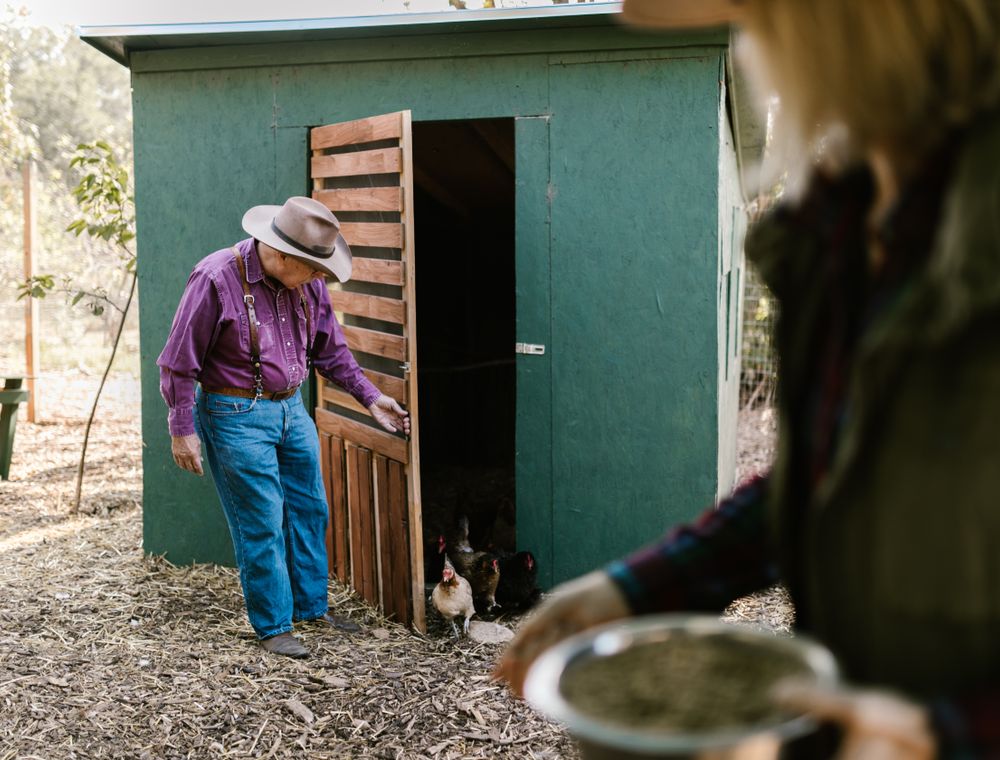
The answer is to give birds a house at the field edge and let them out on the stubble only when the crop has been lifted. Keep the house well ventilated and the litter dry. The house should be easy to clean, and the feed should be kept in a bin that rats cannot reach. Our article on chickens and goats together covers the feed and space problems that come up when two species share a compound.
If you plan to keep layers or broilers, the feed bill is the part that decides the farm. Free-range birds can forage, but most of their diet still has to be bought or grown. Our feed formulation basics explains the nutrients a flock needs, and cassava in poultry feed shows how that crop can reduce the maize bill.

The dry season: bridging the feed gap before it arrives
The dry season is when a mixed farm is most tested. The stubble is grey and brittle, the grass is dry, and the animals lose weight unless someone has planned for the gap. The harmattan, which blows from December to February, dries the air and draws moisture from the pasture, and the first weeks after the rains stop are often the hardest.
Plan the bridge in the rains. Cut Napier or another fodder while it is growing, dry it on a raised rack or a clean floor, and store it under a roof. Keep the dried haulms of groundnut and cowpea in the same store, and turn the heap each week so it does not heat or mould. Count the stock in the store before the rains end, and compare it with the number of animals you will keep through the dry months.
Water is the other half. Animals need drinking water every day, and a dry-season well or borehole that fails in February can cost more than the feed. Map the water sources on the farm, and agree with neighbours who uses which source when.
Fences, boundaries and the neighbour's goats
Most disputes on a mixed farm are about animals in the wrong field. A goat that breaks into a neighbour's cassava or a cow that grazes a yam mound can start a quarrel that lasts for years. The cheapest insurance is a fence that is checked after every heavy rain, and a record of who keeps what and where.
Speak to the neighbours before the planting season. Agree which boundary is fenced by whom, which paths stay open for people and which are closed for animals, and what the owner pays if an animal damages a crop. If the community has a local rule on stray animals, learn it and follow it. The chief, the family head or the district assembly can help if the rule is unclear.
Keep a simple record of incidents as well. Write the date, the animal, the damage and what was agreed. A written record helps the family, and it helps the community if the matter reaches a meeting.
Need chicks for your next batch?
Send breed, number and town. We reply with price, hatch date and delivery cost in writing.
The labour calendar: one family, two enterprises
The work on a mixed farm follows the season, and the table shows one way to share the calendar between the field and the pen. Adjust the months to the rains in your district, because the forest zone, the coast and the north do not start on the same day.
| Season | Crop tasks | Livestock tasks |
|---|---|---|
| Land preparation, early rains | Clear, plough or till, and sow the first crop | Move stock off the planting field, repair fences, check water sources |
| Early growing season | Weed, thin and apply fertiliser as the crop needs it | Cut fodder, keep poultry out of seedbeds, check the stock register |
| Mid-season | Watch for pests and spray only according to the label | Keep sprayed areas closed, dig out and compost the pen manure |
| Harvest | Lift, dry, shell and store the crop | Move animals onto stubble after the crop is lifted, check the haulm store |
| Dry season and harmattan | Plan the next field, collect seed, mend tools | Feed the stored haulms and fodder, check water, watch for weight loss |
The calendar is only useful if the family reads it at the start of each season. Pin a copy on the wall of the store, and tick each task as it is done.
Feed budgeting from the field to the feeder
Most mixed farms count the animals and forget the feed. Start with the other way round. Walk the farm after harvest and estimate how much residue, haulm and fodder you have, then work out how many animal-days that will carry. A herd of goats eats a fixed amount every day, and a flock of birds eats more as the birds grow. Compare the two numbers before the rains end.
If the feed runs short, you have three options. You can sell some animals early, buy in feed at the local rate, or cut the herd to the feed you actually have. The third option is the one most farmers avoid, and it is often the cheapest. An animal that cannot be fed through the dry season loses weight, delays breeding and costs more than its sale value.
Write the feed plan in the same book as the season calendar. Include the residues, the fodder, the bought feed and the water, and check the stock against it each month.
Sprays, waiting periods and the animals that graze after
Crop protection and animal grazing do not mix without a plan. A field that has been sprayed can carry residues for a period after treatment, and the label gives the waiting period before animals may graze the field or eat the crop. Read the label before you buy the product, and write the date of spraying on the calendar with the date the field is safe.
Keep the livestock off sprayed areas until the waiting period has passed. Store chemicals away from feed bins and drinking water, and wash the containers before disposal. If an animal falls ill after grazing a sprayed field, call your vet at once and keep the label, because it tells the vet what product was used.
Health more generally follows the same principle. Follow your vet's or agric extension officer's advice on deworming, vaccination and quarantine of new stock, and do not take a dose from a neighbour's bottle without asking how much the animal weighs.
Where the mix works, and where it does not
A mixed farm works best on land that is large enough to rotate the crops and the grazing, and where the family can give the work the hours it needs at each stage. It works well for a household that already keeps some animals, has a small herd of goats and some birds, and grows the staple crops for home use and for sale in the local market.
It works less well on a small plot where every square metre is needed for the crop, or on a farm where the family has no spare hours in the peak weeks. A farm that tries to carry a large herd, a big flock and a commercial crop at the same time usually fails on labour before it fails on money. Start with one animal species and one crop, and add the next only after the calendar works without strain.
Our guide to choosing livestock helps you pick the species that fit your land and labour, before you draw up the crop plan. If the money for the first season is short, starting a farm with little money sets out which part of the mix can wait a year.
Checklist for your first mixed season
Before the first planting, go through this list with everyone who works the farm:
- Map the fields, the pens, the water points and the boundaries on one sheet of paper.
- Agree which field is for crops and which is for grazing in each month of the year.
- Estimate the residues and fodder you will have at harvest, and the feed the animals need.
- Plan the fodder cut and the haulm store before the rains end.
- Mend the fences and agree the rules on stray animals with the neighbours.
- Write down every spray, its waiting period and the date the field is safe to graze.
- Keep the poultry out of the seedbed and the animals off the young crop.
- Review the book at the end of the season, and change the calendar for next year.
For the poultry part of the mix, our day-old chicks are the starting point, and the partner page sets out what a longer supply relationship looks like with us.
Questions farmers ask
Can goats graze a maize field in Ghana?
Yes, but only after the crop is harvested, or on stubble from a field that will not be replanted immediately. Keep goats out while the maize is young, because they will eat seedlings. Fence or tether the animals, and move them off the field before the next planting date.
Is maize stover good feed for goats?
It is a useful bulk feed, but it is low in protein. Chop it and mix it with a richer feed such as groundnut or cowpea haulm, and store it dry. Goats need more than stover alone, so ask your vet or extension officer for a feeding plan that suits your herd and season.
Are cassava leaves safe to feed to animals?
Only after proper processing. Cassava carries natural cyanide, and processing by wilting, drying or cooking is what makes the leaves and peels safe to feed. Do not feed fresh cassava material straight from the field. Ask your vet or extension officer for the right method for your species.
Can chickens and goats share the same field?
They can share the field after harvest, but not the same feed or water. Birds scratch up seed and seedlings, and goats eat mash if they can reach it. Keep the flock in its house and the goats on a separate pen or tether, and check the feed bins each day.
How much manure does a mixed farm need?
The amount depends on the crop, the soil and the manure's dryness and nutrient content. Rather than a fixed figure, test the soil, apply compost to the seedbed and watch how the crop responds. Local extension officers can advise on a sensible rate for your district and crop.
What do I do about the dry-season feed gap?
Plan it in the rains. Cut and dry fodder such as Napier while it grows, store the haulms under a roof, and count the store before the rains end. If the feed will not last, reduce the herd early rather than let the animals lose condition through the dry months.
Is a mixed farm better than a single-enterprise farm?
It can be, if the family has the labour to run both parts well and the land is large enough to rotate crops and grazing. A single enterprise is simpler to manage. Start with one animal and one crop, and add more only when the calendar works without strain.


