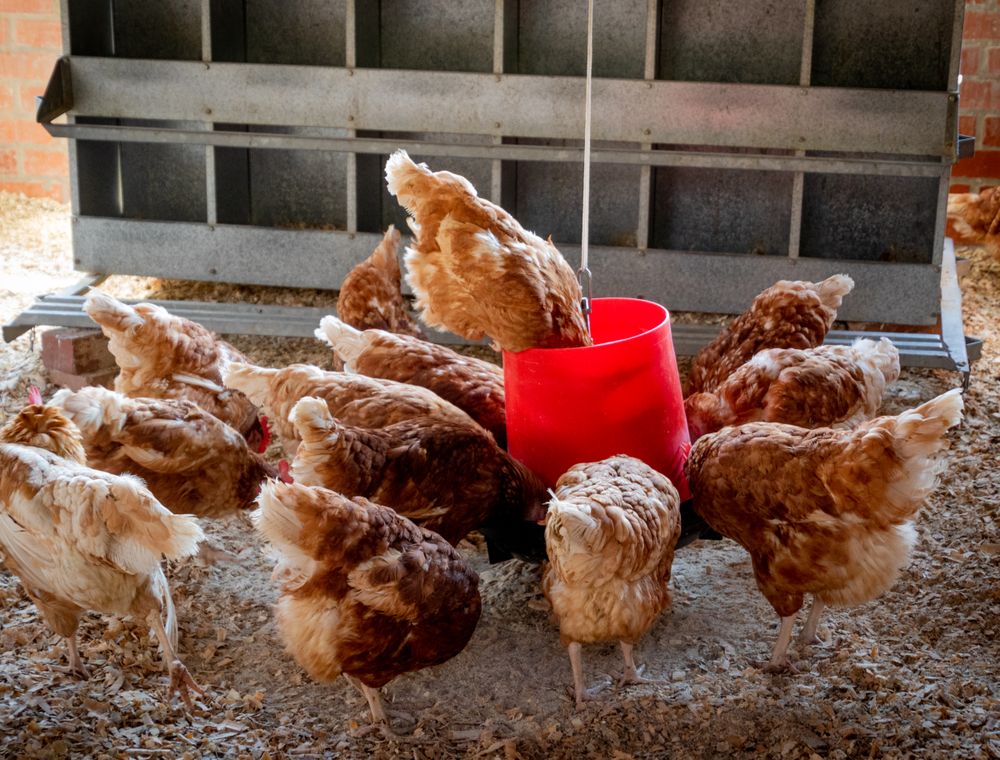
Short answer: Chickens and goats can share a compound in Ghana, but the goat will eat the mash if it can reach it, and some medicated poultry feeds can poison a goat. Keep goat and poultry feed in separate, sealed stores, give each animal its own trough and drinker, and lock both in at night against dogs and rats. Goats are a second enterprise that adds work and risk, so plan them as diversification next to your flock.
Key takeaways
- Never let a goat reach medicated broiler or layer feed, because some feed additives can poison goats.
- Raise poultry feeders and drinkers above goat head height, and give the goats their own trough.
- Close the chickens in at night, and keep goat kids out of the poultry house altogether.
- Separate drinkers and clean them daily, since shared water is where droppings and mud spread.
- Plan the goat feed for the dry season, when grazing thins and goats start raiding the chicken side.
The goat ate the mash first
A common first morning on a mixed compound goes like this. The chicks come out of the house, walk straight to the feeder and find it half empty. The goat has its head through the gap in the bin lid and is eating what it can reach. Nobody has been hurt yet, but the feed bill has gone up and the bird that is closest to the bin is now the goat.
That is the first lesson people learn when they put goats and poultry on one compound. It is also the lesson that costs the most money if it is ignored. The rest of this article sets out how to keep the two animals useful to each other without letting one take over the other's food, house or water.
What each animal does to the other
Goats and chickens behave very differently, and most of the problems come from the places where their habits overlap. The table sets out the main overlaps and the simple fix for each.
| Area | What goats do | What chickens do | What to do |
|---|---|---|---|
| Feed | Pull mash, grain and cake from open troughs | Scratch and pick at goat feed, pellets and browse | Separate feed stores, raised feeders with a rim |
| Space | Butt, climb and trample anything low | Roost high, including on goat pen walls | Separate housing, with no goat kids in the poultry house |
| Ground | Eat litter, bedding and droppings | Scratch and dust-bathe in loose ground | Keep litter out of goat reach and clean it regularly |
| Water | Foul drinkers with saliva and dung | Drink and bathe in the same trough | Separate drinkers, raised on a block |
| Night | Attract dogs if the pen is open | Need closing in to stay safe from rats and cats | Lock both up at dusk, with a sound shelter for each |
Read the table as a list of jobs rather than a list of problems. Each row is a fence, a feeder or a routine you can set up in an afternoon.
Medicated feed, and the goat that must never reach it
This is the one point we want every reader to remember. Many commercial broiler feeds, and some layer feeds, contain coccidiostats, additives that control coccidiosis in chickens. Some of these, the ionophores such as monensin, can poison goats. Horses are even more sensitive. A goat that eats a few handfuls of the wrong feed can become seriously ill within a day or two, even when the chickens around it look perfectly healthy.
Check the bag before you buy it and before you put it down anywhere. Read the label for the additive list and for any warning about other species. If the label warns against feeding to goats or horses, keep that bag in a sealed bin, up on a shelf, in a room the goats cannot enter. Do not tip a split bag on the ground for the chickens to clean up, and do not leave a half-used bag in the corner of the pen.
If you suspect a goat has eaten medicated feed, call your vet straight away. Do not wait to see whether the goat recovers on its own. Bring the bag with you if you still have it, because the vet will need the additive list.
Goats that are fed on their own, from their own store, with hay, browse or a goat feed that has been checked for suitability, are not at risk from your poultry feed. The danger is always the mixed bag and the open bin.
Feeding the chickens without feeding the goats
A chicken feeder that a goat cannot put its head into is the simplest fix on the farm. A hanging tube feeder, or a trough with a rim set above goat height, keeps the mash for the birds. Keep every bin sealed. Rats and goats both learn where the bin is, and a lid that is left open for a morning is enough to teach them.

Goats do not need poultry feed to graze well. If you supplement them, use groundnut haulms, dried leaves or hay in their own trough, at set times of day. A goat that is fed on a schedule does not come round to the chicken side looking for more. Avoid feeding any cassava products raw or in large amounts, because they can carry a cyanide risk for goats, and ask your vet about safe browse and hay for your area.
When you move feed from the store to the pens, carry it in a closed container, and sweep up spills before the goats find them.
Worms, mud and the shared drinker
Most of the parasites that trouble goats and chickens are specific to their own species. A goat does not pass its own gut worms to a hen, and a hen does not pass hers to a goat. That is a relief, but it does not make the two safe to share a yard. They share mud, drinkers, litter and any spot where droppings collect, and those are the places where the eggs of many parasites sit and wait.
Keep drinkers separate, off the ground and on a raised block where neither animal can soil them. Clean them every day. Move the goats around the compound so they are not grazing and fouling the same ground for weeks at a time. Follow your vet's advice on worm checks and on any deworming schedule for the goats, and use the products the vet recommends rather than whatever is on the shop shelf.
In the rainy season, mud is the main carrier. A patch of wet ground that both animals walk through each morning is a good place to find trouble. Put gravel or dry bedding over the worst spots, and keep the feed bins off the wet ground. Our fly control guide covers the same wet-ground problem from the flies' side.
Predators and the night shift
Dogs, cats, snakes and rats come after both animals. A goat pen that is left open is an open invitation to a dog, and a chicken house with a gap at the floor is an open invitation to a rat. Lock the chickens in at dusk, in a house with mesh on the windows and no gap at the floor. Keep the goats in a pen with a roof or a strong shelter, and check the fences each evening before you walk away.
Goat kids are at particular risk from dogs. Bring them into a closed shed at night until they are big enough to defend themselves, and check that the shed door latches from the outside. A determined goat can push a loose door, and a loose door on a chicken house is worse, because the birds have nowhere to run.
Point the goat shelter and the poultry house in different directions, so the goats do not stand at the chicken door all night. The shelter should face away from the poultry house, and the poultry house should face away from the goat pen. Free-range birds need the most protection of all, and our paddock rotation guide shows how to rest the ground they use.
Manure, litter and what you do with both
Goat droppings are small, dry and easy to spread. Chicken litter is wetter, stronger and needs to rest before it goes near a crop. Keep the two heaps apart until you are ready to mix them, because they behave differently in the heap. A mixed heap that is too wet smells badly, and goats will eat bedding if it is left where they can reach it.
Never let the goats feed on the litter, and never let the chickens scratch in the goat dung without a rest period between them. Both can carry parasites, and both are harder to clean once they have mixed with the loose bedding. Our composting guide explains how to rest poultry litter safely before it goes on a crop, and the same care applies to the goat heap.
Need chicks for your next batch?
Send breed, number and town. We reply with price, hatch date and delivery cost in writing.
The dry season, thin grazing and the feed bill
The harmattan is the hard time for goats. Grass dies back, the browse is dusty and the goats start looking for anything green. That is when they raid the chicken side, and it is also when the poultry feed bill jumps. Plan the dry-season browse before the grass runs out. Cut and dry leafy browse in the rainy months, store it off the ground, and set a feed budget for the goats so the shortfall does not fall on your poultry feed.
- Cut and dry leafy browse in the wet season, then store it in a raised, covered place.
- Keep a reserve of hay or dried haulms for at least the harmattan weeks.
- Give goats their supplement at set times, in their own trough.
- Count the sacks of poultry feed each week, so a raid shows up quickly.
A worked day on a small mixed compound
Take a compound with about thirty laying hens and two goats. The birds and the goats need different things at different times, and a simple timetable keeps them apart. The table is a working pattern, not a rule, and you should adjust it to your own daylight and your own routine.
| Time | Chickens | Goats |
|---|---|---|
| Early morning | Open the house, fill the drinkers, check for dead birds | Clean the pen, fill the goats' water, check the fence |
| Mid-morning | Feed from the rimmed hanging feeder, collect eggs | Take goats to browse or graze on the designated ground |
| Afternoon | Let birds range in the run, check the litter and the nests | Bring goats back, give their own supplement from their own trough |
| Dusk | Lock the house, check the mesh and the door latch | Shut the goats into their shelter, check the latch and the fence |
The chickens take the most attention in the first hour and the goats in the last. Keep both routines fixed, and the animals learn them quickly. A goat that knows its feed is at the pen will stop trying the chicken side. If you are starting the flock now, our day-old chicks page shows the poultry we can supply.
Where goats earn their place, and where they cost you
Goats can pay in several ways. Milk, meat and manure are the obvious ones, and a goat that keeps the grass short saves some labour on the compound. But a goat is never a free worker. It needs a shelter, fencing, a vet, worm control, a feed budget and your daily attention, and a goat that gets into trouble with medicated feed can cost you the animal and a vet bill in one week.
Be honest about the numbers before you buy. Add the cost of the shelter, the fence, the feed and the vet, then compare that with what you expect to sell. Then add the hours you will spend walking and feeding. If the sum does not work on paper, a goat will not fix it in practice.
Goats are best treated as a second enterprise, not as a way to make the poultry work pay. Keep the flock as the core business, and bring in goats only when you can run both properly. Our beekeeping alongside poultry article takes the same view of a second enterprise on a compound that already has birds.
Checklist before the goats move in
- Move all medicated poultry feed into a sealed store that goats cannot reach.
- Fit raised feeders and drinkers with a rim above goat head height.
- Build or check a goat shelter facing away from the poultry house.
- Set up a separate drinker for each group, on a raised block.
- Check every fence and gate for gaps a goat or a dog can use.
- Agree with your vet on a worming plan and a plan for suspected feed poisoning.
- Write down the daily routine for each animal, and check it each week.
Once the poultry side is set, our delivery page explains how chicks reach your region, and the FAQ answers the common questions about ordering.
Questions farmers ask
Can goats and chickens eat the same feed?
No. Chicken feed is formulated for birds, and some poultry feeds contain additives that are unsafe for goats. Keep goat feed and chicken feed in separate stores, and read the label on every bag before it goes anywhere near a goat.
Will a goat kill my chicks?
A goat will not usually attack chickens on purpose, but a goat kid or a heavy adult can trample chicks, and goats will eat feed meant for them. Keep chicks in a separate house until they are large enough to be safe in a shared run, and keep goats well away from the brooder area.
Do chickens and goats share diseases?
Most parasites are specific to their own species, so a goat's worms are mostly different from a hen's. Mud, water and litter are shared, though, and any disease that spreads through droppings can move between them. Good hygiene and separate drinkers protect both. Ask your vet about the disease risks in your area.
Can I let my goats graze with free-range chickens?
You can, with care. The chickens get pecked and stepped on, and the goats eat the mash if they can reach it. Plan separate times for each animal, and check that the goats are not picking up litter from the chicken house.
What is the safest way to feed goats near chickens?
Feed goats in their own trough, in their own pen, at fixed times. Use hay, browse or a goat feed your vet has approved, and keep poultry feed out of reach. Never feed goats medicated poultry feed, even as a treat.
How do I stop a goat getting into the chicken house?
Use a door a goat cannot push, a latch set above goat height and sturdy mesh on the windows. Check the fence every morning, and place the goat shelter on the opposite side of the compound, so the goats have no reason to visit the house.
Can I buy chicks for a mixed compound from Halaal Farms?
Yes, for the poultry side. We hatch day-old chicks for broilers and layers and other birds, and we <a href="/delivery/">deliver to all 16 regions</a>. We do not sell goats. Message us on WhatsApp at +233 24 915 1503, or use the <a href="/#order">order form</a> on our homepage to start.


