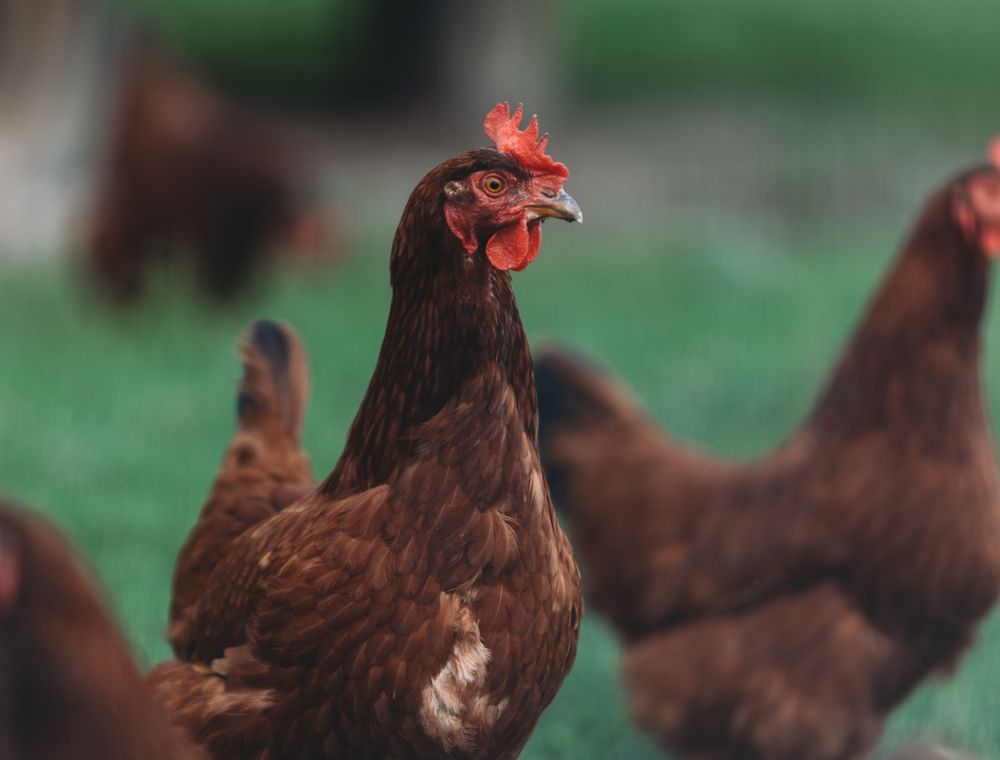
Short answer: Paddock rotation divides a free-range flock's ground into fenced plots and moves the birds from one to the next, so each plot can regrow while worm eggs and coccidia fall in the rest period. A flock of 150 hens that is meant to live outside needs about 600 square metres in use at any one time, so four paddocks of that size come to roughly 2,400 square metres, with each one grazed for about two weeks and rested for six or more.
Key takeaways
- Four paddocks is a practical minimum, and each one needs a rest long enough for the grass to recover.
- Move the flock on grass height and bare ground, not only on the calendar.
- The rest period has to stretch in the dry months, when grass stops growing and the parasite load falls more slowly.
- Move the drinkers, feeders and shade with the birds, and keep the house as the place they sleep.
- Keep a simple grazing record, so no paddock is grazed hard twice in a row.
- Keep paddocks off the valley floor and away from bush fires in the dry months.
Why the same patch of ground makes the flock sick
Free-range birds are never really free of their own droppings. Every worm egg and every coccidia oocyst that a bird passes lands on the ground she is standing on, and the next bird that scratches and pecks in that spot picks the lot up again. Keep a flock on one patch for a season and the ground becomes a reservoir, so the birds are reinfected almost as fast as they are cleared.
Rotation breaks that loop. When the flock leaves a paddock, the eggs and oocysts on the surface are left without birds to infect. Many of them die or fail to develop in the dry spells, and the wet spells that would help them are shorter than farmers think. The rest period does not clean the ground completely, but it lowers the load so much that a healthy bird can cope with what is left.
We see this most with young birds that go out too early. A chick that runs on the same bare patch as the adults from her first week is getting a dose every day, and the first sign is usually a bird that stops eating and sits hunched in the shade.
How the house, the hub and the paddocks fit together
The layout is simple. The house sits in the middle of the plot, or at one edge, and the paddocks radiate out from it like the segments of an orange. The house is where the birds sleep, lay and get shelter from the rain. The feed and water station sits beside the house, and the paddocks are fenced off from one another with a gate at the house end.

In practice the flock goes out in the morning through one paddock, comes back to the house at dusk, and is shut in for the night. The next morning it goes out through the next paddock. The house is the fixed point and the ground is the thing that moves. Farmers who try to move the house along with the birds end up with the paddock system and the tractor system at the same time, which is more work than either one.
The gates are where most of the trouble starts. A gate that is not closed properly lets the birds stray into the paddock that is still resting, and within a week that rest is gone. Put a latch on every gate, and check each one before the birds go out.
How much land a flock really needs
The honest answer is that most Ghanaian plots are smaller than a free-range flock would like. European organic rules ask for at least four square metres of outdoor run for each laying hen, and that is the figure to plan towards for birds that live outside. Lower stocking is kinder to the grass, and it is the only way to keep the parasite load low over a long period. If your land is smaller, the answer is fewer birds, not a tighter fence.
Here is the worked example we use with farmers. Take 150 laying hens. At four square metres each, the paddock in use needs 600 square metres. Four paddocks of that size come to 2,400 square metres, which is a little over half an acre. You graze one paddock for about two weeks, then move to the next, so the first paddock has six weeks to rest before the birds come back to it on the fifth move. The arithmetic only works if you actually move on time.
| Flock | Outdoor area per bird | Area in use at one time | Total paddock area for four paddocks |
|---|---|---|---|
| 50 laying hens | 4 m² | 200 m² | 800 m² |
| 150 laying hens | 4 m² | 600 m² | 2,400 m² |
| 300 mixed dual-purpose birds | 5 m² | 1,500 m² | 6,000 m² |
If your plot is smaller than the table asks for, you have three choices. Reduce the flock, add paddocks and graze each one for a shorter time, or accept that the rest period will be shorter and plan a harder rest in the dry season. Most farmers pick the first option after the first year, once they have seen the bare ground.
Fencing the paddocks so the birds stay where they should
Poultry netting about one metre high is the usual fence. It keeps the birds in, keeps dogs and goats out, and lets you move a section without tearing it down. Fix the netting to posts of hardwood or treated pole at about three metres apart, and run a bottom wire along the base so a dog cannot dig under the net. Add a top wire if kites or hawks take birds from the paddock.
Portable electric netting works on plots that have a power source or a battery charger, and it is quick to move. We would still recommend fixed netting for the boundary and the paddock dividers, because an electric line that goes down in a storm lets the flock wander into the wrong paddock without anyone noticing. Whatever you choose, walk the fence after each storm and check for a gap at the base.
Give the flock a little more room than you think at the first move. Birds that are used to a small run will stand at the gate for the first hour, and they will not go through a gap that they can see the other side of until they have explored it. Open the gate wide, and let them find their own way out.
Reading the grass and the calendar to time each move
Move the flock when the grass is grazed down to a few centimetres, or when the ground under the feeder is bare and the birds start picking at the soil. Those two signs are more reliable than any calendar, because a good week of rain can bring a paddock back in ten days and a dry week can hold it back for a month. Keep the calendar as a guide and the grass as the decision.
The seasons in southern Ghana change the rest period more than anything else. The main rains from about April to July push the grass up fast. The minor rains from about September to November give a second flush. The dry season from December to March stops most growth, and the harmattan dries what is left. The table below gives the working figures we give farmers in Central Region.
| Season | Grazing time per paddock | Rest period before the flock returns | What changes on the ground |
|---|---|---|---|
| Main rains (April to July) | About 2 weeks | 4 to 6 weeks | Fast regrowth, but wet ground and more worms |
| Minor rains (September to November) | About 2 weeks | 6 to 8 weeks | A second flush, then the ground starts to dry |
| Dry season (December to March) | Up to 1 week | 8 to 12 weeks | Little regrowth, dry dust, and the risk of bush fire |
The rest in the dry season is longer than most farmers expect, and it is the rest that suffers most when the calendar is followed too closely. In a dry season, plan to move the flock earlier and give the paddocks more time, not less.
Water, feed and shade that travel with the flock
Drinkers and feeders should move with the birds, not stay in one corner of the plot. A drinker left in the first paddock while the flock moves on to the second is a drinker the birds walk past, so either take it with them or put a second set in each paddock. Hanging nipple drinkers on a small frame are the easiest to move, and our nipple versus bell drinker comparison sets out the trade-offs.
Feed is the trickier half. Free-range birds get protein and minerals from grass, seeds and insects, and that helps. It is never enough for a laying flock, and it is seldom enough for a fast-growing meat bird. Keep a feed station by the house and put the main ration out there each morning and again in the late afternoon. Birds that are fed at the house come back to it at dusk, and that is the habit you want. A bucket shaken at the house door at dusk is an old trick, and it works for most flocks within a few weeks.
Shade in the paddock matters most in the hottest part of the day. A row of trees, a shade net on poles or a strip of roofed run gives the birds somewhere to rest between the morning and the late afternoon. Do not put a paddock under a tree that drops fruit or sap onto the birds, and check the branches in the wind season.
Parasites and the rest period, and what rotation cannot do
Rotation lowers the parasite load, but it does not replace a worming programme or a vaccination plan. A flock on rotation still needs its worming done on your vet's advice, and the timing should fit around the moves rather than the other way round. Our worming guide sets out how to think about it, and the vaccination schedule covers the protection that the paddock cannot give.
Coccidiosis is the disease that rotation helps most, because the oocysts are shed in the droppings and survive on wet ground. Young birds are the most at risk, so keep the youngest birds on the smallest paddock and move them more often. Our coccidiosis notes cover the signs, and the rule of thumb is that a bird that sits hunched and passes watery or bloody droppings needs your vet that day, not after the next move.
Keep the flock out of standing water. The oocysts thrive in wet, warm ground, and a low corner of the paddock after heavy rain is the worst place on the plot. Fill it in, drain it, or fence it off for the whole season.
What the birds get from the grass, and the stubble bank

Grass gives birds green matter, a little protein from the seeds and a fair number of insects. Termites after the first rains, grasshoppers, earthworms and beetle grubs all become food. A bird that spends the day scratching will often come home with a full crop, and that is good for the flock. It is not enough to hold a laying hen at peak lay, so the house feed still does most of the work.
After the maize and cassava harvest, the neighbouring fields become a useful grazing bank. The stubble, fallen grain and insects in the cut fields give the birds a rich few weeks, and they clear the ground for the next crop at the same time. The arrangement works best when you agree it with the farmer in advance, and when the field has not been sprayed with agrochemicals recently. A bird that eats from a sprayed field can take the chemical into its own body and into the eggs, so ask before you move the flock across.
Our free-range setup guide covers the choice of land and the shelter a flock needs, and the semi-intensive system shows how a daytime run can sit next to a closed house.
Need chicks for your next batch?
Send breed, number and town. We reply with price, hatch date and delivery cost in writing.
Bush fire, floods and the plot in the dry months
Bush burning in the dry season can take a paddock in an afternoon. Birds run from smoke in the wrong direction and get caught at the fence, so cut a firebreak round the plot before the dry season starts, and keep the fence line clear of dead grass. If fire comes close, bring the flock into the house, close the sides, and let it pass.
Floods are the wet-season counterpart. Paddocks in a valley bottom fill up in a storm, and the birds are the first thing to drown. Put the paddocks on the higher ground and keep the house on the highest ridge of the plot. Our rainy season notes cover the drainage and dryness side of the same problem, and the harmattan notes cover the cold and dust that come with the dry months.
A grazing record that takes two minutes a week
The farmers who get the best out of rotation keep a short record. It does not need a notebook with columns. A single page with the date of each move, the paddock, the number of birds, the grass height when you moved them and the date you plan to move again is enough. Over a season it will show you which paddock grows back fastest and which one holds the worms, and that is the information you need for the next year's plan.
The record also protects you when the flock is sold or moved. A buyer or a new worker can see at a glance when a paddock was last grazed, and nobody sends the birds back onto ground that has not rested. Keep the page in the house, next to the feed bin, and write on it every time you open a gate.
Before the flock walks out on the first morning
- The plot is divided into at least four paddocks, each big enough for the flock at four square metres per bird.
- The house sits on the highest dry ground, with the feed and water station beside it.
- Every gate has a latch, and every paddock has a bottom wire on the fence.
- There is a firebreak round the plot, and the fence line is clear of dead grass.
- Low corners and standing water have been drained, filled or fenced off.
- Drinkers and feeders are on frames that move with the birds.
- The flock has been wormed on your vet's advice, and the moves fit the programme.
- The grazing record page is in the house, and the first move date is written on it.
Where rotation falls apart in the second month
- Four paddocks drawn on paper for a plot that is really two, so each paddock is grazed bare within a week.
- Moving on the calendar in the dry season, when the grass has not come back and the birds are picking at the soil.
- Paddocks left open after a storm, so the flock wanders into the resting ground.
- Young birds on the same paddock as the adults from the first week.
- Drinkers left behind on the old patch, so the new paddock is watered from a bucket.
If you are still deciding how many birds the plot can carry, our breeds page compares the hardier birds for outdoor life, and the Sasso chicks page covers a bird that does well on grass. Send us the size of your plot on WhatsApp at +233 24 915 1503, and we will say plainly what we think it can carry. The order form is waiting once you have a flock size in mind.
Questions farmers ask
How many paddocks does a free-range flock need?
Four is a practical minimum, because each paddock needs time to rest after about two weeks of grazing. Smaller flocks can manage on three, but a shorter rotation means the grass has less time to come back. More paddocks give a longer rest, and a longer rest is always the better choice in the dry season.
How long should a paddock rest before the birds return?
Four to six weeks in the main rains, six to eight weeks in the minor rains, and eight to twelve weeks in the dry season. The rest is what breaks the worm and coccidia cycle and lets the grass recover. If the grass has not come back by the time you planned to return, extend the rest rather than moving the birds onto bare ground.
How much land does a laying flock need for free range?
European organic rules ask for at least four square metres of outdoor run per laying hen. For 150 hens that is 600 square metres in use at a time, and four paddocks of that size need about 2,400 square metres in total. Smaller plots are workable if you reduce the flock or accept shorter rests.
Can free-range birds graze after the maize harvest?
Yes, and the stubble and fallen grain are good for a few weeks. Agree the arrangement with the farmer in advance, and do not move the flock onto a field that has been sprayed with agrochemicals recently, because the birds can carry the residue into their bodies and eggs. Check the field first and keep the birds off it until the spray has had time to clear.
Do I still need to worm free-range chickens if they are on paddocks?
Yes. Rotation lowers the parasite load but does not remove it, and a flock on pasture still picks up worms from the ground. Follow your vet's advice on the worming programme, and time the treatments around the moves so that the paddock being used is not the one with the heaviest load.
How do I get the birds to come back to the house at dusk?
Feed them at the house every evening, so the habit becomes part of the day. Shake a feed bucket at the door at the same time each evening, and keep the drinkers and the roost inside the house. Most flocks learn the routine within a few weeks, and a bird that stays out after dusk is usually one that was not fed at the house.
What should I do if a bush fire comes close to the paddocks?
Bring the flock into the house, close the sides and the doors, and keep the birds calm until the fire has passed. A firebreak cut round the plot before the dry season starts gives you the best chance of saving the paddocks, and it keeps the birds out of the smoke that drifts across the fence line.

