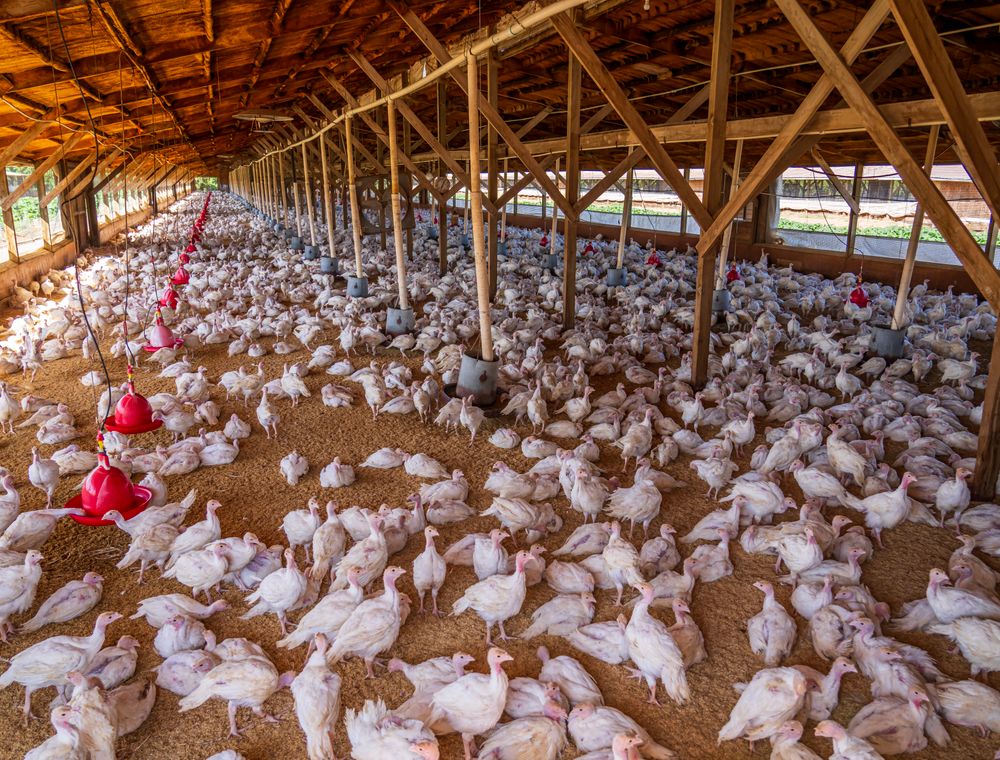
Short answer: Semi-intensive means a house for night, rain and feeding, plus a fenced run for the daytime. It sits between a fully housed flock and open free range, and it suits families and small farms that already have some yard. Plan about 0.3 square metres of house and 2 square metres of run per bird, and expect the run to be the bigger job.
Key takeaways
- Use the house for night, rain and the main feed, and the run for exercise and forage.
- Plan about 0.3 square metres of house floor and about 2 square metres of run per bird.
- Lock the house at dusk and open it at first light, every day.
- Choose a yard with drainage, shade and a fence that keeps dogs out.
- Compare the three systems on space, risk and feed before you build anything.
Finishing the yard you already have
Most families we talk to already have a yard behind the house with a half-built coop, a tree and a fence that stops at one side. The semi-intensive system is what happens when that yard is finished properly. The birds get a sheltered house to sleep and lay in, and a fenced run to scratch and move about in during the day.
It sits between the two systems most people know. A fully intensive house keeps every bird inside all the time, and it needs a bigger build and more feed. Free range, covered in the free-range setup guide, lets birds roam the land, and it needs more ground and more defence. The semi-intensive system takes the sheltered house from the first and the open run from the second, and keeps control of both.
How the day runs in a semi-intensive flock
The routine is what makes the system work. Birds let out at random, locked in late or fed in whatever corner is handy tend to lose condition. A routine takes a few minutes a day once it is set.
- First light: open the house, count the birds out, check the water points and collect the eggs laid overnight.
- Morning: fill the house feeder with the main ration and put scraps and greens in the run.
- Midday: top up the run water and look for any bird off its food. Separate a bird that looks unwell.
- Afternoon: collect the eggs from the nest boxes and set aside any dirty ones.
- Dusk: call the birds in, count them, check the house door and lock it.
The house: night shelter and rain cover
The house has three jobs. It keeps the birds dry, it keeps predators out at night, and it is where most feeding and laying happen. Size it for about 0.3 square metres of floor per bird, the same figure as a free-range house, and add room for feeders and nest boxes. A house for 200 birds needs about 60 square metres of floor, and more if you plan to keep birds of different sizes together.
Give the house roost bars, one nest box for every four or five hens, and vents that pair low openings with high outlets so the warm air leaves above the birds. Keep the litter dry with a good layer of shavings or rice husk, and turn it when it starts to cake. The ventilation guide explains why the outlets matter as much as the inlets in Ghana's heat.
The run: the daytime yard and what it has to do
The run is the part people underbuild. Give each bird about 2 square metres, and fence it to a height and strength that keeps dogs out and the neighbours' birds in their own yards. A run that is too small turns into a dust bowl or a mud patch within weeks, and the birds peck at each other when they cannot spread out.
Surface matters. Bare earth turns to mud in the rains and to dust in the harmattan. Gravel, sand or a planted patch helps, and a shade net or a few trees gives the birds somewhere cool to sit at midday. If you have the land, split the run in two and rest one half while the other is in use. Birds also need a dust bathing spot, a patch of dry sand or fine soil. Give them one and they will use it every day.
The three systems side by side
Here is how the three systems compare on the things that decide them. These are general planning figures, not promises, and your own land and climate will move them. For the breed side of the choice, the local vs exotic breeds comparison is the next read.
| Factor | Fully housed | Semi-intensive | Free range |
|---|---|---|---|
| Space per bird | About 0.3 m² indoors | About 0.3 m² house plus about 2 m² run | About 2 m² run plus shelter, on open ground |
| Build cost | Highest for the house | Middle, and most of it is the run fence | Lowest for buildings, highest for land and fence |
| Feed needed | Full ration all the time | Full ration, with some forage in the run | Part forage, never a full diet on its own |
| Predator and theft risk | Lowest once the house is sealed | Moderate, managed by the fence and the lock | Highest, needs strong fencing and watching |
| Disease exposure | Easiest to control | Medium, depends on run hygiene | Highest, through wild birds and open ground |
| Bird condition | Consistent, easy to manage | Good, birds get exercise | Varies with forage and season |
A worked example: 200 birds on a family plot
Take 200 birds on a yard about 25 metres by 30 metres, which is 750 square metres. Plan the house at about 60 square metres of floor and the run at about 400 square metres. That leaves room for a path, a shade tree and a store for feed and litter. The run takes most of the yard, which is why yards that look big often turn out too small.
On the birds, 200 Sasso chicks at GH₵13 come to GH₵2,600, for four boxes of 50 at GH₵650. The same 200 Kuroiler at GH₵11 come to GH₵2,200, for four boxes at GH₵550. The cheaper bird is not automatically the better buy. Work out what the buyers want from the eggs or the meat, and what feed you can afford over the weeks it takes the birds to get there.
Who it suits and who should wait
The semi-intensive system suits a family with a yard that can be fenced, a few hours a day to manage the birds, and some interest in eggs or small sales. It also suits a small farm that wants to grow beyond a backyard without paying for a full commercial house.
It is a poor start for a yard on a busy street with roaming dogs, or a compound where the neighbours' birds mix with yours each morning. Wait until the fence and the routine are sorted. It is also the wrong choice if you need a fixed output for a contract. Birds that spend part of the day outside lay and grow to a pattern that is harder to predict than a fully housed flock.
If you are still deciding whether to start at all, read the starting budget guide first. When you are ready to price a box, WhatsApp +233 24 915 1503 or use the order form.
Need chicks for your next batch?
Send breed, number and town. We reply with price, hatch date and delivery cost in writing.
Feeding a flock that goes outside
Birds in the run will peck at grass, grit, insects and anything green, and that is good for them. It does not replace the ration. A laying or growing bird still needs its full feed, given in the house or at a covered feeder. Use the run for forage, the house for the main ration, and let the birds find their own treats.
Scraps are useful in small amounts. Cooked rice, vegetable peelings and green leaves are fine in moderation. Salty food, mouldy bread and anything rotten are not. The kitchen scraps and forage guide lists what to keep out. Give scraps last, after the ration, so the birds still eat what they need.
Biosecurity when the yard shares a fence
A yard with a neighbour's fence on one side is a biosecurity problem before it is a feeding problem. Neighbours' birds, wild birds at the water, visitors with their shoes on, and cats or dogs that wander in all carry risk. You cannot control all of them, but you can control the boundary and your own routine.
Keep a footbath or a disinfectant mat at the run gate. Clean your shoes before you enter the run and wash your hands after touching any bird. Keep feed in a sealed bin and water in covered drinkers. The disinfectants and footbaths guide explains how to choose and use them, and the biosecurity article sets out the full routine.
Checklist for setting up the system
- Yard looked at in the rainy season, with the wet spots marked
- Fence at 1.5 metres or more, with wire buried or skirted at the base
- House sized at about 0.3 square metres of floor per bird, with mesh on every vent
- Roost bars and one nest box for every four or five hens
- Run sized at about 2 square metres per bird, with shade and a dust bathing patch
- A daily routine written up on the house door, with the count sheet beside it
- Footbath at the run gate, and feed stored in a sealed bin
Mistakes we see with half-finished yard systems
- Building the house and leaving the run for later, so the birds stay locked in or wander loose.
- A run sized to the yard instead of the birds, which turns to mud at the first rains.
- Leaving the house door open because the afternoon is hot.
- Scraps fed before the ration, so the birds eat less of what they actually need.
Questions farmers ask
What is a semi-intensive poultry system?
It is a sheltered house for night, rain and feeding, combined with a fenced outdoor run where the birds spend the day. The birds get exercise and some forage, and you keep control of their feed, water and night-time safety. It sits between a fully housed flock and free range.
How much space does each bird need in a semi-intensive system?
A common planning figure is about 0.3 square metres of house floor and about 2 square metres of run per bird. For 200 birds that means roughly 60 square metres of house and 400 square metres of run. Your strain, climate and ventilation can change those numbers, so check the heat in the house before you fill it.
Is semi-intensive more expensive than free range?
The house is a cost that free range avoids, but it cuts losses to predators and theft. Free range needs more land and a fence built to keep out determined animals. Semi-intensive needs a smaller run and a sound house. Compare the total cost of your own plot, fence and house, rather than the headline price of the birds.
Which breeds suit a semi-intensive system?
Hardy birds that forage and cope with some outdoor life suit it best. Sasso, Kuroiler and Noiler are common choices on our price list. Heavy fast-growing broilers suit a fully housed system better. The best chickens for free range guide covers most of these birds, because they do well in a run too.
Do semi-intensive birds need vaccines?
Yes, and you should follow your vet's advice on the schedule. The hatchery gives Marek's, Newcastle, Gumboro, infectious bronchitis and coccidiosis vaccines, and the batch record tells your vet what the chicks already had. Wild birds and open runs raise the disease pressure, so ask your vet which boosters matter most on your yard.
Can I keep a cockerel in a semi-intensive system?
Yes, with one cockerel for a manageable group of hens, usually around one for every ten. He will crow at dawn, so check that the neighbours accept it before he arrives. Lock the cockerel and the hens in together at night, and watch the run for fights, which often start when the flock is too crowded.
How do I keep the run from turning to mud?
Use gravel, sand or a planted patch at the house door and at the feed points, and split the run in two if you can. Fill any hole with fine soil and gravel, and keep the drinkers under cover so the water does not spill. In the rainy season, move the main feed inside the house and keep the run as dry as you can.


