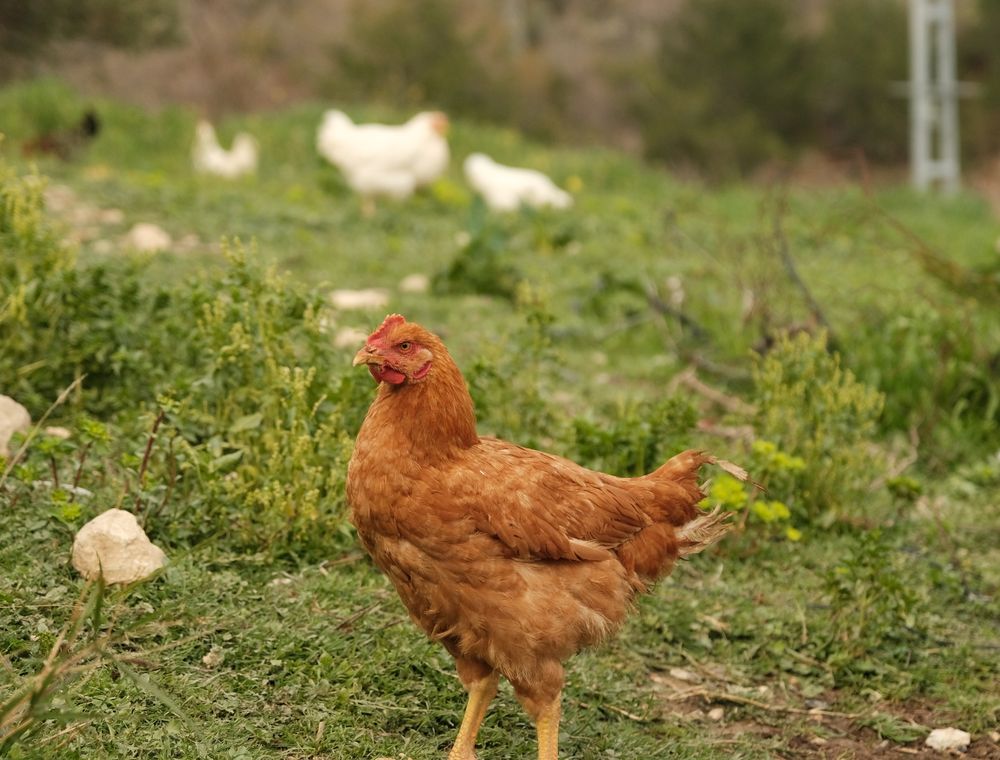
Short answer: Kitchen scraps and forage add variety to a chicken's diet, but they supplement a balanced feed and do not replace it. Plain cooked starches, ripe fruit, cooked greens and clean cooked fish are safe, while raw cassava, green potato, avocado and salty, fried or spoiled food can harm birds. Offer scraps after the ration, in small amounts, and clear what is left within two hours in the heat.
Key takeaways
- Scraps supplement the ration. They never replace it, and the ration is always fed first.
- Safe choices include plain cooked rice, unsalted maize porridge, ripe pawpaw, cooked sweet potato and cooked greens.
- Harmful foods include raw cassava and its peel, green potato, avocado skin and seed, and salty, fried or spoiled food.
- Never feed raw poultry offal, raw meat or dead birds back to the flock, because disease moves that way.
- Remove leftovers within two hours in Ghana's heat to stop spoilage, flies and sour food.
Can I give the chickens yesterday's jollof?
Not really. Yesterday's jollof is salty, oily and often sour by the time the birds get it. Chickens will eat almost anything you put in front of them, and that is exactly why you have to choose what you give. Scraps can add variety and cut the feed bill a little. A poor choice can make a bird ill, or stop a flock from laying for a week.
The question most farmers should ask is not whether a food is edible. It is whether the bird is better off for eating it, and how much of its ration the food will push out of the way.
Why scraps supplement the ration but never replace it
A ration is balanced for the stage. It holds energy, protein, calcium, phosphorus, vitamins and minerals in the right proportions. Most kitchen scraps are starch, water and whatever flavour went into the pot. A hen that fills up on leftover rice eats less of her layer mash, and the protein and calcium she needs fall short without anyone noticing at the trough.
Here is a sum for a flock of 40 laying hens eating about 110 grams of layer feed each day. That is roughly 4.4 kg of ration for the flock. If the hens fill up on 1 kg of cooked rice before the feed goes out, close to a quarter of the day's ration has been displaced, with almost none of the protein. Over a month, that gap shows up in the egg count and in the size of the eggs.
Feed the ration first, every time. Give scraps in the afternoon, after the birds have finished their feed, and keep the amount small enough that the flock still comes to the feeder the next morning hungry. Our layer feeding guide and broiler feeding schedule show how much ration each stage should eat, so you know what the scraps are displacing.
If the scraps are meant to supply calcium or extra energy, there are cheaper and safer routes. Our grit and shell guide covers calcium for layers, and our cheaper feed alternatives article covers energy ingredients that can replace scraps in the ration.
Scraps that are safe to offer
These foods are safe in modest amounts when they are fresh, plain and cooked where cooking is needed. None of them should be salted, fried or heavily spiced.
- Plain cooked rice and unsalted maize porridge. Good for energy, and useful for hens that need a bit of extra weight.
- Cooked sweet potato and boiled yam. Starchy and filling, best given cool and fresh.
- Ripe pawpaw, ripe banana and watermelon flesh. Useful vitamins, but high in sugar, so keep them to a few pieces a day.
- Cabbage, lettuce, pumpkin leaves and cooked kontomire. Greens add vitamins and bulk. Cook kontomire before feeding it, because raw cocoyam leaves are not safe.
- Clean cooked fish, unsalted. A useful protein, with the bones in small amounts only.
- Cooked black-eyed peas and other cooked beans. Cooked beans give protein, but raw beans are a problem, so always cook them thoroughly first.
Our rule of thumb at the hatchery is simple: if you would eat it plain and fresh yourself, it is probably acceptable for a bird in small amounts. That still does not make it feed.
Scraps that can harm birds
Some kitchen foods are a real danger to poultry, and some of them look harmless on the plate. Keep this table on the kitchen wall.
| Food | Why it is a problem | What to do |
|---|---|---|
| Raw cassava, roots and peel | Releases cyanide when broken down in the gut | Never feed; only properly dried and processed cassava belongs in feed |
| Green or sprouted potato | Contains solanine, which is toxic | Do not feed; keep green peel and sprouted pieces out of the scrap bucket |
| Avocado skin, seed and flesh | Contains persin, which is toxic to birds | Keep out of reach of the flock |
| Raw beans, including dried beans not cooked | Contain lectins that damage the gut | Cook fully before feeding, or do not feed |
| Salty leftovers, seasoning cubes and salted fish | Salt can poison birds, especially where water is short | Keep out; cook without added salt for the birds |
| Fried or very oily food | Rancid fat, poor gut health and fatty livers | Keep out of the flock's feed |
| Mouldy bread, rotten fruit, sour dough | Mould toxins and spoilage bacteria | Throw away; do not feed to birds |
| Raw meat, raw offal or dead birds | Spreads disease, even between flocks | Never feed back to the flock |
| Onion and garlic in quantity | Can damage red blood cells in large amounts | Avoid in quantity; small amounts from the kitchen are not the issue |
The raw meat and dead birds line is the one we press hardest. Scraps are a common way for a disease to move from one flock to another, which is why our biosecurity notes treat carcasses and offal as a risk, not a treat.
Ghanaian kitchen foods, one by one
Most Ghanaian kitchens cook food that is starchy, sometimes fermented and often salted or spiced. The same rules apply, but the details matter.
- Kenkey and banku. Fermented dough is sour, and the salt in most batches is too much for birds. Leave both out, except for a plain, fresh, unsalted portion in very small amounts.
- Fufu. Plain pounded cassava and plantain, fresh and unsalted, is a filling snack in small amounts. Sour or fermented fufu is not.
- Waakye. Rice and beans cooked plain are fine. The oil, pepper and salt that go into the usual pot are not, so set aside a portion before seasoning.
- Gari. Dry gari is a processed cassava product and a poor treat on its own. Soaked gari turns sour within hours in the heat, so do not leave it out.
- Ripe plantain. Boiled or steamed ripe plantain is a good treat. Fried plantain is not.
The test is always the same. Would the food be safe, plain and fresh if it was served to you that morning? If the answer is no, it does not go into the scrap bucket.
Forage: what hens find on the ground
Scratching hens eat grass shoots, seeds, insects, worms and greens. In the rainy season there is plenty, and the flock's protein and vitamin intake can improve as a result. The pasture is at its best in the weeks after the first heavy rains, when grass is growing, the soil is soft and insects are everywhere.
The dry season is different. In the harmattan the grass is brown and brittle, insects thin out and the birds have less to find. Forage cannot be counted on, and a flock that was thriving on the pasture in the rains can slide in the dry months if the ration is not kept up. Forage tops up a ration. It never replaces one.
Our article on battery cage and deep litter systems covers the difference between housing styles, and it is worth reading before you decide how much of the flock's diet should come from the ground.
Free range without losing control of the ration
The simplest way to keep control is to fix the order of the day. Feed the ration in the morning from a covered feeder, then let the birds out to forage after they have eaten. Give scraps in the afternoon, after the ration is gone, so the scraps are a bonus rather than the meal.
- Shut the birds in at dusk, so they are safe from predators and sleep in a dry house.
- Keep the feed store closed, so rats and wild birds cannot get in.
- Provide clean water inside the house and in the run, and check it twice a day.
- Watch the flock for birds that stay off the ground or lose weight, since they may not be getting their share.
Free-range birds also meet wild birds, rodents and dirty puddles. The more birds mix, the more disease can travel, so read our notes before you let visitors or another flock near the run. Dual-purpose birds like the ones on our Kuroiler and Noiler chicks page are often kept free range, and the same rules apply to them.
Need chicks for your next batch?
Send breed, number and town. We reply with price, hatch date and delivery cost in writing.
Growing greens in the run
Some farmers grow cowpea, pumpkin or moringa near the house and cut the leaves fresh for the flock. Moringa leaves are often dried and ground into the mash by small farmers, because they add vitamins and some protein. Dried greens go into the mash in small amounts, and only after you have checked the birds' intake and droppings for a week.
Cut greens should not sit in the sun. In Ghana's heat they wilt, heat and spoil within a few hours, and a bird that eats wilted greens can get loose droppings or a sour crop. Cut only what the birds will finish in the morning.
Do not treat moringa or any herb as a cure. Greens are a supplement, and a sick bird needs a vet, not a leaf.
Scraps in the heat: spoilage and flies
Scraps that sit in the sun turn sour within hours. The bird eats the sour food and becomes ill, or the flies lay eggs in the leftovers and the heap becomes a breeding ground. Both problems grow quickly in the dry season heat and in the wet season humidity alike.
Pick up what the birds leave within two hours. Store any scraps you are holding covered and cool, not in the sun. Never mix leftovers into a trough of water. Wash the feeders and drinkers each time you add scraps, and do not let the same bowl sit full of old food for a day.
A bucket of scraps by the back door is the start of a fly problem for the whole household. Use a lid, empty it daily, and clean the bucket with hot water and soap.
A checklist for scraps and forage
- Feed the full ration first, every day, from a clean feeder.
- Offer scraps in the afternoon, in amounts the flock finishes within two hours.
- Choose plain, fresh, unsalted and cooked food wherever cooking is needed.
- Keep raw cassava, green potato, avocado, salty food, fried food and spoiled food out of the flock.
- Never feed raw meat, offal or dead birds back to the flock.
- Weigh the scraps for a week and weigh what is left, to see how much of the ration they replace.
- Remove leftovers and wash the bowls each time you add scraps.
- Shut the birds in at dusk and keep the feed store closed to rats and wild birds.
If you are starting a flock and want to plan the feed from the first day, our broiler day-old chicks page and layer day-old chicks page set out what we sell. Message us on WhatsApp at +233 24 915 1503 with your questions, or use the order form when you are ready to order.
Questions farmers ask
Can chickens eat cooked rice?
Yes, plain cooked rice is a useful energy food in small amounts. It should be unsalted, unoiled and fresh, and it should come after the ration rather than in its place. Rice that has sat out for hours turns sour in the heat, so give only what the flock finishes within two hours.
Is cassava safe for chickens?
Only when it has been properly dried and processed, as it is in commercial feed. Raw cassava roots and peel release cyanide when the tissue is broken down, so never feed them from the kitchen. If you are unsure about a cassava product, ask the seller how it was processed before you buy it.
Are bread and biscuits good for chickens?
They are empty calories. Bread and biscuits contain salt, sugar and fat, and they fill the bird up without giving it protein, calcium or vitamins. A crumb now and then will not harm a healthy bird, but do not let bread become a regular part of the diet. Mouldy bread is a definite no.
Can chickens eat cooked kontomire?
Yes, when it is cooked and given in small amounts. Raw cocoyam leaves contain compounds that irritate and can harm the gut, but cooking reduces them a great deal. Cook the leaves thoroughly, cool them and offer a modest portion alongside the ration, not instead of it.
How much scrap can I give a flock each day?
Keep scraps to a small share of the day's intake, and always feed the ration first. A useful test is to weigh the scraps for a week and check that the flock still eats its full ration at the next feeding. If the birds stop coming to the feeder, you are giving too much.
Do free-range chickens still need feed if they forage?
Yes. Foraging supplies some protein, vitamins and grit, but it varies with the season and the birds never get a balanced ration from the ground. In the harmattan, the pasture can be bare for weeks. Keep the feed in the morning and treat the forage as extra.
What do I do if a bird eats something toxic?
Remove the food from the flock, separate the bird if you can, and provide clean water. Keep a sample of what the bird ate, and call your vet early. Do not try home remedies or give medicines on your own judgement, since some of them make matters worse. Early action gives the best chance.


