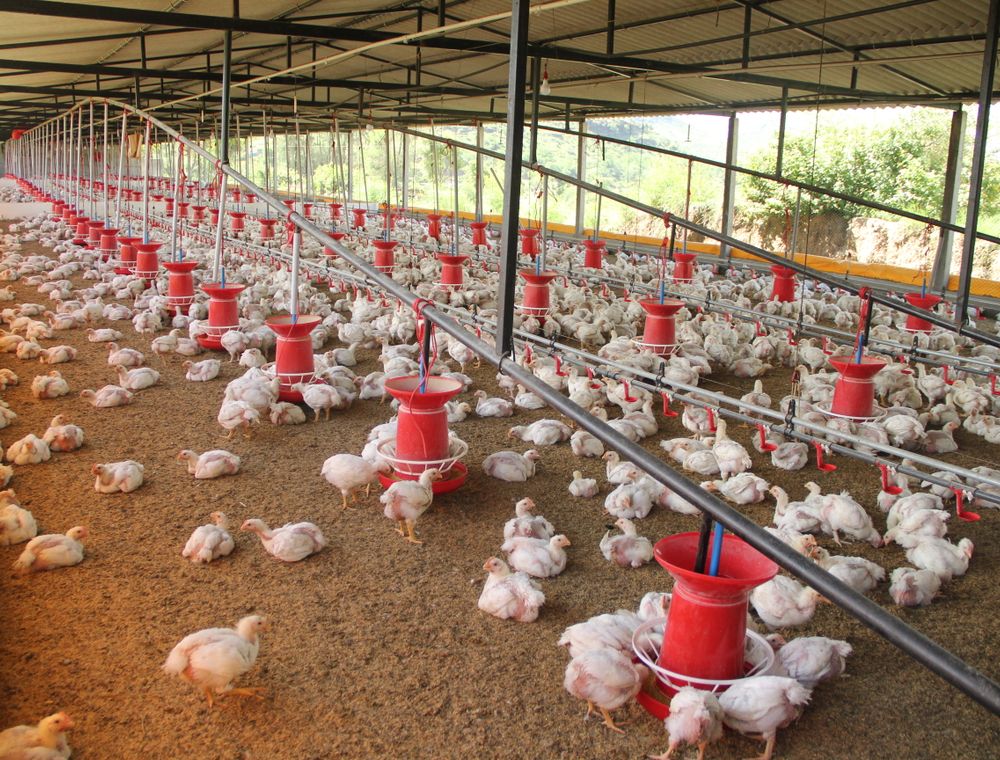
Short answer: The rains rarely kill a healthy flock in one blow. They make the litter wet, the feed damp and the house cold at night, and the diseases already in the house find the gaps. Fix drainage and the drinker lines before the heavy weeks, keep feed off the floor and in small stocks, and check the litter and the birds every morning.
Key takeaways
- Wet litter is the rainy season's main problem. Dig out the caked patches the day you find them, not after they have spread.
- Water coming into the house is a drainage job. Gutters, a trench on the uphill side and a raised threshold do more than any spray.
- Damp feed goes mouldy within days. Buy in smaller amounts, and keep every bag on raised boards away from the wall.
- Coccidiosis and respiratory trouble climb when the floor stays wet. Ask your vet to set the plan and the monitoring for your flock.
- Watch the cold, damp nights as closely as the storms. A flock that piles into one corner at dusk is telling you the house is not right.
The calls start when the rain settles in
The calls start when the rain settles in. A farmer rings to say the birds are bunched at the door, the litter at the feeder line feels like wet porridge, and two or three birds a day have stopped eating properly. Nothing dramatic has happened. The house has simply been wet for a week, and the wet has been doing its slow work.
Rain rarely kills a healthy flock in one blow. It changes three things at once: the floor, the feed and the air. Those changes open the door to diseases that were already in the house, and they leave every bird a little less able to cope. A house with dry litter, a clean store and a sensible night routine takes a heavy storm without fuss. A house with a split gutter, a dripping drinker and a feed bag sitting on the concrete does not.
This guide covers what to do before the heaviest weeks arrive and what to watch while they last. It comes from the hatchery side of the business. We send out day-old chicks in boxes of 50, and the rainy-season problems come back to us in the stories farmers tell a few weeks later. The same few faults come up again and again, which is good news, because they are fixable.
Why wet litter does more damage than the rain
Wet litter is the rainy-season problem we hear about most, and it does its damage in two ways. The first is direct. Damp, warm patches suit the bacteria and the coccidia that cause trouble in young birds. The second is slower. Moisture speeds up the breakdown of droppings, and that breakdown releases ammonia. A few hours of ammonia irritates a chick's eyes and airways. A few weeks of it leaves a flock with a rattling cough that looks like something else entirely. Our deep litter guide explains how to keep a litter bed working through the wet months.
The trap is that wet litter rarely looks wet from the doorway. Walk to the far end, or to the spot under the drinker where a nipple drips, and you will find the caked crust that has been forming for days. Push your hand under the top layer. If what is beneath is grey, sticky and cold, the house has a water problem first and a litter problem second.
Drinkers cause more of this than farmers expect. A nipple that drips, a bell drinker hung too low, or a leaking joint at the end of a line can keep one patch wet all season. Fix the water first. If you replace the litter while the drip is still running, the new litter will be wet by the weekend, and you will have paid for the bedding twice.
Drainage: move the water away from the house first
Most rainy-season trouble that looks like a litter problem is really a drainage problem. Stand outside the house during the first hard rain and watch where the water goes. If it runs under the wall, pools at the door or backs up into the run, you have found your first job.
- Clear the gutters and downpipes so the roof water lands well away from the walls, not in a soak pit beside the door.
- Dig a shallow trench or swale on the uphill side to carry run-off around the house. A few centimetres of fall over a few metres is enough, provided the trench ends somewhere the water can leave.
- Raise the threshold at each door and keep the ground outside lower than the floor. Packed soil or stone works well for this.
- Check every pipe that feeds the drinkers for leaks at the joints and the taps. A slow leak in the dry season becomes a standing pool in the wet.
- Clear the channels of litter, feathers and mud before each heavy spell. A blocked channel holds water against the wall, which is worse than having no channel at all.
Some farms run a band of coarse gravel along the foot of the wall to stop rain splashing back up onto the boards. It is cheap, it drains well and it is easy to rake clean. Splash from a bare, packed yard carries dirt and droppings up onto the lowest boards every time it rains.
Damp feed, mould and the store that leaks
Feed is the rainy-season risk most farmers underrate. A bag stood on a damp floor for a week can take up moisture from below even when the top looks fine. Once the feed warms and stays damp, moulds grow, and some of them produce toxins that harm the liver and the gut. You will not always see the damage. What you see is birds that eat less, grow more slowly and sit with ruffled feathers.
Our rule for the store is simple. Pallets or raised boards under every bag, bags stacked clear of the walls, and no more feed on hand than the flock will eat in about three weeks. In the wet months that stock limit matters more than the price per bag. A cheap bag you cannot use before it spoils is the most expensive feed on the farm.
Rats find a damp store attractive too, and a wet bag with a torn corner brings them in faster. Our article on rodent and snake control covers the sealing and trapping side.
Look at each bag when you open it. Hard lumps, a sour or musty smell, a grey or green bloom and warm patches inside all mean the feed does not go in the trough. Do not mix the bad part into good feed to stretch the bag. Ask the supplier for a replacement, and keep the bag until the matter is settled. Our article on storing feed and avoiding mould goes into the detail, and it is worth reading before the first heavy week.
Why disease pressure climbs when the ground stays wet
Wet weather does not invent new diseases in your flock. It raises the pressure on the ones already there. Coccidiosis is the classic case. The parasite thrives in damp litter, and young birds that peck at wet droppings take in more than they can handle. Respiratory trouble gets worse when the house is cold, wet and crowded at night. A stressed flock also responds worse to any infection it meets.

The vaccination programme is set by your vet, and rain does not rewrite it. What rain changes is how closely you need to look. During a wet spell, check the flock twice a day, count the birds that stand apart, look at the droppings and write down what you see. If numbers rise over two or three days, call the vet before you start treating on a guess. Do not add medicines to the water or feed at a dose you found online. The vet decides what is needed and for how long. Our coccidiosis article sets out the signs to watch for.
The table below is the one we use when a farmer describes a wet-season problem to us on the phone. It is a starting point for the conversation with your vet, not a diagnosis.
| What you see | Likely link to the wet | First move |
|---|---|---|
| Birds bunched at the door, cold to the touch | Draught and damp at night, or the house closed too tight | Check curtain gaps, open high vents on mild nights, look at the litter under the bunch |
| Caked, sticky litter at the drinker or feeder line | A dripping nipple, a bell drinker set too low, or poor drainage | Fix the drip and reset the drinker height, then dig out and replace the patch |
| Watery or bloody droppings in young birds | Coccidiosis pressure in wet litter | Call the vet the same day, remove the worst litter, and do not guess a treatment |
| Watery eyes, sneezing, rattling breath | Ammonia from wet litter, or a respiratory infection | Clear the air and the litter at once, and report to the vet if it spreads |
| Birds eating less, a musty smell at the feeder | Damp or mouldy feed | Stop using the bag, move stock to raised dry storage, and ask for a replacement |
| Flies over the litter and the drains | Standing water and wet droppings | Clear the water, dry the litter, and check the channels by the walls |
Cold wet nights: close the house without choking it
Rainy nights in Ghana feel cooler than the daytime figures suggest, and the birds feel the drop. Farmers shut the curtains to keep the rain and wind out, and the flock bunches together for warmth. Both habits are sensible. Both can make the house sick if they go too far.

A closed house with a wet floor fills with moisture and ammonia by morning. The birds breathe it in while they sleep, and the air is at its worst just before the lights come on. The answer is not to throw the whole side open in a storm. Keep the warm, moist air moving out at the top of the house, and stop cold draught reaching the birds at their level. Our ventilation guide explains how to set the vents for each season.
- Open the high vents or the ridge gap on mild wet nights, even when the side curtains stay down.
- Keep the curtains on the windward side shut, and lift the leeward side a little so air moves across the top of the house.
- Check for birds piling into one corner in the first hour of dark. Piling means either a draught is getting in or the house is colder than you think.
- Walk the house with a lamp held at bird height before you lock up. From the doorway you see nothing useful.
Look at the air in the morning too. If your eyes sting when you walk in at dawn, the ammonia is already too high, and the birds are breathing more of it than you are.
Mosquitoes, flies and the water they breed in
Rain brings the insects that carry trouble. Mosquitoes breed in tyre tracks, old buckets and the tray under a leaking drinker. Flies follow wet droppings and the spoiled feed that goes with them. Neither will kill your flock by itself, but both tell you the house is holding water, and both add to the work when you are already short of hands.
Empty and turn over anything that holds water near the house every few days. That includes old drinker trays, buckets left by the gate and the rims of feed bins that collect rain. Keep dropping pits dry and covered where your system allows. Fly traps have their place, but they cannot replace a dry floor. Clean water and dry litter remove most of what the flies want.
Need chicks for your next batch?
Send breed, number and town. We reply with price, hatch date and delivery cost in writing.
A worked example: four lost birds in a bad week
Say you run a flock of 400 broilers from chicks bought at 20 GH₵ each. The chicks alone cost 8,000 GH₵ before feed, housing or labour. In a dry spell you lose the usual couple of birds a week and accept it as the cost of doing business. Then the rains come, one drinker line leaks for four days, and the litter at that end turns to cake. In that week you lose four birds.
Four birds at 20 GH₵ is 80 GH₵ of chicks. That is not the real loss. The birds in that end of the house are standing in the worst litter, eating less and putting on weight more slowly. Nobody weighs the birds that lose three or four days of gain, so that loss stays on the farm and never reaches the notebook. By the time the flock is sold, the bill is much larger than the four birds.
The fix costs far less than the loss. Repairing the drip and digging out the cake takes an afternoon, and a bag of dry litter to cover the patch is a small cost against a flock that has stopped gaining. If you had walked the drinker line on the first wet morning, you would have spent nothing at all. Our guide to water management for broilers shows how to check the line before it fails.
A morning routine for the wet weeks
- Walk the outside of the house and look for standing water against the walls and in the run.
- Feel the litter at the door, along the feeder line and under each drinker.
- Check every drinker for drips, and confirm the flow at the far end of the line.
- Look at the feed bags for damp, caking, smell and bloom before you fill the feeders.
- Count the birds standing apart, and note any with watery eyes, open beaks or a hunched posture.
- Check the vents and curtains for the night, and walk the house with a lamp at bird height before you lock up.
- Write the day in the record: litter condition, mortality, feed used and any rainfall you measured.
Planning around the two rainy seasons
In the south of Ghana, including the Central Region where we are, the rains come twice a year. The major season usually arrives in the spring and runs into early summer. A shorter minor season follows in the autumn. The gap between them is the dry spell, and it is the best time to do the work that wet weather makes impossible. In the north there is a single rainy season, shorter and later to start, and the harmattan follows it with dry dust and cold nights. Build your plan around the rain that falls on your site, not the forecast on the radio.
Use the dry spell to fix the roof, dig the trenches, build the raised store and replace the worn drinker lines. A house prepared in the dry weeks rides out a storm. A house started in the middle of one does not. Our year-round calendar sets the rainy weeks against the festive peaks, so you can see where the repairs fit. The dry-season work for the harmattan is in our harmattan care guide.
If you are restocking into a wet season
If your house is ready, chicks bought in the rains can do very well. We dispatch day-old chicks on the day they hatch, in ventilated boxes of 50 for broilers and layers. The brooder is where you need to be strict about dryness and draught. Set it up on clean, dry litter, check the heat source before the box arrives, and never put chicks into a house that has not been dried out. Our brooder setup guide covers the steps in order.
Check the breed pages before you choose, starting with the broiler chick page or the layer chick page, then place the order through the form at /#order. If you want a second opinion on the house before you buy, WhatsApp us on +233 24 915 1503 and we will talk it through. Farm visits are by appointment, which suits a farmer who wants to see the layout in person before the rain sets in.
Questions farmers ask
Should I change all the litter when the rains start?
Usually not. Dig out the wet, caked patches and replace them with dry litter, and keep the dry areas dry. Stripping the whole floor in the middle of a flock's life stresses the birds and throws up dust. The exception is a house where the whole floor has gone sour, cold and sticky. In that case, call the vet to look at the flock before you pull everything out.
How do I know if my litter is too wet?
Push your hand about ten centimetres into the litter in three places: the door end, the feeder line and under a drinker. Dry litter crumbles and feels dusty on top. Wet litter clumps, feels cold and leaves a film on your palm. Smell it too. A sharp ammonia smell at the level of your face means the litter is working against the birds, and it needs attention that day.
Does rain change the vaccination schedule?
Not by itself. Your vet sets the schedule for your flock and your area, and the timing of vaccines does not move because of a wet week. What changes is the checking. Watch for coughing, watery eyes and a drop in intake during the rains, and tell your vet early. If a planned vaccine date falls in a storm, ask the vet whether to shift it, rather than moving it on your own.
Can I dry damp feed in the sun and use it?
Sun drying does not reliably remove mould or the toxins some moulds produce, and a bag that smells sour is not made safe by a day in the sun. Stop using feed that is clumped, musty, warm or mouldy. If only part of a bag is affected, do not sort out the good bits to feed. Ask the supplier for a replacement, and keep the bag so you can show what happened.
What should I do if birds are coughing after heavy rain?
Sort out the signs before you act. Is the cough with watery eyes, sneezing or swollen faces? Is the house damp, cold or smelly at dawn? Improve the air and the litter the same day, reduce crowding at night, and call your vet. Coughing can come from several causes, and the vet needs to see the flock or hear the signs clearly before choosing a treatment. Do not start medicines from a guess.
How much fall should a drainage trench have?
There is no single figure that suits every site, but the principle is simple. Water has to run downhill, away from the house, to a place it can leave. A few centimetres of fall across a few metres is usually enough on a gentle slope. Walk the line after a heavy rain and look for pools. If water stands at any point, the fall is not enough or the outlet is blocked, and that is the place to dig again.
Do mosquitoes spread disease to chickens?
Some mosquito-borne diseases affect birds, and the risk depends on where you are and which diseases are present locally, so ask your vet. For most farms the practical point is simpler. Standing water near the house is a sign of wet, dirty litter and poor drainage, and fixing it removes both the mosquitoes and the conditions that suit disease. Empty containers, keep drains clear and dry the ground around the house.


