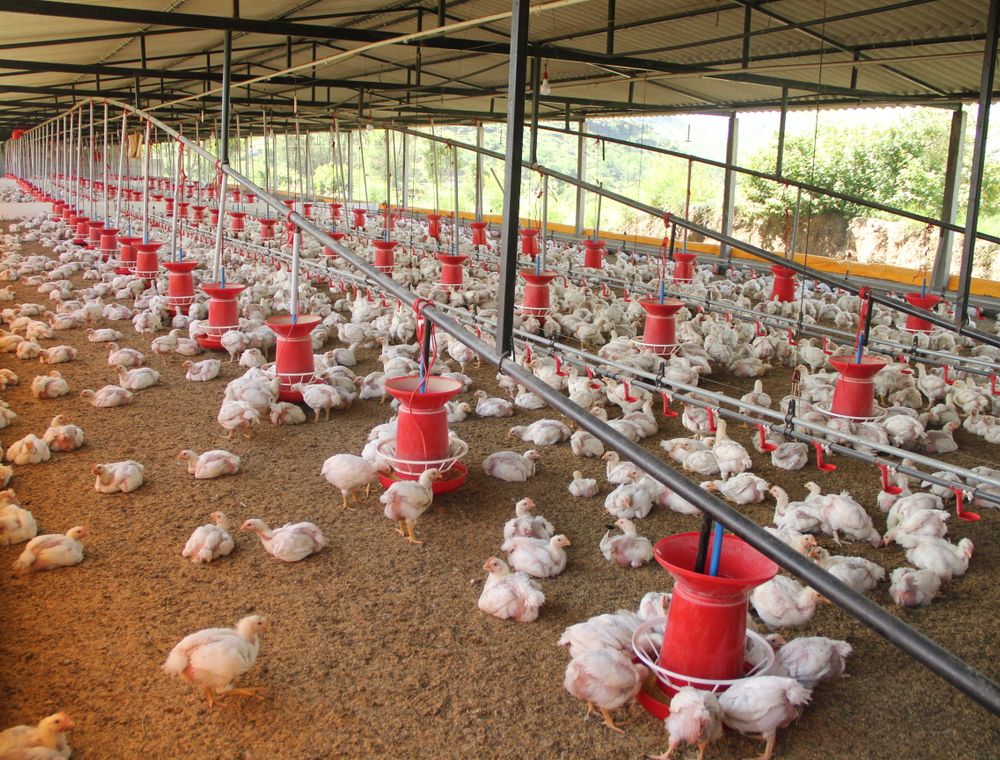
Short answer: Plan about 10 broilers per square metre of house floor in hot Ghanaian conditions, about 6 to 7 deep-litter layers per square metre plus nests and perches, and add roughly a quarter of the house area again for the feed store, wash area, walkways and litter. A free-range run needs much more ground, often 1 to 2 square metres per bird as a working figure, and the grass wears out faster than you expect. Start from the number of birds you plan to keep at once, then size the house, then the yard, and only then look at the plot.
Key takeaways
- Work from the number of birds you keep at one time, not from the size of the plot you can see.
- Broilers in a hot Ghanaian house need about 10 birds per square metre as a planning figure, and less in the hottest weeks.
- Deep-litter layers need about 6 to 7 birds per square metre plus space for nests and perches.
- Add about a quarter to the house area for feed, water, walkways, litter and the dead-bird pit.
- Free range can double or triple the land need, and the run needs a rest rotation to stay usable.
A plot size question has no answer until you name the birds
Ask a farmer how much land they need for poultry and they will name a plot. Ask how many birds they plan to keep at one time and they will go quiet. The second answer is the one that matters, because the plot is only a container for the birds, the feed, the litter and the work.
In our experience the most common land mistake is sizing the plot for the chicks you ordered in the first month and then forgetting the second batch. A house that is full of eight-week-old broilers has no room for the next box of 50, and a yard that worked for one flock turns to mud when two flocks use it.
So start with two numbers. How many birds will be on the ground at the peak of the cycle, and how many batches or flocks you want to run each year. Everything else follows from those.
Floor space per bird, by flock type
These are planning figures, not limits. Your breed guide and your vet's advice should override them, and the hottest weeks of the year should push you to the lower end of each range.
| Flock | Indoor space per bird (planning figure) | What else to allow for |
|---|---|---|
| Broilers finishing near 2.5 kg, deep litter | About 10 birds per square metre in a hot house, a little more in cool months | Feeders and drinkers spread evenly, and room to walk in |
| Layers in deep litter, indoors | About 6 to 7 hens per square metre | Nests, perches and a scratch area |
| Free-range layers | The same as indoor layers, plus an outside run | Run space, shelter from sun and rain, and a rest rotation |
| Cockerel batches | Close to broiler figures, but check the growth rate of the breed | Slower birds need more weeks in the house |
| Turkeys and guinea fowl | Much more room per bird than broilers, so use their breed guides | Height for perching and a fenced run |
The figure most people get wrong is the broiler one. A bird that is 2.5 kg at sale weighs far more than a chick, and by the last fortnight a crowded house gives you more dead birds, lower weight gain and a smell that the neighbours will notice.

Size the house first, then the yard around it
Take the number of birds at the peak, divide by the density for your flock, and you have the house floor. Then add the yard. Most people forget the yard, and the yard is where the feed sits, where the litter is stacked and where the dead birds are dealt with.
- Divide the peak number of birds by the planning density for your flock to get the house floor area.
- Add about a quarter of that figure for the feed store, a wash and dry area, walkways and a corner for litter.
- Add the working yard for vehicle or hand-cart access, turning space and a shade tree or two.
- Mark a clean area for the next batch's chicks, so the new house is not used until the old one is cleaned and rested.
- Check the total against your plot after you have set aside the boundary and the access path.
The quarter is a rough figure. A farm that buys feed in bulk every month needs more store space than a farm that buys a bag at a time. A farm with a single wet season yard may need a drier corner for litter. Adjust it to the way you actually work.
Worked example: a 500-bird broiler yard
Take a farmer who wants to run one batch of 500 broilers at a time, with a clean-out and rest between batches. At 10 birds per square metre, the house floor is 50 square metres. Add a quarter for feed, washing, walkways and litter, and the house and its immediate yard come to about 63 square metres. Round it up to 65 so there is room for a wheelbarrow to turn. For the chicks themselves, our broiler day-old chicks page lists what we send, and the price page shows what 500 birds cost at the starting price of 20 cedis each.
That is the figure for one house. If you want to run the next batch while the first is being cleaned, you need a second house or a second bay of the same size. Many small farms make the mistake of planning one house and finding that the next batch of 500 chicks has nowhere to go for two weeks.
Ten birds per square metre is the planning figure we use for a hot house. In a cool month a little more is fine, but do not plan the house on the cool figure, because the weather that counts is the one you will be farming in.
Free range: the run is where the land goes
A free-range layer flock needs an indoor house for the night, for shelter and for laying, and an outside run for the day. The house can be sized as above, but the run is the big demand on land. Our working figure is between 1 and 2 square metres per bird in the run, and organic or certified systems often ask for more. The grass goes first, and a run that looked generous with 100 hens can be bare earth by the end of the rains.
Our layer day-old chicks page is a good place to check how many hens a house is meant to carry before you size the run.
The table shows what a 300-hen flock might ask for, depending on how much run you give each bird.
| Run space per hen | Run needed for 300 hens | What it means in practice |
|---|---|---|
| 1 square metre | 300 square metres | Workable on a small plot with a rest rotation, but the ground will wear |
| 2 square metres | 600 square metres | A reasonable run that can take a grass cover if you keep the birds moving |
| 4 square metres | 1,200 square metres | The kind of space organic systems ask for, and rarely available near towns |
On top of the run, the indoor house for 300 deep-litter hens needs about 45 square metres of floor at 6 to 7 birds per square metre, before nests and perches. Plan the indoor floor first, then the run around it. If the run is too small for the flock you want, our small-plot article covers fitting more birds into a tighter area without overcrowding.

The space people forget, every time
Most land shortfalls come from the same five jobs, none of which show up on the chick order.
- Feed storage. A bag stored on the floor soaks up damp and goes off, so the store needs a raised platform and a dry room, with space for the bags you will buy in a month.
- Litter. Used litter has to go somewhere. Stacking it in the open for weeks in the rains is a smell and a fly problem, so give it a covered corner or a plan for a compost pile.
- Dead birds. You need a safe place to dispose of them that does not attract dogs or rats. Check local rules before you dig. Our frequently asked questions answer common questions about disposal and biosecurity.
- Washing and drying. A chick box, a feeder and a drinker all need a clean place to be washed and left out to dry.
- Turning space. A cart or a motorbike needs room to turn, and a wet yard becomes impassable quickly.
Our biosecurity guide sets out how to keep these jobs away from the clean areas, which matters more the bigger the flock gets.
Neighbours, roads and the district assembly
A poultry house is a neighbour problem before it is a land problem. Smell, flies, noise and dust reach the people living closest to the house, and a complaint can stop a farm faster than a disease. Put the house downwind of nearby homes if you can, and keep it away from the public road so that delivery trucks and visitors do not pass through the biosecure area.
Ask the district assembly what it requires before you build. Permits, planning consent and any distance rules are set locally, and they change, so check the current requirements in writing rather than relying on what a neighbour did. The same goes for any environmental approval that applies to a larger operation.
Our site selection guide covers access, water and the wider choice of location. This article is about the space arithmetic, so use both together.
Need chicks for your next batch?
Send breed, number and town. We reply with price, hatch date and delivery cost in writing.
A lease you can show a bank, a buyer or a relative
Land is often where a good poultry plan dies. A farmer builds a house, puts in water and buys stock, and then the family that owns the plot wants it back. Before you build anything permanent, get the terms in writing.
- Confirm who owns the land and who has the right to lease it, especially on family or customary land, where more than one person may need to agree.
- Write down the length of the lease, the rent, the right to build and what happens to the buildings at the end of the term.
- Ask whether the land is registered or in process of registration, and check with the Lands Commission if you are unsure.
- Keep copies of the lease and any consent letters with your farm records.
A written lease is also what a bank or a buyer will ask for if you need credit or want to sell eggs or birds to a regular customer. We are not lawyers, so take advice from a lawyer for the detail, but do not start a house on a handshake.
Rest the ground, or the run stops working
A run used every day with the same flock turns into a mud pit, then a source of worms and coccidia. The fix is simple but needs land. Split the run into two or three paddocks, and move the flock to a fresh one every few weeks, leaving the other paddocks to recover. Each paddock needs time to dry and regrow. Plan the number of paddocks before you fence, because adding one later is expensive.
Deep-litter houses also need a rest. Clean out the house between batches, let the floor dry, and leave it empty for at least a few days where you can. A house that goes straight from one flock to the next carries the previous flock's problems with it. That is one reason the second house, or the second bay, is worth planning from the start.
Plan for the second house now, not the fourth
Most farms grow in steps, and the step that hurts most is the one where the land runs out. A farmer with 500 birds who wants 1,000 next year needs room for the second house, the extra feed store and the wider yard, and those things cost far more to add after the first house is in use than they do to plan now.
If you rent, ask the landowner about the adjacent plot before you sign. If you own, mark the second house on the plan before you pour a floor. Keep the access path clear of the future house so that the first one does not block the second.
Our part-time or full-time guide covers the labour side of growing from one house to two. Keep the batch sizes in step with the land. A farm that starts with one box of 50 chicks a month can grow into the space, while a farm that orders 500 chicks for a yard that holds 200 will spend the first month sorting out the mess.
A sizing checklist before you sign anything
Work through these before you agree a lease or start a foundation.
- How many birds will be on the ground at the peak, and how many batches will run each year?
- What is the house floor for that peak, at the planning density for my flock?
- Have I added room for feed, washing, walkways, litter and the dead-bird pit?
- If I free range, is the run big enough for the number of hens at 1 to 2 square metres each, with paddocks for a rest rotation?
- Is there a clean area for the next batch, and a second bay or house if I want to run two batches at once?
- Is the house downwind of nearby homes and clear of the public road?
- Do I have a written lease, and does it allow me to build the house and the store?
- Have I checked the district assembly's requirements in writing?
Once the sums are done, message +233 24 915 1503 on WhatsApp and we will check the batch size against the space you describe, and whether delivery to your region is practical (see our delivery page for how chicks travel), and we will suggest a starting order. Our bulk day-old chicks page covers larger orders, and you can place a smaller one through the order form once the house is ready.
Questions farmers ask
How much land do I need for 500 broilers?
For one batch of 500 broilers at about 10 birds per square metre, the house floor is about 50 square metres. With room for feed, washing, walkways and litter, plan about 65 square metres for the house and its yard. You will need a second house or bay if you want to run the next batch while the first is cleaned.
How much space does a laying hen need?
In deep litter indoors, plan about 6 to 7 hens per square metre, plus room for nests and perches. A free-range hen also needs an outside run, which is usually planned at 1 to 2 square metres per bird as a working figure. Organic or certified systems often ask for more, so check the rules that apply to you.
Can I keep poultry on a small plot in a town?
Yes, for a small flock, if the house is well placed and the neighbours are not affected by smell, flies and noise. Keep the number of birds within the house floor, manage the litter carefully, and check the district assembly's requirements before building. A small town plot suits a modest broiler batch better than a free-range flock.
Do I need a bigger yard for free-range birds?
Yes. The run is usually the biggest demand on land in a free-range system. Ground that is used every day wears out quickly, so plan paddocks and a rest rotation. Without them the run becomes mud and a source of worm and coccidia problems.
What do I do with the used litter?
Stack it in a covered corner or a compost pile away from the house and the water source, and keep it turned so it does not smell or attract flies. Many farmers sell used litter to growers of crops. Check your local rules about storing and moving it before you build the stack.
Does the land have to be in my name?
Not necessarily, but you need a written lease or consent that lets you build, keep the birds and stay for the length of time you need. Check with the Lands Commission about registration and get advice from a lawyer on the detail. A verbal agreement is not enough to protect a house you have built.
Is it better to rent more land or stay on a small plot?
Stay on a small plot if you can run your birds well on it and you have no plans to grow. Rent more land when your batch size is already the limit of the plot and you have the money and the time to manage a second house. Do not rent land you cannot yet use, because idle ground costs money every month.


