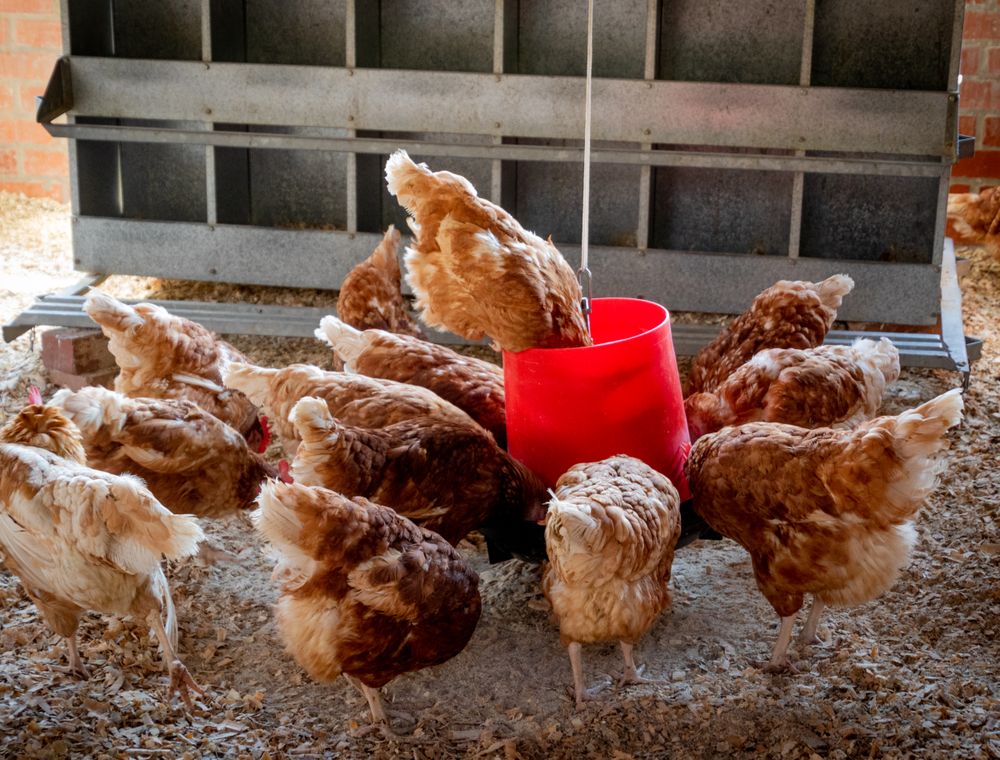
Short answer: A rabbit in Ghana does best on a complete rabbit pellet, unlimited good hay, and a small, steady amount of fresh forage that has been introduced slowly and checked for toxic plants. Pellets must stay dry, because damp feed grows moulds that can harm the whole group. Halaal Farms hatches day-old chicks and does not sell rabbits or rabbit feed, so this is a feeding guide for a poultry keeper who wants a second meat animal beside the flock.
Key takeaways
- Feed fibre first: good hay and a complete rabbit pellet form the base, and fresh forage comes after.
- Read the pellet bag for fibre as well as protein, and never feed poultry mash as the main ration.
- Wilt greens before feeding them, and remove anything that has been sprayed, mouldy or is an unknown plant.
- Feed by life stage, because kits, growers, pregnant does and bucks need different amounts of pellet.
- Store pellets off the floor, away from damp, and check for weevils and mould before each refill.
Fibre first: how a rabbit's gut actually works
A rabbit is built to live on plants that are hard to digest. Most of the work happens in a large caecum at the back of the gut, where bacteria ferment fibre into the energy the animal uses. Hay and other tough material keep the gut moving, and they keep the bacteria in balance. When a rabbit eats too little fibre and too much soft, starchy feed, the balance shifts, and the gut slows.
Rabbits also produce a second kind of dropping. At night they pass soft, clustered droppings called caecotrophs, and they eat them straight from the anus. These are part of normal digestion, and they carry protein and B vitamins that the animal reabsorbs. Do not mistake them for diarrhoea, and do not clean them out of the hutch as though they were dirt. You will find them mostly in the early morning, and they are a sign of a working gut.
Everything you feed should be judged by what it does for the gut as well as by how much it weighs. A ration that fills the animal with starch and little fibre can look generous and still cause trouble.
Reading the pellet bag, and why poultry mash fails
A complete rabbit pellet is designed to supply everything a rabbit needs in one food. The bag lists the crude protein, crude fibre, fat and ash, and sometimes the species it is made for. Read the fibre figure as carefully as the protein figure. A pellet with a lot of protein and too little fibre is a rich food that the gut cannot cope with in large amounts.
Poultry mash is a different product. It is formulated for birds that process grain quickly and need a particular amino acid balance, and it lacks the fibre a rabbit needs. Some farmers feed mash to rabbits because it is on hand, and the result is usually soft droppings, weight loss and a dull coat. If you have only poultry mash, supplement it with hay and fresh forage until you can buy a rabbit feed, but do not let it become the main ration.
Ask the seller for the analysis on the bag, and buy from a source that can show you a fresh batch. A bag with a sweet, musty smell or visible clumps has been stored too long. Pellets that have started to break into powder at the bottom of the bag are losing their structure, and they are harder for the animal to eat in a normal way.
Keeping pellets dry through the rains and the storage pests
Damp is the greatest threat to a pellet store. Moisture lets moulds grow, and some moulds produce toxins that build up in the feed over time. Store the bags on pallets or a raised shelf, away from the wall, and keep them in a room that does not flood. A bag that sits on wet cement will wick moisture up from the floor within days.
Pests are the second problem. Weevils and beetles can get into a bag through a torn corner or a poorly sealed top, and rats chew through paper and plastic to reach the grain. Keep the bags closed, use a bin with a lid, and check the store every week. Old feed should be used first. A bag that has been open for a month is not the bag to keep at the back.
The aflatoxin risk is serious enough to read properly. Our guide to feed storage and aflatoxin covers the signs of a contaminated store and what to do with a suspect batch, and the same rules apply to any feed you hold for rabbits.
Rabbit hay: fine stems, no dust, and a rack that keeps it clean
Hay is the cheapest fibre a rabbit can eat, and it should be available at all times. Grass cut young and dried quickly makes the best hay. Guinea grass and other fine grasses are good choices, and they are easier for a rabbit to chew than coarse, woody stems. Cut the grass before it turns to seed, dry it in the sun until it crackles, and store it under a roof.
Dusty hay causes problems. It irritates the eyes and the nose, and a rabbit that breathes dust on a regular basis develops a chronic cough. Shake the hay before you put it in the rack, and discard the bottom layer, which carries the dust and the damp. A rack that keeps the hay off the floor saves a great deal of waste, because a rabbit that lies on its hay soils it within the hour.
Check the hay for mould before each feed. Hay that is warm, smells sour or shows white or grey growth should be thrown away. Never feed hay from a field that may have been sprayed, and never feed hay that has been rained on and left to sit.
Forage that grows in a Ghanaian compound
Most compounds already grow a useful range of forage, and a little planning turns a patch of waste ground into a steady supply. The table below lists plants that many Ghanaian keepers use, with the point to watch for each one. Check each plant on the list with your agric extension officer before you rely on it, because local conditions and varieties differ.
| Forage | Use | Watch for |
|---|---|---|
| Guinea grass | Bulk, cut and wilted for daily feeding | Coarse stems in old growth, so cut it while it is still leafy |
| Sweet potato vines and leaves | Leaf and vine for fibre and some protein | Wilt first, and never feed vines from a field that was sprayed |
| Moringa leaves | Leafy supplement in small amounts | Introduce slowly and give in moderation alongside hay |
| Amaranth and pumpkin leaves | Soft leafy greens for variety | Wash and wilt, and keep them a small part of the daily ration |
| Cowpea leaves and haulms | Legume leaf with useful protein | Dry thoroughly if stored, and check for mould |

Grow a forage patch in a corner you can irrigate in the dry season, and keep it away from the poultry run, where birds scratch and dirty it. A cut-and-carry patch that you harvest every few weeks gives better leaf than a plot that is grazed hard.
Plants to treat with care, and what to leave out
Some plants that grow around Ghanaian homes are poisonous to rabbits, and a rabbit that gets a mouthful can die within hours. Castor, oleander, lantana and datura are the ones keepers most often meet in hedges and fence lines. Do not cut them for rabbit feed, and do not let rabbits reach them from the fence side. If a plant is in doubt, leave it out.
Cassava leaves need special care. They contain compounds that release cyanide when the tissue is broken, and the leaf must be properly processed before it is safe to feed. Dried or thoroughly cooked cassava leaf is used in some feeding systems, but the method matters, and the advice of your agric extension officer comes before any experiment with your own animals.
Also keep out clippings from the garden where pesticide, herbicide or fungicide has been used, lawn clippings from a treated lawn, and any mouldy vegetable scraps. A rabbit has no way of knowing that the leaf in front of it was sprayed yesterday, so the keeper has to check the source of every cut.
Wilting, washing and rotating greens
Fresh greens are a welcome addition, but they should be handled like any other feed. Wash the leaves to remove dust and soil, then spread them out in the shade for an hour or two so that the surface moisture evaporates. A wilted leaf has less water, and it is much easier for the gut to handle than fresh leaf straight from the wet ground.
Rotate the greens rather than feeding one plant every day. A rabbit that eats the same leaf for a month can develop a taste for it and refuse other feeds, and a single plant that goes off in one batch can upset the whole group. Keep a list of what you have fed and when, so that a change in droppings or appetite points you to the feed in question.
Give the greens at a set time of day, and remove what is left after a few hours. Leftover wet leaf in the hutch goes slimy and attracts flies. A small measure of fresh feed that is always eaten up is worth more than a heap that gets trampled and wasted.
A feeding plan by life stage: kits, growers, does and bucks
A rabbit's needs change with its age and its role in the group. A kit weaned onto pellets needs a steady intake and a gentle transition. A grower that is building muscle needs a good pellet and fresh hay. A doe that is pregnant or feeding a litter needs more food than she did before, and a buck kept for mating needs enough to stay in condition without getting fat.
| Stage | Core ration | Watch for |
|---|---|---|
| Weaned young on pellets | Pellets in a measured daily amount, with unlimited hay | Change the pellet slowly from whatever the young animals were eating |
| Growers at market age | Pellets and hay, with forage as a small add-on | Weigh a sample each week to see whether the feed is working |
| Pregnant doe | Extra pellet in the later weeks, with hay always available | Body condition, and the water supply on hot days |
| Doe with a litter | The largest pellet ration on the farm, with clean water at all times | Whether she eats up quickly, which tells you her milk supply is good |
| Buck kept for mating | Maintenance pellet and hay, without a heavy extra ration | Fat build-up, which can reduce fertility |
Measure the pellet by weight rather than by the scoop, because a scoop of a fine pellet and a scoop of a coarse one are not the same amount. Ask the feed supplier for the daily amount on the bag, and adjust from there using your own weekly weights.
Need chicks for your next batch?
Send breed, number and town. We reply with price, hatch date and delivery cost in writing.
Water: bowls, nipple drinkers and the heat
Water is the first thing a rabbit needs and the thing most often neglected. Bowls are cheap and easy to fill, but a rabbit kicks them over, and the water goes dirty with feed and dung within hours. Nipple drinkers keep the water clean, and they are the better choice for most hutches. Some rabbits take a little time to learn them, so watch the first few days and show the animal where the nipple is.
Check the drinkers at least twice a day, and more often when the weather is hot. Nipples clog with dust and dried feed, and a blocked drinker means a thirsty animal that is off its food by the afternoon. Clean the nipples weekly, and carry a spare drinker so you can swap a broken one without waiting.
Water intake rises when the weather turns hot, and it falls when the animal is ill, which makes the drinker a useful early warning. Note how much water is used across a week, and treat a sudden drop as a reason to look more closely at the animal.
Mixing a rabbit ration: what to find out first
Some keepers prefer to mix their own rabbit ration, and it can work well when it is done properly. The principles of a poultry ration are different, though, and copying a chicken formula into a rabbit bin is a fast way to create digestive trouble. Start by finding out the protein and fibre needs for rabbits at each stage, and then check each ingredient against them.
Our guide to mixing your own poultry feed explains the arithmetic of a balanced ration for chickens, and the same discipline of listing each ingredient and checking its value applies to rabbits. Keep a record of every batch, including the source of each ingredient and the date it was milled. If a group does badly on a homemade ration, the record tells you where to look first.
Whatever you mix, do not change a rabbit's ration overnight. Introduce the new feed over a week or more, and watch the droppings, the appetite and the weight. If you are unsure, buy a complete rabbit pellet until you have the experience and the advice to mix safely.
Reading droppings, including the soft ones you may miss
A rabbit's droppings are the cheapest health check you have. Normal hard droppings are round, dry and separate, and they come in similar sizes across a healthy group. Caecotrophs, as described above, are soft and clustered, and you may only see them in the early morning. Anything else is worth a closer look.
Watch for droppings that are small, misshapen or stuck together into a mass, because these can point to a feed that is too low in fibre, or to an animal that is not drinking enough. Loose, watery droppings, or a rabbit that is hunched and off its feed, is a more serious sign, and the animal should be separated and checked. Ask your vet before giving any treatment, and never dose an animal from a guess.
Keep a note of what you find. A group that shows a change in droppings after a feed change is telling you which feed to review. A group that shows a change with no change in feed is telling you to look at the water and the hutch.
Daily feeding checklist
- Check the drinkers and fill them with clean water, then clean any blocked nipples.
- Top up the hay rack, and remove dusty or damp hay from the bottom.
- Weigh out the pellet for each group, using the amount on the bag as your starting point.
- Wilt and wash the fresh forage, and check each plant for toxins or spray residue.
- Give the greens at the same time each day, and remove leftovers after a few hours.
- Look at the droppings and the appetite of each group, and note any change.
- Check the pellet store for damp, weevils and rats, and close every bag.
- Record the feed given and any change in weight or behaviour.
Feeding a group well is a routine, and the routine is what makes a rabbit enterprise profitable. Our guide to building rabbit hutches for Ghana's climate covers the housing side of the same routine, and our guide to rabbit breeding and kindling covers what happens when the does start to kindle. For the wider enterprise, the rabbit farming guide is the starting point.
If your holding is mainly poultry, the day-old chicks page is where to start, and WhatsApp +233 24 915 1503 is the quickest route to us for chick questions. Breeds are described on our breeds page, and the order form is on the homepage. Our guide to reducing feed wastage applies to poultry feed as well as rabbit feed.
Questions farmers ask
Can rabbits in Ghana live on pellets alone?
A rabbit can eat pellets alone for a time, but it does better with unlimited hay as well. Hay supplies the long fibre that keeps the gut moving, and pellets supply the concentrated nutrition. Add fresh forage in small amounts and keep the water clean, and the group will do well on that base.
Is poultry mash suitable for rabbits?
It is not suitable as the main ration. Poultry mash is made for birds and lacks the fibre a rabbit needs, so the animal can end up with soft droppings and weight loss. If mash is all you have, feed it only as a short-term supplement and add good hay, and buy a complete rabbit feed as soon as you can.
Which green leaves are safe for rabbits in Ghana?
Many common leaves are used, including guinea grass, sweet potato leaves and amaranth. Introduce each one slowly, wilt and wash it before feeding, and check with your agric extension officer if you are unsure. Never feed a plant you cannot identify, or one that has been sprayed or left to go mouldy.
Why does my rabbit eat its own droppings?
Rabbits eat soft caecotrophs straight from the anus, usually at night. This is normal digestion, and the caecotrophs carry protein and vitamins that the animal absorbs. Do not confuse them with diarrhoea. Watch for hard, misshapen or watery droppings, which are the real warning signs.
How do I keep rabbit pellets from going mouldy?
Store the bags off the floor and away from walls, in a dry room that does not flood. Keep the bags closed, use a lidded bin, and use older stock first. Throw away any feed that smells musty or shows visible mould, because some moulds produce toxins that build up over time.
Should I give my rabbits water from a bowl or a nipple drinker?
Nipple drinkers keep the water cleaner, and they are the better choice for most hutches. Some rabbits need a few days to learn them, so watch the first week. Check the drinker twice a day, clean the nipples weekly, and keep a spare drinker in case one breaks.
How much pellet should I give each rabbit each day?
Start with the daily amount printed on the bag, then adjust using your own weights. Feed by weight rather than by the scoop, and change the amount for the life stage of each group. Ask your feed supplier or agric extension officer to check the plan, because the right amount depends on the breed and the feed.


