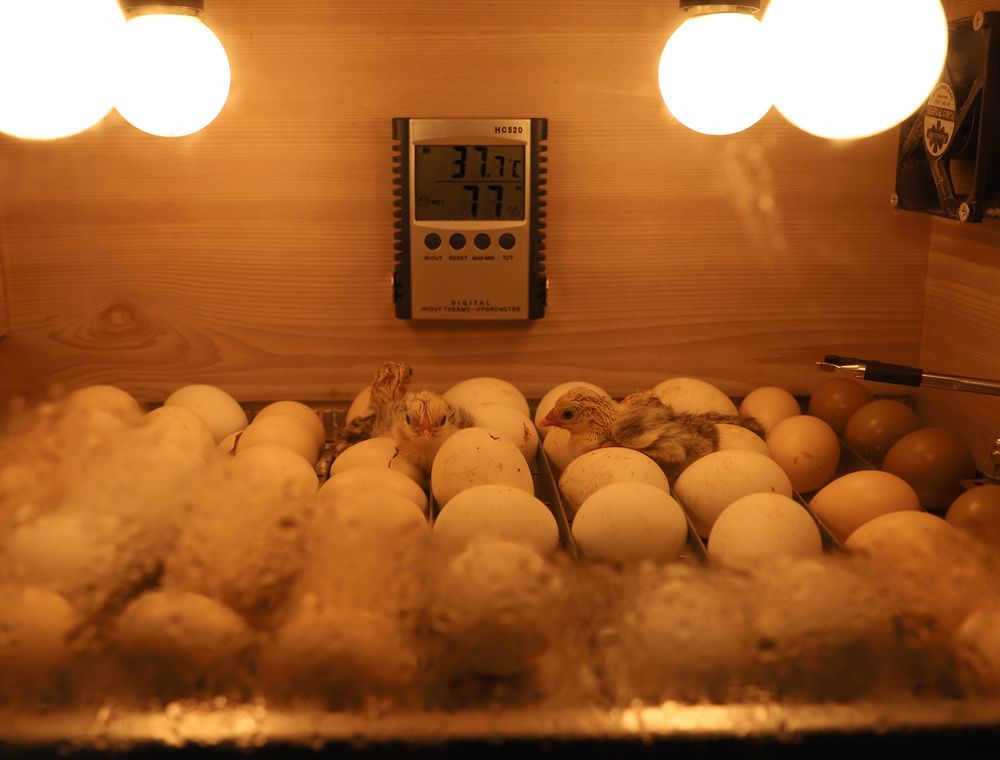
Short answer: Day-old chicks are the cheapest door in cash and the longest in time, because you carry the birds for 18 or more weeks before they lay. Point-of-lay birds get you eggs within weeks but cost more per bird and hide the rearing history from you. Hatching eggs put you in the incubator business, which only pays once you have a dependable power supply and a clean setter room. Pick the door that matches the months you can wait and the skills you already have.
Key takeaways
- Day-old chicks are the cheapest entry in cash and the slowest in time to first egg.
- Point-of-lay birds bring income sooner, but you pay for someone else's feed and you cannot see how they were reared.
- Hatching eggs need an incubator, steady power and a clean setter room, and they reward patience more than money.
- Ask for a written price and a rearing record before you pay for any point-of-lay or hatching stock.
- Do not start with hatching eggs if you have never raised a flock from chick to lay.
Three doors into the same business
How long can you wait before the first egg? That is the first question to answer, because the three doors into poultry open onto very different timetables. A day-old chick needs months of feed, housing and care before it earns you anything. A point-of-lay bird is already close to laying, so the money comes sooner. Hatching eggs sit at the start of the chain, so the work begins earlier and the skill is more technical.
The table gives the short version. Read the rest of the article before you rule anything out, because each row hides a few traps.
| Door | Cash at the start | Time to first egg or sale | Skill you need | Main risk |
|---|---|---|---|---|
| Day-old chicks | Lowest per bird, plus brooder and feed | Around 18 weeks to lay for layers, six to seven weeks for broilers | Brooding and rearing | Losing birds in the first weeks, or rearing a poor flock |
| Point-of-lay birds | Higher per bird, plus housing | Within weeks of arrival | Moving birds and managing lay | Buying birds with a hidden problem |
| Hatching eggs | Eggs, incubator, power backup | 21 days to hatch, then rearing | Incubation, candling and hatch management | Poor hatch rates from weak eggs or bad setting |
Most farmers who ask us about this choice are weighing cash against time. Chicks win on cash and lose on time. Point-of-lay wins on time and asks you to trust the seller. Hatching eggs can win on both over several years, but only after the first year has taught you the skill.
Day-old chicks: the long road with the most control
When you buy day-old chicks you choose the breed, you see the box arrive, and you know the vaccination history from the batch record. From our hatchery in Kasoa, we vaccinate for Marek's, Newcastle, Gumboro, infectious bronchitis and coccidiosis before the chicks leave us, so your first job is the brooder and not the vaccine schedule. The batch record comes with the order and tells you what was done and when.
The price is the easy part to read. A box of 50 Hy-Line Brown chicks starts at 1,150 cedis, which is 23 cedis a chick. A hundred birds therefore start at 2,300 cedis in chicks alone. The part people forget is everything after the box is opened: the brooder, the feed for the first weeks, the grower feed when the birds get bigger, and the months of wages or time that no one puts on paper.
The long road also asks you to be patient. A layer pullet has to grow through the rearing period before she lays, and in that time she will eat a great deal of feed and produce nothing you can sell. If you can only tolerate one bad month of cash flow, the day-old door is not the right first step for layers. Our layer day-old chicks page sets out the breeds we send and what each one asks of the farmer, and the breeds guide compares them side by side. If you are still choosing a house plan, the hatchery page explains how our chicks are reared before dispatch.

Point-of-lay birds: faster money, borrowed risk
A point-of-lay bird is a hen close to her first egg, bought from someone else who has already reared her. You skip the rearing months, which is the attraction. You also skip seeing the rearing, which is the risk. A pullet that looks perfect at the gate may have had a coccidiosis outbreak in week five, a weak vaccine programme, or a feed change that stunted her growth. None of that shows in the box on the day you buy her.
Point-of-lay birds do not come with a fixed price from us, and you should not accept any price written in a stranger's text message as a fixed one either. Ask for a written quote that names the breed, the age, the number of birds and the date they will be ready to move. A seller who will not write it down is telling you something.
Before you pay, ask the seller these things and write down the answers:
- What vaccines were given, and on which days of age? Ask for the record, not a verbal summary.
- What feed did they eat through rearing, and was there any change in feed during the growth period?
- Did the flock have any disease in the last six weeks, and was a vet involved?
- How were the birds housed, and at what stocking density?
- Can you visit the rearing house, and do the birds look bright and even in size?
For a comparison of the point-of-lay route with rearing your own birds, our point-of-lay pullets guide works through a worked cost example.
Point-of-lay birds suit a farmer who already has a laying house built, a feed supplier who delivers on time, and a little money set aside for the weeks when the new flock is settling in. They suit a farmer who wants eggs by the end of the rainy season and can carry the risk of a poor batch. If you cannot yet tell a healthy pullet from a sick one, this door is expensive to learn in.

Hatching eggs: the skill door, and the one that rewards patience
Hatching eggs are where you become a hatchery. Our own day-old chicks range comes out of the same kind of incubator work. You collect or buy fertile eggs, you store them cleanly, you set them in an incubator at a steady temperature, and you turn them until the transfer. Then you move the eggs to a hatcher, wait for the chicks, and rear whatever hatches. Each step has a cost in time and in attention, and each one can go wrong without much warning.
The timing is fixed. Incubation takes 21 days. A setter normally runs at about 37.5 degrees Celsius, and most farmers move the eggs to a hatcher around day 18. Anyone who has kept a setter through a dusty harmattan night knows how quickly dry air can change the humidity in a room. A power cut for six hours on day nine is a disaster you cannot pay your way out of.
Egg quality decides more than most beginners expect. Eggs from birds that are off lay, eggs that have been stored too long, eggs that are dirty or cracked, and eggs that were never fertile will all lower the hatch. Store them in a cool, clean place, keep the storage time short, and handle them gently. Do not wash them with anything that could seal the shell. Most hatcheries keep storage to about a week, and the longer the eggs wait, the poorer the hatch tends to be.
If you buy fertile eggs rather than keeping a breeding flock, check the supplier's storage and handling before you pay. Our fertile eggs page explains what we supply. Guinea fowl fertile eggs are 10 cedis each at the moment, and our egg hatching service page sets out the terms if you would rather not run an incubator yet.
A worked start: what 100 birds costs through each door
The sums below use only the prices we can quote at the moment. Where a price is not on our list, we say so, and you should get a written quote before you decide.
| Door | What you buy for 100 birds | Cash for the stock | What else you must pay for |
|---|---|---|---|
| Day-old chicks, Hy-Line Brown | 100 chicks, two boxes of 50 | 2,300 cedis at 23 each | Brooder, feed for 18 weeks, vaccines beyond the hatchery programme |
| Point-of-lay birds | 100 pullets ready to lay | Written quote from the rearing farm, not priced here | Laying house ready on arrival, feed, transport, a vet on call |
| Hatching eggs, guinea fowl | 100 fertile eggs | 1,000 cedis at 10 each | Incubator, hatcher, power backup, rearing of the chicks that hatch |
The hatching row needs a caveat. Not every egg hatches. If you set 100 eggs and plan on losing some to infertility, poor storage or handling, you will have fewer chicks than eggs. Assume the hatch will be lower than you hope for your first setting, and count the cost of the eggs against the chicks you actually get, not the eggs you bought. A first setting that produces 60 healthy chicks is not a failure, but it is also not a plan you can build a farm on.
Notice what the table does not show: the cost of the things that go wrong. A point-of-lay flock that arrives with a respiratory problem costs more than the difference in purchase price. A hatch that fails because the power was off costs more than the eggs. Those are the costs to set against the lower cash outlay of chicks.
Which door fits which farmer
Here is how we usually sort farmers who call us. None of these rules are fixed, but they cover most of the calls.
- If you have never kept a flock, start with day-old chicks. You will learn the brooder, the feed and the daily routine on birds that cost less to lose.
- If you have a laying house, a reliable feed supplier and a few months of cash, point-of-lay birds can start paying sooner, provided you check the rearing record carefully.
- If you already raise a flock and want to breed your own stock, hatching eggs are the next step. Keep the incubator and the breeding flock separate from the main house.
- If you can only be home at weekends, pick the door with the fewest daily jobs, which is usually a broiler batch of chicks rather than a laying flock. Our part-time or full-time guide shows how to count those hours.
Hatching eggs are not a shortcut around raising birds. They are a skill on top of raising birds. The farmer who has reared three flocks to point-of-lay will understand a bad hatch far better than the one who bought an incubator in the first month.
Whatever door you choose, the first call is the same. If your route runs outside the Kasoa area, our delivery page explains how chicks reach your region and how the cost is confirmed before payment. Message your target and start month to +233 24 915 1503 on WhatsApp. We will say which door fits, and if it is chicks, we confirm the breed and delivery date in writing first. You can also use the order form when you are ready.
Need chicks for your next batch?
Send breed, number and town. We reply with price, hatch date and delivery cost in writing.
Mistakes we see with each door
Each door has its own failure pattern. These are the ones we hear about most.
With day-old chicks
- Opening the box in a house that was not dried, cleaned and heated overnight.
- Switching to grower feed too early because the birds look big, then losing growth when the change is rushed.
- Skipping the records, so no one can say when the birds began to slow down.
With point-of-lay birds
- Moving the pullets into a house still full of the previous flock's litter and bugs.
- Mixing the new birds with an older flock without a quarantine week in between.
- Assuming the first eggs will be full size. Small first eggs are common and usually settle down.
With hatching eggs
- Setting eggs that were stored for too long, or that came from a flock with a disease problem.
- Opening the incubator often in the early days, which lets the temperature and humidity drift.
- Having no power backup, then discovering the generator has no fuel on the one night it is needed.
Starting with chicks and adding eggs later
Many farmers do not choose one door for ever. A sensible path for a first-time farmer is to start with a broiler batch or a small layer flock from day-old chicks, learn the brooder and the feed, and then add a hatching setup once the main flock is reliable. The breeding flock and the incubator room can sit on a corner of the same plot, provided the biosecurity is kept tight. Our biosecurity guide covers the simple steps that keep a breeding room safe from visitors and the main house.
If you have only a small plot, plan the space for the second door before you need it. Our guide to starting poultry on a small plot shows how to split a small area so that the incubator room does not end up in the path of the feed store.
The point-of-lay door also works well as a second step. Once you have reared a flock yourself, you know what a healthy pullet looks like, and you can judge a rearing record properly. That knowledge turns point-of-lay from a gamble into a sensible purchase.
A checklist before you choose a door
Work through these questions in order. If you cannot answer the first two, stop and read again before you spend money on any door. The questions we answer most often may help with the rest.
- How many months can I wait before the first egg or the first sale?
- Do I already have a house, a brooder or a laying room ready to use?
- Have I raised a flock before, and can I tell a healthy bird from a sick one?
- Do I have dependable power, and a backup for at least one day without mains?
- Is the supplier willing to put the price, the breed, the age and the records in writing?
- Can I afford the stock and the first three months of feed without borrowing against the rent?
- Do I know who my vet is, and will they visit my flock if it goes wrong?
If you answer yes to the first six and have a plan for the seventh, you are ready for whichever door suits you. If you answered no to any of the first three, day-old chicks is almost always the sensible choice.
Questions farmers ask
Which is cheapest to start with in Ghana?
Day-old chicks are the lowest cash cost per bird. A box of 50 Hy-Line Brown chicks starts at 1,150 cedis. The total cost is higher than the chick price once you add the brooder, feed and rearing time, so compare the full cost of raising a flock, not just the box price.
Is it better to buy point-of-lay birds or chicks?
It depends on how long you can wait. Point-of-lay birds get you eggs within weeks, but you pay more per bird and cannot see how they were reared. Day-old chicks are cheaper and let you control the rearing, but they take roughly 18 weeks to lay. Ask for a written rearing record before buying point-of-lay birds.
How long does hatching take?
Incubation takes 21 days. Most farmers keep the eggs in a setter at about 37.5 degrees Celsius for the first 18 days, then move them to a hatcher for the last days. The chicks then need to be dried, kept warm and fed before they are ready to go to a brooder.
Can I hatch chicken eggs from my own flock?
Yes, but a hatch from your own flock depends heavily on the fertility of the birds, the age of the flock and how the eggs are stored. Collect the eggs often, keep them clean and cool, and do not store them for long. Expect the first setting to be a learning exercise rather than a reliable source of stock.
Why do hatching eggs fail to hatch?
Common causes are old or dirty eggs, poor storage, temperature drift in the setter, low humidity in dry harmattan weather, and power cuts during incubation. Keep a daily record of temperature and humidity, and candle the eggs at the proper stage so you can see which ones are developing.
Can I buy hatching eggs from you?
We sell fertile eggs for some species, including guinea fowl fertile eggs at 10 cedis each, and we offer an egg hatching service. For chicken hatching eggs, ask us for the current availability and price on WhatsApp at +233 24 915 1503, because we quote those individually.
Should I buy point-of-lay birds from a stranger?
Only with a written quote, a rearing record and a chance to see the flock. A seller who will not show you the birds or the vaccination record is asking you to take a risk you cannot measure. If the price looks low for the breed and the age, ask why before you pay.


