
Short answer: Brewers' grains are a useful source of protein and fibre, but wet spent grain turns sour within hours in Ghana's heat. A bucket of wet grain is mostly water, so divide the price by the dry matter, not the weight. Dry it thinly until it snaps, keep the share modest, and remember that its low lysine means it never replaces soya.
Key takeaways
- Wet spent grain is about three-quarters water. Pay for the dry matter, not the weight.
- Use wet grain the day it is collected, or dry it that same day.
- Dry it until it crumbles when squeezed, not until it merely feels firm.
- Low lysine means brewers' grain never replaces soya or another good protein.
- Keep the share modest for each bird, and watch droppings and intake after every change.
Free at the brewery gate, and expensive in the trough
Spent grain costs nothing at the gate, and that word is where most of the trouble starts. A farmer hears free, fills a drum and carries it home on a motorbike in the afternoon heat. By the next morning the drum smells sour, and the birds that ate from it have loose droppings. We hear versions of this story from farmers who ask us about feed, so we now think about the drum first and the price second.
Brewers' grains can be a useful ingredient. They are just not the free lunch they look like when the bin is full and the sun is out.
What comes out of the mash tun
Spent grain is what is left after the malted cereal has been mashed to release its sugars. Most of the starch and sugar has gone into the wort, so what remains is mainly husk and the protein-rich parts of the grain, still soaked and still warm when it leaves the brewhouse. Barley is the usual base. Some brews use sorghum or maize in part, so the grain you collect can change from one brewing to the next.
That variation is worth asking about. A bin that mixes brews, or that catches cleaning water and spills from other parts of the plant, is a different product from clean spent grain in a clean container.
Wet grain has a clock, and the heat starts it
Wet spent grain is a fermenting material. Yeasts and bacteria from the brewhouse, or from the air, start working as soon as the grain sits in the open. Lactic acid builds, the smell turns sour, and moulds take hold on the surface. In Ghana's heat that can happen in a matter of hours, not days.
- Collect the grain the same day it is made, in covered containers that drain.
- Keep it off bare ground and out of direct sun.
- Do not pile it into deep heaps, since the centre heats up and spoils first.
- Dry it or feed it the same day. If neither is possible, do not take it.
The moisture sum that decides the real price
The figure to care about is dry matter, the part of the grain that is not water. Fresh spent grain is around 78 per cent water, so a 100 kg load holds only about 22 kg of anything you can feed. The rest is water that you carry home and pay for.
| Condition | Moisture | Dry matter in 100 kg | How long it keeps |
|---|---|---|---|
| Fresh from the brewhouse | About 78 per cent | About 22 kg | Hours in the heat |
| Partly dried, still soft | About 30 per cent | About 70 kg | Days, if kept dry and covered |
| Dried until it snaps | About 10 per cent | About 90 kg | Weeks, if kept dry and sealed |
Whatever you pay for 100 kg of wet grain, divide that price by 22, not by 100, to find the price of the dry matter you actually get. Dry the same load down and it leaves you with roughly 24 kg of dry product, because the water goes but the dry matter stays. That is the number to put beside the other ingredients on your list.
Drying it in Ghana's sun, and in the rains
Drying is where most farmers either succeed or give up. Spread the grain in a layer no thicker than a few centimetres, on a clean, raised surface. A swept concrete apron works. A tarpaulin laid straight on the ground holds heat and moisture underneath. Turn the grain every couple of hours while the sun is up, and gather it under cover before the dew or an evening shower.
The harmattan helps. The air is dry, the sun is warm through the haze, and the grain dries faster in the afternoon. The dust it brings is the cost. In the rainy season drying can take days, so either build a roofed rack or accept that you cannot take wet grain in the wet months at all.
The test is simple. Take a handful of the dried grain and squeeze it. It should crumble when you open your hand, not cling to your palm or feel cold and damp inside. Anything less goes back in the sun, or it is not stored at all.
What dried grain actually gives the bird
Dried brewers' grain has a reasonable protein figure on a dry basis, usually in the mid-twenties, which is why people look at it as a protein source. Look at the rest of the profile before you lean on that. The fibre is high, the energy is modest because much of the fibre is hard to digest, and the lysine, the amino acid birds need most, is low.
Brewers' grain does not replace soya in a layer or broiler ration. It sits alongside the soya, and it dilutes the energy if you lean on it too hard. Our soya and groundnut cake article explains why the lysine question decides which protein carries the ration.
Dried grain also carries some minerals from the grain. Do not count those as a substitute for a properly balanced calcium and phosphorus supply, which the feed plan has to cover in any case.
How much a bird can take
| Bird | Dried grain, rule of thumb | Why |
|---|---|---|
| Chicks and starters | None | Too fibrous and too low in lysine for young birds |
| Broiler grower and finisher | A small share, a few per cent | Energy density matters for growth, and bulk slows it |
| Pullets | Modest, up to around a tenth | Fibre helps fill the gut and keeps weight in check |
| Laying hens | Up to around a tenth | Lysine has to come from soya or another good protein |
| Free-range birds | A treat on top of forage | Forage does the work. Grain should not become the diet |
Use these as the ceiling a formulator should check, not as a target. If droppings loosen or weight gain slows after a change, pull the share back and watch again for a week.
Mould and sour smell in dried grain
Dried grain can take up moisture again in store. A bag that was crumbly at the start of the rains can turn damp and musty by the end of them, and that is when mould moves in. Mould in a feed ingredient is a health risk, not just a bad smell, because some moulds produce toxins that stay in the feed after the mould itself has gone. Our feed storage article covers keeping mould out of the store.
Reject any lot that smells sour, feels damp, shows visible mould or has patches of colour that are not the normal tan. Do not pick out the good grain from a bad bag and carry on. A bag with mould in it is a bag you do not feed.
Need chicks for your next batch?
Send breed, number and town. We reply with price, hatch date and delivery cost in writing.
Introducing it to the trough without making a mess
Change the share over several days. Start with a small percentage in the existing ration, hold it there for a week, and move up only if the droppings, the intake and the weights look right. Do not tip a bowl of wet grain on the floor for the flock to pick at. Wet grain on bare ground draws flies and spoils in the sun, and the birds that eat it first are often the ones that get sick.
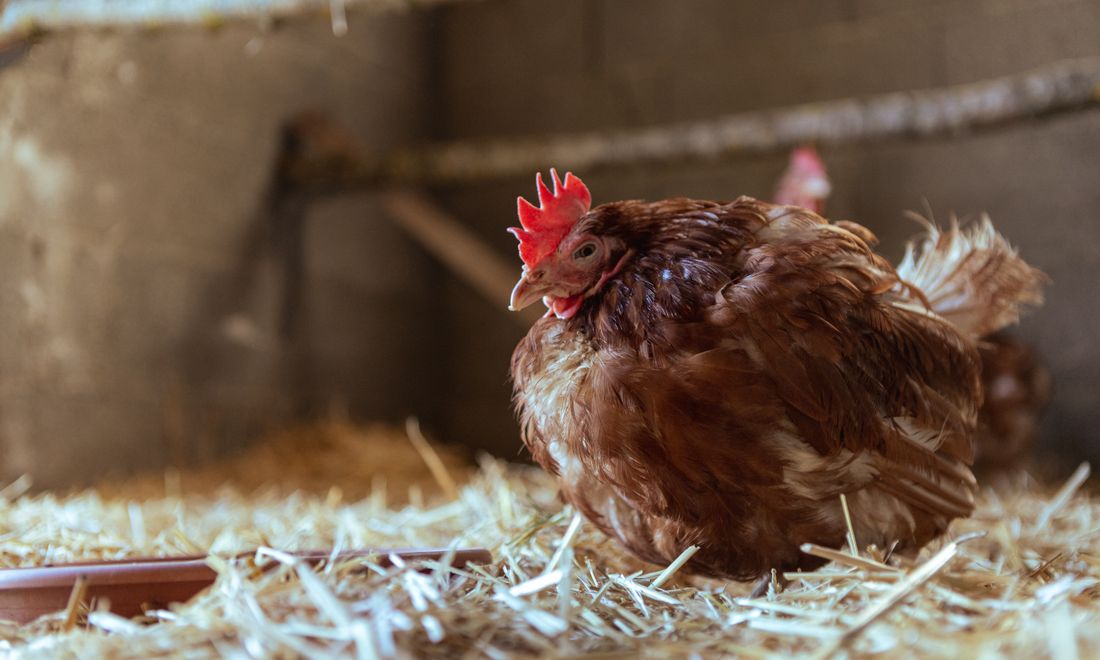
For chicks, the answer is no. Young birds need a tight, consistent starter ration, and wet or fibrous brewers' grain has no place in it.
What to ask the brewery before you take a load
- Which grain does the brew use, and does it change from one brewing to the next?
- Does anything other than spent grain go into the collection bin, such as cleaning water or spills?
- What hours does the grain come out, and can you collect on the same day?
- Can you bring your own covered container, one that drains?
- Is there a regular volume, or will the supply stop without warning?
- Can you take a sample and dry it yourself, so you know the dry matter before you commit?
Keeping supply steady through the year
Brewery output can change around the festive season, and the flow of grain may not match the months when your birds need it most. Plan your dried stock to cover the lean weeks, not just the next delivery. A few weeks of dried grain held under cover is worth more to a flock than a large load of wet grain that you have to cram into a drum on the day it arrives.
Keep the rest of the feed plan in view too. Our guide to how much feed a chicken eats gives you the daily figures, so you can tell how many weeks a dried stock will last your flock.
Keep the flock on a plan, not a free sack
A cheap ingredient is only useful when the flock it feeds is strong. Pick the strain that suits your house, then build the feed around its needs, rather than around whatever the drum at the gate happens to hold. Our cheaper feed alternatives article lists the other swaps worth checking first.
For layers, start with layer day-old chicks. For broilers, broiler day-old chicks sets out what we hatch and when. You can place an order on the order form, or send us a WhatsApp message on +233 24 915 1503.
Questions farmers ask
Can I feed wet brewers' grains straight from the brewery?
Only if you can feed it the same day, to birds that will eat all of it, in a small share alongside the rest of the ration. Wet grain sours quickly in the heat and can upset the gut. The safer route is to dry it, or to skip it. Do not leave wet grain in a closed drum overnight.
Is brewers' grain a good protein source for layers?
It contributes protein and fibre, but it is not a replacement for soya or another protein with good lysine. Use it for a modest share of the layer ration and let soya or another protein carry the amino acids. Keep an eye on egg size and laying rate whenever the share changes.
How much of the ration can brewers' grain make up?
A modest share only. Most farmers should keep dried grain to a small part of the mix, and for young birds the answer is none. Your formulator sets the exact figure from your ingredients. The rule of thumb in this article is a ceiling, not a target, and birds that show loose droppings or slower gain need less.
Why does my wet grain smell sour the next morning?
That is fermentation. Yeasts and bacteria work on wet grain as soon as it cools, and lactic acid builds up. Heat speeds the process. Collect the grain the same day and dry it or feed it straight away, and do not store wet grain in a closed drum overnight.
How do I know my dried grain is dry enough?
Squeeze a handful. It should crumble when you open your hand and feel dry, not cold or damp. If it sticks to your palm or clumps, it needs more time in the sun or under cover. Grain that is still damp will mould in store, even if it looked fine on the day.
Can I mix brewers' grain with rice bran?
You can, but treat both as high-fibre ingredients and count their combined share against the fibre limits for each bird. Rice bran adds fat, which goes rancid, so keep it fresh. Check the mix for combined fibre and fat rather than each ingredient on its own. Our <a href="/blog/wheat-rice-bran-poultry-ghana/">wheat and rice bran article</a> gives the limits for each one.
Will brewers' grain make my birds grow faster?
No. It is a low-energy, high-fibre ingredient that fills the gut without feeding the bird much. Broilers in particular need energy-dense feed to grow quickly, so a high share of brewers' grain will slow them down. Use it for protein and bulk at a modest level, not as a growth feed. More answers are on our <a href="/faq/">FAQ page</a>.


