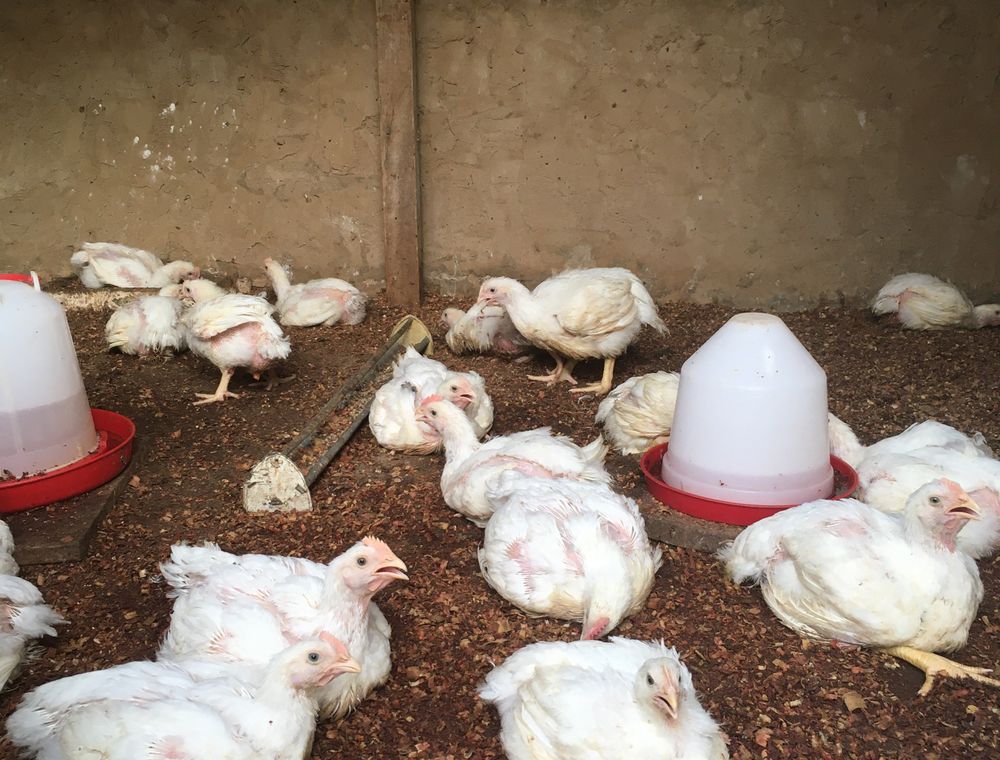
Short answer: A fast-growing broiler eats roughly 5 kilos of feed to reach about three kilos at six weeks, and most of that comes in the last three weeks. A laying hen at peak lay eats around 110 to 120 grams a day, which adds up to roughly 40 kilos a year. Measure your own flock by weighing what goes into the trough and what is left the next morning, because a table like this one is a starting point, not a substitute for your records.
Key takeaways
- A broiler's daily intake rises more than tenfold between week one and the last week, so plan stock for the peak.
- A laying hen eats most when she is at full production, not when she first starts to lay.
- Feed per bird per day, times the number of birds, times the days, is the simplest stock-planning sum on the farm.
- Heat and dust cut intake, so put feed out early and late in the day when the afternoon heat hits.
- A badly set trough can waste a noticeable share of the ration, so measure what is left, not just what goes in.
A chick eats less than you would think
Most farmers underestimate how much feed a broiler eats in its last two weeks, and they overestimate its first. The first week is almost nothing. A chick the size of a matchbox takes only a few grams a day. The bags you open in the early weeks last a long time and make the bird look cheap. Then the last fortnight arrives and the store empties twice as fast.
That pattern is why stock planning goes wrong. If you order for the average, you run short in the fifth week. Plan for the peak, keep a buffer for the days when a delivery is late, and buy the broiler day-old chicks you have the house and feed budget for, not more.
Broiler intake week by week
The figures below are typical for a fast-growing meat bird on a good programme, rounded so the table is easy to read. Slower-growing birds eat less per day and take longer to finish, so do not use this table for a Sasso or a local cockerel without checking the breed guide.
| Age (weeks) | Feed per bird per day (g) | Cumulative feed per bird (kg) | What changes |
|---|---|---|---|
| Week 1 | 15 to 20 | about 0.13 | Very little eating; water and heat matter most |
| Week 2 | 50 to 70 | about 0.5 | Intake starts to climb |
| Week 3 | 95 to 115 | about 1.3 | Feeder space starts to matter |
| Week 4 | 130 to 150 | about 2.3 | Crowding at the trough is at its worst |
| Week 5 | 170 to 190 | about 3.5 | Heat can cut intake on hot afternoons |
| Week 6 | 200 to 220 | about 5.0 | Feed cost per kilo of weight is at its highest |
Read the table as a plan, not a promise. A house that is hot, dusty or short of water will eat less than these figures. A house with well-set feeders and cool mornings may eat a little more. Your own records will settle it after one batch.
Layers eat for production, not for age
A laying hen's appetite follows her lay. A pullet at point of lay eats less than a hen at peak, and a hen in her second laying year eats a little less again than one in her first. So plan layer feed around the flock's lay percentage and the weight of the birds, then check the trough to see what they really take.
At peak production, a typical brown-egg hen eats around 110 to 120 grams a day. Across a year, with a few days off lay, that adds up to roughly 40 kilos of feed per hen. That number matters when you set the price of an egg. If a hen eats a lot and lays little, look for bullying, disease or wasted feed before you cut her ration. Cutting feed to a hen that is already short of condition only slows the flock further.
If you are choosing between layer types, the feed each one eats is part of the cost. Our Hy-Line Brown guide sets out the production side, and the intake numbers above help you turn that into cost per egg.
Pullets and the rearing period
Rearing is where people miscount. A pullet from day one to point of lay eats far less than a broiler, but it eats for much longer. Over the whole rearing period, a typical brown-egg pullet takes in around 7 kilos. Most of that comes in the final weeks before lay, as the bird builds up for production.
The mistake we see most is feeding the grower too long or moving to layer feed too early. Neither helps the pullet. Use the rearing feed your supplier recommends and change to layer feed at the stage the breed guide sets. Weigh a sample of pullets each week against the breed's target weights. If they are behind, check the feed and the house before you change the plan. A pullet that is light at point of lay tends to lay small eggs for longer, and you cannot fix that later with extra feed.
If you are buying layer day-old chicks to rear yourself, the count of 7 kilos is the number to build into your first feed order.
Free-range birds eat less from the bag
A bird scratching on a pasture takes a share of its food from grass, seeds, insects and kitchen scraps. Free-range flocks often take 60 to 100 grams a day from the bag on a good day, with the rest from the ground. That sounds like a saving, but it is hard to measure. A free-range flock also eats unevenly across the day, and some birds get far more than others.
If you run birds outdoors, keep a feeder at the house for the main ration and count what goes into it. Do not count forage as feed. Scraps and forage are a separate subject, and they should never replace the ration a laying or growing bird needs.
Measure your own flock in three steps
Your own weights are better than any table. The method is simple, and you can run it with a bucket and a spring scale.
- Each morning, weigh the feed you put into each house and write it down.
- Before you refill, weigh the leftovers in the trough and the bin, and remove any feed that is wet or dirty.
- Subtract the leftover from the amount you gave, then divide by the number of birds. That is the feed per bird for the day.
Do it for a full week before you trust the numbers. Some days will look odd because of spillage, a delivery or a sick bird. Average the week, not the day. After two or three batches of records, the table above becomes a check on your own birds rather than a guess. Keep the sheet with your poultry records so the figures stay with the batch they came from.
Working out a week of feed for a real flock
Take 500 broilers in their third week. At around 105 grams a day, they eat about 52.5 kilos a day, which is a little over one 50 kilo bag every day. A week's supply comes to about 370 kilos, or more than seven bags. That will not stay fresh in a humid store for long, so buy in a rhythm that matches the space you have.

Now move to the last week. The same 500 birds at 200 grams a day eat 100 kilos a day, or 700 kilos a week. Two bags a day is not a small job. Plan the delivery days, the cash for each purchase and the labour to move and weigh the bags before the flock needs them. At GH₵8 a kilo, that last week's 700 kilos costs GH₵5,600 in feed alone, so one missed delivery is an expensive gap.
Need chicks for your next batch?
Send breed, number and town. We reply with price, hatch date and delivery cost in writing.
The feed you pay for and never see
Wastage is the quiet leak. Feed falls out of an open trough when birds scratch, when the feeder is set too high, and when a chick sits in the feed and kicks it out. A badly set chain feeder can waste a noticeable slice of the ration over six weeks. Check the litter under and around the feeders once a week. If you find a fistful of feed on the floor each morning, the feeder needs setting differently.
Set the feeder rim at the height of the bird's back, adjust it as the birds grow, and keep the pan full but not overflowing. An overfilled feeder spills. An empty one makes birds fight. A trough that is always a third full is a sign of a poor set-up, not of a well-behaved flock.
Heat, dust and the daily rhythm
Birds eat less in the heat of the afternoon. In the rains, when the air is warm and damp, intake falls on hot days. In the harmattan, dust can put birds off the trough altogether. The answer is not to cut the ration. Put more feed out early in the morning and again late in the afternoon, and keep the water cool and always available.
Keep the house cool. Open the sides at night and close them when the dust blows in during harmattan. A bird that eats well in a cool house gains weight. The same bird in a hot house spends its energy keeping cool and gains less, even when the feed is good. If you are growing birds for the festive market, the Christmas timing guide shows how the hot and dry weeks line up with the buying rush.
Ordering so the store never runs dry
Order feed before you need it, not on the day you run out. Ask your supplier for the lead time, and add the transport days to the count. At Christmas and Eid, when roads and transport are busy, order a week earlier than you think you need to.
Keep a short list in the feed store so you never have to remember it:
- Know your daily intake from your own records, not from this table alone.
- Keep a week's stock on hand at the peak stage of the flock.
- Count the bags at every delivery and write the batch number in the book.
- Set a reorder point in kilos, such as three days of feed at the current intake.
- Tell your supplier your delivery days so they can plan the route. Our delivery page sets out how we handle orders on our side.
Once the numbers are in your book, send the dates to us on WhatsApp at +233 24 915 1503, and we will work the chick order back from your feed plan.
Questions farmers ask
How much feed goes into one broiler from chick to market?
On a good programme, roughly five kilos by six weeks, and a little more for birds kept longer. The figure to watch is feed conversion, the kilos of feed per kilo of live weight gained. A good programme sits around 1.6, but your own batch record gives you the real number. Our <a href="/blog/ross-308-broiler-guide-ghana/">Ross 308 guide</a> sets out the growth side.
How much feed does a laying hen eat per day?
At peak lay, most brown-egg hens eat about 110 to 120 grams a day. Hens at point of lay eat less, and older hens in a slow season may eat a little less again. The figure moves with temperature, feed quality and the bird's weight, so treat it as a range to check your own flock against.
Do local chickens eat less than imported birds?
Usually yes, per day, because they grow more slowly and weigh less at a given age. A <a href="/blog/sasso-chicken-guide-ghana/">Sasso</a> or other dual-purpose bird can take much longer to reach market weight, so the total feed per bird can be similar or higher. Compare feed per kilo of weight gained, not feed per day, before you decide which bird is cheaper to feed.
Why does my flock eat less one week?
The usual causes are heat, dust, a sudden feed change, poor water flow, an empty feeder or illness. Check the water first, then the feed, then the birds. If the drop lasts more than two days, call your vet and check your records for the same period in earlier batches.
Can I push more feed in to fatten birds faster?
Not by much. Birds take in feed to meet their energy needs, and pushing extra into the trough mostly means waste and higher cost. Growth depends on feed quality, bird health and house conditions. Better management usually beats extra feed, and a quick look at the drinkers and the ventilation will often find more gain than another bag.
Should I weigh feed for each house separately?
Yes, if you run more than one house. Two houses on the same feed can show very different intake because of heat, feeder set-up or stocking density. Separate records help you spot the house that is losing feed or slowing down. Keep the records by house from the first day.
How many days of feed should I keep?
Keep about a week at the peak stage, and no more than your store can keep dry. For a larger flock, a few days in the store is enough if deliveries are reliable. If your supplier is far away, or rain often blocks the roads, keep a little more. Our <a href="/blog/poultry-feed-formulation-basics-ghana/">formulation basics</a> article covers storage quality in more depth.


