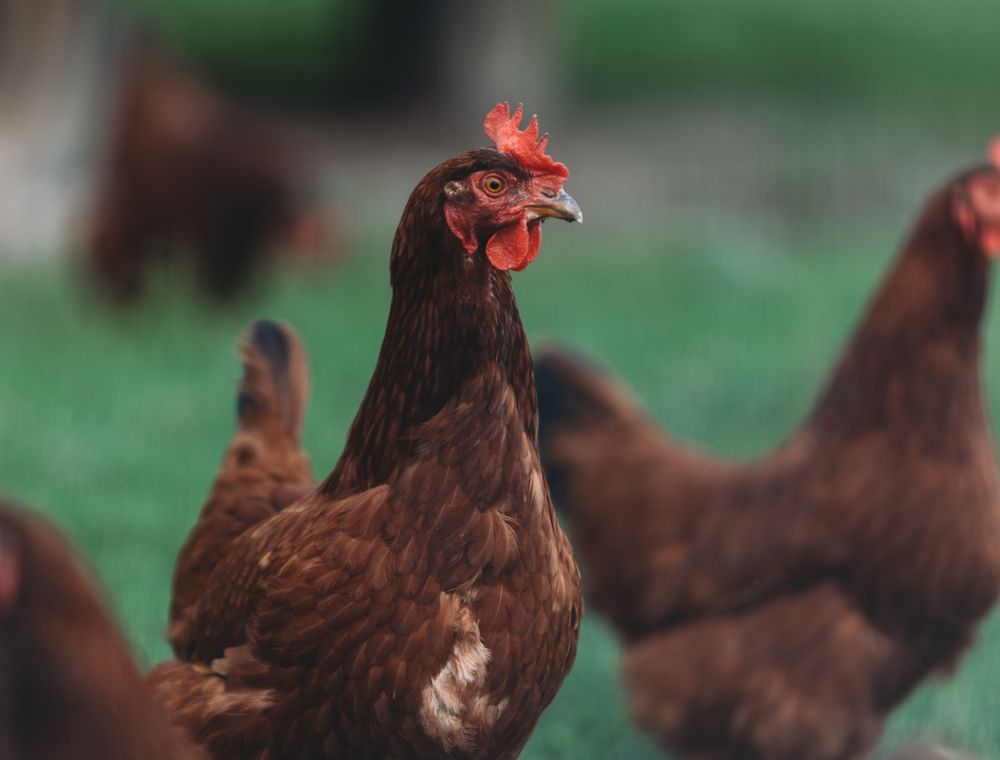
Short answer: The Sussex is an English dual-purpose breed with a calm temperament, brown-tinted eggs and a carcass good enough to sell as a table bird at four or five months. It handles Ghanaian mornings well but needs shade and cool water by midday, and it lays well below a hybrid layer. For a farm that wants a quiet flock that gives eggs and surplus cockerels, it is a sensible middle choice.
Key takeaways
- Sussex hens are quiet and easy to handle, which lowers stress in the house and makes routine checks quicker.
- Expect roughly 180 to 200 eggs in a good laying year. That is well below a hybrid layer, but it adds up on a small farm.
- Surplus cockerels are worth selling at four or five months, before the feed cost outruns the carcass.
- Shade and cool water at midday matter more than any supplement during the hot months.
- The first egg comes later than with hybrids, so budget for a longer rearing period.
An English farm bird that stayed useful
The Sussex came from the county of Sussex in southern England, where farmers kept it for both eggs and meat long before anyone drew up a hybrid breeding plan. Several colour varieties exist. The one most people in Ghana will meet is the Light Sussex, a white bird with black-tipped feathers on the neck and tail. The Speckled Sussex is the other common one. The colour matters for one practical reason. A white bird shows dirt and blood, so a flock of light birds means a house you have to keep clean.
Standard weights put a hen at around 3 kilograms and a cockerel closer to 3.5 kilograms. Those are show standards, and farm birds vary with feed and age. Even so, the scale is clear. A Sussex hen is about half as heavy again as a Leghorn, and a Sussex cockerel carries a proper carcass that a Leghorn never will.
Why a calm bird saves you time
On a working farm the temper of the flock costs money. Excited birds pile into corners, bruise each other and crowd together on hot nights. A Sussex is steadier. Hens let you walk through the house, pick them up without a fight and check crops and vents without a chase. That matters when you are doing a weekly weigh-in or treating one bird for something minor. The calmer the flock, the less time you spend chasing birds around the compound.
Calm is not the same as lazy, though. Sussex hens still forage, scratch and keep up with the group. They just do not panic when a door bangs or a motorbike goes past the gate. For a beginner, a forgiving bird means you can learn the routine without losing a box of chicks to a bad afternoon. A calm flock also makes the first season less stressful for the person doing the feeding.
Brown-tinted eggs and the lay pattern
The eggs come out tinted brown, usually a shade lighter than a Rhode Island Red's, and they are a good size. Sussex hens start later than hybrid layers, often around 20 to 22 weeks, and they settle into a steady rhythm once they are established. A good hen in a sensible system is quoted at around 180 to 200 eggs in a year. Under village or free-range conditions that count drops, sometimes a long way.
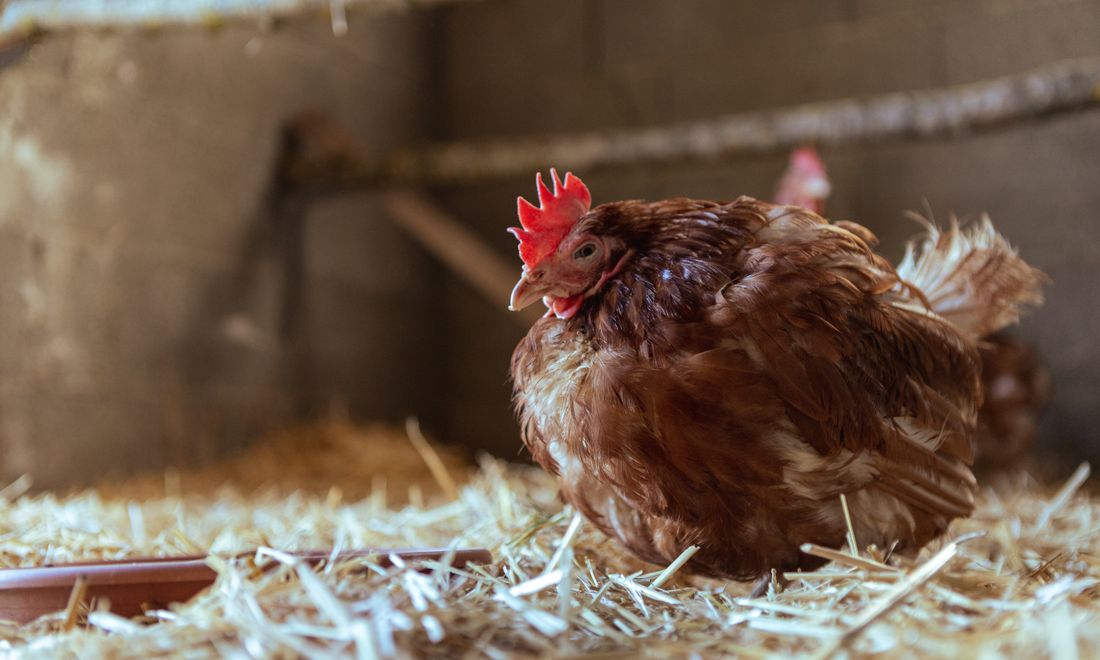
Put it on a farm scale. Forty hens at around 180 eggs each is about 7,200 eggs a year, but only if the feed is right, the light is steady and the house is not an oven for half the year. Ghana's day length barely shifts through the year, so the seasons here are driven by heat, feed and disease rather than by daylight. Our lighting guide explains how to add morning light if you want the lay to hold steady through the rains.
Feeding a Sussex from chick to hen
Feed the birds in phases and switch on what they are doing, not on the calendar alone. Here is a typical plan. The protein and calcium figures are ranges, so read them against the label on your bag.
| Stage | Age | Protein (typical) | What to watch |
|---|---|---|---|
| Starter | 0 to 6 weeks | About 18 to 20% | Fine crumbs and fresh water from the first hour |
| Grower | 7 to 18 weeks | About 15 to 16% | Build frame, do not push lay feed early |
| Layer | From the first egg, around 20 weeks | About 16 to 17%, with calcium at 3.5 to 4% | Shell quality depends on the calcium |
A feed that says layer but shows 12% protein and 1% calcium is a grower wearing a layer's label. Check the figures before you buy, not after the eggs come out thin. The stage switches should follow the birds. Move to layer when the first eggs appear, not on a date you wrote on the wall. A grower that runs on too long gives you a heavy hen that lays late, and a layer ration fed too early gives you a fat pullet that lays small.
Housing a medium dual-purpose bird
Sussex are medium to heavy, so they need more floor than a light layer. Plan around a quarter of a square metre of floor per bird indoors, and give them a run on top of that if you can. Perches should be wide enough to grip, around 5 centimetres across, and set low enough that a heavy hen can get up without a jump. Nest boxes at around 30 by 30 centimetres, one for every four or five hens, belong in a dim corner.

Open-sided sheds suit Sussex well in the Kasoa area, provided the open sides face the breeze and a windbreak stops the rain driving in during the wet months. A closed house with a hot roof will cost you more eggs than any feed problem. If you cannot open the sides, fit more roof vents and check every afternoon that air is moving across the roosts. Our poultry house ventilation guide covers the layout in more detail.
Heat, shade and the rainy season
Sussex cope with Ghana's heat reasonably, but a medium-heavy bird with a full coat of feathers does not enjoy a low, dark roof at two in the afternoon. Shade over the run and a cool, clean water supply are the two things that keep lay steady through the hot months. A flock that is panting at midday will eat less and lay less the next day. Watch for it, because a drop in egg count shows up before a sick bird does.
In the rains the danger changes. The ground turns to mud, feet get wet, and the house holds damp. Keep the scratching area drained, put the drinkers on a dry concrete or brick base rather than in the wet patch under the eaves, and top up the litter where it goes soggy. Wet litter also favours the gut problems that come with coccidiosis, and our coccidiosis guide sets out the signs to look for. Follow your vet's advice on any treatment.
The cockerel question: when to sell the surplus
Half your hatch will be males, and you have to decide what to do with them. On a dual-purpose farm the sensible answer is to sell surplus cockerels as table birds at around four to five months, when the carcass has filled out. Hold them longer and the feed cost climbs faster than the carcass gains value.
Here is the sum we would run. Twenty cockerels eating roughly 100 grams a day for another 30 days use about 60 kilograms of feed. If that feed costs GH₵350 for a 50 kilogram bag, which is an example price only, the extra month costs about GH₵420. The birds need to sell for enough to cover that, plus what you already put into them. Weigh a few birds before the sale so you know what you actually have, and find the buyer before the birds are ready, not after. Our cockerel farming guide goes deeper on pricing the sale.
Need chicks for your next batch?
Send breed, number and town. We reply with price, hatch date and delivery cost in writing.
Common mistakes with Sussex
- Expecting Leghorn numbers from a dual-purpose hen. A Sussex lays a steady brown egg, not a white one from a hybrid line. Plan the business around 180 to 200 eggs, not 280.
- Switching to layer feed at 16 weeks because the hen looks big. Size is not maturity. Watch the combs, the pubic bones and the first eggs instead.
- Keeping too many cockerels. More than one cockerel to about eight or ten hens leads to over-mating, and the hens' backs and necks go bare.
- Letting a white bird's house get dirty. Light feathers show every smear of droppings, and a dirty house is one nobody wants to walk into.
- Skipping the batch record. It lists the vaccinations your chicks had at the hatchery and when. Without it, your vet is guessing.
How the Sussex stacks up against two birds on our list
The Plymouth Rock and the Kuroiler are both on our list, so here is how the three compare in plain terms. The Sussex is not on our standing price list, so ask us about stock before you plan around it.
| Trait | Sussex | Plymouth Rock | Kuroiler |
|---|---|---|---|
| Temperament | Calm | Calm | Active, forages hard |
| Egg colour | Brown-tinted | Brown | Brown |
| Eggs in a good year (approx.) | 180 to 200 | Around 200 | Moderate, depends on range |
| Carcass at four to five months | Good, fills out slowly | Good | Good, rewards free range |
| Price per chick with us | Ask us | From GH₵7 | From GH₵11 |
For a first-timer who wants a calm flock on a budget, the Plymouth Rock is our pick. The Sussex suits a farmer who already has some routine and wants a larger, steadier-looking bird. The Kuroiler belongs on a free-range compound with land to forage, where its appetite for scavenged food pays back. If you are choosing between the first two, our Rhode Island Red guide and Australorp guide give a similar calm dual-purpose picture.
Before you order: a checklist
- Decide whether eggs or meat come first, because the feed programme and the sales plan both depend on the answer.
- Count your floor space. Plan at least a quarter square metre per bird indoors.
- Name a buyer for surplus cockerels at four to five months before the chicks arrive.
- Ask for the batch record and read the vaccinations it lists against your vet's schedule.
- Build shade over the run and a drained scratching area before the rains start.
- Check each feed label against the protein and calcium ranges in the table above.
- Keep a simple record of eggs, feed and weights from the first week. Our record keeping guide has a page layout you can copy.
When the list is ticked, you can place the order on our order form, or reach us on WhatsApp at +233 24 915 1503 first. Delivery is confirmed before payment, and chicks leave the hatchery the day they hatch.
Questions farmers ask
Are Sussex chickens good for Ghana?
Often, yes. They are calm, medium-sized and reasonably hardy, and they forgive small mistakes in housing and feeding. They need shade and cool water in the hot months and a drained run in the rains. They lay well below a hybrid layer, so choose them for a mixed farm that wants eggs and a carcass, not for maximum egg numbers.
How many eggs does a Sussex hen lay?
A good hen in a sensible system is usually quoted at around 180 to 200 brown-tinted eggs in a year. Laying starts later than with hybrid layers, and free-range birds on poor feed will lay less. Count the eggs yourself from the first one, because a brochure figure is only a starting point.
Are Sussex hens broody?
Some are, and a broody Sussex can make a steady mother. A hen that goes broody will sit for about three weeks and stop laying while she does. If you want a hen to hatch, give her a quiet nest with clean litter and food and water nearby. If you do not, lift her off the nest each evening and keep her away from it for a few days, with water and feed close by.
When should I sell surplus Sussex cockerels?
Most farms sell surplus cockerels as table birds at around four to five months, once the carcass has filled out. Waiting longer costs feed faster than the carcass gains value. Weigh a few birds before the sale so you know what you have, and line up the buyer before the birds are ready.
Is the Sussex a good first chicken for a beginner?
Often it is. The calm temperament makes routine handling easy, and the medium size is forgiving of small housing errors. The trade-off is a longer rearing period and a slower first egg than a hybrid. If your priority is the fastest possible return, a hybrid layer or a broiler is the better start.
Do Sussex chickens need a special feed?
No special feed, but the stage matters. Use a starter, then a grower, then a layer, and check the protein and calcium figures on each label. Switch to layer feed when the first eggs appear rather than on a fixed date, and keep calcium in the layer ration itself.
Can Sussex chickens be kept free range?
Yes. They forage well on grass and insects, but they need a secure run and a shaded area because the rains make the ground wet. Free range works best when the flock is locked in at dusk, since hawks, dogs and wild animals do most of their damage after dark.


