Short answer: A broiler farm is a string of batches, not one big flock, and the batch is the unit you plan money around. Work back from the sale week to the chick day, size the house for the birds you will sell, and find buyers before the chicks arrive. Ross 308 and Cobb 500 chicks start from GH₵20 each at our hatchery, and the minimum order is a box of 50.
Key takeaways
- Plan the farm around the sale week, then count back to the chick day.
- Expect about seven to eight weeks per batch once cleaning and rest are included.
- Plan about 10 birds per square metre for a grow-out to around 2.5 kg live, and lower it in heat.
- Put buyer names, quantities and a price on paper before the first chick arrives.
- Take feed, litter, vaccines, power and transport off the gross before you call a batch a profit.
Start with the batch, not the building
Ask a new broiler farmer how many birds they want and you will get a number straight away. Ask them when the house will be empty, cleaned and ready for the next lot, and most of them stop talking.
A broiler farm is a string of batches. One batch goes in, grows for five to six weeks, goes to market, and then the house is emptied, cleaned, rested and filled again. The batch is the unit you plan money around, not the house and not the year. Think in batches from the start and the other decisions fall into place: how many chicks, how many days of feed to hold, when the buyer collects, and when you can afford the next box.
We see first-time growers plan the house in great detail and the sale in one sentence. That is backwards. Settle the sale week and the buyer first, then build the plan around them.
Work out the batch size and how many batches you can run
Take 500 birds as a worked example. It is a sensible size for a first farm with one house and one person doing the daily work. Here is how the year looks with that count.
| Item | Example figure |
|---|---|
| Chicks per batch | 500 (10 boxes of 50) |
| Grow-out to about 2.5 kg live | 5 to 6 weeks |
| Clean-out, rest and restock | 1 to 2 weeks |
| One full cycle | About 7 to 8 weeks |
| Batches a year | About 5 to 6 |
| Birds sold a year, before losses | 2,500 to 3,000 |
Two things stand out. The cleaning weeks are not wasted. A house that goes straight from one batch to the next carries disease from one flock into the next, and you pay for it in losses you do not see until week three. And the batch count is a ceiling, not a promise. Every batch that runs late pushes the one after it, and the festive weeks are the easiest time to fall behind. The all-in all-out guide sets out how to keep batches in step.
Plan the sale week first. Christmas and Eid both pull demand up, and birds ready in the week before Christmas are often worth more than the same birds a fortnight later. Our Christmas broiler timing article works the count-back for the December peak.
The house and equipment for batch one
For fast white broilers we plan about 10 birds per square metre in the house, and we lower that in the hot months. That puts 500 birds on about 50 square metres of floor. The stocking density guide explains why the number that matters at sale is kilograms per square metre, not the head count.
Litter goes down about 6 centimetres deep. For a 50 square metre house that is roughly 3 cubic metres of dry bedding before the birds arrive, so buy and store it before the chick day. Wet litter is the first thing to go wrong in the rainy season, and the litter guide shows how to keep it dry.
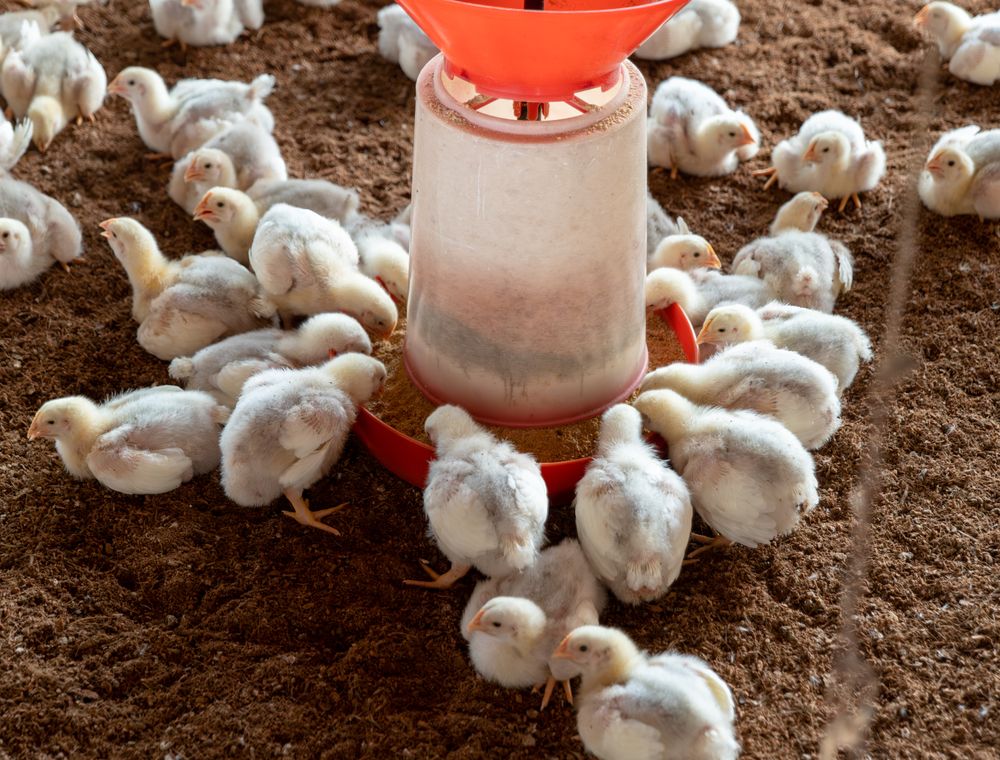
Set the brooder as a ring inside the house for the first week, with a feeder tray and a drinker for every 50 chicks. Once the birds are a week or so old, move to tube feeders and drinkers you can reach without crawling into the litter. The brooder ring guide shows a layout to start from.
Choosing a strain for the buyers you have
Our starting price for Ross 308 chicks is GH₵20 each, with a box of 50 at GH₵1,000. Cobb 500 is listed from GH₵20 as well. Availability depends on the hatch, so confirm the strain and the delivery date when you order. The real differences between the two show up in feed conversion and in how the birds finish, and the Ross 308 vs Cobb 500 comparison sets out the numbers side by side.
If your buyers want a bird that looks more like a village chicken, a slower, coloured bird such as the Sasso (from GH₵13, box of 50 at GH₵650) takes longer to reach weight and uses more feed per kilogram. That is a different business with a different price. Do not run the two in one house on the same plan. Start with one strain, learn its numbers, and add a second only when the first one is paying its way.
The first week decides the rest of the batch
Most of the losses we hear about on broiler batches trace back to the first seven days. The chicks arrive tired from the journey, they need water before food, and they need the heat right in the ring from the first hour. Check the ring at chick height every two hours on day one. Chicks bunched on one side are cold. Chicks with wings held out and panting are too hot.
Put water in front of every chick before you put the feed down. Add vitamins and glucose to the drinking water for the first two days only if your vet recommends it. The first 48 hours guide goes through arrival day in order. Count the birds on arrival, send us a WhatsApp photo the same day on +233 24 915 1503, and keep the batch record. Dead on arrival is replaced free in the next hatch.
Feeding the batch from chick to market
Broilers eat in phases. Starter feed goes in for the first weeks, grower feed follows, and finisher feed carries the bird to market weight. The change points matter more than the brand. Switch too early and the birds miss the protein they need for growth. Switch too late and you pay for feed the birds cannot turn into weight.
Let the weights decide when to change, not the calendar. Weigh a sample every week, and the week-by-week plan in the broiler feeding schedule shows what each weight should look like. Keep a few days of each feed on hand, because a late delivery in the middle of a batch is the surprise that costs the most. Store feed off the floor, out of the rain and away from rats.
Weights, sale day and who buys
Our reference for a finished live broiler is about 2.5 kilograms, the bird behind our GH₵110 live price. Dressed broilers are on our list at GH₵120. Around six weeks is a realistic target for that weight on a good batch, though feed and house conditions decide how close you get. Do not hold birds past the weight you want just because the price looks better tomorrow. Birds kept longer eat more and gain more slowly at the end.
Buyers come in a few kinds. Households buy a few birds a week and pay on the day. Small food sellers and chop bars want a steady supply at a fixed price. Restaurants and hotels want consistent size and clean dressing. Decide which group you are selling to before you choose the sale weight, because each one wants the bird presented differently. The when to sell broilers guide covers timing, and how to sell poultry covers the buyer side.
Need chicks for your next batch?
Send breed, number and town. We reply with price, hatch date and delivery cost in writing.
The first-batch cost example, line by line
Here is the first batch on paper, using our starting prices. Read it as the gross picture and nothing more. The 25 losses are an assumption made for the arithmetic, not a figure from our hatchery.
| Line | Working | Amount |
|---|---|---|
| 500 Ross 308 day-old chicks | 10 boxes at GH₵1,000 | GH₵10,000 |
| Birds sold | 500 less 25 assumed losses | 475 birds |
| Live value at reference price | 475 birds at GH₵110 | GH₵52,250 |
| Feed, litter, vaccines, power, transport, labour | Your own figures | Not included |
The gross is not the profit. Feed is the largest cost in any broiler batch, and it moves with the market faster than the chick price does. Litter, the vaccines your vet agrees, power for the lights and pump, and the van to market all come out of the gross. Put your own figures into the same table before you commit. If the line for everything else is bigger than the gross, the batch loses money, and the chick price was never the problem. The broiler vs layer profit comparison works through the margins in more detail.
Cleaning and resting between batches
When the last bird leaves, the work begins. Remove the litter, scrape the floor, wash the house with the cleaning routine your vet agrees, let it dry, and disinfect it. Then rest the house for a few days before the next chicks arrive. People try to shorten the rest. In our experience a shortened rest saves a few days and costs far more in the first week of the next batch.
Write down what you found in the house. A wet corner, a broken drinker or a rat run goes on the list for the next batch. The broiler litter management guide covers the litter side of the clean-out in detail.
Mistakes we see on a first broiler batch
- Chicks ordered before the house is dry, tested and heated.
- Feed changed by feel rather than by weight.
- Too few drinkers, or drinkers too far from the birds, so the flock drinks late in the day.
- No buyer for the sale week, so birds sit past their weight and eat the margin.
- The next batch started in a house that was swept out in one afternoon.
Checklist before the chicks arrive
- House cleaned, dried, disinfected and rested
- Litter down at about 6 centimetres and dry
- Brooder ring and heat ready, with a thermometer at chick height
- A feeder tray and a drinker for every 50 chicks
- Starter, grower and finisher feed ordered, with delivery dates written down
- Vaccination plan agreed with your vet
- Two or more buyers with the sale week and quantity written down
- Batch record, weight sheet and feed sheet ready, and the order form at /#order bookmarked for the next batch
Questions farmers ask
How many broiler chicks should a first-time farmer start with?
For a first batch, 500 birds in one house is a manageable size for one or two people. That is ten boxes of 50 at the Ross 308 starting price. Start smaller if the house is new, the feed supply is uncertain, or you cannot be there every day. Grow the number of batches before you grow the birds per batch, and only when the first two batches come out clean.
How many broiler batches can I run in a year?
Five to six is realistic if birds reach about 2.5 kilograms in five to six weeks and you take one to two weeks to clean and rest the house between batches. Running batches back to back with no rest is how disease builds up in a house. Fewer clean batches usually earn more than a full calendar with a sick house.
Ross 308 or Cobb 500 for a Ghanaian broiler farm?
Both are fast-growing white strains, and both start at GH₵20 a chick on our price list. The choice comes down to the feed programme you can afford, the weight your buyers want and what the hatch has on the day you order. The comparison article sets out the numbers, and we can tell you which strain is in the hatch when you plan your batch.
What weight should a broiler reach before I sell?
Our reference for sale is a live bird of about 2.5 kilograms, and around six weeks is a realistic target on a good batch. Heavier is not always better. Past the sale weight, birds eat more for each kilogram they gain, and the margin goes into feed. Sell when the weight meets your buyer, not when the calendar looks convenient.
Is a broiler farm profitable in Ghana?
It can be, but only with clean batches, a buyer lined up and a careful count of every cost. The gross from a batch looks good on paper and can disappear once feed, litter, vaccines and transport come off. Run the first-batch table with your own feed price before you decide. The poultry farming profitability article shows how to test the idea properly.
How much floor space does each broiler need?
We plan about 10 birds per square metre for fast white broilers and lower that in the heat. For 500 birds that is about 50 square metres of house floor. Plan by kilograms per square metre at sale too, because a house can comfortably hold many small chicks and still be overcrowded with heavy birds at the end.
Should I sell live or dressed broilers?
Live birds are simpler. You sell at the farm gate or the market, and the buyer does the work. Dressed birds sell for more per bird, but you need a clean space, a steady routine and a buyer who will take them on the day. Start with the buyer who pays on the day, and move to dressed birds once you can keep the hygiene and the cold chain right.


