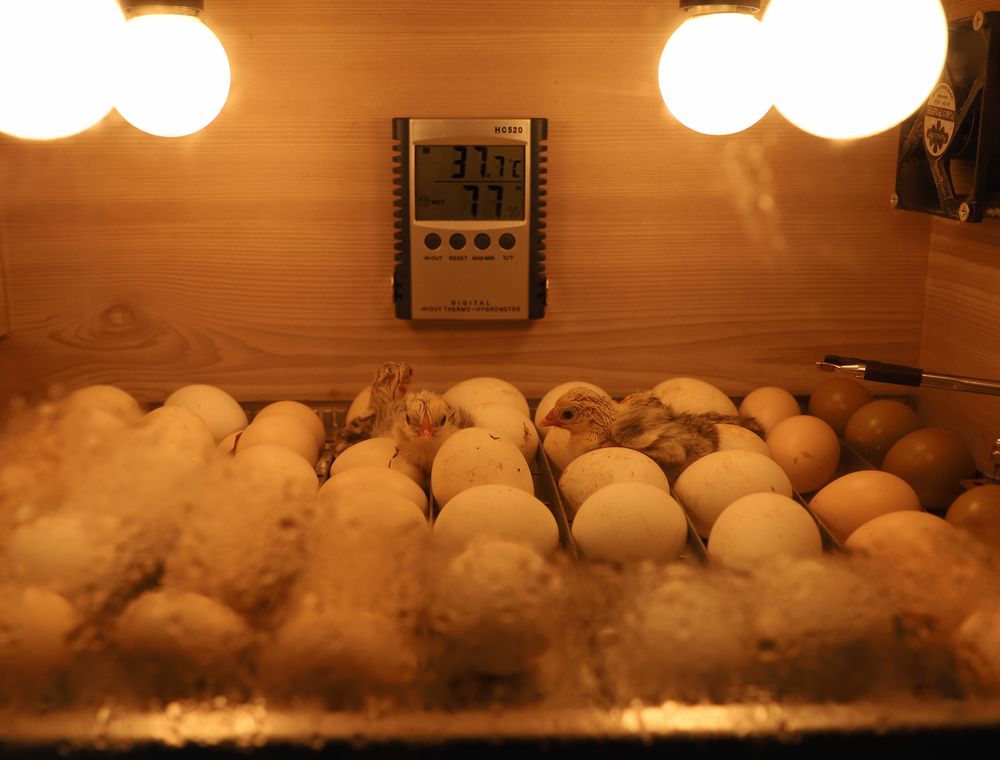
Short answer: A double yolk forms when two yolks leave the ovary close together and end up sharing one shell. Young hens and hens at peak lay make most of them, and one or two a day across a flock is ordinary. A rising count across many birds, or a hen that strains and stops laying, is the point to check feed, light, stress and your vet.
Key takeaways
- A double yolk is a timing accident inside the hen, not a disease.
- Young hens and hens at peak lay account for most of them.
- One or two a day across a flock is normal. A count that keeps climbing is not.
- Double-yolk eggs are safe to eat, but they should never go into a setter.
- Straining, swelling or a hen that stops laying means call the vet, not the feed bin.
What is actually happening inside the hen
Every day or so, a hen releases one yolk from her ovary. The yolk drops into the funnel at the top of the oviduct, where the white is added, and then the membranes and the shell follow. A healthy hen releases yolks on a steady rhythm, usually about a day apart, so each yolk gets its own egg.
A double yolk happens when two yolks come out close enough together that they travel down the oviduct as a pair. Both get wrapped in one white, one set of membranes and one shell. The result is a big egg, often heavier than a normal one, with two yolks inside. It is a timing accident in the reproductive tract. It is not an infection, and the hen did not catch anything to cause it.
The outside of the shell tells you very little. You may see two yolks when you crack the egg, or they may have merged into one lumpy mass. Candling, which we cover later, is the quickest way to know what you have before it reaches a buyer or a setter.
The first eggs and the peak eggs are the usual suspects
Most double yolks we hear about come from two kinds of hen. The first is the young hen in her first few weeks of lay. Her ovulation is still settling into a rhythm, so the gap between yolks is uneven. A pullet that starts laying at about 18 weeks may throw a few doubles, a few small eggs and the odd wind egg before her cycle steadies. Our guide to when layers start explains what a normal first month looks like.
The second is the hen at peak, usually somewhere in the first months after she reaches full production. She is releasing yolks as fast as her body allows, and the gaps shorten under that pressure. Hens that are carrying more body fat than they need seem to have more trouble with timing across the flock. A hen should be lean and firm for her breed, not soft around the belly. Our breed pages give the general weight picture for the common layers.
Genetics play a part as well. Some lines of birds throw more double yolks than others, and a breed that lays large eggs is more likely to show one now and then. That is why a single double yolk in a new batch of pullets tells you very little. Look at the pattern over several weeks before you decide anything is wrong.
When one or two is normal and a run is not
Here is how we would read a count. Imagine a house of 300 hens, collecting about 260 eggs a day. You sort out the doubles each morning and write the number down. A count of one or two in the first week after the flock reaches lay is unremarkable. A count of six or eight a day, from many hens and for several days running, is a different matter. That is a flock where something in the feed, the light or the daily routine has changed.
| Daily double-yolk count (300-hen house) | What it usually means | What to check |
|---|---|---|
| 0 to 2 a day, spread across the flock | Normal variation in ovulation timing | Keep the daily tally going |
| 3 to 5 a day for about a week, mostly young hens | Pullets still settling into lay | Pullet weights and the lay feed changeover date |
| 6 or more a day for several days | Something in the house has changed | Feed, light programme, heat, handling and night-time disturbance |
| Doubles rising while total lay falls | Possible stress or early disease | Call your vet and look for other signs in the flock |
The direction matters more than the number on any one day. A small rise after a feed change often settles within a week or two. A rise that keeps climbing, while the total number of eggs falls, is the one that needs action this week, not next month.
Feed changes and the body condition behind the timing
Feed is the first thing I ask about. Moving a flock from grower to layer feed, or switching from one lay mash to another, changes energy and protein at exactly the moment the hens are gearing up. If the change is sudden, or the new mash is very different in texture, the birds can eat too much for a day or two and then settle. That kind of swing can bring a few extra doubles for a few days, and it is often the only trigger.
Body condition matters more than most farmers expect. Weigh a sample of about twenty hens every two weeks and compare the average with the target for their age. A flock that is drifting heavy will often show more irregular eggs, not only more doubles. A flock that is too light will lay less and shell worse. Both problems start with feed and weight, so fix those before you chase anything else.
Calcium is less likely to cause doubles than to cause soft shells, but a hen short of calcium may still lay irregularly. If you have soft eggs alongside your doubles, read our soft-shelled egg guide before you change anything else. The layer feeding guide sets out the phases and the calcium levels that suit each stage.
Light changes, handling and a restless house
Hens keep an internal clock tied to day length, and sudden changes disturb ovulation. In Ghana the problem is often the power, not the sun. A night-time cut that switches the lamps on for an hour, then off, then on again, gives the flock a confused day. Put the lamps on a timer, check it each morning, and do not let the house go from dark to bright at random. Our lighting programme guide covers a full schedule that works with the power you actually have.
Handling and predators do the rest. A house where a dog or a cat slips in at night, or where people walk through at odd hours, keeps the flock on edge. Stressed hens lay less, and the eggs they do lay are more likely to come out irregular. Close the house at dusk, check for gaps where rats and snakes get in, and keep visits at the same time each day so the birds learn the routine.
The warning signs that mean a vet should look
Most double yolks are harmless. A few are not, especially when a double yolk is followed by a hen that stops laying altogether. The thing to fear is an egg that gets stuck in the oviduct. Egg binding is a real emergency for a hen, and she can decline within a day if nothing is done.
- The hen sits hunched in a corner or a nest for long periods, with tail down and feathers ruffled.
- She strains without producing an egg, or passes only a little fluid or a fragment.
- Her abdomen looks swollen or feels firm when you lift her gently.
- She stops eating and drinking, or stands apart from the flock with her eyes half closed.
If you see two or more of these, move the bird into a warm, quiet space and call your vet straight away. Do not pull at an egg, and do not give any medicine without advice. The vet will decide whether the egg can be moved or whether the hen needs more help. Follow your vet's advice and timing, and do not wait to see whether she improves on her own.
Shell-less, wrinkled, tiny and misshapen eggs
A double yolk is one of several odd eggs a layer can produce, and each one tells you something slightly different. A tiny egg is usually the first egg of a young hen, or a hen that was shocked into an early release. A shell-less egg, often called a wind egg, is a membrane around a yolk and white. It tends to happen when a hen is frightened, when her cycle has an unusual gap, or when the flock is hit by a sudden disturbance. Wrinkled or ridged shells often trace back to a stress or a short illness that interrupted shell formation for a day.
Thin and soft shells belong in a separate group, and they have their own causes. We walk through them in the soft-shell guide linked above. The useful habit is to count the type of odd egg, not just the total. A run of wind eggs on the same day each week, for example, points you toward a disturbance that happens on that day, such as a routine delivery, a cleaning day or a visit by a stranger.
Need chicks for your next batch?
Send breed, number and town. We reply with price, hatch date and delivery cost in writing.
Why double yolks do not hatch and where they belong
Keep double yolks out of the setter. The two embryos share one shell and one white, and the chicks that result are almost never healthy. At our hatchery we candle eggs in the first week and pull out the doubles, because they are easy to see by about day seven and they use up room a good egg needed. If you are hatching your own eggs, do the same. Remove the doubles at the same time you remove the clear eggs. The fertile egg selection guide lists the other checks to make before a tray goes in.

For eating and sale, a double yolk is fine. It is safe, it cooks like any other egg, and many buyers see it as a treat rather than a fault. Keep it with your normal eggs if you like, but do not present it as a special product, and never sell an egg with a visible crack or a bloody spot as a double. Honest packing keeps buyers coming back, and a cracked egg in the tray spoils the whole crate.
Keep a tally that shows the pattern
A pattern only shows if you write it down. The record does not need to be fancy. A page per house, with columns for the date, total eggs collected, doubles, wind eggs, soft shells, cracks and blood spots, is enough to start. Add a short note for anything that changed that day: a feed delivery, a power cut, a new dog, an afternoon of heat. Our record keeping guide shows a simple layout you can copy.
Review the tally every Sunday. Work out the share of doubles across the whole week rather than reacting to one morning. A single bad day means little, but a line that climbs for three weeks tells you to act. Share the page with whoever handles feed and collection, so the pattern reaches the people who can change it. In October the rains are still falling around Kasoa, and wet, muddy mornings change what the birds eat and how they behave. Put that in the notes column too.
What we ask when a farmer calls about odd eggs
Farmers often ring us, or send a message on WhatsApp at +233 24 915 1503, with a photo of an odd egg and a worried question. We do not diagnose from a photo. We do ask the same few things every time: the age of the flock, the breed, how long the pattern has run, what changed in the feed or the house in the last two weeks, and how many birds are affected. Those answers usually point to the right next step, and they save a lot of guessing.
If the flock came from us, we also look at the batch record that goes with the chicks. A flock that was moved, vaccinated or rebedded on a particular date can help explain a change in lay. If you are buying new birds, ask the supplier how the pullets were reared, not only how old they are. Our layer chick page sets out what we supply, and you can place an order through the order form once you are ready.
A checklist before you worry about doubles
- Count the double yolks for the day and the total eggs collected, and write both numbers down.
- Check whether the flock is young, at peak, or in the middle of a feed change this week.
- Look at the lay feed and the oyster shell feeder. Has anything changed in the last fourteen days?
- Check the lamp timer, and note any power cuts or changes in the daylight routine.
- Walk the house at dusk for gaps, predators and noise that could unsettle the birds.
- Look at the hens for swelling, straining or lethargy, and separate any that look unwell.
- Call your vet if a hen is straining, or if the pattern keeps rising for more than a week.
Questions farmers ask
Are double-yolk eggs safe to eat?
Yes. A double yolk is a normal egg in every respect except the number of yolks. Crack it, check the smell and colour as you would any egg, and cook it the same way. Discard it if it smells off or the shell is cracked. The only real difference is that it cannot hatch a healthy chick, so keep it out of your setter.
Why does my pullet keep laying double yolks?
Young hens are still settling their laying cycle, so the gap between yolks is uneven for the first few weeks. A few doubles, small eggs and the odd wind egg in a new flock is normal. If the doubles keep coming after the flock has laid steadily for about a month, check the changeover to lay feed, the light programme and the pullets' body weight.
Can a double-yolk egg hatch?
Almost never into a healthy chick. Two embryos share one shell and one white, and development usually fails part way through. Very rarely a chick hatches with a deformity. Candle eggs before you set them and take out any with two yolks. That keeps the setter room for eggs that have a real chance of hatching.
How many double yolks a day is too many?
There is no magic number, but watch the trend. One or two a day across a flock of a few hundred is ordinary. If the count rises above about five a day for several days, or climbs week after week, something in the feed, light, heat or stress has changed. Keep a daily tally so you see the trend and not only today's eggs.
Should I call the vet about double yolks?
Call the vet if double yolks come with signs of illness: a hen that strains, sits hunched, has a swollen belly or stops laying, or if the flock's total lay drops. A double yolk on its own is not a vet matter. A stuck egg is, and it can be fatal within a day, so act quickly if you see a hen straining.
Do double yolks mean my hens need more feed?
Not usually. Extra feed does not fix ovulation timing, and overfeeding can make hens fat, which causes its own problems. Check that the feed suits the age of the hens, that calcium is in a separate feeder, and that the birds are at a sensible weight for their breed.
Is a wind egg the same as a double yolk?
No. A double yolk has two yolks inside a shell. A wind egg, also called a shell-less egg, has no shell, or only a thin membrane, around the yolk and white. Wind eggs often follow a fright or a disturbance and tend to come in clusters. Both are signs to look at the daily routine in the house.


