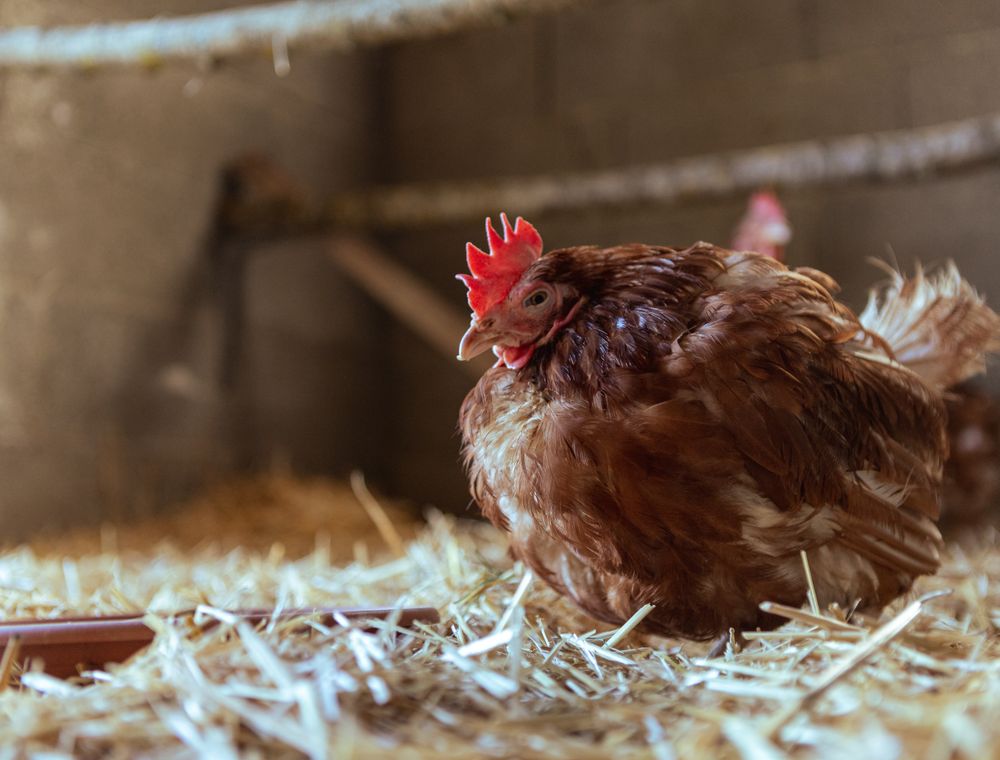
Short answer: The crop is a pouch at the base of the neck where feed waits before it moves on to the gizzard. When it is still full and firm the next morning, it is impacted, and when the contents start to ferment it turns sour. Stop the long fibre, keep clean water within reach, and get the bird to your vet the same day, following your vet's advice on what happens next.
Key takeaways
- A crop that is still full at dawn is not normal, so check it every morning.
- Long fibre, dry grass and whole maize stalks are the usual blockage in village and free-range birds.
- A slow crop and a short water supply go together, so check the drinkers before anything else.
- Never pour oil or force water into a bird's beak, because the liquid can go into the lungs.
- Follow your vet's advice on whether the crop should be emptied and on any treatment.
What the crop does, and why you should feel it
Feel under the bird's neck, just in front of the chest, and you will find the crop. It is a soft pouch. Food goes into it, waits there for a while, and then moves on to the glandular stomach and the gizzard, where it gets ground down.
A healthy crop empties overnight. By the time the birds have been up for an hour or two, it should be small and soft. That is the morning check we ask every farmer to make, and it is the quickest way to catch a crop problem. A crop that is still full the next day is telling you something is blocking the way through.
Free-range birds fill their crops in the afternoon on forage, and some feed will still be there at dusk. That is normal. What you are watching is what is left by morning, and whether the crop feels hard, heavy or gassy when you hold the bird.
The causes we see most on Ghanaian farms
Most crop trouble starts with what the bird has eaten or failed to drink, rather than with a germ. These are the causes farmers describe to us most often when a bird has stopped eating:
- Long, stringy fibre. Whole maize stalks, tough dry grass, coarse leaves and grass clumps knot up in the crop, especially when a bird gobbles them in a hurry.
- Dry, coarse feed for young birds. A grower fed whole grain with no grit, or a coarse mash it cannot break down, can pack the crop.
- Scavenged rubbish. Plastic, string, cloth and bits of sack get swallowed by village birds that roam a compound. A small piece can block the outflow.
- Not enough water. A crop empties slowly when the bird is short of water. In dry spells, birds that have to walk far to a trough are often the first to slow down. Our broiler water guide sets out how much a flock should drink.
- Heat. A bird that has been panting all afternoon eats less and drinks less, and its crop empties more slowly.
A free-range bird may meet all five in one day. That is why one bad crop is often the first sign of a wider feed or water problem in the flock.

Impacted or sour: how to tell them apart
The two often arrive together, because a crop that stays blocked for a day starts to ferment. They still feel different in the hand and smell different at the beak, and that difference tells you how urgent the case is.
| What you notice | Impacted crop | Sour crop |
|---|---|---|
| Feel in the hand | Firm, heavy, sometimes dry and lumpy | Soft or fluid, often gassy, moves under the fingers |
| Smell | Little or none from the beak | Sour, yeasty smell from the beak |
| Fluid from the beak | Usually none | Clear or frothy fluid, sometimes sour, may be shaken out |
| Appetite and posture | Stops eating, sits fluffed and quiet | Stops eating, head may shake, bird looks dull |
| Typical trigger | Long fibre, missing grit, dry feed, a swallowed object | Impaction left too long, or ferment from wet, spoiled feed |
Read the table as a timeline. Impaction comes first and sourness follows. If a crop is both firm and sour-smelling, treat it as the more serious case and call your vet the same day.
How to feel a crop without hurting the bird
- Pick the bird up quietly, ideally early in the morning or in the evening when the flock is calm. Hold it against your body, one hand under the breast and one on the back.
- Place your fingers at the base of the neck, just to one side of the midline, and feel gently for a round pouch.
- Compare it with the crop of a healthy bird in the same pen. Feel three or four healthy birds first so you know what normal feels like on your farm.
- Note whether the crop is empty, full, hard, soft or gassy. A gurgle under light pressure points to fermentation.
- Smell the beak. A sour smell there is a warning sign.
- Put the bird back quietly and write its pen or ring number and what you found in your flock notes.
Do not squeeze hard. The crop wall is thin, and firm pressure can injure it. You are reading the bird, not emptying it. If you cannot tell what you are feeling, that is the moment to show a photo, or the bird itself, to your vet.
What to do in the first few hours
Move the bird to a small, dry pen, or to a corner of the house where you can keep an eye on it. Put it on dry litter or a clean sack, not on wet ground, and keep it away from the rest of the flock so it cannot be pecked while it is weak.
Keep clean water in front of it. A shallow dish that the bird can reach without stretching is enough. If it will not drink on its own, stop and call your vet rather than forcing fluid into its mouth.
Withhold feed only if your vet tells you to. Some vets ask for a short hold so the crop can clear. Do not starve a bird on a guess, because a bird that has stopped eating is already losing strength.
If you are dealing with a bird that has stopped eating for other reasons too, what to do with a sick chicken in the first 24 hours is the wider checklist to run alongside this one.
Write down the time, what you found and what you did. Your vet will ask, and you will want the record when you look back at the week.
The home remedies that do more harm than good
Most farmers have heard of a cure for a blocked crop. Some are harmless. Others can kill the bird, and we would rather you knew which is which before the bird is in your hands.
- Oil or liquid poured into the beak. The bird can breathe the liquid into its lungs. Pneumonia from this is hard to treat and often fatal.
- Forcing water down the throat. The bird can choke, and the water may push more feed into the blocked crop rather than moving it on.
- Hard kneading of the crop. Rough massage can bruise or tear the crop wall. Slow, gentle handling is only worth trying when your vet has shown you how.
- Waiting another day to see. A bird that is not eating has no reserves to spare. Each day without water and proper feed weakens it further.
If your vet decides the crop must be emptied, they will do it or show you a safe method. That is the right route, and it gives the bird its best chance.
Feed and grit choices that keep the crop moving
Most crop problems we can trace go back to the feed bag or the scrap bucket. Crumbles and pellets break down more easily than whole grain or loose, coarse mash, which is why young birds should start on the right feed form from the first day.
Chop greens into short pieces. A handful of long grass for a free-range bird is fine. A whole bundle of stalks tossed into a pen is not. Cut leaves to about the size of a thumbnail before they go in front of birds that gulp. If scraps make up a big share of the diet, our kitchen scraps and forage guide lists what is safe and what is not.
Offer grit where birds cannot find it for themselves. Free-range birds pick up grit off the ground, but birds in a run on bare concrete may have none. Grit helps the gizzard grind, and a gizzard that grinds well keeps the crop emptying on time. Our article on grit and shell covers when it matters and when it does not.
Keep plain, clean water beside every feed point. A feeder with dry feed and no water nearby is one of the fastest ways to start a crop problem in a hot week.
Need chicks for your next batch?
Send breed, number and town. We reply with price, hatch date and delivery cost in writing.
Ghana's seasons and the crop
The harmattan is the hard season for crops. From December into February the grass dries out and turns wiry, and the dust that comes down from the north gets into everything. Birds that once picked soft shoots now chew tough stems and leaves, and the crop has more to move through. Cut back the greens, keep water close, and check crops a little more often through the dry months.
The rains bring the opposite problem. Soft, wet greens and muddy scraps carry more fermentation risk. A bird that eats a heap of wet, spoiled leftovers can have a sour crop within hours. In the rains, pick up uneaten food promptly and do not leave wet mash out until the afternoon.
The hot spells before the main rains, often in March and April in the south, are when birds drink least and crops slow the most. If the flock sits panting in the afternoon, check the crops the next morning. You will often find the trouble started with the heat rather than with what the bird ate. The heat side of this is covered in our heat stress guide.
When to call the vet the same day
Call your vet on the same day if any of these show up. Do not wait to see whether the bird recovers by itself. A crop that is blocked and sour can become a much bigger problem within a day.
- The crop is still full or hard the next morning.
- The bird has stopped eating and drinking for more than half a day.
- The crop smells sour, or the bird shakes its head and brings up fluid.
- The bird breathes with its beak open, or sits fluffed up and does not move when you approach.
- More than one bird in the pen shows the same signs.
Take the vet a photo, the feed you have been giving, and a note of when you first noticed the crop. That history often gets to the cause faster than the bird can. If the bird is one of several that have died, our guide to sudden deaths sets out the first checks to make.
A morning routine for crop checks
You do not need a laboratory to catch most crop problems. You need the same five minutes every day, done the same way, so you learn what normal looks like on your farm.
- Before the first feed goes out, walk the flock and note which birds are standing apart.
- Pick up three or four birds at random and feel their crops. Note empty, soft, full or hard.
- Check the water line. Make sure every drinker is flowing and no bird is standing at an empty one.
- Look at yesterday's leftovers. Remove anything wet, sour or mouldy.
- Write the results in your flock book, even when they are all normal.
Keep the same habit through the harmattan and the hot spells, when intake and crop emptying shift. Once it becomes routine, the morning check stops being a chore and turns into the best early warning you have. Keep these notes with the rest of your flock records. Our record keeping guide shows a layout that takes two minutes a day.
What the hatchery can and cannot do for the crop
Crop trouble in a day-old chick is uncommon. When it does appear, it usually traces back to the brooder: chicks that were not drinking in the first hours, feed that was too coarse too early, or a brooder that ran cold and slowed the chicks down. Our first-48-hours guide goes through that window in detail.
Our chicks leave the hatchery vaccinated against Marek's, Newcastle, Gumboro, infectious bronchitis and coccidiosis, and each order comes with a batch record. Vaccines do not protect a crop, though. The rest of the job happens on the farm, in the water, the feed and the morning check.
If you are starting a new flock and want the feed and water set up before the birds arrive, WhatsApp us on +233 24 915 1503 or use the order form. We will tell you plainly what we can help with and what belongs to your vet. Raising broilers? Our broiler day-old chick page explains what you get and how the chicks travel.
Questions farmers ask
Is sour crop contagious?
Not in the usual sense. Sour crop is a fermentation problem inside the crop, most often following impaction, dehydration or wet, spoiled feed. An underlying illness can spread through a flock, though. If several birds show it together, look hard at the feed, the water and what they have been scavenging, and ask your vet to check the flock before the problem spreads.
Can I give my bird oil to loosen a blocked crop?
No. Oil poured into the beak can enter the lungs and cause pneumonia, which is difficult to treat. Many farmers reach for oil first because it is at hand, but it is one of the most common ways a bird with a simple blockage ends up dead. Call your vet and follow the advice you are given instead.
Should I empty the crop myself?
Only if your vet has shown you how and you are confident doing it. The crop wall can be bruised or torn by rough handling, and forcing contents can cause the bird to inhale fluid. Follow your vet's advice on whether the crop should be emptied and by whom.
How long can a bird survive with an impacted crop?
There is no safe number of days. A bird that has stopped drinking declines quickly, often within a day or two, and an impacted crop that is fermenting can make it worse. Treat a crop that has not cleared by the next morning as an emergency and call your vet that day.
Do village chickens get sour crop more than broilers?
They meet the causes more often. A village bird that roams a compound eats long grass, stalks, bits of plastic and whatever it finds, and it may go a day without good water. A broiler on a managed feed programme has less exposure to those causes, but it can still suffer if its drinkers run dry in the heat.
Do the eggs or meat of a treated bird go on sale?
Not until your vet says so. If a bird has been given any medicine, follow your vet's advice on how long to wait before its eggs or meat can be eaten or sold. Keep the bird separate and note the treatment in your records.
Do Halaal Farms chicks arrive with crop problems?
Our chicks leave the hatchery vaccinated, with a batch record for each order. Check the box when it opens, and if any birds are dead, send us the count and a photo the same day. Those birds are replaced free in the next hatch. A crop problem that starts weeks later is a matter for the farm, the feed and your vet.


