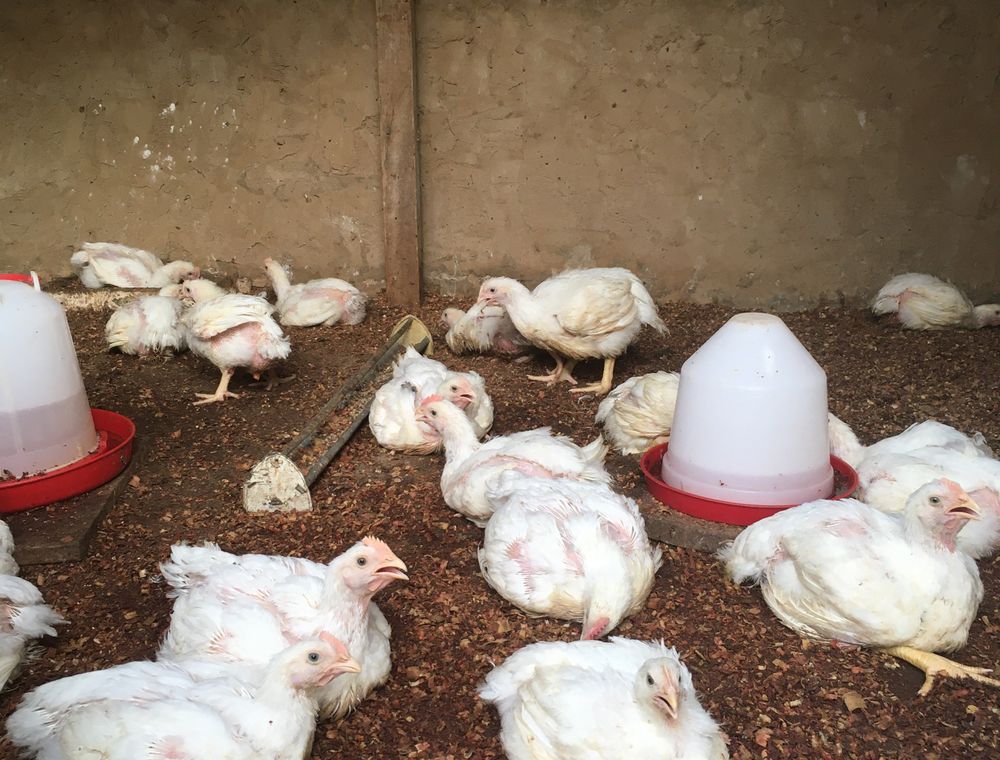
Short answer: Sudden death in chickens means birds dying within hours, or a day or two, often with little warning. The usual causes in Ghana are heat and crowding, poor-quality feed or water, fast infections such as Newcastle disease or fowl cholera, and predators or accidents. Count the deaths, look at where and how the birds died, record the details and call your vet the same day, because a few causes spread fast enough to threaten the whole flock.
Key takeaways
- Sudden death is a pattern, not a single event. The place, the time and the number of birds tell you more than one carcass does.
- Heat, crowding and ammonia can kill birds in a closed house overnight, and a look at the house often rules them in or out.
- Feed and water contamination often kills in clusters, usually after a new bag, a new tank or a new cleaner.
- Report deaths from an unknown cause to your vet promptly, because some diseases must be reported to Veterinary Services.
- Do not open birds yourself unless your vet asks you to, and keep carcasses cool until they have been seen.
Three dead birds on a Tuesday morning
Every farmer knows the scene. You walk into the house at six, count the birds and find three lying in the corner by the drinkers. The rest are standing, eating and calling as normal. Your first instinct is to remove the bodies, throw them behind the house and get on with the day. That instinct is the one thing to resist.
Three dead birds in one corner is a clue. It may point to the water line, a draught, a predator that found a gap, or birds that piled up when the lights came on. Before you touch anything, stand back and look at where they died, how they lie and what the rest of the flock is doing.
What counts as sudden, and what does not
In a poultry house, sudden death usually means birds that were fine the day before and are dead, or dying, within twelve to forty-eight hours. Sometimes a short run of deaths happens over a day. Sometimes a bird is simply found dead with no sign that anything was wrong.
It differs from a slow loss. A bird that loses weight for two weeks, goes off its feed and then dies has a long, quiet problem, the kind covered in our coccidiosis guide. Sudden death tends to mean one of three things: the environment has turned against the birds in a few hours, something has entered the feed or water, or a fast-acting infection has reached the flock.
Heat, crowding and the closed house
Heat is the most common cause of sudden death we hear about, and the easiest to miss. A house that felt fine at noon can become an oven by late afternoon, especially if the roof is low, the sides are shut against wind or the birds are packed in at high density. Birds that pile together at night, trying to share warmth or escape a draught, can smother the ones at the bottom.
Look for birds with open beaks, wings held away from the body and heads hanging low. Check the corner where heat collects, and the birds at the bottom of any pile. Ammonia from wet litter adds to the problem, because a house that smells strongly of it is already irritating the lungs before anything else shows. Ventilation and litter moisture are the first things to check after a sudden death in hot weather.

Harmattan nights can trap you the other way. A cold, dusty night with the sides wide open can chill young birds, and chilled chicks pile up and smother. Check the brooder heat at dawn, when the air is coldest, and not only at dusk.
What goes into the feed and the water
When deaths arrive in a cluster just after a new feed bag, the feed is the first suspect. Mouldy or damp feed can carry toxins, and aflatoxin is one of the most serious. Feed stored against a wall in a humid store, or left open in the rains, can pick up mould within days. Birds that eat a heavy load may die suddenly, and they may not be the only ones affected. Our feed formulation basics explain why the ingredients and the mix matter as much as the bag.
Water causes trouble in a different way. A tank cleaned with a strong chemical and not rinsed, a drinker sprayed with insecticide, or a new pipe that leaches material can poison several birds in one night. Ask yourself what went into the water, the feed or the house in the last two days. A new cleaner, a new sack or a new worker who mixes things can be the answer. Cleaning products are a common route, and our disinfectants and footbaths guide explains how to use them without leaving residues in the water.
Salt deserves a note of its own. Too much salt in the water kills birds, and salty feed mixed by hand can cause the same trouble. If you mix your own feed, weigh the salt rather than guessing with a scoop.
Infections that can kill birds within a day
Some infections kill before the birds show much. Newcastle disease is the one farmers fear most, because it spreads quickly through a flock and can cause sudden deaths alongside breathing trouble, nervous signs and a fall in egg output. Our guide to Newcastle disease covers the signs and the vaccination plan.
Fowl cholera is another. It is a bacterial infection that can strike adult birds suddenly, sometimes with no more warning than a bird found dead and a few others looking dull. Avian influenza, or bird flu, can cause sudden deaths too, with heavy losses in a short time. A sudden death in a flock that is not vaccinated against these, or where several birds die at once, is a reason to call your vet that day.
We cannot tell from a phone call which infection is at work. Your vet, or a laboratory test on a carcass, is the only way to know. What you can do is make sure the vet sees the flock quickly and with good information in hand. Keeping vaccine dates to hand helps, as our vaccination schedule guide explains.
Predators, electrical hazards and accidents
Not every sudden death is a disease. Dogs, cats, rats, mongooses and snakes can kill several birds in one night, and a determined predator may leave the bodies in a line where the birds were roosting. Check the wire mesh for holes, the doors for gaps and the wall for a route in underneath.
Accidents happen too. A bird that flies into a loose wire or a fan can be electrocuted or badly hurt. Birds that fall from high perches, or get trapped under feeders and drinkers, can die without a visible mark. Look for broken wings, torn skin and bruising, and check the electrical fittings before you blame an infection.
Matching the pattern to the likely cause
The pattern of deaths often narrows the field faster than the carcass does. Use this table to organise what you see before you call. It is a guide to questions, not a diagnosis.
| What you see | What it may point to | First check |
|---|---|---|
| Deaths piled in corners, most in the morning, after a hot day | Heat stress, crowding or suffocation | Ventilation, roof temperature, density and the birds at the bottom of the pile |
| Young chicks dead near the heat source, cold to the touch | Chilling, failed brooder heat or draughts | Thermometer at chick height and the sides of the brooder |
| Deaths starting after a new feed bag, several birds affected | Mould, toxins or a feed problem | Set the bag aside, note the lot, ask your vet about sampling |
| Deaths after a tank cleaning or a spray in the house | Chemical contamination of water or air | Stop using the water, flush the line and record the product name |
| Gasping, swollen comb, sudden deaths across the house | Serious bacterial or viral infection | Call your vet the same day, isolate sick birds, count deaths |
| Nervous signs, twisted necks, watery green droppings | Newcastle disease, a reportable disease | Call your vet at once, avoid moving birds, report to Veterinary Services |
| Feathers scattered, birds missing, a hole in the mesh | Predators | Walk the perimeter, close the gaps and look for tracks |
| One bird dead with no signs, others normal | Accident, injury or an isolated fault | Examine the bird for injury, keep a note and watch the flock for a few days |
The routine for the first 24 hours
This is the routine we ask farmers to follow. It takes less than an hour and gives your vet a clear starting point.
- Count the dead birds, the sick birds and the healthy ones, and write the numbers down with the time.
- Note where the dead birds lie, and whether they are clustered, scattered or in a line.
- Photograph the scene before anything is moved, then photograph a few carcasses from above and from the side.
- Check the water line, the drinkers, the feed bag in use and any product used in the house in the last two days.
- Check the house: temperature, smell, ventilation, litter condition, the mesh and the doors.
- Keep the carcasses cool and out of reach of animals, and do not dispose of them until your vet has seen them.
- Call your vet with the numbers, the pattern, the feed and water history and the vaccine record.
- Follow your vet's advice on the next steps, including any sampling and any changes to feed or water.
Need chicks for your next batch?
Send breed, number and town. We reply with price, hatch date and delivery cost in writing.
Post-mortem: leave the opening to the vet
A vet may ask for a fresh carcass, or they may come to the farm and examine birds on the spot. They look at the organs, the lining of the gut and the air sacs, and they may send samples to a laboratory. Some farmers want to open a bird themselves to find the answer. We understand the impulse, but do not do it unless your vet has shown you how and what to look for. Cutting into a bird without training can spread infection, and a wrong guess can send you the wrong way for a week.
If a carcass has to wait for the vet, keep it cool in a sealed bag, away from other birds and from dogs. Do not store it with food. Tell the vet how long the bird has been dead, because the time since death changes what they can see. If you are unsure what to bring, our sick chicken guide lists the details to write down first.
Disposing of carcasses safely
Dead birds carry whatever killed them, so disposal is part of disease control. Burial works if the pit is deep enough, away from water sources and far from where dogs roam, and if the carcass is covered with soil and lime. Burning is effective where it is allowed and done safely. Never feed dead birds to dogs or pigs, never leave them in the open, and never sell a bird from a flock that is dying until you have spoken to your vet.
If the signs suggest a reportable disease, your vet will tell you what must be reported and to whom in your area. Our biosecurity guide covers how dead birds and waste fit into the wider farm plan.
What a wrong guess costs
Say you have 150 Sasso birds, bought at our starting price of GH₵13 each. That is GH₵1,950 of birds in the house. You assume the deaths are heat, so you move the birds to a cooler pen and keep feeding from the same bag. The real cause is mould in that bag, and you lose another twenty birds before anyone looks at it. Twenty birds at GH₵13 is GH₵260, and the bag still in the store will keep doing damage to the next batch.
A call to your vet on the first morning costs a fraction of that, and it protects the next day's feed too. The cheap option is to look first and guess later, not the other way round.
What we ask when a farmer calls us about deaths
When a farmer phones us after a sudden death, we start with the batch. What was the hatch date? Did the chicks arrive with a batch record, and what vaccines does it show? How many birds died, over what time and where? Then we ask about feed, water, weather and anything new in the house. That order is not a secret checklist. It is the sequence we would want any vet to follow.
We do not diagnose from a phone call, and we do not tell anyone which drug to use. Our part is to help the farmer give the vet the right information, and to be honest about what the batch record can and cannot explain. If the deaths started in the first days after a delivery, send the batch details and photos on WhatsApp to +233 24 915 1503, and we will look at the record with you. For the wider picture of how we handle chick losses, see our transit mortality guide.
Questions farmers ask
Can a healthy-looking chicken die suddenly from something minor?
Yes. Heart failure, a ruptured organ, an injury or a heat-related collapse can kill a bird that looked fine an hour earlier. One isolated death with no other signs is rarely an outbreak, but examine the bird, record it and watch the flock for a few days. If a second bird dies the same way, call your vet.
How quickly does Newcastle disease kill birds?
It depends on the strain, the age of the birds and whether the flock is vaccinated. Some birds die within a day or two of the first signs, while others show milder breathing or egg-laying problems for longer. Deaths can rise quickly across a house, so treat any sudden death with nervous signs or breathing trouble as urgent.
Can I eat birds that died suddenly?
No. Do not eat, sell or give away a bird that died suddenly or of an unknown cause. The cause may be a disease that spreads to people through handling or eating, and you cannot tell which from the outside. Ask your vet first, and dispose of the carcass as they advise.
Is a sudden death always the feed?
No, but feed is one of the first things to check, because it changes with every batch. Look at the bag in use, the store and how long the bag has been open, and set aside any feed that looks mouldy or smells musty. Check the house, the water and the environment too, because feed is only one suspect.
Should I move the surviving birds to a new house?
Not before you have talked to your vet. Moving birds can spread disease, and it adds stress if the cause is heat or crowding. Ask your vet whether a move makes sense and how to do it with clean crates and clean footwear.
What should I photograph for my vet?
Photograph the scene before anything is moved, the birds from above and from the side, any sick birds, the feed bag and the water line. Add the house thermometer reading if you have one, and a photo of the vaccine record with the batch date visible. Clear photos help the vet decide quickly whether they need to visit.
How long should I watch the flock after a death?
Watch closely for at least a few days after the last death, and count the birds twice a day. If no new deaths or signs appear, you can relax a little, but keep the records going. Some infections take several days to show. Follow your vet's advice on how long to keep any extra measures in place, and then review the flock with them. Our <a href="/blog/poultry-record-keeping-ghana/">record keeping guide</a> shows what to log each day during that watch.


