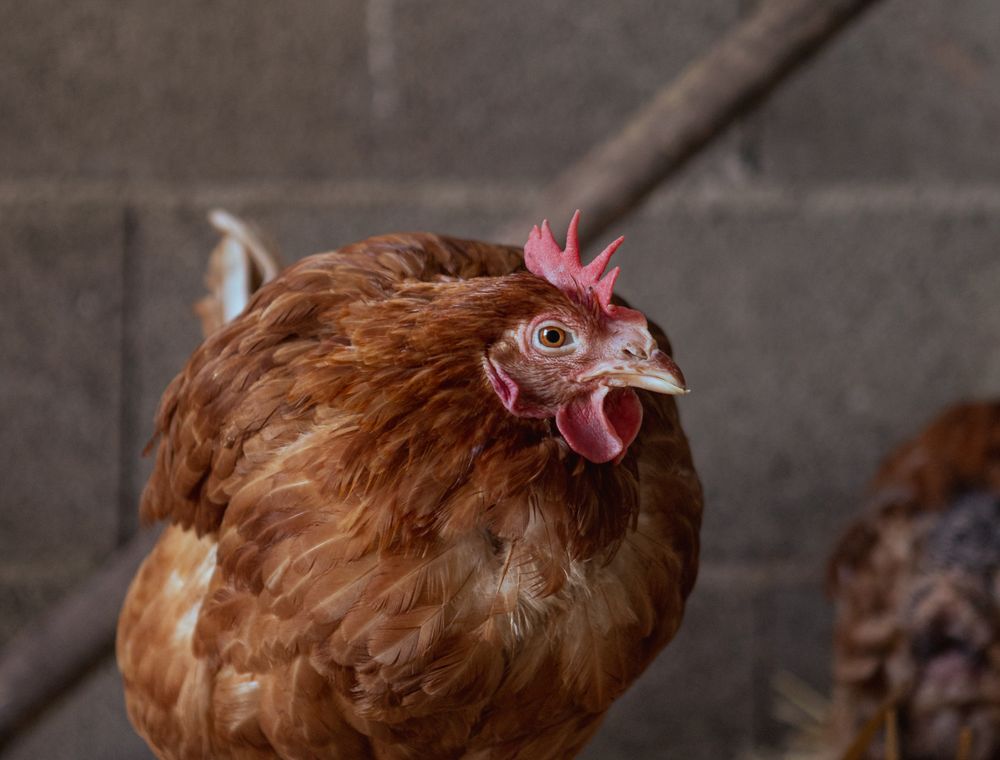
Short answer: A second lay cycle means keeping the same hens through a moult and collecting a lower second peak of eggs. It pays only while the feed you put into each egg stays reasonable, and the sums in this article show that for many flocks replacement wins on feed per egg, though it costs more up front and takes about eighteen weeks before the first egg.
Key takeaways
- A second lay cycle is a bet on feed per egg, not on the hens themselves.
- Starving hens to force a moult weakens them and we do not recommend it.
- Step the light up by about thirty minutes a week, and keep the dark period dark.
- Replacement usually wins on feed per egg, but it costs chicks plus about eighteen weeks of rearing.
- Decide the cull date and the replacement date together, so the house is never empty without a plan.
Why the egg count drops after the first year
A layer hen does not stop being useful the week her egg count drops. She stops being cheap to keep. Those two things are different, and most of the money in a second lay cycle sits in the gap between them.
A brown layer from a commercial line usually starts laying around 18 to 20 weeks, climbs to a peak in the late twenties, and then slides. The slide is slow at first. By the time a flock is past 60 weeks, the tray can look fine for weeks, and then you find the lay rate has dropped a few points without any single bad morning to blame. Eggs also get bigger over time, which helps the price per egg but raises the feed each egg takes. Shells get thinner. Hens that were lean at peak put on fat, and some of them start laying less because of it.

Check your own numbers before anyone tells you what the flock is doing. Count the eggs in every crate, every day, and write the figures in a notebook that stays by the door. A flock that has slid from 85 percent to 70 percent over a year looks very different from one that fell from 85 to 60 in six weeks. The second one has a health or feed problem that a second cycle will not fix.
What we mean by a second lay cycle on your farm
In this article a second lay cycle means one thing. You keep the same hens past the end of their first productive run, let them moult, and collect eggs again from the same birds. It is not a second flock, and it is not a trick to squeeze extra eggs out of tired birds in the same month. The hens take a rest, lose their old feathers, grow new ones, and start again at a lower peak.
The rest is the expensive part. A hen in moult lays little or nothing for several weeks, and she still eats. The feed bill keeps running while the egg tray goes quiet. That is why the second cycle is a bet on feed per egg, not on the hens.
For the signs of a moult and the feed changes that help birds through it, read our guide to molting in layers first. The question here is different: do the sums favour keeping the flock or replacing it?
The feed-per-egg sum that decides the answer
A layer in full lay eats roughly the same amount of feed every day, around 110 grams on a typical brown-layer ration. That number does not care how many eggs she lays. So the feed cost of one egg is the feed she eats divided by the eggs she produces, and that quotient climbs fast as the lay rate falls.
Here is the arithmetic for a hen eating 110 grams a day. The first column is the lay rate, the second is how many eggs 100 hens lay in a week, and the third is the feed that goes into each egg.
| Lay rate | Eggs per 100 hens per week | Feed per egg at 110 g a day |
|---|---|---|
| 75% | 525 | 147 g |
| 60% | 420 | 183 g |
| 45% | 315 | 244 g |
| 30% | 210 | 367 g |
Read the last column with care. At 75 percent lay, one egg carries about 147 grams of feed. At 30 percent, it carries more than twice that. The feed bag does not change between those rows, but the number of eggs you sell from each bag does. Put your own feed price per kilogram against the last column and you have the feed cost of an egg in your own shed, before labour, medicine or the house itself. Our layer feeding guide shows how much a 300-hen flock really uses, which is the other half of the sum.
Why we do not recommend starving hens to force a moult
Some farmers hear that you can bring a flock back into lay faster by taking the feed away for a week or more. They are right that it can work, and they are wrong about the cost. Starving a flock weakens the birds, some of them die, and several countries have banned forced moulting by feed withdrawal on welfare grounds. We do not recommend it, and we would rather you kept the hens and accepted a slower second cycle.
What we suggest instead is a lower-protein moult ration, fresh water at all times, and a calm house. Feed intake stays up, the birds hold their weight, and the moult finishes in its own time. The hens still lose some lay while they moult. That is the honest cost, and it is smaller than the cost of a flock that comes out of a forced moult in poor condition and lays badly for months.
Light is the switch most farms forget
Hens lay because day length tells them to. Ghana sits close enough to the equator that daylight barely changes across the year, around twelve hours give or take. A house with no artificial light gives a layer very little reason to start again after a moult. Our lighting programme article goes through the schedule for lay in full, but for a second cycle two rules matter most.
First, bring the day back up gradually. Add light in steps of about thirty minutes a week until the flock reaches the 14 to 16 hours of light most lay programmes use. Never jump the whole way in one night. A sudden change stresses the hens more than the light does. Second, keep the dark period truly dark. A bulb left on near the feed store, or a gap in the curtain that lets the morning sun in, will undo a week of careful work.
Power cuts complicate this. If the house goes dark for six hours at night, count that as lost light, and decide whether a battery or a timer can cover the gap. A second cycle that stops and starts with the grid will lose more lay than it gains.
Health and culls before the second cycle starts
Hens that go into a second cycle carry everything they picked up in the first. The moult is a bad time to find out about worms, mites or a respiratory problem, because the moult already drags their condition down. Before you decide, go through the house after dark with a torch and look at each hen on her perch. Look for mites around the vent, for hens that stand apart from the flock, and for combs that look pale or dark for no reason.
Weigh a sample. Take ten birds from across the house, weigh each one, and compare the average with what your breed should weigh at that age. A flock well below target weight will struggle to moult and restart at all. Hens that are heavy and fat are a different problem, and usually come from too much feed in the late first cycle.
Cull the birds that are clearly finished: those with a hard, shrunken abdomen, a dull eye, or a keel that is bent or broken. Sell them while they still have a market value, or dress them for the home pot, and keep the healthy hens. Let your vet set the vaccine timings for the second cycle, and keep a record of what you gave and when. Our poultry vaccination schedule shows typical timings for layers, but your vet's schedule for your own flock comes first.
Egg size and shell quality after the restart
Expect the first eggs back after a moult to be small. Hens restarting lay smaller eggs, and the shell is often thinner and rougher for the first few weeks. Buyers notice this quickly. A crate that used to be all large and medium can turn into a crate of small eggs and cracked shells, and the price falls with it.
Calcium is the fix most farmers reach for first, and it is also the one they overdo. Put oyster shell in a separate feeder the hens can visit at will, rather than mixing it into the mash at a fixed rate that they may not match. Watch the shells on the tray each morning. Thin, soft or sandy shells in the first two weeks of restart usually mean the hens are short of calcium or not eating enough. Check the feed intake before you blame the ration.
Some shell damage in the second cycle is simply age. Older hens lay fewer strong shells, and a flock past its best will not give you the grade of a flock of young hens. Count the cracks at collection and log them. If the cracked share climbs above what it was in the first cycle, the cause is usually calcium, heat, or hens stressed by something in the house.
Need chicks for your next batch?
Send breed, number and town. We reply with price, hatch date and delivery cost in writing.
A worked decision for 200 hens: keep or replace
This is a sum we work through with farmers who ask whether to keep a flock. It rests on assumptions, so change the numbers to match your own birds and prices. The structure is what matters here, not the answer for your farm.
Assume you have 200 brown hens at 72 weeks, laying at about 60 percent in the first cycle and dropping to 45 percent. You can keep them through an eight-week moult and then thirty weeks of lay at an average of 55 percent. Or you can cull them now, buy 200 day-old brown chicks, and rear them to point of lay. Hy-Line Brown chicks from our current list start at GH₵23 each, so the chick bill alone is GH₵4,600 for 200 birds. Rearing is the cost people forget, since the chick price is just the opening figure.
| Keep through a second cycle | Replace with new chicks | |
|---|---|---|
| Up-front cost | Nothing new, but feed continues through the moult | 200 chicks at GH₵23, GH₵4,600, before rearing feed |
| Weeks before the next eggs | About 8, the moult | About 18, the rearing period |
| Eggs over 30 laying weeks | About 23,600, moult included | About 35,700, at an average of 85% lay |
| Feed over the same weeks | About 5.6 tonnes, moult included | About 4.6 tonnes, rearing feed on top |
| Feed per egg | About 240 g | About 130 g, before rearing feed |
Compare the eggs row with care. It counts the thirty laying weeks after each option starts laying, so the replacement flock's eighteen rearing weeks sit on top of that. The new birds are cheaper per egg once they are laying, which is why replacement usually wins on feed per egg. But it asks for cash and patience up front, a house cleared and cleaned, and the risk of a bad batch of chicks. The second cycle asks for less cash and gives you fewer eggs. Choose on the cash you have, the time you can wait, and the feed price you are paying. The culling and replacement guide works through the same choice from the farm-gate side.
If you want replacement chick prices, our day-old chick price list has the current figures, and the layer day-old chicks page covers the breeds. For a quote, WhatsApp +233 24 915 1503 or send your details through the order form.
Harmattan, heat and the Christmas order book
Ghana's seasons hit a second cycle in two places: the heat of the hot months and the dust of the harmattan. Hens in heat eat less and lay less, and the hens that eat less are the ones most likely to restart badly. Plan the moult so its quietest weeks do not land in the hottest spell of the year, and make sure water runs at full flow at midday. Our hot-season article on egg drop covers the management in detail.
The harmattan, which usually runs from December into February, brings fine dust into a house that is trying to restart. Dust on the feathers and in the lungs slows the hens and invites respiratory trouble. Keep the vents clean, keep the litter dry, and do not let dust build up on the perches.
Then there is the calendar. Buyers order more eggs in the weeks before Christmas and Easter, and many farmers want fresh stock on the shelves for those dates. Count back from the date you want the flock at its best. If the moult ends in October, the restart falls into the rainy season, which is a fine time for lay but a poor time for dry litter and clean eggs. Work the calendar backwards and decide early.
Mistakes that turn a second cycle into a loss
- Starting the second cycle with a flock you have not counted. If you do not know your lay rate, you cannot tell whether the restart is working.
- Cutting feed to speed the moult. You save a few bags and lose the flock's weight, its eggs and sometimes its birds.
- Adding light in one jump. The hens panic, lay stalls, and the owner blames the feed.
- Keeping every hen. A sick or underweight bird eats as much as a good one and lays nothing.
- Forgetting the rearing bill. A cheap chick price makes replacement look cheaper than it is.
- Ignoring the shell in the first two weeks. Thin shells cost crates before anyone notices.
Checklist before you commit to a second cycle
- Write down the lay rate for the last four weeks, and the feed used over the same weeks.
- Work out feed per egg at the current lay rate, using the table above.
- Weigh ten birds from different parts of the house and compare with the breed's target weight.
- Check every hen for mites, worms and any sign of respiratory trouble, and note what you find.
- Ask your vet to confirm the vaccination programme for the second cycle, and follow it.
- Price the rearing option with your own feed and labour figures, and add the chick cost from our price list.
- Write the lighting step-up on paper, with dates, before the moult starts.
- Set the cull date and the replacement date together, so the house is never empty without a plan.
Questions farmers ask
How long can a layer hen stay in lay in Ghana?
Commercial brown layers are usually culled somewhere around 72 to 80 weeks of age, depending on their lay rate, the feed price and what the flock is worth. Some farms keep hens longer as backyard birds or for a second cycle. Past the first laying year, judge the hen by her feed per egg rather than by her age alone. A hen at 85 weeks laying 60 percent can still earn her feed, but only if the feed per egg stays sensible.
Is a second lay cycle worth it?
Sometimes. It is worth it when feed per egg stays low enough to beat the cost of new birds, including rearing. Compare the eggs you will get over the next thirty laying weeks with what replacement chicks and about eighteen weeks of rearing will cost you. Use your own feed price, your own lay rate and the chick price on our list. If replacement comes out ahead, cull on schedule and do not wait for a miracle.
Can I force a moult by stopping the feed?
You can, and some farms did it for years, but we do not recommend it. Starving hens weakens them, and some of them die. Several countries have banned the practice on welfare grounds. Use a lower-protein moult ration, keep the water flowing and let the moult run its course. It takes longer, but the hens come back into lay in better condition.
How much light do hens need to restart laying?
Most lay programmes run 14 to 16 hours of light a day. Ghana's natural daylight is close to twelve hours and changes little through the year, so the house needs artificial light. Step the day up by about thirty minutes a week rather than in one jump, keep the dark period dark, and plan for power cuts, because a dark night costs lay.
Why are my eggs small after the moult?
Hens coming back into lay usually lay smaller eggs for the first few weeks, and the shells are often thinner. Make sure oyster shell is available in its own feeder, check that the hens are eating enough, and look at the shells each morning. If the eggs stay small and the shells stay thin for more than a month, call your vet and review the ration with your feed supplier.
Should I buy point-of-lay pullets instead of chicks?
Point-of-lay pullets cost more than day-old chicks, but they skip the months of rearing. If your house is empty and you need eggs soon, that saving can justify the price. Ask the seller for the vaccination record, and look at the birds before you pay. Our own range is day-old chicks, and the current prices are on our prices page.
What feed-per-egg figure should make me think about replacing the flock?
There is no single number, because the answer depends on feed price, egg price and the cost of replacement. As a rule of thumb, we look at feed per egg. When it stays above about 200 grams for two weeks in a row and the four-week lay rate is still falling, price the replacement flock that week. Rearing takes about four months, so the decision is best made early.


