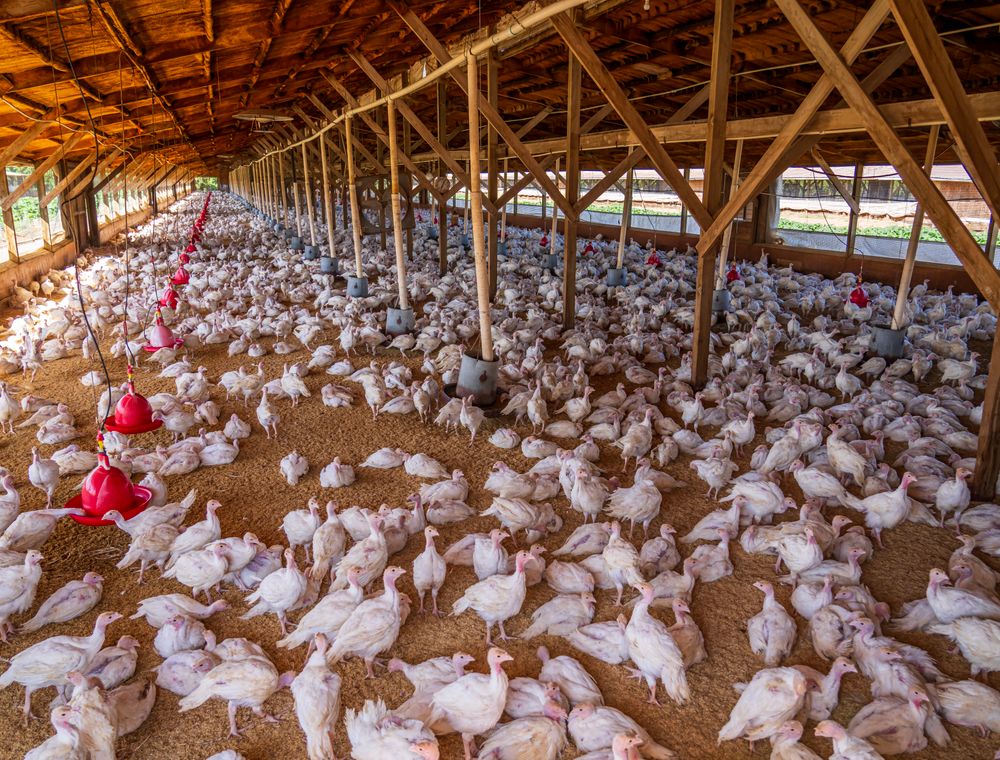
Short answer: A layer or dual-purpose hen needs about 15 to 25 centimetres of perch, depending on her size, and the roost should sit above a droppings board so the night's droppings do not end up in the litter. Set a low step for pullets, use boards about 5 centimetres wide with the edges eased, and check the cracks for red mite every week.
Key takeaways
- Give each hen 15 to 25 centimetres of perch, and go to the upper end for heavier dual-purpose birds.
- A flat-topped board about 5 centimetres wide suits a hen's feet better than a round stick or a bare wire.
- Keep the roost off the side walls and well above the droppings board.
- A hen sleeping on the floor usually points to a fault in the house, not a stubborn bird.
- Inspect the joints and cracks for red mite at least once a week.
- Start young birds on a low step so they learn to roost before they move into the house.
Why a hen sleeps on the floor when she should not
A hen that sleeps on the floor is telling you something about your house, and the message is rarely that she is lazy. Chickens are roosting birds. Given a choice at dusk, a healthy hen climbs as high as she can get and settles with her toes wrapped round a bar. When she ends up on the litter instead, one of four things has usually gone wrong.
The first is space. The roost is too short for the flock, so the lowest-ranking birds get pushed off the end of it. The second is a draught. A hen sitting at the side wall takes the night air at body height, and she will huddle or move. The third is bullying. Dominant hens take the best spots and the timid ones are left to find a corner. The fourth is mite. Red mite hides in the cracks of a roost during the day and comes out at night to feed, so an itchy hen will often choose the floor over a bar that is crawling with them.
We see farmers blame the breed first. Usually the breed is fine. Walk in after dark with a torch, count the birds on the floor, and you have your answer in five minutes.
How much perch each bird needs
Perch is measured as length per bird, not as the number of bars you can fit on the wall. The figures below are the working ranges we give farmers when they plan a new house. If your supplier's breed guide gives a different figure, follow the guide, because it was written for that bird.
| Bird type | Perch length per bird | What to watch |
|---|---|---|
| Light laying hens, for example Hy-Line Brown or Bovans Brown | 15 to 20 cm | Light birds fly up easily, so a second tier is not essential |
| Dual-purpose birds, for example Kuroiler or Noiler | 20 to 25 cm | Heavier bodies need more width on the bar |
| Sasso and other slower-growing hybrids | 20 to 25 cm | Check that the top tier is reachable for the heavier hens |
| Broilers | Optional, one low platform is enough | See the section on broilers below |

Work out the total length before you buy any timber. Multiply the number of birds by the length per bird, then add about ten per cent for birds that come in late from the run and find the good spots already taken.
Lay the bars along the back half of the house, away from the door. Birds that wander in from the run at dusk take the nearest free space, and you want the nearest free space to be a bar. If you are still choosing the breed, the layer day-old chicks page lists what we hatch, or send us your flock size on WhatsApp at +233 24 915 1503 and we will tell you which birds suit the house you have.
Setting the height and the step for pullets
The main roost should sit high enough that a hen can fly up to it without a run-up, and low enough that she does not drop onto the litter from a height that jars her legs. In our experience a main bar about 60 to 80 centimetres above the litter works for most light and dual-purpose flocks. Measure to the top face of the bar, because that is the surface the feet and the breast will meet.
Young birds need a step. A pullet that cannot reach the main bar sleeps on a lower perch or on the floor, and she will keep doing it for the first weeks unless you give her a lower platform. A simple step about 30 to 40 centimetres high, set in front of the main roost, does the job. Once the pullets are flying up without help, take the step out.
If you have two tiers of bars, leave at least 30 centimetres between them. Closer than that, the droppings from the top tier land on the birds below, the lower tier gets dirty, and the birds on it get jumpy and start pecking at each other.
Timber, bamboo and the edges that hurt feet
The best roost bar is a flat-topped board, about 5 centimetres wide on the top face, with the corners rounded off. A hen grips a flat top with her toes spread. A round stick forces her to close her grip around it for hours, which tires her, and a sharp edge will cut the pad of a foot within a season. Ease the edges with a few strokes of sandpaper before the birds go on.
Bamboo is cheap and common in the villages, and it works until the splits open. A cut bamboo culm splits along its length, and the split edges become sharp. It also cracks at the nodes, and the cracks hold mite. If you use bamboo, split it lengthways, sand the inside edges and replace it as soon as it starts to split.
Untreated softwood does not last in our rainy season. Termites will eat cheap offcuts from the sawmill within a couple of seasons, and wet wood rots at the joints. Hardwood offcuts or treated timber cost more at the start but last much longer. Whatever you choose, keep the bar dry and do not let the wood sit on wet litter.
Wire mesh is the one thing we would never use as a roost. A hen's feet wrap round the wire, the toe pads press into the grid for hours, and you will see sores on the feet of birds that have roosted on mesh for a few weeks. The sores are slow to heal and they make the bird reluctant to walk to the feeder.
For more on feet and the way a bird lands, our bumblefoot guide covers the infections that start from a rough landing.
Spacing from the walls and from each other
Keep the roost at least 30 centimetres from the side walls. A hen that lands with her wings out needs room to balance, and a bar pushed hard against a wall makes birds crowd into the corner between the bar and the wall, where the top birds sit on the bottom ones. Leave a walkway of about 60 centimetres in front of the roost, so the birds can reach it from the floor without climbing over each other.
Work the length through with a real example. Say you are stocking 160 light laying hens at 18 centimetres each. That is 28.8 metres of perch. Three bars of eight metres give you 24 metres, which is not enough, and four bars give you 32 metres, which is. Two tiers of two eight-metre bars is a sensible layout, and it keeps the lower tier reachable for the younger birds.
The house plan that decides all this is set out in our cheap coop guide, which shows how perch length and nest boxes share the same wall.
The droppings board under the roost
A roost with nothing under it is a morning clean-up job, and most farmers give up on that after a week. A droppings board fixes it. It is a flat sheet of plywood, a tray of tin or a frame with a wire base, set under the roost so the night's droppings land on it and not on the litter. The birds scratch in the litter by day, so every dropping on the litter becomes ammonia and a risk to feet and eyes.
Put the board about 30 to 40 centimetres below the lowest bar, so the birds can still stand under it, and make sure it scrapes easily. A board too close to the perch gets packed by the birds' feet. One set too low lets them sleep in the mess. Scrape it every two or three days in the rainy season, and every day when the house is hot, because droppings break down quickly in heat and the smell arrives with them.
A scraper and a bucket by the door take two minutes. Without them the board waits until the weekend, and by then it has turned into the sort of mess that draws flies into the house.
Red mite in the cracks you cannot see
Red mite is the reason most roosts go bad after the first year. The mite hides in cracks, knots and the joints where a bar meets its frame, and it feeds on the birds at night. A flock with mite looks dull, lays less, and the hens go pale around the comb. Some birds pick at their own feathers, which is easy to mistake for feather pecking and treat the wrong way.

Check the roost with a torch after the birds have settled, not in daylight. The mite is most active at night, on the birds and in the wood. Run a finger along the joints and look for grey-red specks, or a brownish crust in the cracks. If you find them, the roost needs treating, the nest boxes need checking, and your vet should look at the flock. Ask your vet which product is registered for poultry in Ghana, and follow the label exactly. Do not mix your own dip, and do not wash the roost with strong chemicals that you have not been advised to use.
Prevention is simpler and cheaper. Use smooth-finished bars with no gaps, seal the joints where the bar meets the frame, and take the bars out for a scrape and a dry in the sun every few months. A bar you can lift out is a bar you can clean properly.
Roosting through the heat and the harmattan
In the hot months, birds on the roost spread out and hold their wings away from the body. They need air moving under the bars, so do not pack the roost into the hottest corner. The top of the house is where the heat collects, and a roost placed directly under a tin roof turns into a shelf too warm to sleep on. A hen standing on a hot bar with her beak open is not resting.
The harmattan changes the picture. From about December to February the nights are cold and dry, and the birds sit tight on the roost with their feathers fluffed. A cold bird huddles at the end of the bar nearest the door, where the draught is, while the birds at the far end pile on top of each other. Cover the side walls at night with a tarpaulin or sack that you can roll up in the morning, but keep the vents open above bird height so the breath and the ammonia can still leave. If you can, move the bars away from the draughty side, even if you lose a few spaces in the warm months.
The dust side of the harmattan has its own problems, and our harmattan care notes cover those. On the roost, the rule is simple: the birds should be able to sleep warm without being able to crowd.
Need chicks for your next batch?
Send breed, number and town. We reply with price, hatch date and delivery cost in writing.
Do broilers need perches?
Not in the way layers do. A broiler is heavy from the first weeks, and she does not fly up to a high bar the way a light hen does. Put a broiler on a high roost and she will try to get up, fall back, and bruise her breast or strain a leg. Most of the leg trouble we hear about on broiler farms starts with birds too heavy for their own legs, not with birds that have nowhere to roost.
For broilers, a low platform or a wide, flat step about 20 to 30 centimetres high gives the odd bird somewhere to rest without asking her to fly. If you run a mixed house with cockerels or dual-purpose birds, give them the same low platform and keep the higher roost for the light layers in a separate section. The growth side of the broiler question is in our leg problems guide, and the day-old stock you start with is on the broiler chicks page.
Building a perch frame you can lift out
A roost you can lift out is a roost that gets cleaned. Build the frame from two side rails and a set of cross-bars, and fix the bars with screws rather than nails, so a bar can come out without tearing the wood. Hang the frame so it stands clear of the droppings board.
- Cut the side rails to the length of the house section you are fitting, and mark the bar positions at the spacing you have chosen, usually 30 to 35 centimetres apart.
- Use a 50 by 50 millimetre batten or a hardwood offcut for the bars, and ease the top edges with a plane or a rasp until they are no longer sharp.
- Fix each bar with two screws, and check with a spirit level that the top faces are level across the frame.
- Hang the frame on brackets so you can lift it out to scrape the wood, and drop it back with a single pin through the bracket.
- Oil or paint the bars once a year, and let them dry in the sun before the birds go back on.
Perch checklist before the first bird goes in
- Total perch length is the number of birds multiplied by 15 to 25 centimetres, with a margin for late arrivals.
- The main roost sits about 60 to 80 centimetres above the litter, with a 30 to 40 centimetre step for pullets.
- Bars are at least 30 centimetres from the side walls and at least 30 centimetres apart between tiers.
- The top face of each bar is flat, about 5 centimetres wide, with the edges eased.
- The droppings board is in place 30 to 40 centimetres below the lowest bar, with a scraper by the door.
- Joints are sealed, cracks are filled, and the frame lifts out for cleaning.
- The house is ventilated above bird height, and you have a cover for the sides for the harmattan.
- The breed guide from your supplier has been checked against these figures.
The roost errors we keep finding on farm visits
- Bars fixed along the wall, so half the birds sleep in the corner and the rest sit on the bar ends.
- A single high roost for a mixed flock of pullets and heavier dual-purpose birds, with no step.
- Roosts cut from sawmill offcuts that split, warp and rot by the first rains.
- Droppings boards that were never fitted, so the litter under the roost turns to cake within a month.
- Wire or mesh roosts, which cause foot sores and make the birds slip.
Each of these costs little to fix before the birds arrive and a great deal to fix after. If you are planning a new house, our housing designs guide places the roost within the whole layout, and the order form is the place to start once you know your flock size.
Questions farmers ask
How many centimetres of perch does each laying hen need?
Plan 15 to 20 centimetres for light laying hens and 20 to 25 centimetres for dual-purpose or heavier birds. Multiply your flock size by the figure and add about ten per cent for late arrivals. If your supplier's breed guide gives a different figure, follow the guide, since it was written for that breed.
How high should the perch be above the litter?
A main roost about 60 to 80 centimetres above the litter suits most light and dual-purpose flocks. Measure to the top face of the bar. Add a lower step of 30 to 40 centimetres for pullets, and remove it once they fly up without help.
Is bamboo a good material for chicken perches in Ghana?
Bamboo works for a season or two if you split it lengthways, sand the edges and keep it off wet litter. It splits along its length, the cracks hold red mite, and it needs replacing. Hardwood offcuts or treated timber last longer and are worth the extra cost on a house you plan to keep for years.
Do broiler chickens need perches?
Broilers do not need high perches. A wide, flat platform about 20 to 30 centimetres high gives a bird somewhere to rest. A high roost leads to falls and bruising in heavy birds, so keep the high roosts for light layers and dual-purpose birds.
Why are my hens sleeping on the floor when there is a roost?
Look at the roost before you blame the hens. The usual causes are too little length, a draught at the end of the bar, bullying from dominant birds, or red mite in the cracks. Check the roost with a torch at night and count the birds on the floor for three evenings to find the pattern.
How often should the droppings board be cleaned?
Scrape it every two or three days in the rainy season, and every day when the house is hot. A board left for a week builds up ammonia and draws flies. Keep a scraper by the door so the job takes two minutes rather than half a morning.
What is the best way to stop red mite in a roost?
Prevention starts with smooth bars, sealed joints and a roost that lifts out for cleaning. If you find mite, ask your vet which product is registered for poultry in Ghana, and follow the label. Recheck the roost a week after treatment, because red mite eggs are hard to reach and one application is often not enough.


