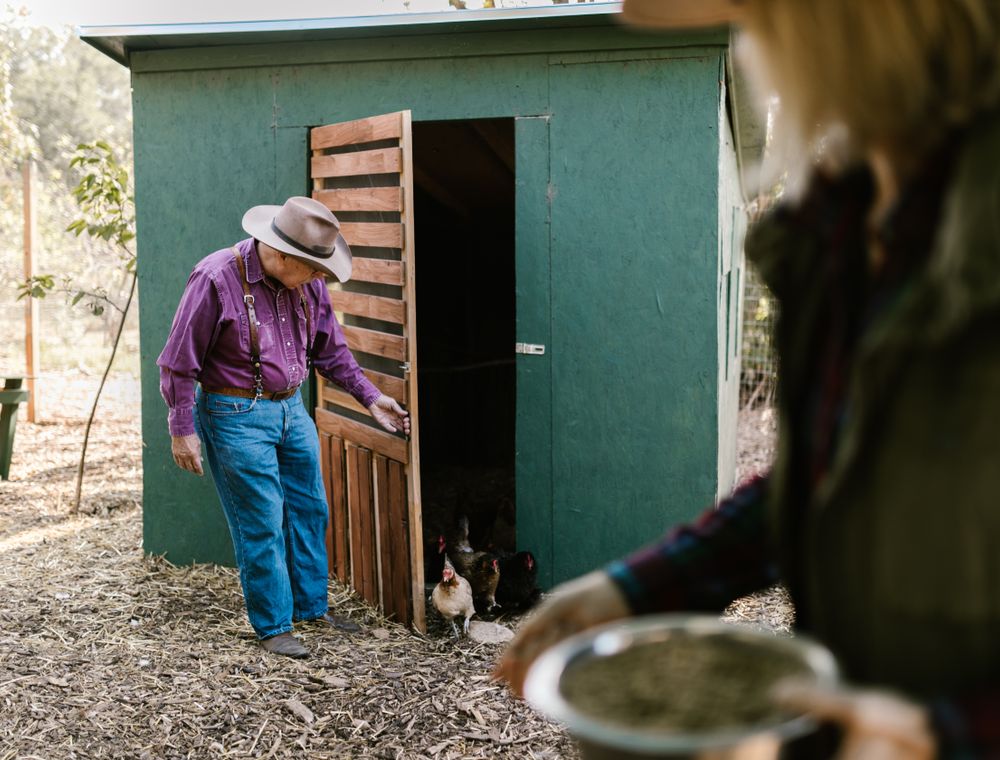
Short answer: A cheap chicken coop in Ghana works when it is raised off wet ground, ventilated high under the roof and closed tight at night. For twenty hens, a 2.4 by 2.5 metre house gives about 0.3 square metres each, with about 20 centimetres of perch per bird and one nest box for every four or five hens. Put your money into the base, the hardware cloth, the roof and the door latch, and use timber only if it is treated and kept off the soil.
Key takeaways
- Size the house from the flock you want, using about 0.3 square metres per hen
- Raise the floor off wet ground and stand every post on concrete or stone
- Use hardware cloth, not chicken wire, anywhere a predator could reach
- Put vents high under the roof so air moves without a draught on the perch
- Spend on the base, mesh, roof and latch; save on paint and fittings
- Latch the door every dusk and check the mesh every month
Cheap is fine. Cheap and wrong is not.
Farmers ask us whether a coop made from old pallets and a sheet of corrugated iron will do for twenty hens. The honest answer is yes, if the floor is off the wet ground, the walls have air gaps near the roof and the door latches properly. Without those three things, the cheapest coop in the world will kill birds slowly, and somebody will blame the chicks.
Cheap coops work when they are simple and sound. They go wrong when the builder saves money on the parts that matter most: the base, the roof gap, the mesh and the door. Spend on those four and you can save on paint, decoration and fancy nest boxes.
Start from the flock, not the timber
Decide the number of birds before you buy a single nail. For this article we plan for twenty point-of-lay hens, a common starting size for a family or a small backyard business. Layers need floor space, perch space and nest boxes, and each of those sets the size of the house.
As a working rule we use about 0.3 square metres of floor per hen inside the coop, plus a separate run outside if you can give one. Twenty hens therefore need about 6 square metres inside. A house of 2.4 by 2.5 metres gives you 6 square metres, which is enough. Less floor than that and the hens will pile up, peck and get dirty, and the litter will be wet by the second month.
Pick the breed before you fix the size, because a larger bird needs more room on the perch and in the house than a small one. Our best layer breeds for Ghana article compares them. If you plan to grow the flock, build for the size you want in two years, or plan a second house beside the first. Extending a coop with a lean-to is harder than it looks on a drawing.
Choosing the spot you will not regret
Pick ground that drains. After a heavy rain, stand on the spot and see where the water goes. If it pools there, it will pool under the coop too, and no timber treatment will keep the floor dry. A small rise is better than a hollow, even if it means carrying water a little further.
Give the coop some afternoon shade, ideally from a tree on the west side, but keep branches clear of the roof. Overhanging branches are a highway for rats and snakes. Keep the coop away from kitchen smoke and the household bins, which draw in the animals that cause the trouble.
Leave room for the run and for walking all the way round the house to clean it. A coop built flat against a wall with no access becomes a coop nobody cleans.
A plan on one sheet of paper
Draw the coop on one sheet before you buy anything. For our 2.4 by 2.5 metre example, we use a raised floor, a back wall about 1.8 metres high and a front wall about 2 metres high, so the roof slopes to the back. A lean-to roof with a ridge gap along the top of the front wall gives you fall for rain and air high up where the birds cannot feel a draught.
Inside, plan a perch of about 20 centimetres per hen, running along the back half of the house and set away from the walls, so droppings fall where you can clean them. Put one nest box for every four or five hens, low and dark. Give them a pop-hole door that opens to the run or yard, and a clean-out door at the front so you can take out the litter without climbing in.
Mark the door, nest boxes, feeder and drinker on the plan. Then walk the route you will take each morning with a bucket of water. If the route is awkward on paper, it will be worse with birds in it.
Materials that last in Ghana's damp and heat
Timber is the usual frame. Wawa and other locally available softwoods are light and easy to cut, but they rot and attract termites when they touch wet soil. Stand every post on a concrete base or stone plinth, and keep the bottom of every timber off the ground. Treat the timber with a wood preservative and let it dry before you close the walls.
Roofing is usually corrugated aluminium or galvanised sheet. Avoid asbestos. Use screws with rubber washers so the roof does not leak at the fixing points. A roof that drips onto the bed is the first thing to fix.
For the walls, use timber boards with gaps, or mesh. Hardware cloth, which is welded wire with small square openings, is the material that keeps predators out. Ordinary chicken wire keeps chickens in but not rats or mongooses, which tear it or squeeze through. Use chicken wire only for an outer skin where nothing can reach through, and hardware cloth wherever a paw or a head could get in. If you are building something larger than a backyard coop, the poultry housing designs article compares the frames and materials that hold up better over several seasons.

Predators: what comes at night, and how they get in
In the bush around Kasoa and across the Central Region, the usual night visitors are rats, snakes, mongooses, civets and stray dogs. In the day, hawks take chicks and young birds from the run. Each one comes in through a different gap, so think through them one at a time.
Rats come under walls and through holes the size of a coin. Snakes come through any gap at ground level and up through open vents. Mongooses and civets tear at mesh that is bent or rusted. Dogs dig or pull at doors. Hawks are a daytime problem for the run, and they get in through gaps in the run roof or through a door left open.
The fix is not complicated. Close the base, use hardware cloth in every opening below head height, make the latch work from the outside and lock it at dusk every night. Check the house each evening before bed, and once more in the early morning.
Weak points and how to close them
Walk the coop once a month with a torch, and go round it slowly. These are the spots we see fail most often.
| Weak point | How predators get in | Fix |
|---|---|---|
| Gap under the walls | Rats and snakes at ground level | Extend the wall down to the concrete base, or bury a wire apron about 30 cm deep |
| Vent openings | Snakes and rats through open vents | Cover with 12 mm hardware cloth, fixed firmly at every edge |
| Chicken wire on the run | Mongooses and dogs tear through | Use hardware cloth at the base and wherever a paw can reach |
| Pop-hole door | Left open at dusk | Close it every evening and check it with a torch before bed |
| Roof edges | Rats and hawks through the gap at the eaves | Close the eaves with mesh and fit the roof sheets tightly |
| Overhanging branches | Snakes and rats drop onto the roof | Trim branches back so nothing touches the roof |
Air without draughts in a small house
A small coop holds moisture and ammonia faster than a big house, because there is less air to dilute the damp. Open the walls high under the roof, so warm moist air can leave without a draught reaching the perch. A gap of about a hand's width along the top of the back wall, under the eaves, is a practical start. Cover it with mesh so birds and predators stay out.
Keep perches and nest boxes out of the main draught. A cold wind across a hen on the perch is the usual cause of a chill. In the harmattan, hang sacking or a loose curtain over the open section at night, but never close the coop completely. In the rains, shut the side the rain comes in on and leave the vent open higher up. The same airflow thinking applies to bigger houses, so our ventilation guide is worth a read before you choose the vent size.
Need chicks for your next batch?
Send breed, number and town. We reply with price, hatch date and delivery cost in writing.
Where the money goes in a small coop
People ask where the money goes. In our experience, the roof sheets and the mesh take the largest share of a small coop budget, followed by the timber for the frame. The base and the door are small costs that matter a lot. A little more spent on the base and latch saves you the cost of losing birds, and nobody wants to rebuild because a rat chewed a corner.
When cash is short, buy in this order. First the hardware cloth, the latch and the roof. Then the frame. Last, the perches and nest boxes, which can be made from leftover boards. A coop with rough nest boxes will still work. A coop with a leaking roof will not.
If you are weighing up hens against chicks, our point-of-lay pullets guide compares the two honestly. Our business is day-old chicks, and our layer chicks page shows what we hatch for lay. Message us on WhatsApp at +233 24 915 1503 once you know your house size. If you are thinking about the wider business, our guide to starting egg farming sets out the costs that come after the coop.
Build order that saves a rebuild
- Level the site and set the base: concrete pads or stone plinths under each post, checked with a spirit level.
- Fix the posts and the frame, and brace the corners so the house does not rack in the wind.
- Fit the floor high enough to keep out splash from the rain, and let it dry before anything goes in.
- Build the walls and mesh, with the base sealed and every vent covered with hardware cloth.
- Fit the roof with the ridge gap and the overhang, and check there are no gaps at the eaves.
- Hang the door and latch, then test the latch by torchlight at dusk.
- Install perches and nest boxes, and check every bird can reach them without climbing.
- Spray the roof with a hose and watch the inside for drips before the first birds arrive.
Keeping the coop clean and dry
Clear the droppings board or the litter every week, and keep the floor dry by checking the drinkers before you blame the roof. Remove the litter once a season, or more often when the rains are heavy. The routine in our deep litter guide works in a small coop too. The difference is that a small house goes wrong faster, so the squeeze test matters more.
Wash the coop once a year, or after any disease scare, with detergent and then a poultry disinfectant. Let it dry fully before the birds go back in. Check the mesh every month for holes made by rats or dogs, because a small hole is the one that lets the whole flock out or lets something in.
Keep feed in a closed bin away from the coop. Spilt feed draws rodents, and rodent droppings can carry disease into the flock. Our biosecurity guide covers the routine for keeping vermin out. Water is the other daily job, and our water quality guide shows how to keep the drinker clean in a small house too.
Before the first birds go in
- Floor raised off wet ground and dry for at least a few days
- Every vent covered with hardware cloth, with no gap a finger can slip through
- Door latch closes from outside and holds in a gust of wind
- Roof sheets screwed down with washers, with no drips in the hose test
- Perch length set at about 20 cm per hen
- One nest box for every four or five hens
- Feeder and drinker set at back height
- Torch check at dusk on the first night, and every night after
Questions farmers ask
What is the cheapest coop material in Ghana that still works?
A locally cut timber frame on a concrete or stone base, with corrugated sheet roofing and hardware cloth in the openings, is the most dependable low-cost build we know. Recycled pallets can work for a short time if they are treated and kept dry, but their joints loosen and the gaps open up. Whatever you choose, the base, the roof and the mesh decide whether the coop lasts.
How many chickens can a 2.4 by 2.5 metre coop hold?
About twenty hens as layers, using the rule of about 0.3 square metres each. A run outside gives them more room to move, but the house still sets the limit. The litter and the droppings will tell you when the flock is too big. If the bed is wet by the second month, you have too many birds for the house, or the house is too closed.
Do I need a concrete floor for a chicken coop?
Not a full concrete floor, but the ground under the coop must be dry and raised. A timber floor with litter on top is common. A concrete pad or stone plinth under each post is the minimum. Concrete floors are easier to wash and disinfect, but they can get cold in the rains, so cover them with dry litter before the birds go in.
How do I keep snakes and rats out of a chicken coop?
Close the gap at the base with a wire apron buried about 30 centimetres, or extend the wall down to a concrete base. Cover every vent and opening with hardware cloth, and trim branches back from the roof. Keep the area clean and clear up spilt feed each day, because rats follow food. Check the coop at dusk and in the morning for new holes.
Can I use bamboo for a chicken coop?
Bamboo can make a usable wall or roof frame, but it splits and rots faster in damp conditions, and its joints need careful fixing. Treat it, keep it off the ground and expect to replace parts sooner than timber. For a coop you plan to use for years, we would choose treated timber and keep bamboo for parts that stay dry.
Should the coop have windows?
A window is not the same as ventilation. Vents high under the roof move air without a draught at perch height, while a window at bird height often creates the draught you are trying to avoid. Use mesh-covered openings high on the walls, and add a shuttered window only if you can close it fully at night.
Can the coop house day-old chicks?
Not without a proper brooder. Day-old chicks need a warm, enclosed area with a heat source, clean dry litter, and feed and water at their level. A coop built for layers is too cold and too open for chicks in the early days. Set up a brooder for the first weeks, then move the birds into the coop once they can handle the conditions. Our <a href="/blog/brooder-setup-before-day-old-chicks-arrive/">brooder setup guide</a> covers the details.


