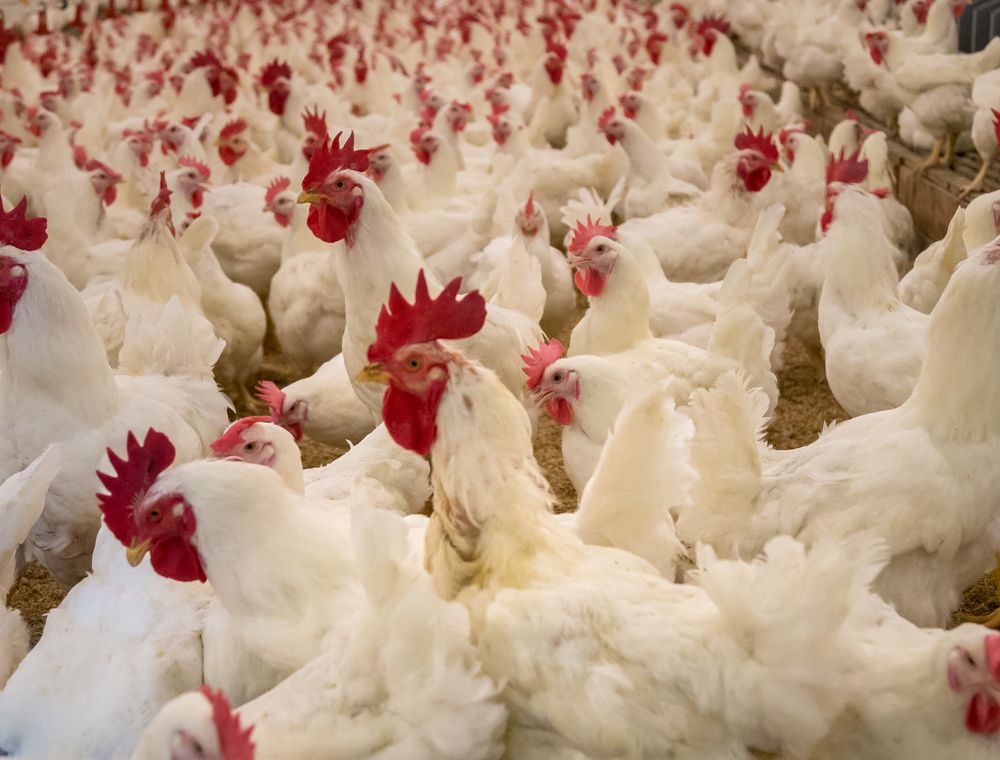
Short answer: The Jersey Giant is a large, slow-growing American dual-purpose breed, with cockerels that can pass five kilograms under good management. It suits large roasters, heritage flocks and careful breeding, but it is a poor fit for fast meat income or commercial egg production. Its feed bill, leg strength and heat tolerance decide whether it pays. Plan for patience, space and feed before you order.
Key takeaways
- Jersey Giants are slow to mature, and cockerels often need close to a year to reach full size, so the feed bill runs for a long time.
- Feed conversion is poor compared with a broiler, so the breed pays only where size is the point and the market will pay for it.
- Heavy legs make lameness and foot problems the main risk, so keep litter dry and deep, perches low and crowding down.
- Size adds heat, so give the birds space, shade, airflow and cool water, and avoid moving them in the afternoon heat.
- We do not list Jersey Giant chicks on the standard price sheet, so get availability and a written price from us before you plan a hatch.
Put a Jersey Giant beside a broiler and the name stops being a joke
Stand a mature Jersey Giant cockerel next to a broiler in the same yard and the name stops sounding like marketing. The broiler looks like a small, compact meal. The Jersey looks like a different animal with the same feathers. That size is the whole reason people keep the breed, and it is also the reason it does not fit every farm.
At the hatchery we are asked about Jersey Giants less often than about Kuroilers or Sasso birds, and when someone does ask, the conversation tends to go in one of two directions. Either the farmer wants a big bird for a special market, or they have seen a photograph online and want to know whether it will pay. This guide answers the second question honestly, so you can plan the first one properly.
Where it came from: a New Jersey bird built for size
Born in New Jersey in the late 1800s, the Jersey Giant came out of crosses between big dark breeds that American farmers valued for the table. The aim was a big, hardy, dual-purpose bird that could supply both meat and eggs to a farm family. The early birds were black, and the breed was recognised by the American Poultry Association. Later, white and blue varieties were developed as well.
Breeders were proud of the size, and the early Jersey Giants became known for very heavy cockerels. That reputation still holds. Under good management, mature cockerels can pass five kilograms, and hens are lighter but still large by the standards of most backyard breeds. Those figures depend heavily on feed, space and time, so treat them as the picture of a well-kept flock rather than a promise.
The breed is not a modern commercial bird. It was built before the era of fast-growing broilers, when a farmer was willing to wait a long time for a large carcass. That history explains almost everything about how the Jersey Giant behaves on a farm today, including its appetite, its pace of growth and its leg strength.
What the bird looks like, and what the colours mean
A Jersey Giant has a broad, deep body, a single comb that is small in proportion to the head, and a stance that looks heavy and upright. The legs are strong, thick and set well apart. The tail is carried in a fairly low arc, and the wings are held close to the body. A healthy adult should look solid rather than fat, with a firm breast and an alert eye.
The colour choices have consequences. Black is the traditional colour and the one most people picture. White birds look clean and striking in a yard, but white-feathered birds show dirt faster, so the house and the litter must be kept dry. Blue is less common, and blue birds do not breed true when mated with each other, so a blue flock needs a planned breeding ratio if you want to keep the colour consistent.

Whichever colour you choose, watch the size of the head and the structure of the legs in young birds. A chick that grows fast in the head and body but slowly in the legs will struggle later, and that imbalance is one of the first signs of trouble with a heavy breed.
Growth: long, slow and expensive per kilogram
Jersey Giants take a long time to grow. Chicks gain weight steadily, but the frame keeps developing for many months, and cockerels often need close to a year before they reach their full size. Hens reach laying age later than light layers and then lay at a modest rate. A farmer who buys this breed should plan to feed it for a long time before there is anything to sell or eat.
Feed conversion is the real cost. A heavy bird spends much of its feed on maintenance, keeping a large body warm and moving, and only a smaller share on new growth. That makes each kilogram of gain more expensive than it is in a broiler. The table below sets the Jersey Giant against two other options we are often compared with, using the general pattern of each type rather than a single guaranteed figure.
| Trait | Jersey Giant | Ross 308 broiler | Kuroiler (dual-purpose) |
|---|---|---|---|
| Time to market weight | Many months, often close to a year for full size | Around five to six weeks, a short fixed cycle | Several months, a middle path |
| Mature weight | Cockerels can exceed five kilograms | Chosen for a meat carcass in a short cycle | Moderate, lighter than a Jersey |
| Feed efficiency | Poor, much feed goes to maintenance | Very good, bred for the job | Moderate |
| Egg output | Modest brown eggs, some broody hens | Not kept for eggs | Fair layer for a dual-purpose bird |
| Best use | Large roasters, heritage meat, breeding | Fast, predictable meat income | Family flock with eggs and meat |
A Ross 308 chick starts from GH₵20 in our standard price list, and a Kuroiler chick starts from GH₵11. We do not list Jersey Giant chicks on that sheet, so any comparison of price per bird has to wait until you have a quote for the breed. What the table shows is the pattern: the Jersey Giant asks for patience and feed, and pays back in size rather than speed.
The frame problem: legs, weight and lameness
The biggest practical problem with a heavy breed is the legs. The bones, joints and tendons carry a large body that is still growing, and any bird that becomes lame or stops walking to feed will lose weight fast. Lameness is the most common reason a Jersey Giant flock falls behind, and it is usually caused by a combination of weight, floor, crowding and nutrition rather than a single cause.
Look at the floor first. Hard, uneven or wet floors are harder on heavy birds, and a bird that slips or sits on damp litter will develop sores on the hocks and the feet. Keep the litter dry and deep enough to cushion the bird, and replace the wettest patches before they become a problem. Our guide to broiler leg problems and lameness explains the signs in more detail, and many of the same principles apply to a heavy Jersey.
Next, look at the perches and ramps. A heavy bird should not need to climb. Keep perches low and wide, and give the birds ramps to reach feed and water if the house is raised. Watch for birds that sit down more than they stand, because a bird that avoids movement is often in pain.
Finally, look at the feet. Bumblefoot, which is an infection of the foot pad, is more common in heavy birds that jump down from height or live on hard surfaces. A swollen, hot foot needs attention early. Our page on bumblefoot in chickens explains the signs and the first steps, and your vet should be the one to decide on treatment.
- Dry, deep litter that cushions the feet and hocks.
- Low, wide perches and ramps rather than steps.
- Enough space that birds can move away from crowding at feeders.
- Weekly checks of feet, hocks and gait.
Heat and the big body
A large body makes heat, and a large body in a hot country has to get rid of it. The Jersey Giant does not have the dense feathering of a Cochin, so it sheds heat a little better, but its size still makes heat stress a real risk in the Ghanaian rainy season. The heat builds up fast in a crowded house, and a heavy bird that is hot will drink more, eat less and stand still.
The answer is space and airflow. Give the birds room, keep the house high-sided and well ventilated, and provide shade over the run. Put water in at least two places, and check it twice a day. Feed in the cooler parts of the day, and move feed troughs away from the hottest corner of the house. Do not move heavy birds in the afternoon heat, because catching and loading a large bird in the sun is a common route to collapse.
Our guide to climate-smart poultry housing sets out the ventilation options, and the same principles apply here with more emphasis on space and shade.
Housing for a big bird
Build the house for the bird you have, not for a lighter breed that you wish you had. A Jersey Giant needs more floor space than a broiler or a light layer, and it needs room to turn, step over others and get to the feeder without a fight. Crowding causes more trouble in heavy birds than in light ones, because the weakest bird cannot always get out of the way.
Make the feeders and drinkers wide enough that the birds do not have to crowd each other. Put several feeders in place rather than one long trough at one end. Nest boxes should be large and low, and placed where a broody hen can settle without being disturbed. Perches should be low and sturdy. A raised perch that a heavy hen has to jump to is a source of injury, not a comfort.
Plan the layout before you build. Our article on broiler stocking density in Ghana explains the logic behind space per bird, and a Jersey Giant flock will need a more generous version of the same thinking.
Feeding for size: the cost you must budget for
A Jersey Giant eats a great deal, and the feed bill is the single largest cost in the whole project. Plan for it before you buy a single chick. Do the sum in your own book: multiply the kilograms of feed a bird eats over its life by the price per kilogram you pay, then add the cost of housing, labour, medicines and transport. Then compare the total with the weight you will sell and the price you will get. If the result is thin, the breed is not the right choice for that market.
Feed by stage. Young birds need a starter or grower with enough protein to build a frame. Once the birds are well grown, a lower-protein finishing feed can reduce waste while the birds fill out. For breeding stock, the feed plan changes again. Heavy breeders can become overweight, which lowers fertility, so many keepers restrict feed in the breeding season and watch the body condition closely.
- Start with a proven grower feed, and change one ingredient at a time if you mix your own.
- Keep grit and clean water available at all times.
- Weigh a sample of birds every two weeks and adjust the feed to the growth you see.
- Limit scraps and whole grain, because they can dilute the balanced ration.
- For breeders, check body condition monthly and reduce feed if birds become heavy.
Our guide to poultry feed formulation basics covers the nutrients and why they matter, and our note on cheap poultry feed alternatives looks at ingredients that some keepers use to reduce the bill.
Need chicks for your next batch?
Send breed, number and town. We reply with price, hatch date and delivery cost in writing.
Eggs, broodiness and the modest side of the breed
Jersey Giant hens lay brown eggs, and they lay at a modest rate. Do not buy the breed for egg production alone. A hen that lays well for a few months, then slows and sits, is normal for many of the heavier dual-purpose breeds. Some hens go broody, and a broody Jersey will sit on a clutch and raise chicks with reasonable care. Give her a quiet nest and keep other birds away while she sits.
Egg records are useful even for a modest layer. Count the eggs daily, note the shell quality, and record the days without eggs. A drop in output that does not match the season, the feed or the age of the flock is worth a call to the vet, because it can be an early sign of disease or a feed problem.
If your aim is a balanced farm with some eggs and some meat, the Jersey Giant can fit in, but a lighter dual-purpose breed may give you more eggs for the same space. Our guide to Australorp chickens in Ghana compares a large dual-purpose bird with a steadier laying pattern, and our breeds page lists the options we supply.
Breeding for size without breeding in problems
Keepers who want to build their own Jersey Giant flock should choose breeding birds for health and structure first, and size second. A large bird with weak legs or a poor gait is a bad breeder, however impressive it looks. Choose cockerels with a broad, straight back, firm legs and good feathering. Choose hens with a calm temperament, steady laying and a sound body.
Keep the flock lines apart. A small yard flock can drift into related birds in a few seasons, and the results show up as weaker legs, smaller chicks and poor hatchability. Bring in a new cockerel from a different source every few seasons, and keep records of parentage, hatch dates and any leg or health problems.
Use a sensible ratio. For a heavy breed, one cockerel to around six hens is a common starting point, and some keepers use fewer hens per cockerel when the birds are very large. Too many cockerels together will fight, and fighting birds hurt each other's feet and backs.

Our hatchery keeps the records that help a breeder choose, and our egg hatching service may suit a keeper who wants to hatch their own fertile eggs. Ask us about what is available before you plan a breeding season, because fertile egg supply depends on the flock.
Who should keep Jersey Giants, and who should not
The breed suits some plans and frustrates others. Use the table below to decide honestly before you commit.
| Your plan | Jersey Giant fit | Why |
|---|---|---|
| Fast meat income each quarter | Poor fit | Growth is too slow and feed cost too high for a short cycle |
| Large roasters for a special market | Good fit, with patience | Size is the point, if you can wait and feed well |
| Heritage flock for a homestead | Good fit | Calm nature, size and a long productive life |
| Breeding stock for a larger project | Good fit with records | Selection, ratio and records make a difference |
| Commercial egg production | Poor fit | Modest output compared with hybrid layers |
| Small house, hot site, little shade | Difficult | Size adds heat, and space is tight |
If the honest answer is that you want a faster meat bird, our broiler day-old chicks and Sasso day-old chicks pages describe the faster options we supply, and our Kuroiler and Noiler chicks page covers the dual-purpose birds that sit between the two.
Buying Jersey Giant chicks from us
Jersey Giant chicks are not on our standard starting price list, so we do not publish a price for them here. We would rather tell you honestly what we can source for your hatch than quote a number that might not match the birds we have. Message us on WhatsApp at +233 24 915 1503 with the variety you want, the number of chicks, the date you need them and your delivery town. We will reply with what is available and the price, confirmed in writing before payment.
Before you pay for any breed, check these points with us:
- The variety and the parent stock, including whether it is local or imported.
- The vaccines the chicks have received, and the batch record that comes with them.
- The count on arrival, and what happens to dead-on-arrival birds.
- The delivery cost to your town, which we confirm before payment.
- Whether the hatch date suits your house, so the chicks do not arrive before the brooder is ready.
Hatchery vaccinations cover Marek's, Newcastle, Gumboro, infectious bronchitis and coccidiosis. Each one is dated on the batch record, which you should keep. Count every chick on arrival. Any dead-on-arrival bird is replaced free in the next hatch if you send a photo the same day. Our delivery page and FAQ hold the detail. Once you have a quote, the order form is the next step, and our day-old chicks page covers the wider range.
Questions farmers ask
Are Jersey Giants a meat breed?
They are a dual-purpose breed that was built for both meat and eggs, and they are most useful as large roasters or heritage birds rather than as fast meat. Their size is their main attraction. The meat is good, but the time to reach a saleable size and the feed cost per kilogram make them a poor choice for quick returns.
How big do Jersey Giants get?
Under good management, mature cockerels can pass five kilograms, and hens are lighter but still large. Size depends heavily on feed, space, genetics and time. A bird that is kept crowded, short of feed or lame will not reach its potential, so treat any published weight as a picture of a well-kept flock rather than a promise.
How long before a Jersey Giant is ready to eat?
Expect many months. Cockerels often need close to a year to reach full size, and a bird killed early will be small and thin in the carcass. Plan the feed budget for the whole growing period, and weigh birds regularly so you know when the carcass will be worth the time and feed.
Can Jersey Giants cope with Ghana's heat?
They can, with the right housing. Their size makes heat a real risk in the rains, so give them space, shade over the run, good airflow and plenty of cool water. Avoid moving or catching birds in the afternoon heat, and watch for panting, drooping wings and reduced feed as early warnings.
Do Jersey Giant hens lay many eggs?
No, they lay brown eggs at a modest rate, and some hens go broody. They are not a commercial layer. If egg output is your main goal, a hybrid layer will give you far more eggs for the same space and feed. Keep Jersey Giants for size, character or a breeding plan rather than for a high egg count.
Why is my Jersey Giant limping?
Lameness in heavy birds is often caused by a mix of weight, hard or wet floors, crowding and feet problems such as bumblefoot. Check the litter, the perches, the feeders and the feet, and separate any bird that cannot walk to feed. Ask your vet to examine the bird, because the cause needs to be confirmed before treatment.
Do you sell Jersey Giant chicks?
We do not put Jersey Giant chicks on the standard price sheet, so availability depends on the hatch. Send the variety, quantity, date and delivery town to +233 24 915 1503 on WhatsApp, and we will reply with what we can source and the price in writing.


