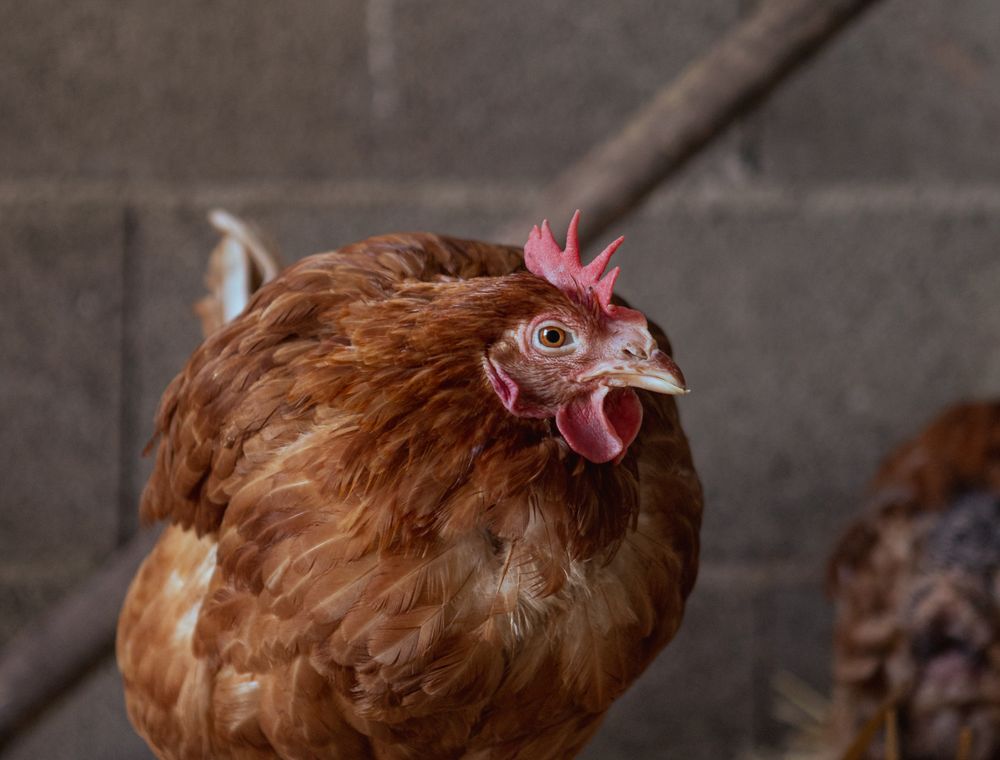
Short answer: The ISA Brown is a brown-egg layer bred in France for egg production, and it is one of the most widely kept brown birds in commercial flocks. The figure most often quoted for its first laying year is about 300 eggs per hen. What decides whether your flock gets there is less the breed and more how closely you watch the egg curve, the daily count and the first sign of a dip.
Key takeaways
- Expect lay to start around 18 to 19 weeks and climb to a peak in the late twenties of weeks, then ease off slowly.
- Work out lay as eggs collected divided by live hens, every day, and write it down.
- When lay drops, check the recent events first: disturbances, water, feed, then disease.
- Late in lay the eggs get bigger and the shells get weaker, so change the feed before the cracks show.
- Ask for the parent stock, vaccination record and hatch date before you pay for a box.
How many eggs will 200 hens really give you?
Most farmers who ask us about ISA Browns want one number: how many eggs will a hen give me in a year? It is a fair question, and the honest answer is that the number is only as good as the way you count. A hen that lays 300 eggs on paper but lays 250 in your shed is still a 250-egg hen for your planning.
This guide is about the egg curve. It sets out what a healthy ISA Brown flock looks like at each age, how to count so the numbers mean something, and what to do when the line bends the wrong way. The breed is the easy part. Reading the flock is the skill.
If you are still choosing between brown layers, our breed range shows what we hatch and import, and the Hy-Line Brown guide sets out the other popular brown option in the same detail.
Where the ISA Brown came from and what it was bred for
The ISA Brown was developed in France in 1978 by the Institut de Sélection Animale, and it was built for egg production in the battery hen systems of that period. The exact line-up of parent breeds is a closely guarded secret. What breeders do say is that it is a complex cross, with brown-egg ancestry and a calm temperament that suits a shed full of birds.
In practice that calm temperament is the first thing farmers notice. ISA Browns are easy to handle and tend to settle into a routine quickly. They are not a heavy bird. The adult hen is usually quoted at around 2 kilograms, which is lighter than many dual-purpose birds and a good deal lighter than a meat bird. That lightness is part of why they can lay so steadily on a moderate feed bill.
We do not keep ISA Browns on our standard price list. If you want them, ask us on WhatsApp at +233 24 915 1503 before you plan the flock around them, and we will tell you what we can supply and when. The rest of this guide applies to any ISA Brown chick you bring into your shed, from whichever source.
The egg curve, age by age
A layer flock does not lay at one steady rate. It climbs, peaks, and then declines slowly. The table below shows the shape you should expect from a well-managed ISA Brown flock. Treat the ages as a guide. Your own birds will move a week or two earlier or later depending on weight, season and health.
| Age (weeks) | What the flock is doing | What you should be doing |
|---|---|---|
| 0 to 16 | Rearing. No eggs. Frame and weight build. | Weigh a sample weekly and bring the flock to the breeder curve. |
| 17 to 18 | Pre-lay. Feed changes and the first hens crouch and test the nests. | Move to layer feed over about a week and start a daily egg count. |
| 18 to 19 | First eggs. Lay climbs fast in the first few weeks. | Record the date of the first egg and the first ten days of lay. |
| About 25 to 30 | Peak. Lay is at its highest for the flock. | Hold feed and water steady. Watch shell quality and any sudden fall. |
| 30 to 55 | Plateau. Lay eases very slowly. | Keep the routine the same. This is where most of your eggs are made. |
| 55 to 70 | Gradual decline. Eggs get bigger and shells get thinner. | Adjust calcium and grit, and plan the feed budget against the falling count. |
| Beyond 70 | Late lay. Lower counts, larger eggs, more cracks. | Decide on culling and replacement against your cash flow and buyers. |
The shape matters more than any single number. A flock that climbs slowly to a lower peak will usually finish with fewer eggs, even if it looks fine in week 22. Compare your curve to the shape, and you will see trouble before the total shows it.
Counting lay the right way: the hen-day formula
The number you need every day is the hen-day percentage. It is simple to work out, and it is the figure that shows whether the flock is doing its job. Eggs collected divided by live hens, times 100.
Take a house of 200 ISA Browns. On a given morning you collect 180 eggs and you have 200 hens alive. That is 180 divided by 200, which is 0.9, times 100, so 90 per cent. The next morning you collect 176 eggs from 199 hens, which works out at about 88.4 per cent. Two mornings of numbers do not prove anything, but a week of them shows you the trend.
Two details trip farmers up. First, count the live hens each day, because a loss of two birds changes the percentage more than most people think. Second, count the eggs before you clean them and after you have removed the cracked ones. Keep the cracked eggs on a separate line, so you can see shell quality as its own number.
- Count eggs at the same time every morning, before the hens have a chance to eat them.
- Record live hens, eggs collected, cracked eggs and floor eggs on one line per day.
- Work out the hen-day percentage at the end of the week and plot it on the curve above.
- Keep a note of anything that happened: heat, a loud night, a feed change, a bird found dead.
Reading a dip: check the causes in order
Every flock dips. A fall of two or three points in a week is often nothing more than a hot spell, a bird that has gone broody, or a few eggs laid on the floor and missed. The question is whether the fall is one bad day or a line that keeps bending. When it keeps bending, work through the causes in the order below. The cheap and common ones come first.
- Disturbance. A dog in the house, a night of thunder, a new person on the shift, or a change to the routine. These cause a sharp one-day drop that recovers within a few days.
- Water. A drinker that has blocked, leaked or run dry. Check the flow and the line before anything else, because a hen without water stops laying within hours.
- Feed. A bag that has gone off, a change of brand, or feed that has been left out in the sun. Smell the feed and check the trough.
- Heat. A hen in a hot house eats less and lays less. The pattern is a dip that follows the afternoon temperature.
- Light. Shorter or irregular light, especially when the power has been off. Day length affects laying in brown birds just as it does in whites.
- Disease. A drop with other signs such as lethargy, watery droppings, coughing or sudden deaths. This is a call to your vet, not a cause to guess at treatment.
Work through the list for a few days and write down what you find. A dip that does not match any event is the one to take to your vet. Ask them to look at the flock, not only the eggs, because a drop in lay is often the first and only sign of a problem that is spreading.
Managing the peak so it lasts
The peak is short. A flock at 95 per cent for a few weeks is a good flock, and the job is to hold it there for as long as the curve allows. The main levers are feed, water and a steady routine. Keep the layer feed at the same quality and do not change brands during the peak unless you have to.
Calcium needs watching from the start of lay, not only in the late months. The hen builds shell overnight, so the calcium she eats in the afternoon matters for the eggs she lays the next morning. Give calcium in a separate container so the hens can take it when they need it, and do not rely on the mash alone. Our layer feeding guide goes through the phase feeds and the calcium amounts in more detail.
Water is the cheapest lever on the farm. Check that every hen has access to a drinker within a few steps of the nest area. Hens that have to walk a long way to drink lay less and drink later in the day, when the house is hottest.
Keep the light steady. Most farmers already know to avoid sudden changes, but the common mistake is letting the lights go off during a power cut and coming back to a flock that has lost half its day. Plan for the power, and read our notes on lighting programmes for layers before the next dry season.
Feather pecking: the brown flock's quiet problem
Brown birds are calm, but calm birds are not immune to feather pecking. A bird that starts pecking feathers will often pull the feathers from another bird's back or tail, and the wounds can turn into a serious problem. The bird that is pecked loses feathers, eats less while she recovers, and lays less while she is stressed.
Feather pecking usually has a cause you can change. Protein that is too low in the feed, too many birds in one space, dark or overcrowded corners, and boredom are the usual suspects. Check the feed label first. Then look at the house. If the birds are bunched in one corner, spread the feeders and drinkers out. If a single bird is always the target, separate her for a few days so the flock settles.
Look at the litter too. Dry, clean litter gives the birds something to scratch and peck that is not each other. Wet, dirty litter is a magnet for trouble. Our rule is simple: if the litter is wet near the drinkers, fix the drinker before you look at anything else.
Need chicks for your next batch?
Send breed, number and town. We reply with price, hatch date and delivery cost in writing.
Late lay: bigger eggs, weaker shells
As the flock ages, the eggs get larger. That sounds like good news until you see the cracks. The shell does not keep pace with the egg, and a larger egg with a thinner shell breaks in the nest, on the floor or in the crate. A flock in late lay that looks fine on the count can be losing a fifth of its eggs to breakage.
The fix starts with the feed. Late-lay hens need more calcium and a steady supply of grit. Give calcium in a separate container, check it is clean and dry, and make sure the hens have free access to it throughout the day. If you see cracks rising, increase the calcium before you change anything else.
Handling matters more at this stage. Old hens have thinner shells and less strength in the legs, so they are more likely to fall off a perch or step on an egg. Keep the nests low and the path to them clear, and collect the eggs at least twice a day. An egg left in the nest for six hours in the heat is an egg you will not sell.
Late lay is also when you start to think about the flock's future. Do the sums on the falling count against the feed bill, and decide whether to keep, sell or replace. Our guide on how to start egg farming in Ghana covers the budget side of that decision in more detail.
A worked example for a 300-hen flock
Here is a plan for a flock of 300 ISA Browns in their peak year. The numbers are a planning example, not a forecast. Replace them with your own feed bags, your own lay rate and your own egg price.
Assume the flock averages 88 per cent lay across a month, which is a realistic target for a good shed. That is 264 eggs a day. Over 30 days you collect 7,920 eggs, which is 264 crates of 30. Our list price for table eggs is GH₵50 a crate of 30, so the gross from that month is GH₵13,200 at the list price.
On the cost side, assume each hen eats about 110 grams a day. That is 33 kilograms a day for the flock, or about 990 kilograms in the month. At 50 kilograms a bag, you are buying about 20 bags. Put your bag price against that count to get the month's feed bill. Everything else, such as labour, water, lights, medicines and transport, comes out of what is left.
| Line | Monthly figure | Notes |
|---|---|---|
| Average lay | 88% | Planning figure for a good shed |
| Eggs collected | 7,920 | 264 a day over 30 days |
| Crates of 30 | 264 | Eggs divided by 30 |
| Gross at GH₵50 a crate | GH₵13,200 | Our list price for table eggs, used as a benchmark |
| Feed use | About 990 kg | 110 g a hen a day, assumed |
| Feed bags | About 20 of 50 kg | Multiply by your bag price |
Notice what the table does. Lay rate and feed bags move the answer more than anything else. If the lay falls to 80 per cent for a month, the crates drop by about a tenth, and the feed bill stays almost the same, because the hens still eat.
Before you pay for a box of ISA Browns
ISA Brown chicks are not on our standard price list, so the first step is a message. Send us the number of birds and the week they need to arrive, and we will come back with what we can source. Our layer chick page shows the layer options we carry at standard prices.
Whoever supplies the birds, ask these questions before you pay: what the parent stock is, which vaccinations were given and when, what the hatch date is, and whether you will receive a batch record. We send the batch record with our chicks, listing the vaccines given at the hatchery, and you should expect the same from anyone you buy from. Count the chicks on arrival and photograph the box. Dead-on-arrival birds need to be reported the same day.
Chicks are sold in boxes of 50, with one box as the minimum order. Prices are written down before payment, and mobile money, bank transfer and cash are all accepted. Delivery goes to all 16 regions and the cost is confirmed before payment. You can also collect at the farm. You can place your order here once you have the price in writing.
A checklist for the first laying year
Keep this list beside the record book. Most of it takes a few minutes a day, and it is the difference between a flock you can plan around and one you can only hope for.
- Note the date of the first egg and the first ten days of lay.
- Count eggs and live hens every morning, and work out the hen-day percentage weekly.
- Plot the weekly figure on the egg curve, and mark any day you had a disturbance.
- Check the drinkers twice a day, especially in the hot months.
- Check the feed bags for smell and clumping, and store them off the floor.
- Give calcium in a separate container and keep it clean and dry.
- Look for feather pecking and wet litter around the drinkers each week.
- Call your vet if the curve drops for more than two days without a clear cause.
- Review the flock's cash flow at the peak and again when lay starts to fall.
For the wider picture of running a layer enterprise, our guide on why layers eat their eggs covers one of the most common problems that sits between the nest and the crate.
Questions farmers ask
How many eggs does an ISA Brown lay in her first year?
The figure most often quoted for the ISA Brown is about 300 eggs in the first laying year. That is a breeder-based planning figure, not a guarantee. Farm results depend on heat, feed, water, disturbance and the health of the flock. Count your own eggs from the first day of lay and compare your curve against the expected shape each month.
When does an ISA Brown start to lay?
Most ISA Brown flocks start laying around 18 to 19 weeks. The timing depends on the weight of the pullets at point of lay, the feed they have had during rearing and the light they have been on. Record the date of the first egg in your book, because that date is the start of your planning year.
How do I work out my flock's laying percentage?
Divide the number of eggs collected in a day by the number of live hens that day, then multiply by 100. For example, 180 eggs from 200 live hens is 90 per cent. Do this every morning and average it across the week. The weekly figure is far more useful than any single day, because one hot afternoon or one disturbance can move the daily number.
Why has my ISA Brown flock dropped in lay?
Start with the recent events: a disturbance, a water problem, a change or problem with the feed, a spell of heat or a power cut that affected the lights. If none of those fit, look for other signs of disease and call your vet. A drop that comes with lethargy, watery droppings, coughing or deaths needs prompt professional advice, not a guess.
What is the cheapest way to lift lay in a brown flock?
Water and routine. Check that drinkers are flowing and close to the nests, keep feeding times the same each day and keep the house quiet. These cost little and affect lay quickly. Feed quality and calcium come next, and both matter more in the late months than most farmers think.
Are ISA Browns sold through Halaal Farms?
ISA Browns are not on our standard price list, so there is no listed price to quote. Write to us on WhatsApp at +233 24 915 1503 for a quote, and expect every price to be confirmed in writing before any money changes hands.
How do I know when to replace an older flock?
Replace when the cost of keeping the flock, including feed and labour, exceeds what the eggs bring in at a realistic price and volume. Look at the curve, the cracked-egg rate and the cost of feed per dozen. A flock that is still laying well but producing many cracks may be worth keeping with better calcium; a flock that has fallen well below the expected curve for months may not be.


