
Short answer: Forced molting means stopping or cutting a layer flock's feed for days or weeks, so it sheds feathers and starts a second, usually weaker, cycle of eggs. In Ghana it rarely pays once feed per egg and welfare are counted, it hurts birds that are already in poor condition, and some buyers refuse eggs from a flock that was starved. Work out the numbers on your own farm, and plan replacements early.
Key takeaways
- Forced molting works by making birds lose condition, and that cost is paid before any eggs return.
- Feed does not fall when lay falls, so feed per egg is the number to watch.
- A molt on a thin or sick flock is a welfare problem before it is a production problem.
- On the example here, keeping the hens beats replacing them only while average lay stays above about half.
- Plan replacements early so you are never choosing between a starved flock and an empty house.
What forced molting does to a flock, in plain terms
Forced molting means taking the birds off their normal feed for several days, or feeding them a much poorer diet for weeks, so that they shed their feathers, stop laying and then start again on a second, usually smaller, cycle of eggs. Farms use it to squeeze another year out of a flock that would otherwise be sold or replaced.
The argument for it is simple. A point-of-lay replacement costs money and time, and the old flock already has its house, its routine and its buyers. The argument against it is also simple. The birds pay the price, and the numbers rarely come out in the farm's favour once the feed, the lost weeks and the losses are counted.
The natural moult, which happens to every hen in its own time, is covered in our guide to molting in layers. This article is about the decision to force one, which is a different question entirely.
We will say our view plainly. We would not starve a flock to make it lay again, and we would not advise a farm that buys its chicks from us to plan a forced molt. The rest of this article explains why, using numbers you can check on your own farm.
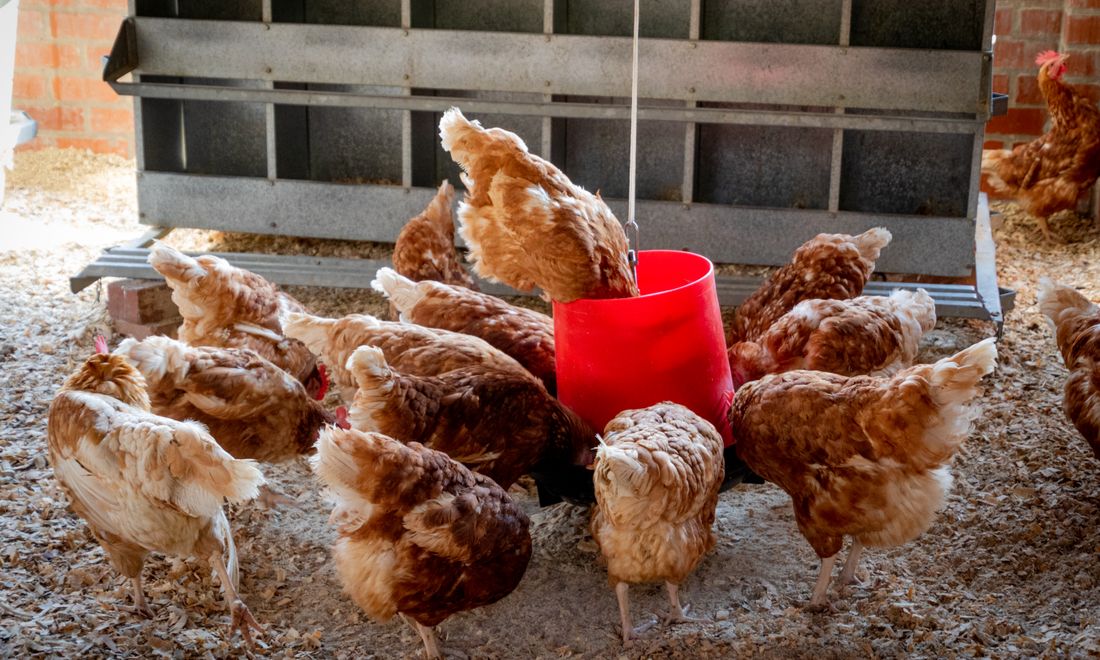
If you are weighing the decision, start with the flock you already have, not with the one you might buy. Our breeds page covers the laying strains, and the notes on each one help you judge how a flock is likely to hold its lay.
The methods people use, and why most of them are a bad idea
People describe forced molting in different ways, and the methods differ in how hard they hit the birds. The table lists the common approaches. Do not take any of them on the strength of a neighbour's story.
| Method | What happens to the birds | Main risk |
|---|---|---|
| Full feed withdrawal for several days | Birds lose weight quickly, lay stops, and weaker birds stop drinking | Deaths, severe weight loss and birds too weak to restart lay |
| A long period on a low-nutrient diet | Intake is cut and the bird draws on her body reserves over weeks | Poor condition, slow recovery and a second cycle that never reaches a good peak |
| Reduced feed combined with light changes | Lay stops over a shorter period, with the programme set by feed and light together | Hard to manage on Ghana's natural day length and power supply, and stressful for the flock |
Notice the common thread. Each method works by making the birds lose condition, and the lay comes back only once the birds have been pushed hard. That is the cost you pay before the eggs return, and it is paid by the birds, not by the farm's accounts.
Some farms use formulated low-energy or high-fibre moult diets rather than starving birds. These are a feed programme decision, not a shortcut. If you consider one, speak to your feed supplier and your vet before you change a flock's diet, and keep water and body condition under constant watch.
Welfare, and the buyer who asks how the eggs were made
Start with the birds. A bird that is fasted for days is a bird in distress, and the distress is visible to anyone who looks. Expect sunken eyes, a dull comb, weight loss you can feel along the breastbone, and birds that stand apart from the rest. Those are welfare signs before they are production signs, and they do not improve because the calendar says the molt is on schedule.
Then the buyer. Some supermarkets, hotels and welfare certification schemes will not accept eggs from a flock that was starved to molt, and some will ask. A shop that buys your eggs once may never ask. A shop that buys every week will eventually ask, and a shop that finds out after months of supply can drop you without warning. The loss of that account usually outlasts the molt by a long way.
Then your own time. A farmer who has starved a flock tends to watch it closely for weeks, and the watching costs more than the feed you saved. Decide before you start whether you can live with the flock for the next two months, because the flock will not forget the decision faster than you will.
Body condition: the birds you cannot starve
Before you consider any molt, look at the flock. Pick up a sample of birds from different parts of the house and feel the breastbone. A bird in good condition has a covering of flesh on either side of a firm keel. A bird that feels like a knife edge is already thin, and she has no reserves to spend. A molt on thin birds is not a molt. It is a slow loss.
Weigh a sample if you can. Ten or twelve birds weighed at the same hour each week give you a trend that a glance cannot. Track the average, and also look at how far apart the weights are. A flock whose weights are widely spread already has a welfare problem, and a molt would make the gap worse. The birds at the bottom of the range are the ones that do not come back.
Do not forget the age of the flock. A hen at 72 weeks is not the same as one at 85 weeks, and the bones of older birds are weaker. Your vet should see the flock before any decision about withholding feed, and the vet's view on age and health should carry more weight than any figure in this article.
What the second cycle really gives back
After a molt the flock starts laying again, but it does not restart at the old peak. The second cycle usually comes back at a lower peak, and the lay falls away again over the following months. Eggs laid after a molt are often larger, which some markets like, but larger eggs do not make up for fewer of them.
Expect the first week or two after feed returns to show very little lay. Then the count climbs over several weeks rather than in one jump. A farm that plans for a quick return will be disappointed, and disappointed farms make rushed decisions, such as putting high-energy feed in too early or pushing the lights too hard. Our lay figures by age show what a healthy curve looks like, which makes a poor second cycle easier to spot.
Keep the expectation honest. Write down the lay rate you had before the molt and the rate you think you will reach after it. At the end of the year, compare the two. Most farms that do this find the second cycle is the weaker half of the year, and the notebook is what makes that visible.
Feed per egg and replacement: the sum that decides it
Feed is the big cost, and it does not fall when lay falls. A hen eats to keep her body going whether she lays 85 eggs in 100 days or 45. That is why feed per egg is the number to watch. The example below uses assumptions you should replace with your own: a laying hen eats 110 grams a day, layer feed costs 6 cedis a kilo, and rearing a replacement to point of lay costs 95 cedis in feed on top of the chick price.
The chick price is the starting point for a replacement. Our layer day-old chicks include Hy-Line Brown from 23 cedis each, confirmed at the order form. The replacement sum looks expensive at the start and cheaper at the end, because the birds earn their keep once they lay.
| Option for 100 hens over the next 52 weeks | Eggs | Feed bill (GH₵) | Chicks and rearing feed (GH₵) | Cash cost per egg (GH₵) |
|---|---|---|---|---|
| Keep the hens unmolted, averaging 62 per cent lay | 22,600 | 24,000 | None | 1.06 |
| Force a molt, then a second cycle averaging 45 per cent | 13,900 | 24,000 | None | 1.73 |
| Cull and replace with 18-week pullets, averaging 85 per cent once laying | 20,200 | 15,700 | 11,800 | 1.36 |
Read the table with the egg price in mind. The table egg price in this example is 50 cedis a crate of 30, about 1.67 cedis an egg before any discount. On these assumptions the molted flock produces eggs that cost more to make than they sell for. Keeping the hens and replacing them both come in under the price. The molt is the worst of the three, even though it looks like the cheapest decision on paper, because nothing is bought in cash and so nothing looks spent.
Keeping the hens wins only while the average lay stays above about half. Divide the feed bill of 24,000 cedis by the replacement cost of 1.36 cedis an egg and you get roughly 17,600 eggs, which means the unmolted hens must average around 48 to 49 per cent over the year before keeping them beats replacing them. A molt pulls the flock below that line for the whole second cycle.
Change the assumptions and the table will move. A cheaper feed price helps keeping and molting equally. A higher chick price favours keeping. The one number to watch is feed per egg, and the question to ask is whether the flock will average above half its potential over the year you are planning.
When a molt could make sense, and when it never does
A molt is not always the wrong answer. It can make sense when all of these are true: the flock is in good body condition and healthy, you have good records of lay and feed, the house and water are sound, your buyers are not asking how the eggs were made, and replacement pullets cannot arrive in time. Even then the case rests on the numbers, not on hope.
- Body condition is good across the flock, and the weights sit close together
- The flock has no active disease, and your vet is involved in the decision
- Feed and water are reliable through the whole rest period, including power cuts
- Your records show the lay curve and feed use for at least the past six months
- Replacement birds cannot reach the house for several months
A molt never makes sense for a flock that is already thin, sick, or losing lay to heat or disease. In those cases you are asking a weak flock to pay for a fault that is not its own, and you may lose birds you could have saved.
Timing around the heat, the harmattan and the rains
Ghana offers three poor windows for any kind of withholding. In the hot months birds already struggle to eat and drink enough, and a molt on top of heat stress is a fast route to losses. In the harmattan the cold nights and the dust make a thin flock more vulnerable, and the birds need every calorie they can get. In the height of the rains, damp litter and high disease pressure make a weakened flock easy prey.
If the decision is still open, the least bad window is the cool, dry part of the year, with a flock in good condition and a stable power supply. Even then, plan it with your vet, and set a stop point before you start. Write down the weight and lay numbers that would make you end the programme early, and keep to them when the birds are looking their worst.
Need chicks for your next batch?
Send breed, number and town. We reply with price, hatch date and delivery cost in writing.
What to do instead of starving the flock
Most of what a molt promises can be had without it. A flock that is past its best is usually suffering from something you can fix, or from a plan that was never made. Look at these first.
- Cull the slow layers and the birds with poor shells, so the rest of the flock lays at a higher average
- Check water flow and drinker height, because a short water supply cuts lay faster than almost anything else
- Match the feed to the phase of lay, and keep calcium steady for the older birds, as set out in our layer feeding guide
- Keep the light steady, rather than changing it at the end of the year, as our lighting guide explains
- Plan replacements early, so you are not forced to choose between a molt and an empty house
The culling and the planning matter most. A farm that starts planning its replacements at 60 weeks has more choices at 72 weeks than a farm that waits to see what the flock does. Our culling guide sets out the signs that a hen has finished, and our spent layers guide covers what to do with birds at the end of their laying life.
If you still go ahead, watch these numbers every day
If you decide to go ahead with any programme that cuts feed, your vet should be involved from the start, and the numbers below should be recorded every day. The points at which to stop are for planning, not a substitute for veterinary advice.
| Measure | How often | Stop, or call the vet, if |
|---|---|---|
| Daily deaths | Every morning | The count rises above the normal daily figure, or birds are found dead with visible weight loss |
| Body weight sample | Twice a week, same hour | The sample average falls faster than planned, or the spread of weights widens |
| Water intake | Check the drinkers at each visit | Drinkers run dry, or birds crowd them at every visit |
| Droppings and posture | Every visit | Birds stand apart, hunch, or the droppings change |
| Egg count and shell quality | Daily | Shells turn soft or rough, or the count falls below the plan |
Restarting feed: slowly, and with a plan
When the rest period ends, do not put the flock straight back on full feed. The gut and the body need time to recover. Restart with a smaller ration and step up over several days, watching the birds at each step. Your feed supplier can advise on the stepping plan for the feed you use.
Calcium needs attention at the restart. Birds that have been off feed, and are then asked to lay again, need steady calcium for their shells. Our guide to calcium and oyster shell covers how to provide it without overloading the birds.
Expect a slow return of lay and a flock that looks tired for several weeks. If the birds still look thin after the restart period, the molt has cost more than it was worth. That is the moment to think about culling and replacement, rather than planning another round.
Mistakes that turn a molt into a loss
- Starting with a flock that is already thin. A molt on weak birds is a welfare problem and a production loss at the same time.
- Setting no stop point. Farms that do not decide in advance when to end a programme tend to carry it on past the point of harm.
- Restarting feed at full strength on the first day. The birds need steps, and a sudden return to full feed can upset their digestion.
- Counting only the eggs. The feed, the lost weeks, the deaths and the extra labour all belong on the same sheet.
- Ignoring the buyer. A shop that finds out about a starved flock after months of supply will stop buying, and that loss outlasts the molt.
Decision checklist before you withhold a single meal
- Body condition checked on a sample of birds from across the house.
- Weights recorded for at least a month before the decision.
- Feed per egg calculated with your own feed price and your own lay rate.
- Replacement cost and the weeks to first egg written beside it.
- Vet consulted about the flock's age, its health and the planned programme.
- Buyers asked whether they accept eggs from a molted flock.
- Stop point set in writing, with the numbers that would end the programme.
- Water, feed and power backup confirmed for the whole rest period.
Questions farmers ask
Is forced molting allowed in Ghana?
The rules on livestock welfare can change, so check with your district veterinary office and the livestock authorities before you decide. Ask your buyers whether they accept eggs from a molted flock as well. Whatever the rules say, the welfare of the birds and the trust of your buyers remain your responsibility, and both can be lost even where a practice is not banned.
How long does a forced molt take?
Lay stops for weeks, and the full cycle from stopping feed to the second peak can take several months. The exact timing depends on the flock's condition, the method used and how the birds respond. Plan for a long stretch with no eggs, and for the second cycle to come back slowly and at a lower peak than the first.
Can I molt the flock by lowering the light instead of stopping feed?
Light changes are not a simple switch. In Ghana the natural day length barely changes through the year, so you would be making a large change to the house's lighting for a small biological effect. Changing light also stresses the flock. Talk to your vet and your feed supplier before you change any lighting programme, and check the lighting guide first.
Are eggs from a molted hen safe to eat?
Eggs from a healthy hen in good condition are fine, so the main issue is welfare, not the egg itself. A bird starved to force a molt is under stress, and many buyers will not accept such eggs. If the flock has any illness, handle its eggs as you would handle eggs from a sick flock, and follow your vet's advice on what to do with them.
Is it cheaper to molt or to buy new pullets?
On the example in this article, replacing the flock costs less per egg than molting it, and keeping the hens is cheapest while their lay stays above about half. The answer depends on your feed price, your chick price and how the flock is laying now. Work out feed per egg with your own numbers before you decide, and do not rely on the example.
What do I do with the hens if they do not come back into lay after a molt?
Set a culling date before you start the programme. Hens that do not return to good lay should be sold or culled while they still have some value, rather than kept to eat feed. Our spent layers guide covers the options for birds at the end of their laying life, including what to do with the meat.
Does a molt change when I should order my next flock?
It does not change the chicks themselves, but it changes your timing. A molted flock will be replaced sooner or later, so plan the next batch of pullets early. Order before the molt starts, rather than in the middle of a rest period when there are no eggs and no cash coming in. Plan the house and the nests for the new birds at the same time.


