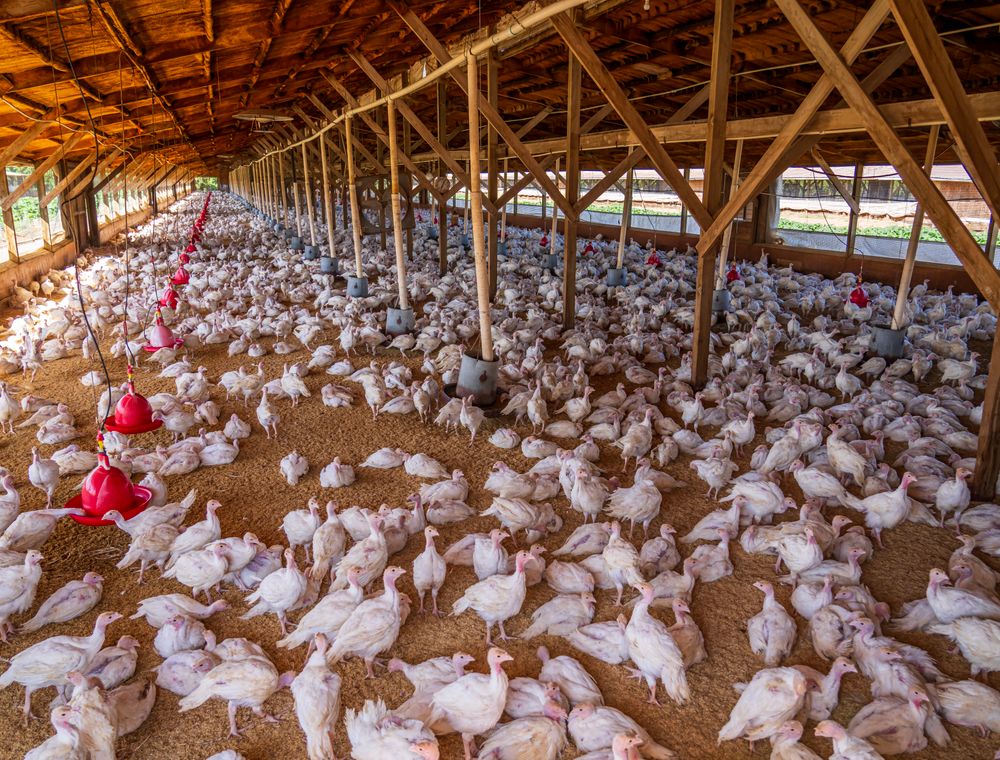
Short answer: Set curtains by what the birds are doing, not by the forecast or the calendar. Open the house in stages as the flock grows, keeping it tight for chicks and widening it progressively, with the windward side protected and the leeward side open for air. In a storm, close the side the rain is driving through, then check the litter and feed once it passes.
Key takeaways
- Read the birds first: panting, piling and spreading each point to a different curtain fix.
- Open the house in stages as the flock grows, not on a fixed date.
- Tie curtain bottoms down at intervals, because loose edges wear the fixings slack in a week of gusts.
- In a storm, close the windward side at once and reopen it when the rain eases.
- Night settings matter most in the cold weeks, and you should never close every opening.
- Log each setting beside what the birds were doing, so you can trace the cause of a problem.
Read the birds before you touch the rope
Walk into an open-sided house at dawn and the birds will tell you whether last night's curtains were set right. Heat-stressed birds stand apart with their wings held out and their beaks open. Cold birds pile into corners and huddle under the feeders. Birds bunched along one wall are usually sitting in a draught, and birds spread evenly across the floor are comfortable. You learn to read these patterns in a few weeks, and the curtain setting follows from what you see.
| What the birds are doing | What it usually means | First curtain action |
|---|---|---|
| Panting, wings held out, crowding round the drinkers | Too hot, and the air is not moving at bird height | Open the leeward side fully and check the windward inlet is clear |
| Piling into one corner or along one wall | A draught on that side, or cold | Lower the curtain on the draught side and open the far side a little |
| Spread evenly, eating and walking about | Comfortable | Hold the setting and check again at noon |
| Huddled under the feeders, quiet | Cold, or damp air trapped at floor level | Close the night side to the set gap and check the litter |
| Fighting over the middle of the house | Crowding or feeder competition, not always temperature | Check density and feeder space before you touch the curtains |
Open the house week by week, not on the calendar
A curtain setting that suits a three-week-old flock will chill a one-week-old flock. Open the house in stages, and let the birds decide when you move on. Move to the next phase only when the birds are settled in the current one. A calendar date tells you little when a cold spell arrives in week three.
- First week: keep the house mostly closed, with small controlled gaps. The chicks need the heat, and the air should move only enough to clear moisture from the brooding area.
- Weeks two and three: open the leeward side a little more each day, and open the windward side a hand's width in calm weather. Check how the chicks spread at night before you go further.
- Middle weeks: open both sides fully by day, and set the night gap by temperature and wind rather than habit.
- Finishing weeks: the birds now make the most heat and moisture, so the daytime opening stays wide and the night curtains do the hardest work.
Our hot weather cooling guide covers the late-stage problem in more depth, since the finishing weeks are when heat stress tends to show up.

Why the windward side fails first
The windward side takes the force of the wind and the rain. It is where curtains tear, come off their hooks and slap against the wall at two in the morning. A curtain that hangs loose at the bottom will flap and wear its fixings slack in a single week of gusts. Tie the bottom edge down at intervals, not just at the corners, and check the ropes and pulleys before the rains arrive. The leeward curtain is usually the safer one, and it is also the side you want open for air.
A common mistake is to fix the windward curtain tight and then forget it. The wind changes direction through the season. A curtain that was sheltered in the harmattan can take a direct blow in the rains.
Choosing curtain material and hardware
Curtains come in woven polypropylene, tarpaulin, shade net and old feed sacks sewn together. Each has a job. Woven polypropylene is strong and lets some light through. Tarpaulin keeps out rain and wind but holds heat, so it needs an opening plan on hot days. Shade net is cheap and lets air through, but it does little against driving rain. Old sacks look like a saving on a windy site until they tear and rot under the sun.
- Choose material that will last a full batch under Ghana sun, not just the first month.
- Use rope and pulley systems that let one person adjust a whole side in a few minutes.
- Fit locking cleats, so the curtain stays where you put it and not where the wind leaves it.
- Keep a spare length of curtain and rope in the store for the storm you did not plan for.
When the storm hits: what to do in the first minutes
Storms come on fast in the rainy season, and the wind often swings round in the middle of one. Close the windward side at once, because that is the side the rain is driving through. Keep the leeward side open if the house is getting hot. If you have to close both sides, open them again as soon as the rain eases, since a shut house full of wet birds builds heat and gas within minutes.
When it passes, walk the house before the birds settle. Look for wet litter where the rain came in, for feed sacks and feeders soaked by the splash, and for chicks crushed into a corner. Move feeders away from any wet strip, and lift any curtain still whipping in the wind. Then write the storm in the log, because the next day's curtain setting will need a second look.
Night settings in the cold weeks
The coldest hours of a Ghana night often come just before dawn in the harmattan, and the night setting matters more than the day one. Close the windward side to the wind line and leave a small gap on the leeward side. Watch the chicks at the wall. If they huddle tight against the leeward wall, the gap is too big or the draught is hitting them directly. If they gather in one group under the brooder at the back, the house is holding its heat, and you can open a little more.

Do not close everything to chase warmth. A house sealed tight at night keeps the warm air in, and the moisture and gas come in with it, which is why the morning round sometimes finds wet litter and a sharp smell near the floor. The aim is a small, steady exchange of air, not a warm box.
A pattern we see when the rains settle in
Here is a pattern we see often once the rains set in. The farmer leaves the windward curtain rolled up at night, so the chicks can be checked without lifting anything in the dark. Rain comes in on a strong south-westerly wind, runs down the inside of the wall and soaks a strip of litter about a metre and a half wide. Over three nights the strip caked, the drinkers along that line began to leak, and the birds in the wet strip grew more slowly than their neighbours.
The correction is simple: lower the windward curtain before dusk and tie the bottom edge. The cost in this pattern was a batch that finished a few days late, with weights spread wider than they should have been. Nothing about the flock was wrong. The curtain was.
Layer houses: curtains and lights working together
In a layer house, curtains and lights are one system. Opening the curtains early on a dull morning can bring birds off the perches before the lights come on, and a sudden rush of cold air at first light can startle a flock that has been sleeping. Match the curtain opening to the lighting programme so the house goes from dark to dim to bright in steps, and the birds settle rather than scatter.
Our lighting programme guide sets out the day length and the step-up pattern, and the curtain only needs to follow it. Keep a fixed routine, and write any change in the log, so you can tell whether a dip in laying came from the air or from the light.
Need chicks for your next batch?
Send breed, number and town. We reply with price, hatch date and delivery cost in writing.
Common curtain mistakes
- Opening everything at once after a cold week because the house feels warm at noon.
- Leaving the windward curtain tied up overnight in the rains.
- Tying curtains with thin twine that rots and snaps in the first storm.
- Setting curtains by the calendar instead of by the birds.
- Closing every opening on a cool night and then wondering why the litter is wet.
The morning curtain round, step by step
- Before you open anything, walk the house quietly and count where the birds are. Note any huddling, panting or crowding.
- Check the windward curtain and its ties for slack, tears and loose fixings.
- Look at the litter along each wall for wet strips, and feel it with your hand.
- Adjust the leeward side first, then the windward side, a little at a time.
- At noon, walk the house again and look at the birds rather than at the thermometer.
- At dusk, set the night gap and confirm the windward side is secure before the wind rises.
A curtain log that shows what worked
A curtain log is short, and it saves arguments with yourself later. Write the setting and the bird behaviour side by side, every morning, at noon and at dusk. The rows below are examples to show the layout.
| Week | Time | Weather | Curtain setting | What the birds were doing |
|---|---|---|---|---|
| Week 2 | 06:30 | Still, cool | Windward one hand open, leeward two hands | Spread evenly, eating |
| Week 2 | 12:00 | Hot, no wind | Both sides fully open | Panting near the drinkers |
| Week 2 | 17:30 | Gusty, rain to the south | Windward closed, leeward half open | Settling, a few chicks in the corner |
| Week 3 | 06:30 | Cold, harmattan dust | Windward half open, leeward closed to two hands | Spread out, dust on the feeders |
Curtain checklist for the store wall
- Curtains tied at the bottom edge at intervals, with no slack on either side.
- Cleats or locks on every side, working and not worn through.
- Spare curtain length and rope in the store.
- Night gap set and written in the log before dusk.
- Windward side closed during driving rain, and reopened when it eases.
- Feeders and drinkers moved away from any wet strip after a storm.
If you are still choosing the house design, our ventilation guide and broiler house setup guide explain how the house is laid out for curtains. Ready to stock the house? Our broiler day-old chicks page covers the options, and you can place your order through the order form or on WhatsApp at +233 24 915 1503.
Questions farmers ask
What time should I open the curtains in the morning?
There is no fixed time. Open when the house has warmed enough for the birds to be active and before the heat builds in mid-morning, and let the birds set the timing. In the harmattan the morning is cold and dusty, so open later and more gently. In the hot months open earlier, because an iron-roofed house warms quickly once the sun is up.
Should the curtains stay closed at night in hot weather?
Not fully. Keep the leeward side open for air, and close the windward side only as far as the wind and rain demand. A house that stays hot at night holds that heat into the next day, and birds that cannot cool down eat less and grow more slowly. Our <a href="/blog/cooling-poultry-house-hot-weather-ghana/">cooling guide</a> covers the hot-night settings in more detail.
Are curtains enough, or do I need fans?
In an open-sided house, curtains do most of the ventilation work, and fans help on still, hot afternoons. Fans need power, and power cuts are common enough that you should not depend on them. Curtains work without electricity, so set them to suit the house first and add fans as support, not as a substitute.
How do I stop curtains flapping in the wind?
Tie the bottom edge down at intervals, fit a locking cleat on every side, and check the ties after each storm. Use strong rope rather than thin twine, which rots and snaps in the first heavy wind. A curtain that flaps is usually loose at the bottom, so start there rather than at the top.
What if the chicks crowd into one corner?
Read the cause before you change anything. Check for a draught on that side, the temperature at chick height, and whether there is enough feeder and drinker space for the flock. Our <a href="/blog/broiler-stocking-density-ghana/">stocking density guide</a> helps you check the density side. Adjust one thing, then check again in an hour. Corner crowding is a signal to look at the curtain, the heat source and the density together, not any one of them alone.
Do curtains affect feed intake?
Yes. Birds under heat stress eat less, and the drop shows up in weight gain before it shows up anywhere else. A house that is too hot at midday will cut the intake of the whole flock, so the noon setting matters as much as the dawn one. Our <a href="/blog/feeding-poultry-hot-weather-ghana/">hot weather feeding guide</a> explains how to adjust the feed around that.
What should I do when the rain arrives without warning?
Close the windward side first, keep the leeward side open for air unless the house is already cold, and move feeders and chicks away from any wet strip. Once the rain has passed, walk the house and check the litter and the curtains. Write the event in the log so the next setting is based on the real weather rather than the forecast.


