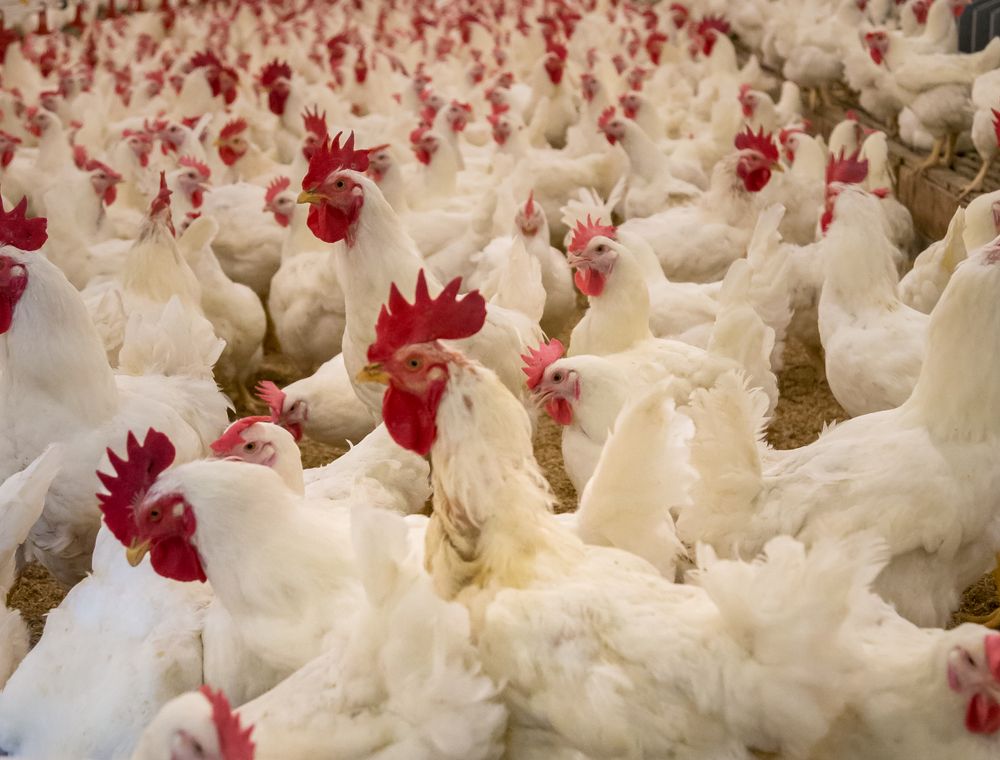
Short answer: Ammonia comes from wet litter and from droppings breaking down, and it climbs fastest in warm afternoons and in houses with leaking drinkers. Measure it at bird height, aim to stay under about 25 ppm, and fix the source first, which is nearly always water, spilt feed or wet litter, before you reach for fans or treatments. A simple weekly log shows the trend before the birds start to cough.
Key takeaways
- Your nose adapts within minutes, so measure the air instead of trusting the smell.
- Aim to keep ammonia at or under about 25 ppm at bird height.
- Fix the source, meaning water leaks, spilt feed and wet litter, before adding treatments or fans.
- Afternoon readings are usually the worst, so measure then as well as at dawn.
- Lime on wet litter makes the gas problem worse, not better.
Why the house smells fine at dawn and stings by four
Why does the house smell fine at seven in the morning and make your eyes water by four in the afternoon? Almost every farmer who has run a house for a few weeks asks that question, and the answer is mostly about temperature and wet litter.
Ammonia forms when the uric acid in droppings and urine breaks down, and the bacteria doing that work are most active in wet, warm litter. The bed cools overnight, so the morning round often finds the air calm. By mid-afternoon the sun has heated the roof, the birds have been eating and drinking all day, and the litter under the drinkers is soft and warm. The gas builds fastest then.
Your nose is a poor instrument for this. It stops reporting the smell within minutes of walking in, so the farmer who has been inside since six often reads the air as fine when it is not. The birds have no such luxury. They breathe that air all day and all night, and they cannot step outside for a better lungful.
Measure it at bird height, not at the door
You need a number, and the cheapest route to one is a detector tube or a hand-held ammonia meter. Both are sold through agro-dealers and suppliers who serve intensive farms. Follow the instructions for the exact tube or meter you buy, because each reads over a different time and reports on its own scale.
Take readings at bird height, roughly the level of a standing broiler's head, and not at the door where the air is freshest. Take them in at least three places: along the drinker line, in the middle of the house, and at the end furthest from the inlet. Repeat the round in the afternoon as well as the morning, because the afternoon reading is the one that matters for the birds.
Most broiler guidance treats around 25 parts per million as a ceiling for sustained exposure, and you should aim to stay under it. By the time the birds are blinking, sneezing or coughing in the afternoon, the air is already past that point, so treat those signs as the last warning rather than the first.
The leaking drinker is usually the first suspect
A drinker that drips makes a wet patch that never dries, and that patch is the most common reason a well-run house starts to gas. Nipple lines leak at the joints and where nipples have been knocked sideways. Bell drinkers overflow when the float is set too high, or when a bird has knocked one over. The water that ends up in the bed under the line is often the largest single source of wet litter in a broiler house. Walk the line with the lights on and look for damp litter, sticky bedding and birds standing in a puddle.
- Check drinker height. Set too low, they get knocked and spilt. Set too high, young birds cannot reach them.
- Look for a dark band of litter directly under each nipple or bell, and feel it with your hand.
- Replace worn washers, cracked bells and kinked lines before the batch, not after the first bad week.
Our nipple versus bell drinker comparison covers the hardware choice, and the broiler water management guide covers the daily checks. For now, treat any damp circle under a drinker as a job for today.
Spilt feed and too much protein both feed the gas
Spilt feed rots in wet litter and gives the bacteria more to work on. The usual sources are overfilled pans, feeders hung too low so birds scratch feed out, and mash left on the floor after a feed change. Clear the spills before the afternoon, and adjust the feeder height every week or so as the birds grow.
The ration matters too. Birds excrete the nitrogen they do not use, so the more protein you feed above what the birds need, the more nitrogen leaves in the droppings and turns into ammonia. A ration balanced to the bird's age, rather than pushed hard with extra protein, produces less gas for the same growth. Our feed formulation basics explains how to read a ration with that in mind.
Cold nights: the ventilation trade-off you cannot skip
Farmers close the house at night to keep chicks warm, and that is exactly when ammonia builds. You need a minimum airflow that carries moist, gassy air out even on a cold night. The fix is not to open everything. It is to open a small gap high on the leeward side, keep the floor level free of draughts, and watch where the chicks gather.

Chicks crowded into one corner are telling you the setting is wrong in one direction or the other. Chicks spread evenly across the floor are usually comfortable, and the air is probably moving at about the right speed. Our ventilation guide covers the airflow and curtain settings in full. The narrower point here is that a house can feel warm to you and still hold dangerous air at floor level, where the chicks are.
Density and manure: the arithmetic behind the readings
More birds on the same floor produce more manure and urine on the same litter. If you run a house at a higher density in the hot months to make the most of a Christmas order, ammonia will climb even when the house is well managed. The same fan and the same curtains then have to clear the gas from more birds, and the afternoon readings show it within days.
A worked example makes the point. Take a 120 square metre house. At 12 birds per square metre you have 1,440 birds. At 10 birds per square metre you have 1,200. The extra 240 birds pass manure and urine onto the same bed, and the air has to leave through the same openings. On a hot afternoon you are asking the house to remove gas from 20 per cent more birds with the same airflow. The sums do not balance, and the meter will tell you before the birds do.

Our stocking density guide sets out the numbers we would work from for your site and season.
What to do this week when the readings are high
When the readings are high, work through these in order. Do not reach for a product or a new fan first, because the source is almost always water, feed or wet litter.
- Walk the house and fix every leaking drinker and every patch of spilt feed before anything else.
- Scrape out the caked litter around the leaks and replace it with dry material from the same batch stock.
- Open the curtains a little wider in the warm part of the day, then close back by late evening.
- Clear dust, feed sacks and litter from the inlets so the air can actually come in.
- Re-measure at bird height in the afternoon and write the reading down.
- If the reading is still high two days later, call your vet and tell them what you have changed.
Litter treatments: a helper, not a fix
Some farmers use litter acidifiers or mineral products to bind ammonia on the surface of the bed. They can help for a short time when the litter is damp and you cannot fix the leak the same day. They do not replace fixing the source, and they do not dry the bed. Read the label, make sure the product is sold with clear poultry instructions in Ghana, and ask your vet or supplier how it fits your litter. Do not stack several products on one bed in the hope that one will work.
Avoid liming the bed in the hope it will soak up the gas. Lime makes wet litter more alkaline, and in alkaline litter more of the ammonium turns into gas. The result can be worse air, not better. If the bed itself is the problem, our bedding guide compares the materials that hold water best in a Ghana house.
Need chicks for your next batch?
Send breed, number and town. We reply with price, hatch date and delivery cost in writing.
Layer houses and manure pits: a different kind of problem
In a layer house with droppings pits under the cages, or with belts that carry manure out, the ammonia comes from the pile of droppings sitting under the birds rather than from a deep litter bed. The fix is a fixed removal schedule and a dry manure store well away from the house. If the pit is more than a few days old and the air at the front of the house smells sharp, the pit is almost certainly the source. Our fly control guide covers what to do with that manure once it is out of the house.
The wet months are when layer houses most often get shut up tight and the droppings stay soft, so that is when the readings tend to climb.
What ammonia does to the flock over a whole batch
High ammonia rarely kills birds in an afternoon. It irritates the windpipe and the eyes, which makes respiratory infections easier to catch and harder to shift. Birds in a gassy house often cough and sneeze, grow more slowly, and show more eye trouble and more leg problems on wet litter. It is easy to blame the disease when the air was the real cause. If your flock has a breathing problem, check the ammonia before you start a course of treatment, and ask your vet whether the disease and the air are working together. Our guides on chronic respiratory disease and coccidiosis both explain how poor air and wet litter make those problems worse.
The people in the house suffer too. A worker who spends a morning turning wet litter in a gassy house can end up with sore eyes and a cough that lasts into the afternoon. Open the house early before the work starts, and wear a mask when you turn the litter.
A weekly ammonia log that gives you warning
A single reading tells you where you are today. A log tells you where you are going. Keep it on the wall by the batch sheet, and note the weather and anything you changed. Here is the format we suggest, filled in with example rows so you can see how it reads.
| Week | Time | Where | Reading (ppm) | What you saw | What you did |
|---|---|---|---|---|---|
| Week 3 | 15:00 | Drinker line, middle bay | 18 | Dry litter, no leaks | None |
| Week 4 | 15:00 | Drinker line, middle bay | 32 | Damp circle under two nipples | Replaced two nipples, raised the line |
| Week 4 | 16:00 | Far end, by the wall | 41 | Wet strip along the wall, birds bunched | Scraped the strip, adjusted curtains |
| Week 5 | 15:00 | Drinker line, middle bay | 14 | Dry, birds spread out | Kept the new settings |
The pattern in those rows is the point. The reading at the far wall was worst because that was where the water was going, and it fell once the leaks and the wet strip were dealt with. Fans did nothing to that trend.
Ammonia checklist for the house
- Meter or detector tubes in the store, with the expiry date checked.
- Readings at bird height in at least three places, twice a week and daily in the rains.
- Drinker lines checked for leaks on every morning round.
- Spilt feed cleared before the afternoon, and feeders adjusted each week.
- Wet patches lifted and replaced, not topped up.
- A log on the wall, with the weather and every change written beside the reading.
Ordering new chicks for a cleaner house? Our broiler day-old chicks page explains what arrives, and the FAQ covers delivery questions. Use the order form or WhatsApp us on +233 24 915 1503.
Questions farmers ask
Can I rely on the smell to know the air is bad?
Only as a rough warning. Many people notice ammonia well below the 25 ppm guideline, but the nose adapts within minutes, so once you have been inside a while you stop smelling it at all. A meter or tube gives you a number you can compare from one day to the next. Use your nose to tell you it is time to measure, and use the meter to decide what to do.
What level should I aim for with young chicks?
Aim for the lower end of the range while the chicks are small. Young birds have less resistance, and their airways are still developing, so a reading that a finishing flock tolerates can still cause trouble in the brooding weeks. Keep the house warm enough that the chicks are not crowding, and keep the litter dry from the first day. If you are unsure what your target should be, ask your vet to set it for your site.
Will more fans solve it?
Usually not on their own. Fans move air, which helps, but they cannot dry a wet bed or stop a leaking drinker. A house with a wet strip and a good fan still has a wet strip. Fix the source first, then decide whether the ventilation needs adjusting. In a power cut the fans stop, and that is when the source matters most.
How often should I measure?
Twice a week through the batch is the minimum, with at least one reading in the afternoon. In the rains, or whenever the litter has been wet, measure every day for a week after you make a change. Once the numbers settle, drop back to twice a week. Write each reading in the log so the trend shows, not just the single number.
Can I put lime on the litter to absorb ammonia?
Avoid it. Lime makes wet litter more alkaline, and that pushes more of the ammonia into the gas form. Many farmers try it because it is cheap and visible, and then see the air get worse. Fix the water and the litter moisture first, and use a product sold for poultry litter if you need a treatment. Ask your vet before you add anything to the bed.
Is ammonia a problem for layers too?
Yes. Layers are exposed to gas from the litter or from a droppings pit underneath, and the air reaches their airways every day. Poor air is linked to more respiratory trouble, which affects laying. Keep manure removed on a set schedule, check the air in the afternoon, and keep the house ventilated in the wet months when curtains tend to stay closed.
What do I tell my vet when I call about bad air?
Give the readings, where and when you took them, the condition of the litter, the weather, the age of the flock and any recent change to feed, water or stock. Mention the birds' behaviour too, such as coughing, eye discharge, or birds bunched in one corner. Your vet can then tell you whether the air, a disease, or both are behind the problem.


