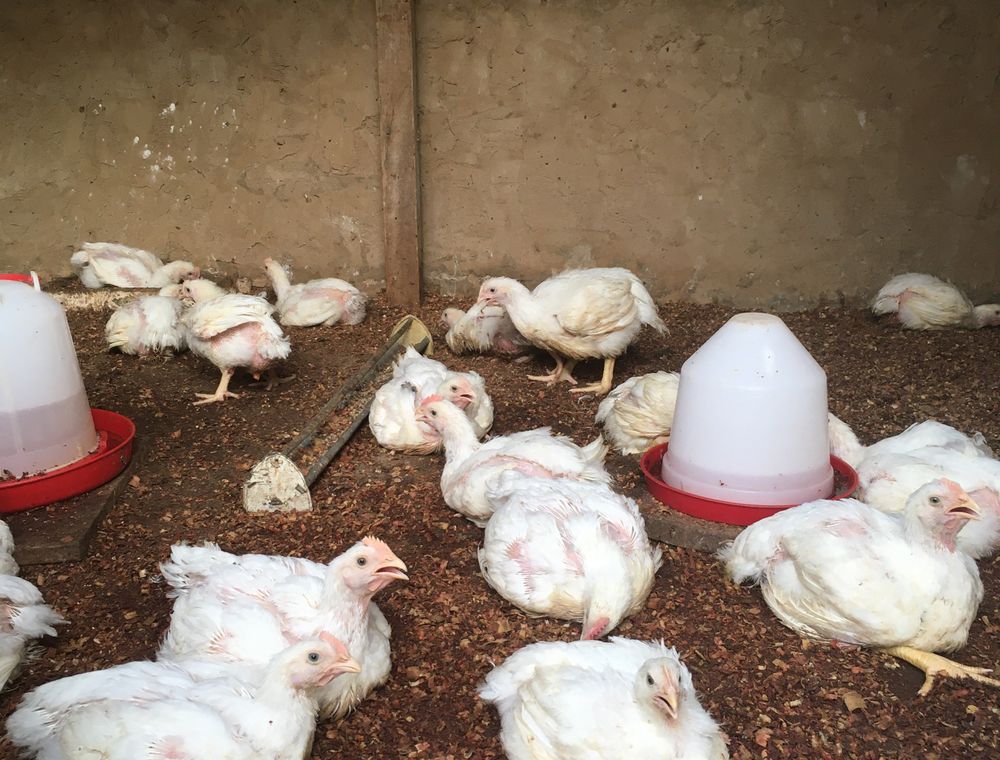
Short answer: For most meat production in Ghana, Ross 308 and Cobb 500 give the lowest cost per kilogram sold when housing, feed and water are well run. Sasso, Kuroiler and Noiler are the coloured meat birds to consider when you have range, want eggs from the same flock or cannot run a tight broiler programme. Judge each bird by what it costs to produce a kilogram your buyer will pay for, not by the price of the chick.
Key takeaways
- Cost per kilogram sold, not the day-old price, decides which meat bird pays.
- Broilers sell in about six weeks but need a disciplined feed and house programme.
- Coloured dual-purpose birds take months, forage well and suit mixed systems.
- Ask your buyer for the weight and the form they want before you choose the breed.
- Test any new breed on a small batch before you commit a full house.
Start with the buyer, not the breed
The best meat bird is the one someone pays you for. That sounds obvious, and it is still the step most new growers skip. They pick the bird they read about, raise it to a weight they think is good, and then discover the chop bar wants a smaller bird, or the market women want one with more fat and a yellow skin.
Before you order, ask three questions. What weight does the buyer want, live or dressed? What colour and skin do they prefer? And how many birds do they take, and how often? A caterer may want the same size every time. A family buying for a festival may want one large bird. A trader may buy in small lots and pay on the day. Each of those buyers pulls the breed choice in a different direction.
Demand also follows the calendar. The run-up to Christmas and the Eid season bring a rush for birds, and the rush is short. A broiler that is ready early, or a slow bird that is ready late, can miss the window altogether. We come back to timing in the worked example further down.
Broilers: Ross 308 and Cobb 500 at the top of the cost table
Broilers are the default meat bird for good reason. They put on weight quickly, they convert feed well and they produce a large amount of breast meat in a short time. For a grower with a closed or well-controlled house, a Ross 308 or Cobb 500 usually gives the lowest cost per kilogram sold, provided the feed is right and the birds stay comfortable.
The catch is the margin for error. A broiler that has a poor feed day loses weight it cannot make up later, and a broiler in a hot house stops eating just when you need it to eat. You need a feed plan by week, drinkers you can count, and ventilation that keeps pace as the birds grow. Our broiler chick page covers what we supply, and the broiler feeding schedule gives a week-by-week plan you can adapt to your own house.
Ross 308 and Cobb 500 are both fast broilers, and most farms choose between them on the feed programme they already run and the buyer they serve. The side-by-side is in our Ross 308 vs Cobb 500 comparison. The Ross has its own detail in the Ross 308 guide, and the Cobb 500 guide covers the other side of the choice.
Sasso: a coloured meat bird with some range in its blood
Sasso is the coloured meat bird most of our buyers have heard of. It grows more slowly than a broiler and it finishes into a bird that looks and eats differently. Some buyers prefer the colour, the firmer meat and the flavour of a coloured bird, and some will pay more per kilo for that. The premium varies by market and by season, so check it locally before you plan around it.
In a semi-intensive run, Sasso forages, and once it is out in the open it takes less feed per day than a broiler would. The trade is time. You carry the birds for ten to fourteen weeks, and your house or pen is busy for that whole period. If you have space and a buyer who wants a coloured bird, the economics can work well. If you need a fast turn on a small house, a broiler will beat it on cash timing every time.
The detailed guide is the Sasso chicken guide for Ghana. Chicks are on our Sasso page, and the from price is GH₵13 a chick, or GH₵650 for a box of 50.
Kuroiler and Noiler: the hardy middle of the range
Kuroiler and Noiler sit between a broiler and a layer. They are dual-purpose birds, so the hens give eggs and the flock gives meat, and both are cheaper to start at GH₵11 a chick. They are not fast. Expect a longer wait than a broiler, and plan the feed for the whole period, not just the first month.
These birds earn their place on the kind of farm most of our buyers run: a compound flock, a half-open house, a few hundred birds on a mixed plot. They forage, they put up with less than perfect management and they make good use of clean kitchen greens and scraps. We would not put them in a tight, high-density house and expect broiler weights. We would put them in a semi-open system and feed them properly.
Read the Kuroiler guide and the Noiler guide before you choose between them. Both are on the Kuroiler and Noiler chicks page.
Plymouth Rock and white cockerels: cheap chicks with a narrow job
Plymouth Rock is one of the cheapest dual-purpose chicks we sell, at GH₵7 a chick or GH₵350 for a box of 50. It is a calm, steady bird that works well in a small homestead run. It is not a fast meat bird and you should not expect it to compete on weight with the broilers. Its value is the low chick cost and the eggs the hens lay along the way.
White cockerels are cheaper still, at GH₵3 a chick and GH₵150 for a box of 50, which makes them the lowest entry point on our list. Their meat value depends entirely on who buys them. A buyer who wants a small bird at a low price may take them gladly. A buyer who wants size will not. Be clear about which buyer you have before you spend the money. The cockerel chicks page has the current details, and the cockerel farming guide works through costs and timing. The Plymouth Rock profile is in the Plymouth Rock guide for Ghana.
Turkey poults and guinea fowl keets: the specialist meat birds
Turkey and guinea fowl are not chickens, but growers ask about them alongside meat birds, so we cover them here. Turkey poults are GH₵65 each and come in boxes of 10 for GH₵650. Guinea fowl keets are GH₵17 each, or GH₵850 for a box of 50. In practice both are seasonal products, because their buyers are seasonal.
Turkey is a festive product. Growers aim for birds ready ahead of the Christmas rush, and the sums depend on what a whole bird fetches in that window. A turkey takes a long time to grow, needs careful feeding and needs real room, so it is not a bird to start on a whim. Guinea fowl are hardier on range and make a useful meat bird on less input, though they grow slowly. The turkey poults page and the guinea fowl keets page set out what we can supply.
Table: which meat bird fits which job
The table compares the main options on the points that move the money. Times are typical ranges for well-managed birds. Feed need is a relative guide, not a bag count.
| Bird | Typical time to sale | From (GH₵ a chick) | Feed need | Best fit |
|---|---|---|---|---|
| Ross 308 | About 5 to 6 weeks | 20 | High, needs exact phasing | Closed house, steady buyer |
| Cobb 500 | About 5 to 6 weeks | 20 | High, needs exact phasing | Closed house, steady buyer |
| Sasso | About 10 to 14 weeks | 13 | Medium | Semi-intensive, coloured-bird buyers |
| Kuroiler | About 4 months or more | 11 | Medium, lower on free range | Mixed and scavenging systems |
| Noiler | About 4 months or more | 11 | Medium, lower on free range | Low-input, mixed systems |
| Plymouth Rock | About 4 months or more | 7 | Medium | Small homestead run |
| White cockerel | Set by your buyer | 3 | Medium | Small bird at a low price |
Need chicks for your next batch?
Send breed, number and town. We reply with price, hatch date and delivery cost in writing.
A worked example: one house, two birds
Take a house with room for 500 birds. Put in broilers and you can run a cycle of about six weeks, clean out and restart. Put in Sasso and the house is busy for ten to fourteen weeks per cycle, so over a year you finish roughly half as many batches through that building, before you allow for clean-out.
Now suppose each broiler sells at 2.5 kg and each Sasso at a heavier, coloured weight your buyer will pay for. Even if the Sasso fetches more per kilo, the house is tied up for longer, and that cost hides in the cash flow. Work it this way:
- Count the batches per year. Broilers give you more turns through the same house.
- Count the days of house occupied per batch, including clean-out and a rest period.
- Count the kilos sold per house per year, not per batch.
- Take the feed, chick and vaccine costs away from the revenue for each batch, then divide by the kilos sold to get your cost per kilo.
Use your own sale prices. We have not put a market price into this example, because the price in your town and in your season matters more than any figure we could give. The principle holds either way. If the house is the scarce thing, the bird that turns it fastest usually wins on paper, and the bird that commands a premium only wins in practice if the buyer is actually there when the birds are ready.
Mistakes that cost meat growers the most
- Choosing by chick price. A cheap chick that needs twice the feed per kilo is the expensive option.
- Ignoring the buyer's size. A bird 300 grams too light for a caterer can cost you the whole contract.
- Stocking coloured birds like broilers. A Sasso in a tight house will not grow the way a broiler does, and crowding it wastes the foraging you bought the bird for.
- Selling into the wrong week. Missing the festive window by a week can cut the price you get for the whole batch.
- Letting dressing and handling slide. How a bird is dressed, packed and held changes what it fetches on the day.
Checklist: choosing your meat bird
- Write down the weight, form and colour your buyer wants.
- Count the birds you can house at once and the weeks you can keep them.
- Work out the feed cost per kilo for two breeds, using your local feed price.
- Check that your feed supply and water can keep up with the faster option.
- Agree a sale date and quantity before the chicks arrive.
- Order a small test batch of any new breed before filling a full house.
- Ask your vet for a vaccination and biosecurity plan that fits the breed you pick.
Our view on the best meat bird
If you want the lowest cost per kilo in a well-run house and you have a reliable buyer, the broiler is the answer, and Ross 308 and Cobb 500 are the two we see most on commercial farms. If you have range, want eggs from the same flock or cannot run a tight programme, a coloured dual-purpose bird is the more honest choice. It fills a house more slowly, but it forgives more.
Tell us your house size, your buyer and your target date on WhatsApp at +233 24 915 1503. We will say which bird we would put in your house and why, and if the answer is a bird we do not sell, we will say that too. You can order through the order form, or see bulk supply if you are buying 1,000 or more.
Questions farmers ask
What is the best meat chicken for a beginner in Ghana?
For a beginner with one closed house and a steady buyer, Ross 308 or Cobb 500 can work, but only with a disciplined feed and water routine that you check every day. For a beginner who wants more margin for error, a dual-purpose option such as Sasso, Kuroiler or Noiler gives room to learn, with a longer wait to sale and a slower return on the house.
Is a Ross 308 more profitable than a Sasso?
Often per house per year, because a broiler turns faster through the same building. Per bird, a coloured bird can sell for more per kilo in the right market and the right week. Compare cost per kilogram sold and the number of batches your house can actually run, and do the sums with your own feed price and your own sale price, not ours.
How much does a box of meat chicks cost?
Our from prices are per chick and are confirmed at order: Ross 308 and Cobb 500 from GH₵20, Sasso from GH₵13, Kuroiler and Noiler from GH₵11, Plymouth Rock from GH₵7 and white cockerels from GH₵3. A box holds 50 chicks, so multiply the chick price by 50. We confirm the total in writing before you pay, and turkey poults are sold in boxes of 10.
Are turkeys a good meat bird for Ghana?
They can be, for a seasonal market. Turkey poults sell best around Christmas, but they take a long time to grow and need room and careful feeding. Plan the sale date first, then work back to the hatch date, and make sure you have buyers for the whole flock inside the window you are aiming for.
Do coloured meat birds need free range?
Not always. Sasso does well in a semi-intensive system with a run, and Kuroiler and Noiler handle more scavenging. A coloured bird kept only in a tight house grows more slowly than the timing table suggests, and it will cost you more in feed and in time.
What weight should I aim for when selling broilers?
That depends on the buyer, so the target is the weight your buyer asks for rather than a generic number. Many buyers want a bird that dresses well at a particular size. Ask before you order, weigh a sample each week and adjust the feed programme so you hit the sale window with the right weight in hand.
Why do my meat birds sell for less than I expected?
The usual causes are a weight that is light for the buyer, a missed sale window, poor dressing or handling, and a batch that did not match the colour or size the buyer wanted. Check the sale plan against the buyer's request before the chicks arrive, not after the birds are ready.


