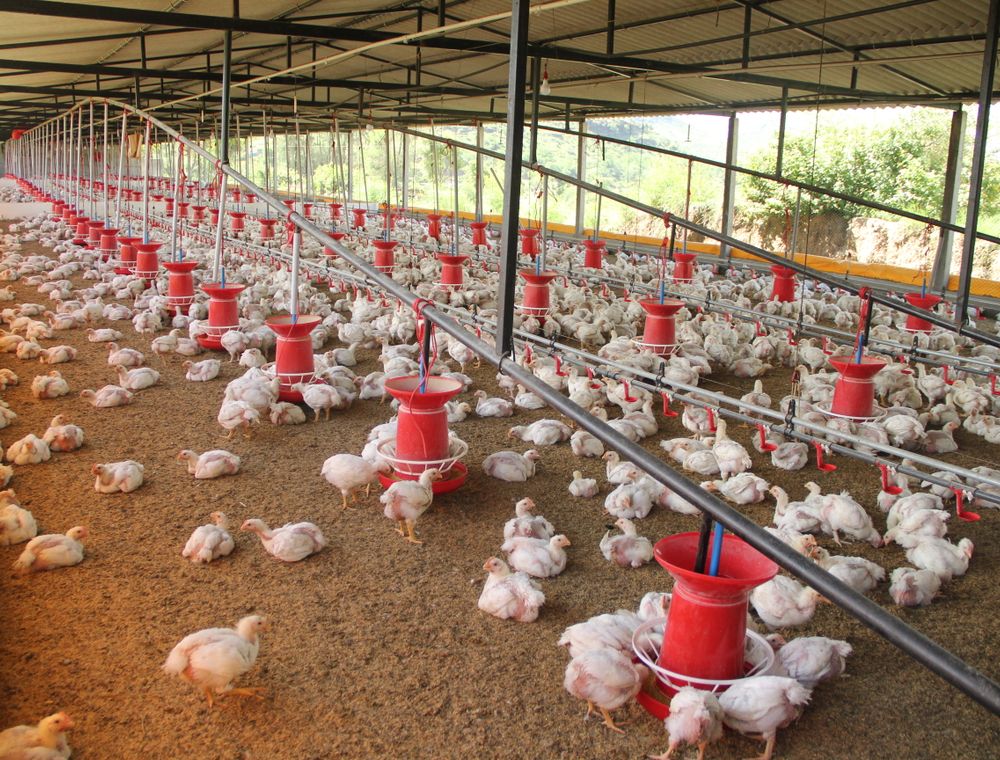
Short answer: Ross 308, Cobb 500 and Arbor Acres are all white broilers that aim for market weight at about six weeks, and the published gaps between them are small. Only the Ross 308 and Cobb 500 are on our price list, at GH₵20 per chick, so for most Ghanaian farms the real decision is about your buyer, your feed and your house, not which strain wins a spec sheet. Run a small side-by-side trial before you commit a whole season to one of them.
Key takeaways
- Treat the three strains as close cousins on growth. Management moves your weights more than the choice of strain does.
- Ross and Arbor Acres both come from Aviagen, so judge them on your own pens rather than on brand loyalty.
- Published trial data on Arbor Acres is thin, so test it before you rely on it.
- Feed conversion is where a poorly run house quietly costs the most money over six weeks.
- Pick the strain your buyer rewards, then keep the house cool enough for it to reach that weight.
Why a third strain is on the list at all
Most farmers who come to us already know two names: Ross and Cobb. Our Ross 308 against Cobb 500 comparison covers that pair in depth, so this piece goes one step further. The third name, Arbor Acres, usually arrives through a neighbour, a feed seller or a video clip. It deserves a straight answer, and the straight answer is that it is a sound broiler line that is not on our current price list, so the trial evidence and the price are harder to pin down than for the other two.
This article puts all three on one table, looks at the only small trial we could find, and then walks through the things that really decide your margin: feed, heat, the buyer and the way you run your own test. Where the numbers are open to question, we say so.
The three strains on one page
Read the table as a checklist of what you can verify. Most rows are close, and the last row is the one that should send you back to your buyer.
| Question | Ross 308 | Cobb 500 | Arbor Acres |
|---|---|---|---|
| Breeding company | Aviagen | Cobb-Vantress | Aviagen, as an Aviagen brand |
| Amount of published data | Extensive, including breeder guides | Extensive, including breeder guides | Thin, with one small six-week trial we could find |
| Growth in that trial | Not significantly different from the others | Not significantly different from the others | Not significantly different from the others |
| Our starting price | GH₵20 per chick | GH₵20 per chick | Not on our current price list |
| Box of 50 from us | GH₵1,000 | GH₵1,000 | Ask us on WhatsApp |
| What to ask the hatchery for | Parent flock age, hatch date, vaccination record | Parent flock age, hatch date, vaccination record | The same three records, in writing |
The row that matters most for your decision is the last price row. A strain you cannot buy from your hatchery at a confirmed price is a strain you have to plan around, not one you can simply switch to in the middle of a season.
What the one trial we could find really tells you
A 2025 study from the Department of Animal Science at the University of Calabar in Nigeria put 60 chicks of each strain into a six-week deep-litter trial, split into three pens of 20 birds per strain. The reported final weights were about 1,713 grams for Cobb 500, 1,681 grams for Ross 308 and 1,662 grams for Arbor Acres. The authors found no significant difference between the strains on growth, and no significant strain effect on feed conversion.
Two things stand out. First, those birds weighed well under the 2.2 to 2.5 kilograms that a well-run commercial flock reaches at six weeks, so the trial was probably limited by feed, the house or the pens rather than by genetics. Second, the gap between Cobb and Arbor Acres was about 50 grams. In a pen of 20 birds, that is noise.
What the study cannot tell you is which strain your buyer will prefer, how each one copes with your afternoons, or how it responds to your mill's grower ration. Those answers only come from your own pens.
Where a strain shows itself on the growth curve
Most farmers look at the final weight and miss the shape. Two flocks can finish at the same kilogram and still differ in how they got there. Weigh the same ten birds every week, at the same hour, and plot the average against our weekly weight chart. This is the pattern to look for in a well-run house. It is not a promise.

- Week one to two: chicks should be clearly ahead of their day-old weight by the end of week one. Birds standing back from the feeder are a brooding problem, not a strain problem.
- Week three to four: the curve steepens. Uniformity matters more than the average here, because a flock that spreads by 300 grams is harder to sell in one go.
- Week five to six: the birds carry most of their weight and the feed bill climbs fastest. The last fortnight is where heat and crowding usually show up first.
A flock that spreads out early costs you in the sale, whatever strain is in the house. Sort by weight at the buyer's yard and you will see the loss in the price per kilogram.
The feed sum that decides your margin
Feed is the biggest running cost in a broiler house. Feed conversion ratio (FCR) is how many kilograms of feed it takes to put on one kilogram of live weight. A few tenths of a point sound small until you multiply them out.
Take 1,000 birds finishing at 2.3 kilograms each. At an FCR of 1.9 they eat about 4,370 kilograms of feed. At an FCR of 2.0 they eat 4,600 kilograms. That 230-kilogram gap is worth GH₵1,150 at GH₵5 per kilogram. That price is a placeholder, so put in your mill's figure before you decide anything.
The sum assumes the strains behave alike on the same feed, which the small trial suggests they roughly do. So if you see a gap of that size between two flocks in your own house, look at the house and the feeding routine before you blame the bird. Feed left in damp bags, feed wasted at the trough and birds that stop eating in the afternoon heat all push FCR the wrong way. Our feed conversion article works through the maths in more detail.
Heat, dust and the house you actually have
In Ghana the house matters more than the label on the chick box. Heat in the hot months, damp litter in the rains and the fine dust of the harmattan from December to February each test a flock in a different way. No strain is immune to all three.
Before you choose any strain, check these five things in the house:
- Air moves through the house at bird height, not only at the roof vent.
- Stocking density leaves room for birds to lie down clear of the feeder on a hot afternoon.
- Drinkers deliver cool, clean water and are checked twice a day.
- Litter stays dry around the drinkers, so ammonia does not build up overnight.
- Feed goes out in the cool hours, early morning and late evening, through the dry season.
If your house runs hot in the afternoons, the answer is not to swap strains. It is a lower stocking density, more airflow and a feeding time that moves away from midday. Run the trial in the same house you will use all season, because a trial in a cooler building tells you nothing about your own. See our notes on heat stress in broilers and stocking density before you set the house up.
Work backwards from the buyer
The strain that wins your trial is the one that earns your buyer's price. Buyers are not all alike, and the bird that suits one may not suit the next.
- Live-bird traders pay by the kilogram of the whole lot, so uniform weights and few culls matter most to them.
- Households buying whole birds pay for size, freshness and a fair price per bird. They notice how the skin looks after cooking.
- Chop bars and processors want consistent carcasses, so breast yield and a tidy shape count for more.
- Festive buyers at Christmas and Eid want birds at the right weight on the right day. A heavier bird that arrives a week late is worth less to them.
Ask three buyers what they pay for before you choose a strain. If two of them describe the same bird, you have your answer. If they describe different birds, you may need two flocks, staggered so the sales do not land in the same week.
Running a fair trial on your own farm
A trial that compares two strains in two different houses, with different feeders and different hands on the feed, tells you about the houses. Run it like this instead:
- Buy both strains on the same hatch day from the same hatchery, so the chicks start from the same point.
- Put them in identical pens, or identical sections of one house, with the same feeders, drinkers and stocking density.
- Feed both from the same bag batch, and change the ration on the same day.
- Weigh ten random birds from each pen every week and write down the average.
- Record feed bags used and mortality per pen, not per house.
- Sell both to the same buyer in the same week, and write down the price each pen fetched.
Fifty birds per strain will show you a big problem. It will not reliably show a small difference. If you can manage 100 birds per pen, the numbers start to carry weight.
Need chicks for your next batch?
Send breed, number and town. We reply with price, hatch date and delivery cost in writing.
Mistakes that make the comparison useless
- Choosing on the price of the chick alone. A cheaper chick that eats more or sells later costs you more over the season.
- Quoting weights from forums or videos without the age, the feed and the house they came from.
- Changing two things at once, such as the strain and the feed brand, then blaming the strain for the result.
- Mixing two strains in one pen to see what happens. You will learn nothing you can use.
- Skipping the batch record. Ask for the parent flock age, the hatch date and the vaccination record before you pay.
The last one is the cheapest to fix. A hatchery that will not give you those three details in writing is telling you something about the chicks.
Where we would put our money
For most commercial broiler farms in Ghana we would start with a Ross 308 or a Cobb 500, and run a fair trial of the two in the same house. Both are well documented, both are on our list at GH₵20 per chick and both respond well to the same routine. Arbor Acres is a respectable line, and it may suit a farm that has already tested it on its own ground.
On today's evidence, though, we would not move a working flock onto Arbor Acres for a saving that the trial data does not show. If you want to try it, message us on WhatsApp at +233 24 915 1503 before you plan the house. We will tell you what we can supply and on which hatch day, before you pay anything.
A checklist before you choose a strain
- Write down the buyer, the sale weight they pay for and the week you want to sell.
- Check the hottest afternoon in your house with a thermometer at bird height, not on the wall.
- Get your feed mill's current price per kilogram and the FCR the mill expects for its grower ration.
- Choose two strains for the first trial, not three.
- Order both on the same hatch day and ask for the batch record with each order.
- Set a weighing day, keep to it for the whole flock, and write every weight down.
Ordering Ross or Cobb chicks from Halaal Farms
Ross 308 and Cobb 500 day-old chicks are GH₵20 each, and a box of 50 is GH₵1,000. One box is the minimum order, and orders of 1,000 chicks or more are quoted individually. The price is confirmed in writing before you pay, and you can pay by mobile money, bank transfer or cash. We do not take online payment.
Chicks are dispatched on the day they hatch, in ventilated boxes. We deliver to all 16 regions, and the delivery cost is confirmed before you pay (see our delivery page). You can also collect from the farm. Count the chicks when they arrive. If any are dead on arrival, send a photo on WhatsApp the same day, and they are replaced free in the next hatch.
We vaccinate at the hatchery against Marek's, Newcastle, Gumboro, infectious bronchitis and coccidiosis, and the batch record comes with the order. Your vet still sets the programme for your own farm. Read the Ross 308 guide and the Cobb 500 guide, then start with our broiler chick page, check current prices, or go straight to the order form.
Questions farmers ask
Is Arbor Acres better than Ross 308 or Cobb 500?
The one small study we could find, from the University of Calabar in Nigeria, found no significant difference in growth between Arbor Acres, Ross 308 and Cobb 500 over six weeks. That does not prove the strains are equal in every house, but it does mean nobody has shown Arbor Acres is clearly better. Test it against your current strain on your own farm before you switch.
Which broiler strain is cheapest to buy in Ghana?
At Halaal Farms, Ross 308 and Cobb 500 start at GH₵20 per chick, with a box of 50 at GH₵1,000. Arbor Acres is not on our current price list, so ask us on WhatsApp. Chick price is only part of the cost, so compare feed conversion and the price your buyer pays before you decide.
Do Ross 308 and Arbor Acres come from the same company?
Yes. Both are Aviagen brands, and Cobb 500 comes from Cobb-Vantress. Sharing a breeding company does not make two strains identical, because each line is developed and tested separately. Judge them on your own pens, weights and feed records.
How many birds do I need for a fair trial?
Aim for at least 50 birds per strain, and 100 per strain if you can manage it. Keep them in identical pens or sections of the same house, with the same feed, water and stocking density. Small numbers can show a big problem but will not reliably show a small difference between strains.
What weight should a broiler reach at six weeks?
Well-managed Ross 308 and Cobb 500 flocks commonly reach about 2.2 to 2.5 kilograms at six weeks, and that is the planning range most farms use. Your own figure depends on feed, house and season. Weigh a sample every week and compare with a proper weight chart, not with a number you saw in a video.
Can I mix Ross and Cobb chicks in one house?
You can, but you lose the ability to learn anything from the flock. Mixed strains grow to different sizes and sell at different times, so the sales and the feed records become hard to read. Keep them in separate houses or sections, even if the chicks arrive on the same day.
What should I ask a hatchery before buying broiler chicks?
Ask for the parent flock's age, the hatch date, the vaccination record and the delivery cost. A good hatchery answers in writing before you pay. At Halaal Farms the batch record comes with every order, and the price is confirmed in writing before payment.


