Short answer: A Muscovy hen will sit on her own eggs for about five weeks, and most keepers plan for an incubation of around 35 days. The Muscovy is a different species from common ducks, copes with heat better, and its drakes are much larger than its hens. Plan the flock around broody hens, careful separation of the drakes, and a clear sales plan for the meat, and check supply with us before you buy any birds.
Key takeaways
- Plan for about 35 days of incubation, and let a broody hen do the hatching where you can.
- Muscovies are a different species from common ducks, and crosses with them are sterile, so keep the breeds apart.
- Drakes are much heavier than hens, and they can be aggressive to ducklings at the feed.
- Give the ducklings their own feed and water station, and watch their huddling as your guide to heat.
- Muscovy ducklings are not a catalogue line, so get a supply answer before you buy a pen.
How a Muscovy hen brings off her own clutch
A Muscovy hen will sit on her own eggs for about five weeks, and most keepers only notice when the nest is already full. She leaves the nest briefly, eats, drinks and comes back. If you have never watched a broody Muscovy, the first few times look like neglect. In fact she is working to a timetable that common ducks rarely keep.
That habit is the single biggest reason to keep Muscovies on a Ghana farm. A broody hen does the hatching for you, needs no incubator, and brings the ducklings out herself. The rest of this guide is about making that work, and about the cases where you have to do the job by hand.
A different species from the common ducks
The Muscovy is not a common duck with a fancy face. It is a different species, Cairina moschata, and the common ducks most people keep descend from the Mallard. The Muscovy is believed to come from South America, and it has been known in Egypt for a very long time. The fleshy red caruncles on its face and wattles are the feature most people notice first.
The distinction matters in practice. A Muscovy male crossed with a common female produces a mule, and a common male crossed with a Muscovy female produces a hinny. Both are sterile. Common-duck breeds can interbreed and produce fertile young, but the Muscovy cannot be folded into that flock to improve the meat or the eggs. If you keep both, keep them in separate pens and separate hatch records, and do not expect a useful cross from them.
The sitting hen: what she does each day
A sitting Muscovy hen leaves the nest about once a day, and usually stays off for somewhere between 20 minutes and an hour and a half. In that time she defecates, drinks, eats and sometimes bathes, then goes back to the eggs. The breeding literature describes the pattern clearly, and the keepers who have watched it know the times of day when she comes off.
Your job is to make sure she can eat and drink without going far. Put her feed and water within a few metres of the nest, in a shaded spot she can reach without climbing. Keep the nest clean and dry, and do not disturb her more than you must. Check her once a day at the same time, and count the eggs so you know when the clutch is close.
Candle the eggs at about a week to ten days, and remove any that are clear. Our egg candling guide walks through how to do it without damaging the shell, and the natural incubation guide for broody hens covers the same routine for chickens, which applies here too.
Drakes, aggression and the ducklings' feed station
Drakes are big and they are aggressive. Males fight over food, territory and mates, and the females fight less. Some adult Muscovies will peck at ducklings who are feeding from the same dish, and a young bird that gets a beak in the head at the feeder can be badly hurt. That is why the ducklings need their own feed and water station, set up before they hatch.
Put a low tray with a dish of starter and a shallow water pan under a cover the drakes cannot easily reach into. Keep it within sight of the hen's nest so the mother and the ducklings can find it. Remove the drake from the brood area while the ducklings are small. The drake will stay with the brood for several weeks in the wild, but a domestic drake in a small yard can do damage in the first days.

When the hen does not sit: brooding ducklings by hand
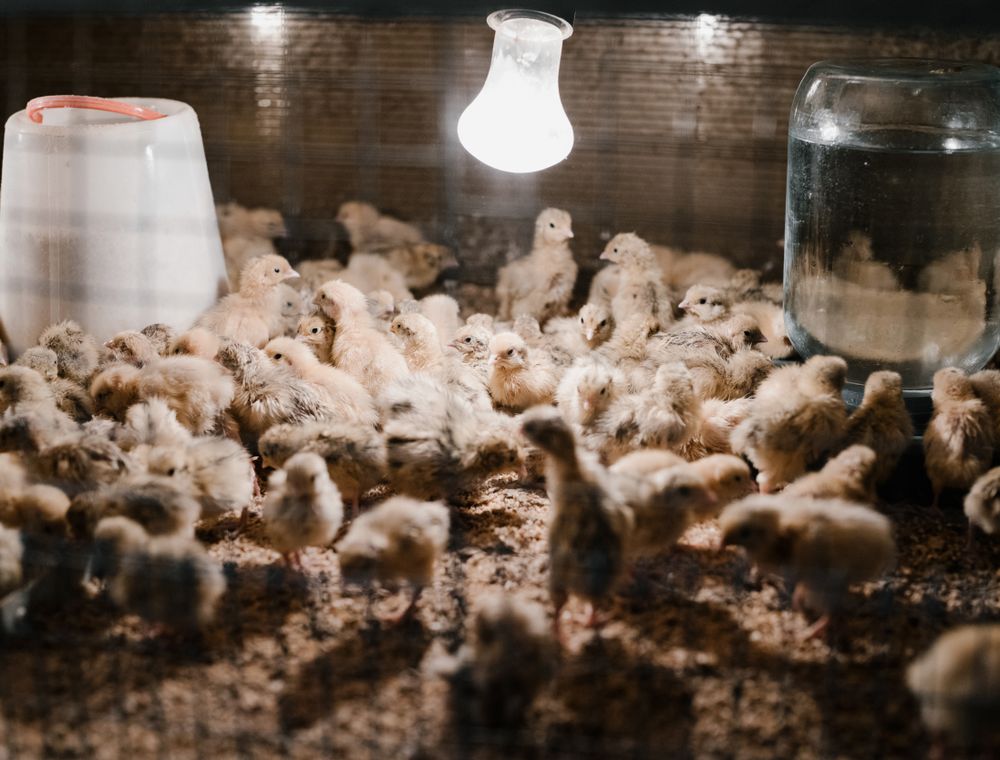
Not every Muscovy hen goes broody, and not every broody hen stays on the nest through a hot spell. When you have to brood ducklings by hand, a heat lamp in a small enclosed space is the usual solution. Start the lamp before the ducklings arrive, so the space is warm when they step in.
Watch the ducklings rather than the thermometer. If they huddle under the lamp, the spot is too cold, so raise the lamp or move the box closer. If they spread to the edges and pant, it is too hot, so raise the lamp or add ventilation. Ducklings that sleep quietly and walk about in a loose group are comfortable. Our brooder temperature chart is written for chicks, but the same watch-the-birds method works for ducklings.
Keep water shallow, with stones or a grid so the ducklings cannot drown, and keep the brooder dry. Wet bedding gives chills and pneumonia before anything else does, and it is the most common reason a hand-brooded duckling dies in the first week.
Heat tolerance and the Ghana yard
Muscovies handle heat better than common ducks. The source we used describes the species as tropical, and it notes that the birds adapt well to cooler weather too. That makes the breed a sensible choice for a yard that gets the full force of the dry season and a humid rainy season after it.
Heat tolerance is not the same as heat immunity. A Muscovy in a shadeless pen in the afternoon still stops eating and stops laying, and a drake in the sun can overheat. Give the flock shade, a breeze through the house, and water they can reach without wading through mud. Those three things cost little and keep the birds working through the hottest month.
Meat from the drake: a sales plan before the hatch
The drake is where the meat is, and the difference in size between sexes is the thing that catches most keepers. Published figures put the drake anywhere from a third heavier to about twice the weight of the hen, and the drake's breast muscle can reach about 700 g by 13 weeks in a well-fed bird. A hen carries far less meat, and she is the one you want to keep for brooding and laying.
That makes the sales plan simple to state and harder to carry out. Decide in advance which drakes you will sell, at what age and weight, and to whom. Hold back the best hens and one or two drakes, and sell the rest once they reach the weight you want. Buyers of Muscovy meat often want the carcass by the piece, so ask a few before you hatch.
Keep a record of the age and weight at sale, and of the feed used to reach it. The Muscovy takes longer than a common meat duck, so the feed bill runs for more weeks, and that cost decides whether the drake pays.
Nest boxes and the tree-hollow instinct
In the wild, Muscovy hens lay in tree holes and hollows, and a clutch can be between 8 and 15 eggs. Domestic hens still look for that sort of place, so the nest should be a dark, enclosed box with a single side entrance, not an open basket on the ground. A box raised off the floor, with straw that stays dry, will suit most hens.
Put the nest where the hen can see the water and the feed, but where the drake cannot easily get in. Predators look for nests as well, and a snake or a rat will find an open clutch quickly. Our predator protection guide sets out the fencing and night-lock steps that protect the nests as well as the birds.

Need chicks for your next batch?
Send breed, number and town. We reply with price, hatch date and delivery cost in writing.
Feeding Muscovy ducklings and growers
Muscovy ducklings need a feed made for ducks, or at least a starter ration with the right protein for young birds. A chicken starter is a common stop-gap, but keep an eye on the labels and the niacin level, since ducklings have a particular need for it. Ask the miller to show you the feed analysis before you buy, rather than relying on the bag.
Move the ducklings to a grower ration as they feather, and keep fresh greens in the pen once they are walking well. A duckling that gets only grain grows the wrong frame and carries a poor breast. Check the weights every two weeks, and set those weights against your own sales target, not against the stated age of sale.
Worked example: one drake, four hens, one season
Take a small breeding group of one drake and four hens for a single season. Assume each hen lays one clutch of 10 eggs, which is inside the 8 to 15 range, and that 70 per cent of the eggs hatch. Both figures are planning assumptions, not measured results, and you should replace them with your own records as soon as you have them.
| Step | Number | How it is worked out |
|---|---|---|
| Eggs set | 40 | 4 hens x 10 eggs |
| Ducklings hatched at 70% | 28 | 40 x 0.70 |
| Ducklings kept to 6 weeks after losses of 10% | 25 | 28 x 0.90, rounded down |
| Hens kept back for the next season | 4 | from the ducklings hatched |
| Ducklings for sale or meat | 21 | 25 minus the 4 hens kept |
The sum is only as good as the hatch rate and the losses, and those are the numbers that go wrong most often. A hen that sits in a hot shed, a clutch left too long in a warm room, and a drake that injures the ducklings can each take a large bite out of the 28. Keep a record for every clutch, and the next season's plan will be far more accurate.
A checklist before you commit to Muscovies
- Meat, hatching or both: the choice is made, and the sales plan is set before the first hatch.
- Drakes and hens are housed so the drakes cannot reach the nests or the ducklings' feed.
- Each hen has a dry, enclosed nest with feed and water within reach.
- A shaded, quiet area is ready for ducklings, with water too shallow to drown them.
- You have a heat source and a plan for hand-brooding if a hen does not sit.
- You have decided where the Muscovies will be kept, so they are not crossed with common ducks.
- You have a buyer for the drakes and a record sheet for the age and weight at sale.
Mistakes that lose Muscovy ducklings
The first mistake is letting the drake stay with the brood. A drake that pecks at the feeder can injure ducklings within hours, and by the time you notice, the damage is done. Remove him, or fence the brood where he cannot reach it.
The second is deep water too early. A duckling can drown in a pan that an adult duck would never think twice about. Keep the water shallow, with stones or a grid, until the birds are well grown.
The third is letting the nest get damp. A hen that comes back to a wet clutch can chill the eggs, and a clutch left in a warm but dirty room can start to rot. The fourth is mixing Muscovies with common ducks and expecting the offspring to be useful. They will not be, and the breed record will be unreadable after one season.
Getting Muscovy eggs or ducklings from Halaal Farms
Muscovy ducklings are outside our standard range. If you need them, get in touch on WhatsApp at +233 24 915 1503 before you commit any money, and we will answer whether a batch is possible, what it would cost and when it could arrive.
If hatching your own is the plan, start with the fertile eggs page and the egg hatching service page, which describe what we offer for hatching. The breeds page covers the chicken strains we list.
For the meat side, our Pekin and Muscovy comparison sets out how the two breeds compare on time to market, and the Indian Runner guide covers the egg-laying breed that many keepers pair with a Muscovy flock.
Questions farmers ask
How long do Muscovy ducks take to hatch?
Most sources put the incubation at about 35 days, and a few give a shorter range. Plan for 35 days, so you can count the sitting time into your plan. Candle the eggs at about a week to ten days, and watch the hen's routine, which shows you when the clutch is close.
Do Muscovy hens go broody?
Yes, and it is one of the breed's most useful habits. A broody hen sits on her own clutch, leaves the nest briefly each day, and brings the ducklings out herself. Give her a quiet, dry nest with feed and water within reach.
Can I cross Muscovies with my Pekins?
Not usefully. Muscovies are a different species, and their crosses with common ducks are sterile. The offspring cannot be bred on, so keep the breeds in separate pens and separate records if you keep both.
Do Muscovy ducks handle heat well?
Better than common ducks, according to the sources we used, and they adapt well to cooler weather as well. Heat tolerance is not immunity, though. Give them shade, a breeze and clean water in the afternoon, and watch for birds that stop eating in the hottest hours.
Are Muscovy ducks good for meat?
They can be, but they grow more slowly than a common meat duck. Drakes are much heavier than hens, so the sales plan usually centres on the drakes. Decide the age and weight of sale before the hatch, and keep the hens for brooding and laying.
Why is my drake attacking the ducklings?
Drakes are aggressive, and they often peck at young birds that feed from the same dish. Remove the drake from the brood area while the ducklings are small, and give them their own feed and water station, set where the drake cannot reach.
Do you sell Muscovy ducklings?
We do not list them, so ask first. Send a WhatsApp message to +233 24 915 1503 and we will check whether a batch can be found, then send you the price and the delivery plan.


