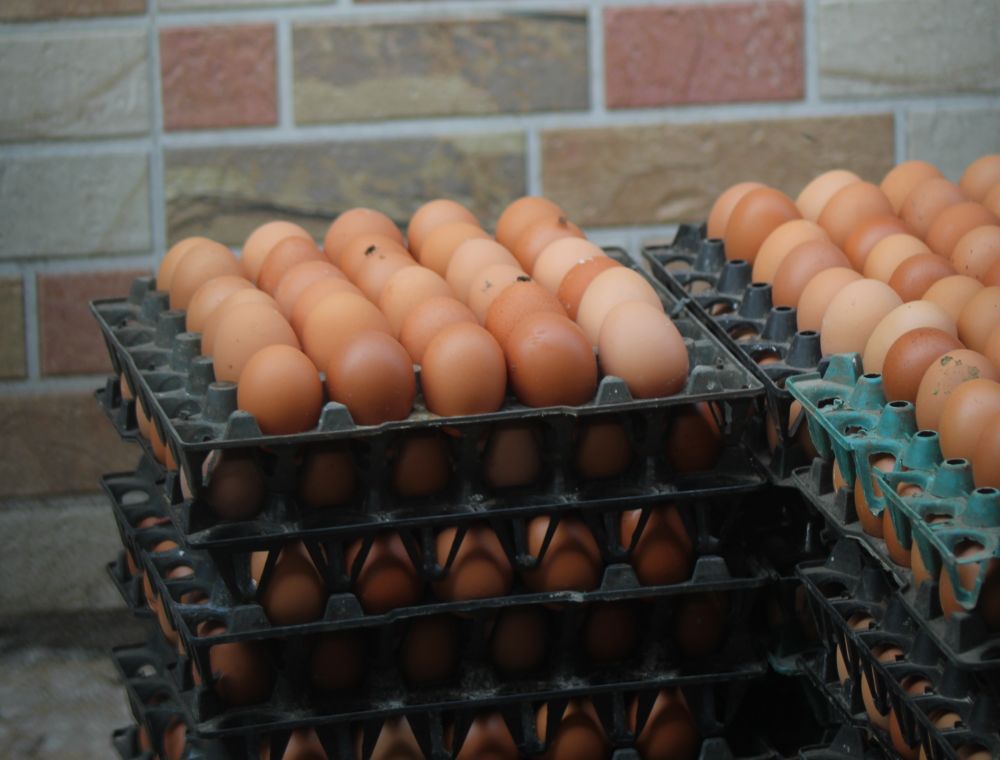
Short answer: Price from your cost, not from what the next farm charges: work out what one egg or one kilo of dressed chicken costs you, add the margin you need to survive a bad month, then check the result against what local buyers pay. In our 60-hen example an egg costs about GH₵1.51, so a cost-plus price of GH₵1.90 gives a 25% markup, and every festive and bulk rule should be written down before the rush.
Key takeaways
- Find your cost per egg or per kilo before you look at the market price.
- A 25% markup on cost leaves a margin of about 20% of the selling price. Know which one you are quoting.
- Price dressed chicken by the kilo so that a light bird and a heavy bird are treated fairly.
- Limit festive increases to a fixed window and agree them with regular buyers before the rush.
- Review prices monthly, and give regular buyers notice before any change.
Why what the market pays is only half the answer
Most farmers price by asking the buyer what they will pay. That works until the day it does not. The buyer pays a little less than last week, you lower your price to keep the order, and by the end of the month you have sold a whole flock at a loss without noticing.
The market tells you the ceiling. Your cost tells you the floor. Prices between those two are where a farm makes a living, and you cannot find the right point in between unless you know both numbers. Ask a neighbour what they charge and you learn their price, not whether it covers their feed.
So start with your own cost, check the market second, and only then decide what to charge. Our selling guide covers the buyer side of the same conversation.
Step one: find your cost per unit
A unit is one egg, one crate, one live bird or one kilo of dressed chicken. Pick the unit your buyers use, and then work out what it costs you to produce.
Add up everything that goes into the batch for a month or a cycle. Feed, chicks or pullets, vaccines, litter, power, fuel, transport and packaging all count. Then divide by the number of units you produced, not the number you hoped to produce. Losses and breakages belong in the cost.
If you are buying chicks or pullets, the day-old chick prices page gives the from-prices to start from. Some costs are harder to see. The house, the crates and the generator wear out, and that wear is a real cost even though no cash leaves the account each month. Set aside a small monthly figure for them, and include it in the cost per unit if you want an honest number.
Worked example: 60 hens and the cost of one egg
These are example figures. They are not our prices and not a quote for your flock. We assume 60 laying hens with an 80% lay rate, which gives 1,440 eggs in a 30-day month. Each hen eats about 110 grams a day, and we use an example feed price of GH₵8.50 per kilo.

| Monthly item (example) | Amount (GH₵) | Working |
|---|---|---|
| Feed | 1,683 | 198 kg at GH₵8.50 per kg |
| Vaccines and vet visits | 120 | Vet-guided, averaged over the month |
| Litter | 80 | Shavings topped up monthly |
| Power and water | 150 | Fans, lights and a pump |
| Crates and trays | 60 | Replacement stock |
| Transport | 80 | Delivering to two buyers |
| Total cost | 2,173 | Before house and equipment wear |
Our layer chick page shows which birds the flock would come from. Divide GH₵2,173 by 1,440 eggs and you get GH₵1.51 per egg. That is the number to start from. It includes feed, which is the largest line, but it does not include the house, the crates you have already paid for, or your time. If you want to include wear on the house, add a fixed monthly figure and divide again.
Notice how much the feed line dominates. A 50 pesewa rise in feed per kilo adds about GH₵99 to the month, which moves the cost per egg by about 7 pesewas. Small on one egg, large across a flock.
Step two: add the margin you need
Cost-plus pricing is simple. Take your cost per unit and add a percentage. The part people confuse is what the percentage is measured against.
- Markup is a percentage of your cost. A 25% markup on GH₵1.51 gives GH₵1.89.
- Margin is a percentage of your selling price. The same GH₵1.89 price gives a margin of about 20%, because you keep GH₵0.38 of every GH₵1.89.
We round to GH₵1.90, which makes a crate of 30 eggs cost GH₵57. Decide on the margin you need, and be clear with yourself about which one you mean. A farmer who thinks they have a 25% margin and actually has a 25% markup will be surprised at the end of the month.
How much margin should you aim for? That depends on how bad your bad month can be. If one lost batch or one feed rise can wipe out your profit, your margin is too thin. There is no universal figure, but the margin has to cover losses, your own time and the next batch.
Step three: check the market, then decide
Now look at what buyers in your area actually pay. Visit the roadside sellers, ask the chop bars, and check what the shops charge for the same product. Do this in person if you can, because a price quoted over the phone can differ from what buyers actually pay.
If your cost-plus price is well above the market, you have three choices. You can cut your cost, for example by reducing feed waste or lowering mortality. You can improve the product, with cleaner, more uniform eggs or birds that are dressed carefully, which buyers will often pay for. Or you can accept a thinner margin for a short time while you fix the cost. Do not choose the third option for long.
If your price is well below the market, you are probably underpricing. Many small farms leave money on the table because they never ask. Raise the price gradually, tell regular buyers why, and watch what happens to the orders.
Dressed chicken: price by the kilo
A live bird and a dressed bird are different products. Buyers want to know the weight of the bird they take home, and a heavy bird and a light bird should not sell for the same price. Price dressed chicken per kilo and let the weight decide the total.
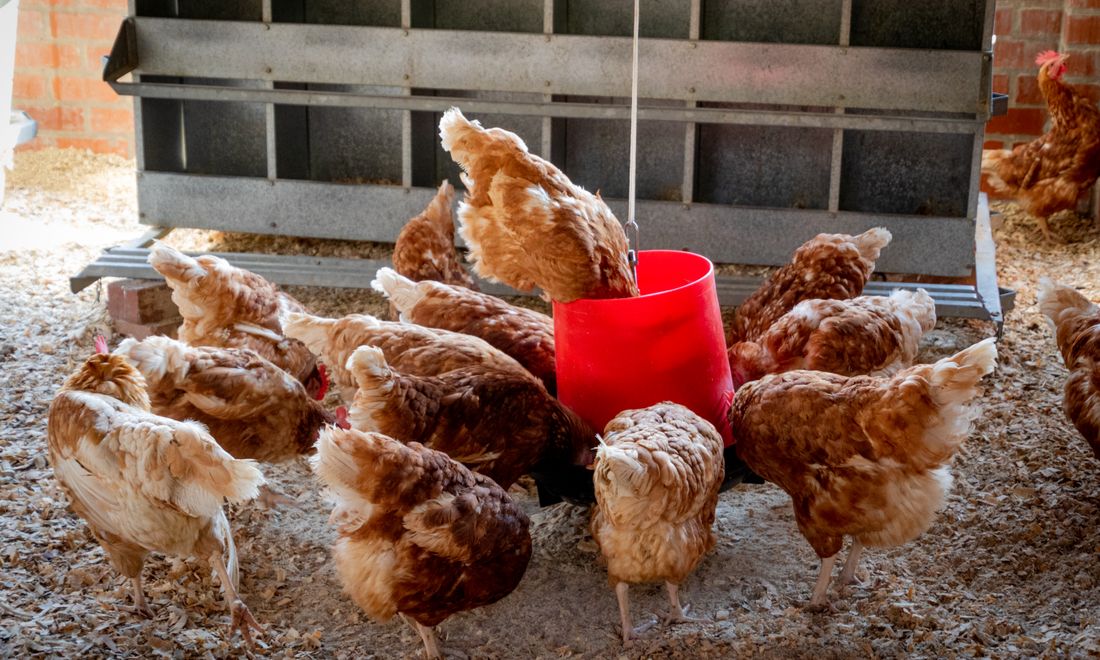
Worked example, again with example figures: a dressed bird of 1.5 kg comes from a live bird of about 2.0 kg. Each live bird costs GH₵20 for the chick, GH₵30.60 for 3.6 kg of feed at GH₵8.50 per kilo, and GH₵6.00 for vaccines, litter and power. That is GH₵56.60. Allow 3% for mortality, which takes it to GH₵58.35, and add GH₵5.00 for dressing and packaging. The total is GH₵63.35 per live bird sold.
Divide GH₵63.35 by the 1.5 kg of dressed meat and you get about GH₵42.23 per kilo. A 30% markup gives GH₵54.90, which we round to GH₵55 per kilo. A 1.5 kg dressed bird then sells at GH₵82.50. If your buyer prefers whole birds of a set weight, quote the price per bird for that weight, but still work it out from the kilo.
If your dressed birds come from our broiler chicks, the feed and weight assumptions above are the ones to test first. Our guide to dressing and selling chicken covers the hygiene and packaging that let you hold this price.
Festive prices without angry regulars
Christmas, Easter and Eid lift demand, and buyers expect prices to rise with it. The trouble starts when a farm raises its price for the whole season, then keeps the higher price in February when nobody is buying. Regular buyers remember that.
Our rule is a fixed window. The profitability overview explains why a festive spike is not a reason to plan a whole year around it. Raise the price for the three weeks before the festival, and for the festival week itself, then return to the normal price for at least two weeks after. Write the dates on the price list so nobody has to ask. Use the same window every year, so buyers learn to expect it.
| Period (example rule) | Dressed chicken per kilo | Table eggs per egg |
|---|---|---|
| Normal weeks | GH₵55 | GH₵1.90 |
| Three weeks before the festival | GH₵60 | GH₵2.10 |
| Festival week | GH₵60 | GH₵2.10 |
| Two weeks after | GH₵55 | GH₵1.90 |
The window also helps with supply. If you know the price will be higher for a fixed period, you can plan the batch to finish inside it. That is the point of the batch calendar in our Christmas broilers guide, which works backwards from the festival date.
Need chicks for your next batch?
Send breed, number and town. We reply with price, hatch date and delivery cost in writing.
Bulk orders and the discount trap
Bulk buyers will ask for a discount, and sometimes they are right to. A caterer who orders 30 crates in one go saves you time, and you can plan your collection around that order. A discount for that is reasonable, provided the terms are clear.
The discount trap is an open-ended discount. "I will give you a better price if you take a lot" with no number, no order size and no payment date leaves you with no margin and no way to refuse the next request. Set the rule in advance: for example, a 5% discount on orders of 30 crates or more, paid in full before collection, and only for orders placed at least a week ahead.
Put the rule in writing before the first order. A short message on WhatsApp with the price, the discount rule and the payment method is enough. We do the same with our own customers, because a price in writing before payment protects both sides.
When feed goes up, your price has to move too
The price you set in January can be wrong by June. Feed prices move with the cedi, with harvests and with the cost of imported ingredients. If your feed rises by 10% and your price stays the same, you have just cut your margin by about a tenth without signing anything.
Check your cost per unit every month, and compare it with the price you charge. When the cost has moved by more than a few percent, tell regular buyers and adjust. Give notice, explain the reason in one sentence, and do not change the price mid-order. Buyers accept a change that is explained and dated. They resent one that arrives without warning.
Some farms also keep two prices: one for regular buyers who order every week, and one for occasional buyers who buy when they can. That is fair when the regular buyers give you predictable orders, and it stops the occasional buyer from setting your price for everyone.
Put every price in writing
A verbal price is a memory, and memories change when money is involved. Every price you give should come with four things in writing: the unit, the price, the delivery cost and the payment method. Mobile money, bank transfer or cash should be stated, with the account name or number if you use mobile money.
We follow the same rule with our own customers. We quote the price in writing before payment, and we ask buyers to do the same with us. The same discipline works between you and your buyers, and it cuts disputes about what was agreed.
Keep the messages. Our delivery page explains how we confirm the delivery cost before payment, and you can use the same habit with your buyers. A WhatsApp thread with a date and a price is evidence, and it is also a record you can use to check whether you are holding your prices.
A weekly pricing routine
Pricing does not need a spreadsheet every day. It needs a short routine, done at the same time each week.
- Check this week's feed price and update your cost per egg and per kilo.
- Look at what buyers paid last week, including any discounts you gave.
- Check the festival calendar for the next six weeks and mark the window dates.
- Confirm the price in writing to any buyer who ordered this week, and if you take orders from new customers, point them to the order form so the details are recorded once.
- Decide whether any price changes need notice, and send that notice today if they do.
- Write the week's margin per unit on your record sheet.
If you do this every week for three months, you will know your real margin better than most farms that have been running for years. Our record keeping guide has a sheet that fits this routine.
Questions farmers ask
How do I price eggs in Ghana?
Start with your cost per egg, which is your monthly costs divided by the eggs you actually produced. Add a markup you can live with, then check the result against what buyers pay in your area. In our example, a cost of GH₵1.51 per egg and a 25% markup gave a price of about GH₵1.90. Your own figures will be different.
Should I sell eggs by the crate or by the egg?
Sell by the crate of 30 for regular and bulk buyers, because it is simpler to count and to write on a price list. Sell single eggs to walk-in customers, at a per-egg price that is slightly higher, since the crate price is the bulk rate. Make sure both prices are on the same list.
How much should I charge per kilo of dressed chicken?
The answer depends on your cost, not on a fixed figure. Work out the cost per live bird, divide by the dressed kilos, and add your markup. In our example, the cost came to about GH₵42 per dressed kilo, and a 30% markup gave GH₵55 per kilo. Check the result with buyers before you set it.
Is cost-plus pricing fair to buyers?
Yes, when you explain it and apply it consistently. Buyers do not need your cost sheet, but they do need to see that your price moves for a reason, such as feed. A price that rises with a dated notice is easier to accept than one that moves for no visible reason.
How often should I change my prices?
Review them monthly and change them only when the cost has moved by a meaningful amount, or when the festival calendar calls for it. Frequent small changes confuse buyers. Give regular customers notice before any change, and keep the reason short and specific.
Should I offer discounts for bulk orders?
Yes, if the discount has a clear rule. Name the order size, the payment terms and the notice period, and put it in writing. An open-ended discount with no limits takes your margin away and makes every later request harder to refuse.
What if my cost per egg is above the market price?
Look first at the cost. Feed waste, high mortality and poor lay rate are common causes, and each one can be fixed. Then look at quality, since clean, uniform eggs often sell for more. If the gap remains, you may be keeping birds that do not pay, and it is worth comparing the flock's age and output with your records.


