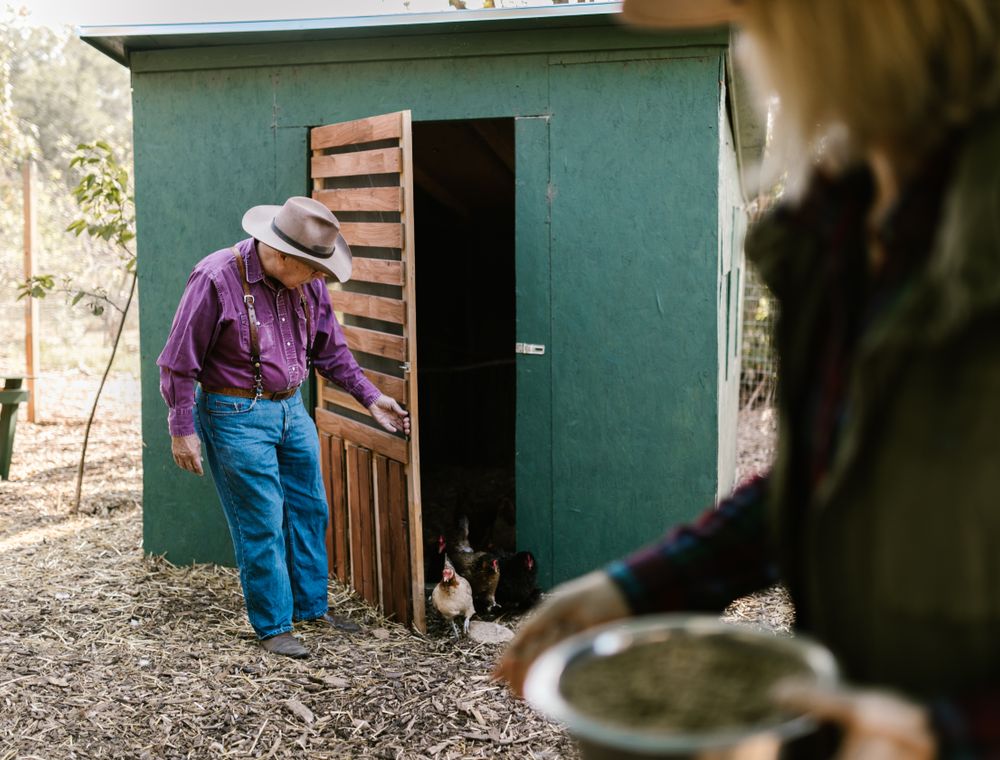
Short answer: A working poultry day in Ghana runs from first light to lock-up, and the order of the jobs matters more than the length of the list: count the birds and pick up any deaths first, then check water, feed, eggs and the house. A 300-hen layer house needs a little over two hours of hands-on work, most of it in the morning, plus a short heat check at midday in the hot months and about half an hour around dusk.
Key takeaways
- Count the birds and remove any dead ones before you touch the feed.
- Check the drinkers before the feeders, because a thirsty bird in heat declines faster than a hungry one.
- Collect eggs at least twice a day when the house is hot, and get them out of the sun at once.
- Treat midday as a heat check, not a feeding time.
- Count the birds in at dusk before you latch the door.
- Write down what you saw in the same hour you saw it, not at the end of the week.
Why the count comes first, every morning
The first job on a poultry farm is not feeding. It is counting. Walk into the house before the birds are fully awake, stand still in the doorway for a minute, and count what you can see. A bird standing hunched in a corner, one that has not come to the feeder, and any bird lying still on the litter all need a look before the rest of the day starts.
The count tells you two things. The first is how many birds are alive, which you compare with yesterday's figure. The second is where the problems are, because sick birds show themselves first by sitting apart from the group. A dead bird left in the house for a few hours is a bird the others will peck at, and it is also a source of smell and flies, so remove it at once and put it in a sealed bag for disposal according to your vet's advice.
Write the number down before you start the rest of the day. Two numbers, the birds you counted and the birds you expected, are enough. If the two differ by more than one or two, something happened in the night, and you need to find out what before you carry on.
First light and the first hour
On our side of the country the day starts with first light. Sunrise moves about through the year, but it sits roughly between 5:50 and 6:30 in the morning, so the first job is ready before most people in town are awake. A torch helps for the count, and it is worth having one by the door rather than in a bag.
Open the vents and any side curtains, and let the house air out before the birds start moving. Ammonia builds up overnight, especially in a house that was shut tight against the cold. A short sniff at the door tells you a great deal. If the eyes sting or the air is thick, open the vents wider and check the litter before you go any further, because the litter under the drinkers is usually where the smell starts.
Turn on any brooder heat, and check the chicks first if you have them. Young birds lose heat in the first hour of the morning, and a cold chick that is still huddled near the lamp at 7 o'clock needs your attention before the adults get their feed. Our broiler chicks page sets out the brooding basics for the first weeks.
Water before feed, and why the order matters
Check the drinkers before the feeders. A bird that has gone without water overnight will drink hard when she finds it, and a bird that is short of water in the morning heat will be short of it all day. Feed is the easier thing to go without for an hour, and a thirsty bird in the afternoon is the one that declines fastest.
Walk the drinker line and look at every point. A nipple that has stopped dripping is a bird that has no water, and a bell drinker with a crust of dried dirt on the rim is a drinker the birds will not use. Clean the bell drinkers and the trays daily, and flush the lines once a week with a clean solution your vet has recommended. Our water management notes set out the flushing and the water quality checks in more detail.
In the dry months, the water in the storage tank warms up in the day, and the drinkers warm with it. A bird drinking warm water will drink less of it. If the water in the drinker feels hot to your hand, lower the tank, shade the line or fill the drinkers twice in the day rather than once.
Feed, the morning round and the level in the bin
Feed follows water. Walk the feeders, look at the level in each pan, and fill to the mark you set for the day. Do not fill the feeders to the brim in one go, because a full feeder spills, wastes feed and draws rats. A few centimetres of feed in each pan is enough to see the birds eating, and it is easy to top up through the day.
Check the bin at the same time. Count the bags you have, write the number down, and check the seals for holes. A bag that has been chewed by rats loses more than the feed inside it, because the damp and the droppings it picks up spoil the rest. Keep the bin lid shut, and keep the day's feed in a closed container rather than the open sack.
The feed amount is set by the flock and the stage of the birds, and our broiler feeding schedule gives the stages for meat birds. For layers, the feed level in the pans is a better guide than a scoop count, because the birds eat more in the cool months and less in the heat.

Egg collection and getting the eggs out of the heat
Layers should be collected at least twice a day, and three times in the hot months. The first collection comes after the birds have laid their morning eggs, which is usually before ten o'clock. The second comes in the early afternoon, and the third late in the day if the house is busy. Eggs left in the nest box through the hottest hours get warm, and warm eggs lose quality faster than cool ones.
Take the eggs to a shaded, dry room as soon as you collect them. Keep the crates off the floor, away from the sun and away from the feed sacks, and sort out the cracked or dirty eggs straight away. Do not wash eggs in cold water, because the water can draw bacteria through the shell. A dry cloth or a light brush takes off most of the dirt, and the washing can wait until the eggs go to the buyer.
Count the eggs and write the number in the record, against the number of hens you have. A drop in lay on one day is worth a look at the birds that day, not a month later.
Midday in the hot months: the check that saves birds
Midday is not feeding time. It is a heat check, and it takes ten minutes. Walk the house with your hand flat in the air at bird height, and feel the difference between the sides of the house and the middle. A hot corner under the roof or a dead patch with no air moving is where the birds will pile up, and it is where you need to act.
Look at the birds rather than the thermometer. Birds that are panting, holding their wings away from the body, or sitting with their beaks open are too hot, whatever the thermometer says. Open the vents and the doors, make sure the fans or curtains are working, and check the drinkers again, because a drinker that has been running for six hours in the sun may be empty or warm. Do not spray the birds with water. A wet bird in still air cools more slowly, and you can make the problem worse. Our hot weather notes cover the cooling options for a closed house.
In the harmattan months the midday check changes. The house is cooler and drier, and the risk is dust, not heat. Look at the eyes and the nostrils of the birds, and wipe the dust from the feeders before you refill them.
The afternoon scrape, the sweep and the wet spots
Mid-afternoon is the time for the jobs that get skipped when the day is busy. Scrape the droppings board, pick up any feathers and loose feed from around the feeders, and sweep the walkway by the door. These jobs take less than twenty minutes in a house of 300 birds, and they stop the smell and the flies that come with a dirty floor.
Walk the litter and look for wet spots. A patch that is wet, caked or clumped is usually under a drinker that leaks or near a door where the rain comes in. Fork it over, take out the cake and replace it with dry litter. A small wet patch left alone for a week becomes a large one, and the birds will pick at it. The fuller story of litter care is in our deep litter guide.
Check the nest boxes at the same time, and replace any box with a broken lid or a cracked floor. A hen that finds a damaged box will lay on the floor instead, and that is where the eggs get dirty and where the birds start pecking at them.
Dusk: counting the birds in before the latch goes on
Sunset falls around six in the evening or a little after, and the birds go to roost as the light fades. Be in the house before they settle, and count them in. The count at dusk is the one that matters most for the night, because any bird out in the run is a bird that will be taken by a dog, a rat or a snake before the morning. Count twice if the numbers are close to yesterday's.
Check the water and the feed one more time before the lock-up. Top up the drinkers if they are low, and leave the feed pans at the level you want for the morning. Look at the birds on the roost for any that are sitting on the floor, and note them. Close the doors, latch them from the outside, and check the sides. A gap the width of a finger at the base is enough for a rat to get in, and a snake will use a gap that size too.
The light goes off last. If you use a lamp in the house for the young birds, check the heat is set for the night and the lamp is safe. Our predator guide covers the night-time risks in detail.
Need chicks for your next batch?
Send breed, number and town. We reply with price, hatch date and delivery cost in writing.
The timetable for a 300-hen layer house
The table below is a realistic day for a layer house of 300 hens with fixed drinkers and a bin of feed by the door. Times are approximate, and the minutes are the hands-on time for one person. A broiler house is run the same way, with more weighing and fewer eggs to carry.
| Time | Task | What to look for | Minutes |
|---|---|---|---|
| First light | Count the birds, remove any dead, open the vents | Birds off the feeder, smell at the door | 15 |
| Early morning | Drinkers cleaned and filled, water checked along the line | Dry nipples, crust on bell rims | 15 |
| Early morning | Feeders filled to the day's mark, bin checked | Spilled feed, chewed bags, damp in the bin | 15 |
| Around 10 a.m. | First egg collection, eggs moved to the cool room | Cracked eggs, eggs on the floor | 15 |
| Midday, hot months | Heat check, vents, drinkers topped up | Panting, wings held out, huddling | 10 |
| Early afternoon | Second egg collection, nest boxes checked | Broken lids, dirty boxes | 10 |
| Mid-afternoon | Scrape the droppings board, sweep, check the wet spots | Caked litter, leaks | 20 |
| Dusk | Count the birds in, check the water, latch the doors | Birds on the floor, gaps at the base | 20 |
| After dark | Final check of lamps and the lock | Lamp heat, latch secure | 5 |
That adds up to roughly 125 minutes on a normal day, a little over two hours, with the heat check and the afternoon scrape taking up most of the difference between a morning job and a full day. A worker who does the same tasks in the same order will finish sooner than one who starts with whatever looks urgent.
The record you keep in ten minutes
The day's record is short. It needs the birds counted, the deaths and the cause if you know it, the feed used, the eggs collected, the water problems and the temperature at midday. Write it on a sheet by the door, and transfer it to the book at the end of the week. The habit is worth more than the format.
A few lines a day tell you things that a monthly review cannot. A slow drop in eggs over four days, a rise in feed use without a rise in lay, or a run of dead birds on the same day each week each point to something in the house or the routine. Our record keeping guide sets out the columns that matter most, and it is the best place to start if your book has no columns yet.
Weekly jobs that do not fit into a single day
Some jobs come round once a week and get dropped when they are not written down. Put them on a fixed day, and do them before the day's routine starts, so the rest of the week has a clear shape.
- Flush the drinker lines and check the water tank for sludge.
- Clean out the nest boxes, replace any damaged lids and check for red mite in the joints.
- Top up the litter in the wet corners, and turn the litter over in the house.
- Weigh a sample of birds for the growth record, using the method in our weighing and growth guide.
- Check the vaccination and worming dates against your vet's schedule, and book anything that is due.
- Sweep the cobwebs from the roof and the vents, because a blocked vent is the one nobody sees until the birds suffer.
Monthly, add a walk round the perimeter to check the fence and the gates, and review the feed and egg figures against the month before. Our biosecurity guide covers the visitors and the footbath routine that belong on the same list.
Handing the routine to someone else for a day
The routine fails when only one person knows it. If you are going to be away, write the routine out as a numbered list on a card by the door, and walk the worker through it once in the house with the birds present. A worker who has done the count once knows what a normal number looks like, and will raise the alarm when it does not.
Give the worker a clear list of the things they must not do. They should not change the feed level without telling you, should not open the house in the rain without checking the litter, and should never leave a door unlatched because the flock looked settled. Give them a phone number to call for a dead bird, a sick bird or a power cut, and make sure the number works before you leave. Our order form and the WhatsApp line on +233 24 915 1503 are good numbers to keep on the list, because a question about chicks or delivery can be answered in the same message.
The shortcuts that cost birds in the daily routine
- Feeding first and watering later, so the birds drink hard at midday in the heat.
- No morning count, so a bird found dead on Friday has been dead since Wednesday.
- Eggs left in the nest boxes through the afternoon, where they warm up and crack.
- Drinkers topped up once a day in the hot months, when they need a second look at noon.
- Doors latched at dusk without a count, and a predator visit that finds the one bird left outside.
- The record kept in the head, and the trend missed until the lay has already fallen.
If you are still choosing the birds for the house, our layer day-old chicks page lists what we hatch and the box sizes, and the current price list is on its own page. A routine is easier to keep with birds that suit the house you have, so the choice of breed matters as much as the timetable.
Questions farmers ask
How long does a poultry farm routine take each day?
For a 300-hen layer house with fixed drinkers, expect around 125 minutes of hands-on work spread across the day, with the biggest block in the morning. A broiler house takes a similar time, with more weighing and less egg handling. Keep the order of the jobs fixed, and the time will settle down within a few weeks.
Should I feed or water the birds first in the morning?
Water first. A bird that has gone all night without water drinks hard when she finds it, and a dry bird in the heat declines faster than a hungry one. Check the drinkers, clean any with dirt on the rim, and then fill the feeders to the day's mark.
How many times a day should I collect eggs?
Twice a day is the minimum, and three times in the hot months is better. Collect the first batch before about ten in the morning, and get the eggs out of the sun and into a dry, shaded room at once. Do not wash them in cold water, and sort out cracked or dirty eggs before they go to the buyer.
What should I do at midday on a hot day?
Walk the house and check the birds rather than the thermometer. Open the vents and doors, check the fans or curtains, and top up the drinkers. Birds that pant, hold their wings out or sit with open beaks are too hot. Do not spray them with water, because a wet bird in still air cools more slowly.
How do I know if the birds are all in before dusk?
Count the birds as they settle, and count again if the number is close to yesterday's. Any bird still outside after the count should be brought in before you latch the doors. A gap the width of a finger at the base of a wall is enough for a rat or a snake to get in, so check the sides as well.
What should a worker check if I am away for a day?
The worker should do the morning count, remove any dead birds, check the drinkers and the feed, collect the eggs, and latch the house at dusk after a count. Give them a short list on a card, a phone number for emergencies, and clear instructions not to change the feed level or leave a door open without calling you.
What is the most useful thing to write in the daily record?
The count at first light, set against the number you expected, is the most useful line. Add the deaths, the feed used, the number of eggs and the midday temperature if you measure it. A few lines a day show a trend that a monthly review will miss, such as a slow fall in lay or a steady rise in feed use.


