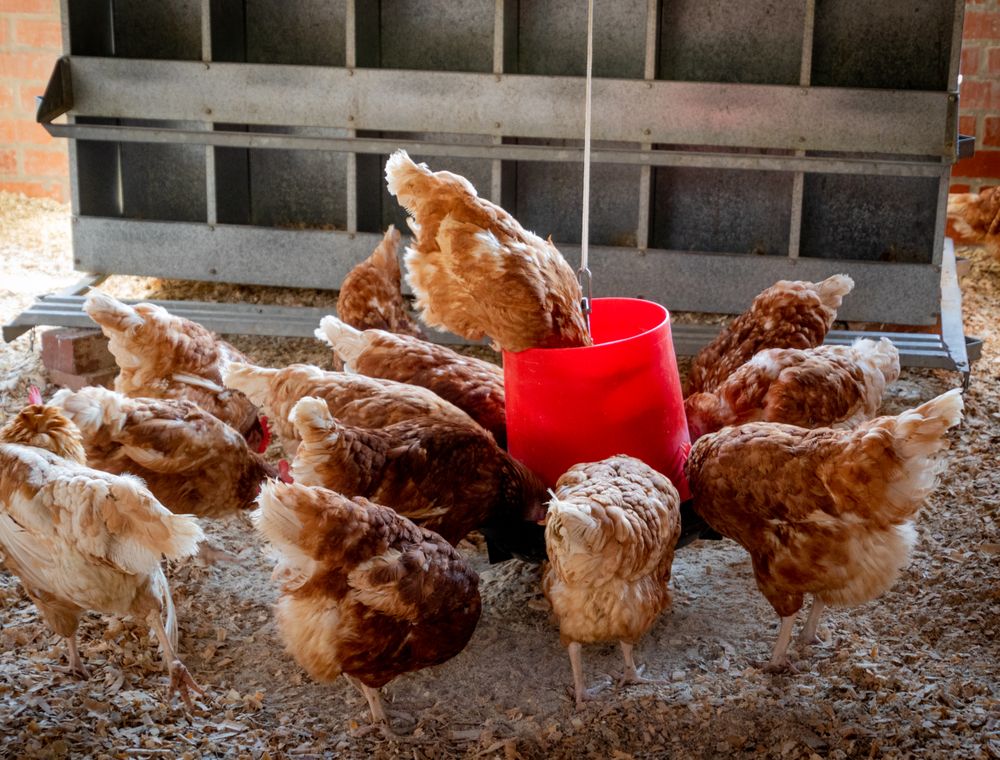
Short answer: Feeder and drinker numbers decide how evenly a flock grows. As a starting rule, use one chick tray or fount per 50 chicks for the first two weeks, then one bell drinker per 70 to 100 broilers or one nipple per 8 to 12 birds. Allow roughly 3 to 5 centimetres of trough per broiler and 10 to 12 centimetres per layer, and set every feeder rim and drinker lip at back height.
Key takeaways
- Equipment count decides whether every bird can feed at the same time
- Chick trays and founts: one per 50 chicks for the first two weeks
- Bell drinkers spill, nipples keep litter dry but need clean lines
- Set rims and lips at back height and adjust them every week
- Clean drinkers weekly, and more often in heat and rain
- Test new equipment empty before the chicks go in
Equipment decides how much each bird eats
Most farmers ask about feed brands and vaccines before they ask about feeders. Then they wonder why the flock is uneven by week four. The feeder and drinker are where every bird meets its food and water, so their design and number decide who eats and who gets pushed off.
When a flock has too few feeding spaces, the strong birds take the front and the slower birds wait at the back. The gap widens every day. By the time you see it in weight, the cheap fix has passed. We have seen houses that look full of birds but are really two flocks, one heavy and one stunted, because the equipment was short.
Count equipment as carefully as you count chicks. It is the cheapest insurance you will buy for the flock.
Feeder types you will meet on Ghanaian farms
Chick feeder trays are shallow round or square trays that sit on the litter for the first two weeks. They are cheap and easy to fill, but chicks scratch feed out and tread it in, so they need topping up and cleaning several times a day. Our brooder setup guide shows where the trays belong in the first week.
Pan feeders are the grow-out version of the same idea: a larger pan with a rim that hangs at back height. They suit broilers well because they are simple to adjust and do not waste much.
Trough or chain feeders are long channels that run along the house. They give every bird a place along the length, which makes them the usual choice for a larger broiler house or a layer house. Hanging tube feeders hold feed in a central column with a plate at the bottom. They suit smaller flocks and keep feed off the floor, but they need height adjustment as the birds grow.
Whatever you choose, the feeder should stop birds scratching feed onto the floor, and it should not hold so much that feed sits and goes stale.
Drinker types: bell, nipple, fount and cup
Chick founts are the jar-style drinkers that sit on a base. They are the standard for the first days, but they must be filled often and kept clean. Chicks can drown in a fount that is too deep for them, so use the correct base or stones in the tray.
Bell drinkers are the common grow-out drinker in many Ghanaian houses. They are cheap, easy to clean and birds drink from them readily. Their weakness is spill. A bell drinker that sits too low or gets knocked will soak the litter around it every night.
Nipple drinkers run along a pipe with a small valve at each point. They keep water off the litter, which is why they suit a deep litter house so well. They need clean, low-pressure water and regular flushing, because a nipple that sticks or drips will flood one corner. Our deep litter guide covers how a leak like that turns into a crust.
Cup drinkers sit on a pipe like nipples but deliver water into a small cup. They sit between the two, but the cups collect dirt and need a daily look.
How many you need: starting numbers per bird
These are typical planning numbers used across the trade. They are a starting point, not a rule for every house. Check them against your equipment supplier's figures and against what the birds do in the first week. Chicks should not queue, and grown birds should reach feed without shoving.
| Equipment | Chicks, first two weeks | Broilers after week two | Layers |
|---|---|---|---|
| Chick tray or pan | 1 per 50 chicks | Not used | Not used |
| Chick fount | 1 per 50 chicks | Not used | Not used |
| Bell drinker | Not used early | 1 per 70 to 100 birds | 1 per 70 to 100 hens |
| Nipple drinker | Not used early | 1 per 8 to 12 birds | 1 per 10 to 12 hens |
| Trough feeder length | About 2.5 cm per chick | 3 to 5 cm per bird | 10 to 12 cm per hen |
| Hanging tube feeder | Not used | 1 per 50 to 60 birds | 1 per 25 to 30 hens |
The numbers are per bird, so do the sum for your own house. Count the birds you will have at peak, not the number on the order slip. Mortality is usually small, but a shortfall of a few birds still matters when the equipment is already tight. Layer flocks can use the same sums, and our layer day-old chicks page is the place to start if you are weighing up layer chicks.
A worked example for 300 broilers
Take 300 broilers in a house about 6 metres long. For the first two weeks, 300 divided by 50 gives six chick trays, or a mix of trays and founts, as long as no chick is more than a few steps from water. After week two, switch to the bird-count sums. Three bell drinkers at one per 100 birds is the bare minimum, so four is the comfortable number.
If you choose nipples instead, 300 divided by 10 gives 30 nipples, spread along the lines so every section gets flow. Feed space at 4 centimetres per bird comes to 1,200 centimetres, or 12 metres of trough. A 6-metre house cannot hold 12 metres in one run, so you would fit two runs side by side, or combine trough and pans. That is the sort of sum that shows the trough is too short before you have paid for the chicks.

At our starting price of GH₵20 per chick, the 300 chicks alone come to GH₵6,000. A feeder shortfall that holds back the slower birds for a week costs more across the flock than the price of the extra equipment, and you cannot get the week back. Feed volume climbs fast after week three, so our broiler feeding schedule is worth reading alongside these sums. The house layout itself is covered in our broiler house setup notes.
Height and position matter more than the count
Set every feeder rim and every drinker lip at the height of the bird's back. Birds that have to reach up waste feed and spill water. Birds that have to stoop get dirt into the feed and the drinker. Adjust the height every week as the flock grows, and do it by looking at the birds, not by the calendar.
Chick trays go on the floor at first and rise as the chicks grow. Bell drinkers should be lifted so they do not sit in the litter. Nipple lines are set at a slight angle so the bird strikes the pin, and the line should be checked at the start of each week.
Keep feed and water apart if you can. Feed next to a drinker gets wet, and wet feed moulds faster in Ghana's humidity. Layers have their own feeding rhythm, which our layer feeding guide sets out, so match the trough to that plan rather than to the broiler sums.
Dust, spill and damp: the Ghana problems
In the harmattan, dust settles into open drinkers and feeders within hours. Partly cover the drinkers, wash them more often and keep feeders clear of dusty litter. In the rains the problem flips to damp. Feed left in an open pan takes on moisture and forms mould, which can upset the birds' guts. Only fill the feeders you can empty within a day or two.
Spill is the everyday problem, because birds in a hot house flick water and feed out of the equipment. A bell drinker with a loose rim makes a puddle in minutes. Look at the litter under every drinker on the morning round, and you will see the spill before it becomes a crust.
Feeders on the floor pick up soil and droppings. Raise them as soon as the birds can reach them without stooping. Spilt feed also draws rats, which carry disease, so sweep the floor under the equipment every day; our biosecurity guide covers rodent control in more detail.
Need chicks for your next batch?
Send breed, number and town. We reply with price, hatch date and delivery cost in writing.
Local options: what to check before you buy
Local metal workers make feeders and drinkers from tin and galvanised sheet, often for less than imported equipment. That is good for a small farm, but check three things before you pay. Look for sharp edges and burrs on the rims, because birds scratch themselves on them. Check the seams, because a poorly soldered joint leaks onto the litter. Check the weight, because a feeder that tips when a bird jumps in wastes feed and gives you nothing back.
Plastic feeders and drinkers are light and easy to wash, but they crack in the Ghanaian sun within a few seasons. Buy the heavier, UV-resistant type if you can, and set them in the shade of the house rather than in open sun.
Whatever you buy, test it empty for a day. A feeder that rocks, a drinker that wobbles or a nipple that drips at low pressure will show the problem before the birds arrive.
Cleaning and checking the lines every day
A feeder left full of old feed grows mould in the humidity. An unwashed drinker grows a slime layer, called biofilm, which shelters bacteria and makes disinfectants work less well. Clean drinkers at least once a week, and daily in hot or rainy weather. Empty and scrub feeders at the end of each stage, and never top up old feed with new.
In the heat, check the water level twice a day, morning and afternoon. A drinker that runs dry for an hour in the afternoon can cost you more weight than you ever gain back. Nipple lines need a flush each week so dirt does not block the valves. Our water quality guide covers the tank and line side in more detail.
If you are planning the next batch, WhatsApp us on +233 24 915 1503 and we can talk through flock size before you order. Start on the broiler day-old chicks page, or go straight to the order form.
Mistakes that waste feed and water
These come up again and again when farmers call us after a poor first month.
- Setting chick trays on wet litter by the door, where they fill with damp shavings within a day
- Buying bell drinkers for a house that needed nipples, then fighting spills every night
- Filling feeders to the top at every visit, so the feed at the bottom goes stale
- Counting feeder length from the drawing rather than measuring the house
- Leaving feeders under the drip line of a leaking roof
- Forgetting to raise the equipment as the birds grow, so half the flock stands on tiptoe
Each of these is cheap to fix when you spot it on the first morning round. Each one is expensive after three weeks.
Equipment check before the chicks arrive
- Count the birds you expect at peak, then work out chick trays, founts, drinkers and trough length from the numbers above.
- Set chick trays and founts on dry litter, away from the door and out of the drip line.
- Place bell drinkers on a dry patch, and check that nothing rocks when you push it.
- Run water through the nipple lines before the chicks arrive, and check that each pin drips only when pressed.
- Set the rim height at back level, and write down the date you last adjusted it.
- Plan a daily water level check and a weekly wash of drinkers and feeders, and put both on the wall.
Questions farmers ask
How many drinkers do I need for 100 broilers?
After the first two weeks, plan on two bell drinkers, since one drinker at one per 70 to 100 birds sits right at the limit. If you use nipples, aim for roughly ten nipples spread along a line so every section gets flow. Place them where birds walk to the feeder, not in the far corner. In hot weather, check the water level at midday, because one drinker that runs dry costs more than the spare drinker.
Chick trays or chick founts, which first?
Use both in the first two weeks. Trays make feed easy for chicks to find, and founts hold the water, so most farms run them side by side. Keep feed and water apart so the feed doesn't get wet. Raise trays and founts a little as the chicks grow, so they don't scratch dirt into them. Empty and wash them daily in the first week, because chicks foul water quickly.
Should feeders sit on the floor?
Only in the first days. Chicks need to reach the feed without climbing, so floor trays are right at the start. Once the birds can reach a feeder without stooping, lift it to back height. Feeders on the floor pick up soil and droppings, and birds scratch feed out of them as they go.
Are nipple drinkers better than bell drinkers?
Nipples keep the litter drier, which matters in a deep litter house, and they waste less water. Their downside is that they need clean, low-pressure water and regular flushing. If your water is dirty or your supply pressure is uneven, bell drinkers are the safer choice. Many farms start with bells in the first weeks and move to nipples once the water has been tested and the lines are being flushed weekly.
What is the right way to clean a bell drinker?
Empty it, scrub the bowl and the rim with a brush, and rinse it well. Disinfect with a product made for poultry equipment, then rinse again before refilling. Do this at least weekly, and daily in the hot or rainy months. Bell drinkers that sit in litter also need the ground around the base cleared of wet bedding. A slime film inside the bowl means it is overdue, and it will show up in the birds' intake sooner or later.
What causes most of the feed wasted in a poultry house?
Feeders that are too high or too shallow, feed left in damp pans, and birds scratching feed onto the floor. Overfilling is a common cause too, because feed sitting at the bottom of a full pan goes stale and birds pick around it. Fill feeders to a set level on each visit, check the rims weekly and sweep up the floor spill.
Why are my birds crowding at one end of the house?
Usually there is too little equipment, or it sits at the wrong height. Check the feeder and drinker count against the bird count, then look at position. Birds clustering around one drinker often mean the others are dry or spilling. Walk the house at midday and at dusk, and add one more drinker or feeder where the crowd sits before you change anything else.


