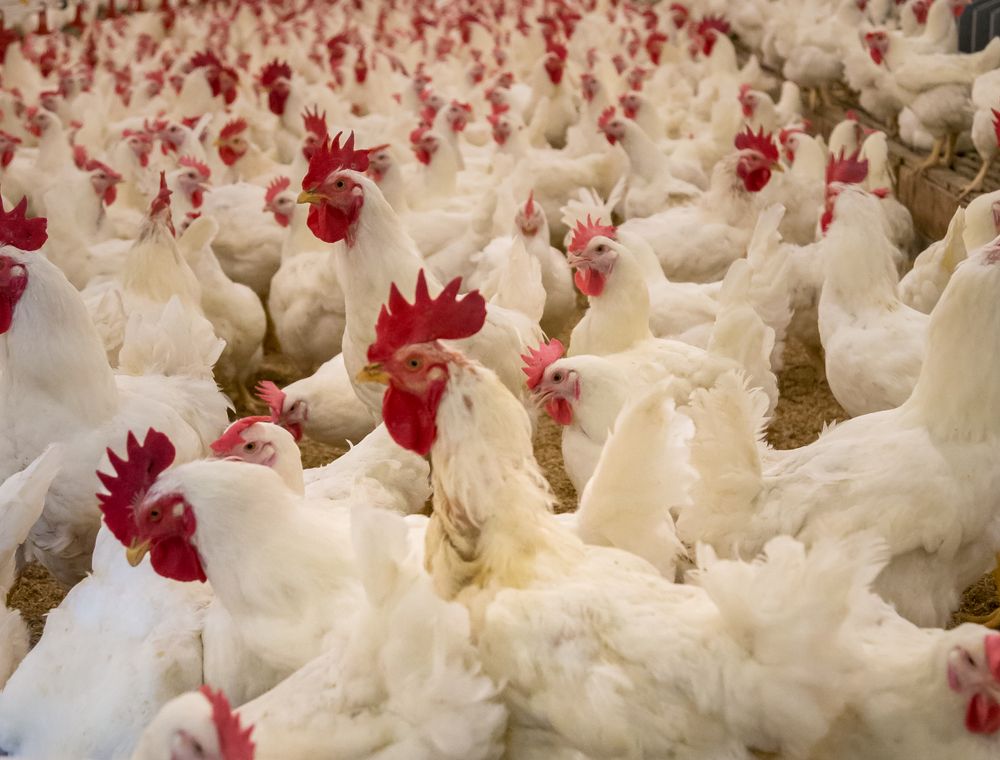
Short answer: A broad breasted turkey is bred to put breast meat on quickly, and its legs and circulation are usually the first part of the bird to suffer when the house is wrong. Start poults only when you can keep the litter dry, the brooder steady and the feed changes on time, because those three things decide most early losses. Sell at the weight your buyer wants, not the weight you hope for.
Key takeaways
- Broad breasted birds grow fast, so a fault in heat, water or feed shows up in their weight within a week.
- Most commercial broad breeders come from specialist stock bred by artificial insemination, so buy market poults rather than trying to keep your own breeding toms.
- Keep litter crumbly and drinkers at back height; wet litter causes the footpad and hock problems we see most.
- Feed by age and stage, weigh ten birds every week, and compare the average with the breeder's chart.
- Give shade and moving air in the afternoon, and do handling and weighing early in the morning.
- Book the buyer before the birds reach weight, because a heavy turkey left too long costs feed, floor space and welfare.
Why a broad breasted turkey is a different animal
The first question most farmers ask about a broad breasted turkey is how big it gets. The second question, the one they ask too late, is whether it will still be standing at sixteen weeks.
A broad breasted white turkey has been selected for generations for one thing: a deep, heavy breast that sells. That selection makes it the bird behind most of the turkey meat on shop shelves and hotel menus, and it is also why it behaves differently from the local turkeys many of us grew up around. A commercial tom often reaches market weight somewhere between 16 and 22 weeks. Hens get there sooner and lighter. Feed, space and strain all move that timing, so treat any single number as a guess until your own birds have been weighed.
In practice the trade is simple. You get a lot of meat in a short time, and you pay for it with a bird that has less margin for error. A village chicken with a poor start usually recovers. A broad breasted poult with a poor start often does not, because the frame and the heart are working to keep up with a muscle that keeps getting heavier.
- Broad breasted birds grow fast, so small faults in heat, water or feed show up in weight within a week.
- They are heavy long before they are mature, which puts strain on legs and the heart in the last month.
- They do not forgive crowding, wet floors or a late feed change the way a local bird does.
We say this to every first-time buyer. It is not a reason to avoid the bird. It is a reason to build the house and the routine before the box arrives. If you want to see the wider range of birds we supply, start at our breeds page.
Why a broad breasted tom often cannot breed on his own
Ask a turkey keeper what happens when a tom gets too heavy to mate and you will get a long, sad story. The breast that makes the bird valuable at market also gets in the way of the act itself. Many toms of this type are too heavy to balance on a hen, and the ones that try can hurt her, or themselves.
That is why commercial broad breasted flocks are bred by specialists using artificial insemination, and why parent stock is managed very differently from the birds that go to market. For a small farm this matters in one simple way. You buy poults. You do not breed them. If you keep a broad breasted tom with a few hens and hope for a second generation, you will spend a season watching the tom struggle and the eggs come up infertile.
If you are thinking about breeding turkeys on your own land, hatching eggs is a separate project. Our guide to hatching turkey eggs covers the incubation side, and it assumes you already have a source of good eggs. Ask us which lines we can supply for breeding and what they need from you before you plan a breeding unit. We would rather say no on the phone than see you lose a breeding season.
A quick test: if your plan needs a tom to produce the next generation, you are planning a breeding unit, not a meat flock. Those are two jobs with different housing, feed and records, and most first-time growers do better learning one of them properly first.
Opening a box of ten poults without losing the weak ones
A box of ten poults has spent the whole journey in the back of a vehicle, and the first ten minutes after you open it tell you more than the paperwork does.

- Open the box in a shaded, draught-free spot, not in the sun beside the car.
- Count every poult out loud and write the number on a card. Compare it with the count we give you when the box leaves the farm.
- Pick up each poult you are unsure about and check its eyes, its beak, its navel and whether it can stand and hold its head up.
- Put the strong ones straight under the brooder with shallow drinkers at the edge of the heat.
- Set aside any that are chilled, sticky or unable to stand, and keep them warm and separate from the rest.
- Photograph the box and any dead birds on the same day and send the photo to our WhatsApp, +233 24 915 1503.
Our rule for dead on arrival birds is simple. We count with you on arrival, and any bird that is dead on arrival is replaced free in our next hatch. The photo the same day is what makes that work. Without it, the count is only your word against a slow courier, and nobody can make a fair decision.
Poults are not chicks. They bunch harder, they are slower to find water, and a poult that stops moving for a few minutes is in more trouble than a chick doing the same thing. Keep the light low for the first hours so they settle rather than pile up, and check the heap in the corner of the brooder every time you pass.
If you are buying through our turkey poults page, the same handling rules apply on the day the box arrives. Delivery to your town is quoted in advance, and our delivery page explains how we handle longer journeys and collection from the farm.
Brooder heat for a bird that grows faster than it can stand
The brooder for poults has to be warmer and drier than most people expect, and the temperature has to come down on a schedule rather than on a feeling.
In the first week we aim for roughly 35 °C under the heat source at poult height, with a clear area where birds can walk away from the heat. Lower it gradually each week and watch the birds, not the thermometer alone. Birds piled in one corner are cold. Birds panting around the edges are too hot. Birds spread evenly and sleeping quietly are about right.
Two things catch new growers. First, a thermometer hung at the top of the brooder reads hotter than the litter where the poults stand, so put it at poult height. Second, a broad breasted poult cannot make up for a cold night the way a village bird can. A drop in the harmattan after midnight can set back a whole box. Keep the heat source on through the night for the first weeks and check the birds before dawn.
Use dry litter, such as clean wood shavings or chopped rice husk, to a depth that stays dry for the first few days. Change the litter the moment it clumps around the water. In the early weeks it is cheaper to change litter often than to treat a bird whose hocks have burned.
For the full brooder layout, read our notes on brooder ring setup while the box is still on its way. The principles carry across to turkeys. The heat sources, sizes and litter depths do not.
Feeding for breast meat: three feeds and when to switch
Each stage asks for a different balance of protein and energy. Too little protein and the frame stays weak. Too much energy too early and the birds get fat before they get strong. Feed by age and by what the birds actually eat, and use the feed mill's label as the starting point.
| Stage | Roughly from | Typical crude protein | What to watch |
|---|---|---|---|
| Starter | Day one to about 4 weeks | Around 26 to 30 percent | Feed eaten in the first day, and steady water intake |
| Grower | About 4 to 10 weeks | Around 22 to 25 percent | Weekly weights, legs and feather cover |
| Finisher | About 10 weeks to market | Around 18 to 21 percent | Walking, breast cover and body condition |
These ranges are typical for commercial turkey feeds. Your mill's label beats our table, and your breeder's feeding guide beats both. Use the table to ask the right questions when you buy a bag.
Change stage when the birds reach the age on the chart and the current bag is nearly finished. Do not change because you have run out of patience. A switch in the middle of a bag leaves you with a mixture nobody can measure. Write the date of each switch in your record, next to the weight.
We see farmers move birds onto finisher feed early because they want them to look big. A big-looking poult on finisher feed often has weak legs at ten weeks, and what you saved on grower feed goes straight into vet bills and culls. Feed the stage first, then the weight.
For the wider picture of how mills build these rations, our poultry feed basics guide explains what protein and energy do in the bird.
Legs first: how lameness shows up in a heavy turkey
Lameness is the problem growers of this bird mention most, and it rarely starts with a broken bone. It starts with a bird that sits a little more than it did yesterday.
Watch the birds walk to the feeder each morning. A healthy bird gets up without fuss and walks the length of the house. A bird with a problem sits down near the door, waits for others to pass, or drops a wing to balance. Pick up any bird that sits on its hocks for long periods and look at its feet and hocks. Swollen joints, a leg held out to the side, or a bird that will not put weight on one foot needs a vet's eye, not a guess from the farm.
- Heavy birds on wet or slippery litter are the most common cause we hear about.
- Rapid weight gain puts strain on joints before bone and cartilage have caught up.
- An uneven ration, or a mineral or vitamin problem in the feed, can leave legs weaker than they should be.
What you can change today is the floor and the walking space. Put down enough dry litter that no bird stands in a wet patch. Spread the feeders and drinkers so the strong birds do not block the weak ones. Check for sharp edges on pens and waterers, because a torn foot in a heavy bird becomes an infected hock within days.
For any bird that is clearly lame, separate it, put food and water within easy reach, and call your vet. Do not give medicine you picked up from a shop counter, and do not give a bird human painkillers. Follow your vet's advice and schedule, and bring your weight records to the visit. They will show whether the problem started with the feed, the floor or the bird.
Wet litter, footpads and the water line
If the litter is wet, the hocks and footpads will burn. You see it in the flock before you smell it in the house. Dark, crusty patches appear on the feet, and birds stand on the back of their hocks rather than the pads.
Test the litter with a handful. Squeeze it in your fist and open your hand. It should crumble. If it holds a clump, it is too wet, and the cause is almost always one of three things: a drinker that is too low or leaking, a waterer set too high so birds spill it, or a house that does not let the damp air out.
Set the drinkers at back height for the birds and check nipple or bell drinkers at least twice a day in the heat. A broad breasted turkey drinks a lot in the afternoon. A drinker that was fine on Monday can drip by Friday if a fitting has loosened. Keep a clean cloth near the drinker line for spills, and move drinkers outward as the birds grow rather than letting them crowd one spot.
Ventilation matters as much as the drinker. Ammonia from wet litter builds up in a closed house faster than most people think, and it stings the eyes and lungs of birds already working hard to breathe in the heat. Open the sides wherever the weather allows, and keep the air moving across the floor rather than over the roof.
Heat, shade and the hot afternoons around Kasoa
Afternoons in the dry season are hard on a bird that carries a lot of meat. A broad breasted turkey in full feather can overheat well before a light bird of the same age. You see it as open-beaked panting, wings held away from the body, and birds bunched in the one patch of shade by the feeder.
Give them shade that moves air. A shade net over the run and open sides in the house do more than a single fan in one corner. Keep water cool and clean, because warm water in the drinker is the first thing birds stop drinking. Do not move birds, weigh them or handle them in the hottest part of the day. Schedule that for first light or the cooler end of the afternoon, after the house has shed its heat.
The reverse problem comes in December and January. Harmattan dust gets into the house, the nights can be cool, and the dust makes birds sneeze and coats the feed. Cover feed bins, sweep the house in the morning rather than the afternoon, and keep the brooder area warm for young poults through the cold nights. Wet litter in the rains is a separate problem, and drainage and ventilation handle that one.
The heat question also changes what you should sell. A bird that has been in the afternoon heat for two weeks at weight is harder to sell well than one that was moved to market before the hot spell. Plan the final weeks around the calendar, not around the bird.
Need chicks for your next batch?
Send breed, number and town. We reply with price, hatch date and delivery cost in writing.
Weighing a sample without stressing the flock
Weighing is the cheapest early warning system you have, and most farmers skip it because it feels like extra work. It is not. Ten birds weighed each week tell you more than a month of looking.
- Pick ten birds at random, not the biggest ones you can catch.
- Catch them quietly, one at a time, with both hands under the body. Do this in the cool of the morning.
- Weigh each on a hanging spring scale, or on a kitchen scale with a bucket, and write the number down with the date and the house it came from.
- Work out the average, then compare it with the breeder's chart for that age.
- If the average is behind for two weeks running, check feed intake, water and litter before you change anything else.
Keep this record yourself. It is the only way anyone can help when a batch falls behind, including us. A single heavy bird tells you nothing. A set of ten, weighed the same way each week, tells you what the house is doing.
When the average falls behind, resist the urge to change three things at once. Change one, wait a week, and weigh again. If you change feed, water and stocking density in the same week, you will never know which one helped.
Toms, hens and the buyer who wants a particular weight
Toms grow heavier and later than hens, and they look very different at twelve weeks. Sexing poults at hatch is unreliable, so a box can give you a mix that does not match what your buyer wants. Plan for the mix before the box arrives.
Decide who your buyer is first. A family that wants one bird for a festive table may want a smaller bird, and a caterer may want a fixed weight they can portion. Ask them what weight they buy, and whether they pay by live weight or by the dressed bird. Those answers decide when you sell and how many toms you need to hold back.
Sell at the weight the buyer wants, not the weight you hope for. A tom two kilos heavier than the buyer needs is not worth more to them. It is worth more feed, more floor and more risk of a leg problem for you. Book the buyer before the birds reach their weight, because a heavy bird left a week too long costs feed every day and gets harder to move without injury.
Our price list gives the starting cost of each bird we supply. Poults come in boxes of ten, so a mixed box is a cost you carry all the way to the market.
The mistakes we see most with broad breasted birds
Most of these are small. Each one adds a little risk, and together they explain most of the bad seasons we hear about.
- Ordering poults before the brooder and the grower house are ready, so the box sits in the wrong place for a day or two.
- Keeping the house dry on paper but not in practice, with a drinker that drips into the same corner every afternoon.
- Changing feed by how the birds look rather than by age and the record.
- Leaving the sale until the birds are too heavy to move comfortably in a crate.
- Putting turkeys near chickens and assuming the two can share a yard. They need separate planning, and our general turkey guide covers the separation rules in detail.
- Not weighing anything until a problem is obvious, when the flock is already behind.
None of these needs expensive equipment. They need a routine, a notebook and someone who checks the birds in the morning and the evening.
Checklist before the first box of poults arrives
Go through this list the day before the box is due. If any item is missing, the poults will teach you the lesson for free.
- A brooder that reaches the right temperature at poult height, tested the night before.
- Dry litter in the brooder and the grower house, enough to last the first week.
- Drinkers placed at back height and checked for leaks.
- Starter feed in the store, dry, off the floor and covered.
- A shaded area in the run and a plan for the afternoon heat.
- A weighing bucket, a scale and a record sheet ready on day one.
- A named buyer, or at least a clear idea of who you will sell to and at what weight.
- Our WhatsApp number saved, +233 24 915 1503, and a plan to photograph any dead on arrival birds the same day.
When you are ready to order, use the order form on our home page. Price and delivery are both settled in writing before any money moves.
Questions farmers ask
Can I breed broad breasted turkeys from my own birds?
In most cases, no, and it is a different job from growing market birds. The breast on a broad breasted tom is often too heavy for natural mating, which is why commercial flocks rely on specialist stock and artificial insemination. For a small farm the practical route is to buy market poults and grow them out. If you want to breed, ask us what we can supply for that purpose before you plan a unit.
How long does a broad breasted turkey take to reach market weight?
A commercial tom often reaches market weight between about 16 and 22 weeks, and hens reach their target earlier and lighter. Feed, space, heat and strain all change the timing. Set your sale date from your own weekly weights, not from a figure you read online, and compare them with the breeder's chart.
Why are my turkeys limping at around ten weeks?
Lameness at this age usually comes from heavy growth on wet or slippery litter, sometimes combined with an uneven ration. Separate any clearly lame bird, put food and water near it, and call your vet. Follow your vet's advice and schedule. Do not give medicine from a shop counter or human painkillers to a bird.
Are broad breasted turkeys hardy in Ghana's heat?
They can cope with Ghanaian weather when the house is planned for it. The problem is the weight. A heavy bird in full feather overheats faster than a light one, so shade that moves air, cool water and handling in the early morning or late afternoon make a real difference. Harmattan dust and cool nights in December and January need attention too.
How many poults should a first-time grower start with?
Start with one box of ten. It lets you learn the brooder, the feed stages and the weekly weighing without risking a whole season. Once a first box has grown out cleanly and you know who will buy the birds, scale up in stages rather than in one large order.
What should I do if poults arrive weak or dead?
Count the birds with the driver or the person who receives the box, and photograph the box and any dead birds on the same day. Send the photo to our WhatsApp, +233 24 915 1503. Dead on arrival birds are replaced free in our next hatch. Keep the weak ones warm and separate, and watch them closely through the first night.
Do you deliver turkey poults outside Kasoa?
We deliver to all 16 regions of Ghana, and delivery is quoted to your town before payment. You can also collect from the farm in Opeikuma if you are close enough. Our delivery page explains how we pack and send the boxes, and the poults should be ready for the brooder as soon as they reach you.
Do broad breasted turkeys need a vet?
Yes. Find a vet who knows poultry and ask them to set a visit schedule for the flock. Bring your weight records and feed changes to each visit, because they show what has changed in the house. Follow your vet's advice on any treatment, and keep a record of every visit for the next batch.


