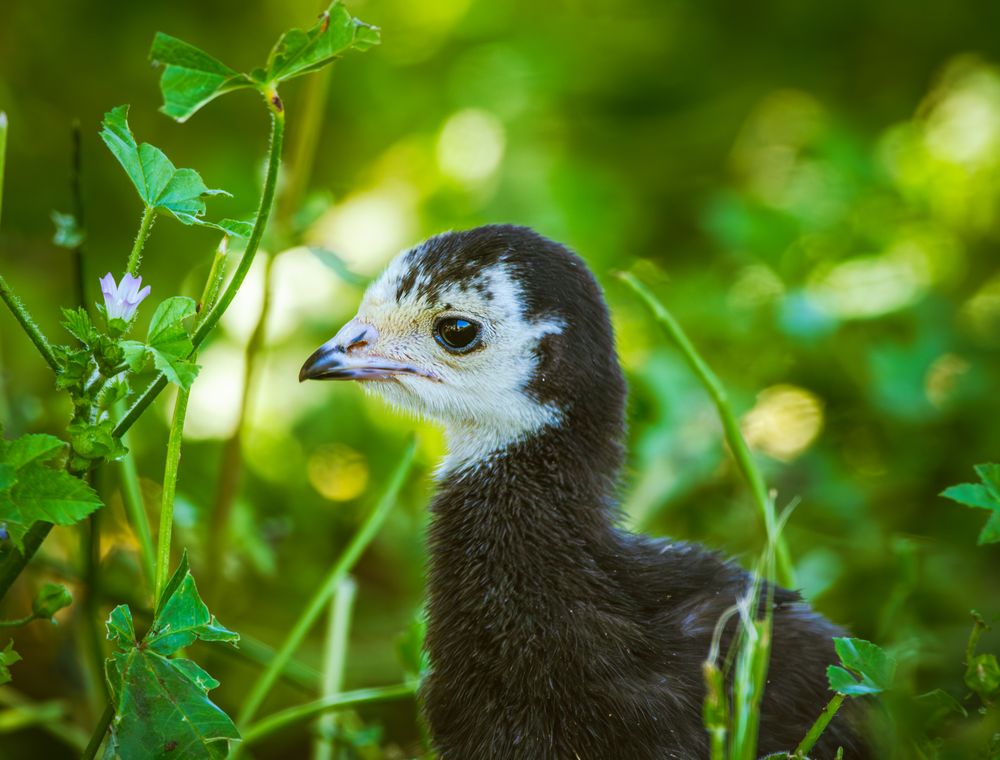
Short answer: Turkey eggs take 28 days to hatch, and they are big, thick-shelled and slow to lose water, so they need careful humidity and a longer, more deliberate schedule than chicken eggs. Keep the setter at about 37.5 °C with setting humidity near 55 percent, turn at least three to five times a day, candle on days 7 and 14, and lock down on day 25 with the humidity raised. Plan the timing backwards from your sale date, because a turkey hatched this month will not be ready for a December market.
Key takeaways
- Turkey eggs take 28 days, and the schedule is longer than for chickens, so the eggs stay in the machine for a week more than most farmers expect.
- Expect to lose a larger share of water than chicken eggs, but do not chase a weight target you cannot measure accurately on your scale.
- Lock down on day 25 and raise humidity for the hatch, rather than waiting for the first pip.
- Work out how many eggs you need for a box of 10 poults at your expected hatch rate, not at the hatch rate you hope for.
- Count backwards from Christmas demand. The turkeys sold in December were hatched months before, and a late set misses the rush.
A bigger egg and a longer wait
A turkey egg weighs roughly one and a half times a chicken egg, and its shell is thick and porous in a different way. The embryo takes the full 28 days, and nothing about the chicken schedule can be squeezed into it. Farmers who try to run turkey eggs on the 21-day chart usually open the machine on day 22 to find eggs with fully formed poults that have not yet pipped.
The bigger egg also changes the air. It holds more water inside, and it needs more heat to warm through. A tray of turkey eggs in a machine that suits chicken eggs can run cooler in the middle, and the poults in those eggs develop more slowly.
The 28-day calendar, from set to hatch
Here is a calendar that works for most turkey sets in a forced-air machine. Adjust it to your own machine's guide, and adjust your log to match what you find.
| Day | Task | What you should see |
|---|---|---|
| 1 | Load eggs pointed end down, start turning | Stable temperature and humidity for 24 hours before loading |
| 7 | First candle, remove clear and dead eggs | Clear veins in most eggs, a dark spot in those that are developing |
| 14 | Second candle, weigh a few marked eggs | Embryo filling more of the egg, steady weight loss |
| 21 | Check humidity and water, no candling needed | Air cell larger, poults moving more |
| 25 | Lockdown: stop turning, raise humidity | Air cell visible, eggs settled |
| 26 to 28 | Hatch: keep the lid closed | Pipping, then poults zipping out |
| 29 | Final check and clean-up | Remaining eggs opened for a look |
Notice that lockdown falls on day 25, not day 18 or 21. That gap is the most common reason turkey sets are locked down too early, and the poults inside are then trapped in the wrong position.
Temperature and humidity: the starting settings
For a forced-air machine, start with a setter temperature of about 37.5 °C, which is 99.5 °F. Keep the readings at tray level, not on the lid, and check the coolest tray each day. Turkey eggs are big enough that a cool corner shows up quickly in the hatch.
Setting humidity sits around 55 percent. From lockdown, raise it to the hatch range, which for most turkey sets is somewhere in the 65 to 75 percent band. Those numbers are starting points. The right setting for your machine is the one that gets the eggs to lose the right amount of weight by lockdown, and your log is where you find it.
Do not run the humidity low to make the eggs feel light. Turkey eggs lose water through a thick shell, and an over-dry set produces a dry, tight membrane and poults that cannot turn. The problem is harder to see than with chicken eggs because the poult is large and the membrane is thick. You find it at hatch, when the poults are stuck.
Weight loss: a useful number if you weigh correctly
Weight loss is the best guide to whether the air cell is developing properly. For turkey eggs, most hatchers look for a total loss of roughly 13 to 15 percent of starting weight by lockdown. Chicken eggs lose a little less, around 12 to 14 percent, so the turkey figure is a useful reminder that big eggs need a little more water loss to develop.
The number is only as good as your scale. Weigh a few eggs on day 1 with a scale that reads to 0.1 grams, mark them with a pencil number, and weigh the same eggs on days 7, 14 and 25. A kitchen scale that rounds to the nearest 5 grams will not show the difference you need.
If the weight loss runs well above target, the humidity is probably too low. If it is well below, the humidity is probably too high, or the eggs have been held in a damp room before setting. Adjust one thing at a time, and write the change in the log.
Turning large eggs without damaging them
Turn turkey eggs at least three to five times a day until lockdown. Automatic turners are useful, but check that they are turning the whole tray, not just the front row, because the back row of large eggs is the one that gets missed.
When you turn by hand, do it gently and in the same rhythm each time. Large eggs are heavier, and a sudden tip can shift the yolk and damage the embryo. Stop turning at lockdown on day 25 and do not turn again. The poult needs to settle with its head toward the air cell.
Candling a turkey egg: what the light shows
Candling turkey eggs is easier than candling guinea eggs, because the shell is lighter and the egg is large enough to show a good shadow. Use a bright light in a dark room, and look for the veins on day 7. By day 14 the embryo should fill a clear portion of the egg, with a dark outline you can see move when you tilt it.
Candle on days 7 and 14, and remove clear eggs and dead embryos after you have looked at them properly. A dark spot that has collapsed, or a blood ring inside the shell, is a dead egg. Keep a count of what you remove. The count tells you whether the set started well, and that helps you choose the next set.
Our general egg candling guide covers the technique, and the principles carry across to turkey eggs.
Storage: set within a week, pointed end down
Store turkey eggs in a cool room, around 15 to 18 °C, pointed end down, and set within about seven days. Turn them gently once or twice a day while they wait. The same rules apply as for chicken eggs, and our notes on storing fertile eggs set them out in full.
Turkey eggs held longer than a week lose hatchability faster than most farmers expect. The embryo starts to age before it is set, and the hatch falls off in a way that is hard to explain from the machine readings alone. If you have to wait longer, the answer is to store them better, not to set them late and hope.
The arithmetic of a box of 10 poults
Plan your numbers from the hatch rate you actually get, not the one you hope for. Here is how many eggs you need to end with a box of 10 poults at different hatch rates. The calculation is simple: divide 10 by the hatch rate.
| Hatch rate | Eggs needed for 10 poults | Eggs needed for 50 poults |
|---|---|---|
| 50 percent | 20 | 100 |
| 60 percent | 17 | 84 |
| 70 percent | 14 | 72 |
| 80 percent | 13 | 63 |
Those figures are rounded up, so you can see the number that matters. A farm that expects 60 percent and sets only 17 eggs for a box will be short the first time the hatch dips. Most of our advice to turkey hatchers starts with that table.
If you are buying poults rather than hatching, our turkey poults come in boxes of 10 at GH₵650, and the price is confirmed in writing before you pay. Compare that with the eggs you would need, the machine time and the risk of a poor set, and decide which route suits your farm.
Need chicks for your next batch?
Send breed, number and town. We reply with price, hatch date and delivery cost in writing.
Timing a turkey hatch for the Christmas market
Christmas is the big turkey market in Ghana, and it is the reason many farmers hatch turkeys at all. The mistake is to count back from the market in weeks. A turkey hatched in October is not ready in December. The 28 days in the machine come first, then the poults need weeks of brooding and growing before they are big enough to sell.
Work backwards from the date you want the birds on sale. Allow the incubation, then the brooding, then the grow-out, then a week or two for sale and transport. For a market in the festive season, that means the set has to go in months before, not weeks. If you are reading this in the middle of the year, you still have time to plan. If you are reading it close to the rush, you should buy poults rather than hatch them.
The harmattan adds its own problem. In December and January the air is dry, and a late set in the dry season can have poor humidity at hatch. Keep the water tray full, and check the room air as well as the machine.
Common mistakes in a turkey set
- Locking down on day 18. Turkey eggs need until day 25. Locking down early traps the poult.
- Setting the humidity by the chicken chart. Turkey shells are thicker and the eggs are larger, so the chart needs adjusting.
- Skipping the weight check. Without weights, you have no early warning about the air cell.
- Loading a cool tray. The coolest corner of the machine decides the hatch of the eggs in that corner.
- Waiting too long before the first poult. Poults can start pipping before day 26, and you should expect the first hatch from about day 26 onward.
A checklist for every turkey hatch
- Eggs collected, checked for cracks, and stored pointed end down in a cool room.
- Set within about seven days, with the set date and expected hatch date on the machine card.
- Machine stable at about 37.5 °C for at least 24 hours before loading.
- Setting humidity around 55 percent, checked daily.
- Turning three to five times a day until lockdown, and the whole tray checked.
- Weight of marked eggs on days 1, 7, 14 and 25.
- Candling on days 7 and 14, with a count of what was removed.
- Lockdown on day 25, with humidity raised for the hatch.
- Hatch record filled in within a day of the last poult drying.
When to call us about a turkey set
If a turkey set goes wrong, send your log and a few opened eggs to us on WhatsApp at +233 24 915 1503. Include the weight readings and the candling counts, because they show whether the problem came early or late. We will tell you what we think happened and what to change next time.
For the same principles on other birds, read our guinea fowl hatching guide, which uses the same log-based approach. For planning a series of sets, see our article on staggered setting. If a poult is stuck, our assisted hatching article explains when to wait.
Our turkey poults page covers what we supply, and you can order through the order form. Delivery arrangements are on our delivery page.
Questions farmers ask
How long do turkey eggs take to hatch?
Turkey eggs take about 28 days to hatch in an incubator. The poults usually start pipping around day 26, so the hatch runs over a few days. Do not use the 21-day chicken schedule for turkey eggs.
What temperature should I set for turkey eggs?
A good starting point for a forced-air machine is about 37.5 °C, which is 99.5 °F. Measure at tray level, check the coolest corner each day, and follow your machine's guide where it differs.
When should I lock down turkey eggs?
Lock down on about day 25. Stop turning, raise the humidity for the hatch, and keep the lid closed. Locking down on day 18, as you would for chicken eggs, traps the poults in the wrong position.
How much weight should a turkey egg lose?
For most sets, a total loss of roughly 13 to 15 percent of starting weight by lockdown is a useful target. Weigh marked eggs on a scale that reads to 0.1 grams, and adjust the humidity if the loss runs well above or below the target.
How many turkey eggs do I need for a box of 10 poults?
Divide 10 by your expected hatch rate. At a 60 percent hatch you need about 17 eggs for 10 poults, and at 70 percent about 14. Plan with the hatch rate you actually achieve, not the one you hope for.
Can I hatch turkey eggs in the harmattan?
You can, but the dry air makes humidity harder to hold. Keep the water tray full, check the room air as well as the machine, and check the air cell and weight at candling. Harmattan losses show up as dry, tight membranes at hatch.
Should I buy turkey poults or hatch my own?
It depends on your hatch rate, your machine and the timing of your sales. Hatching your own pays when the hatch is reliable and the sales plan is clear. For a first season, buying poults in boxes of 10 is often the lower-risk choice. Our turkey poults are GH₵650 per box of 10, confirmed in writing before you pay.


